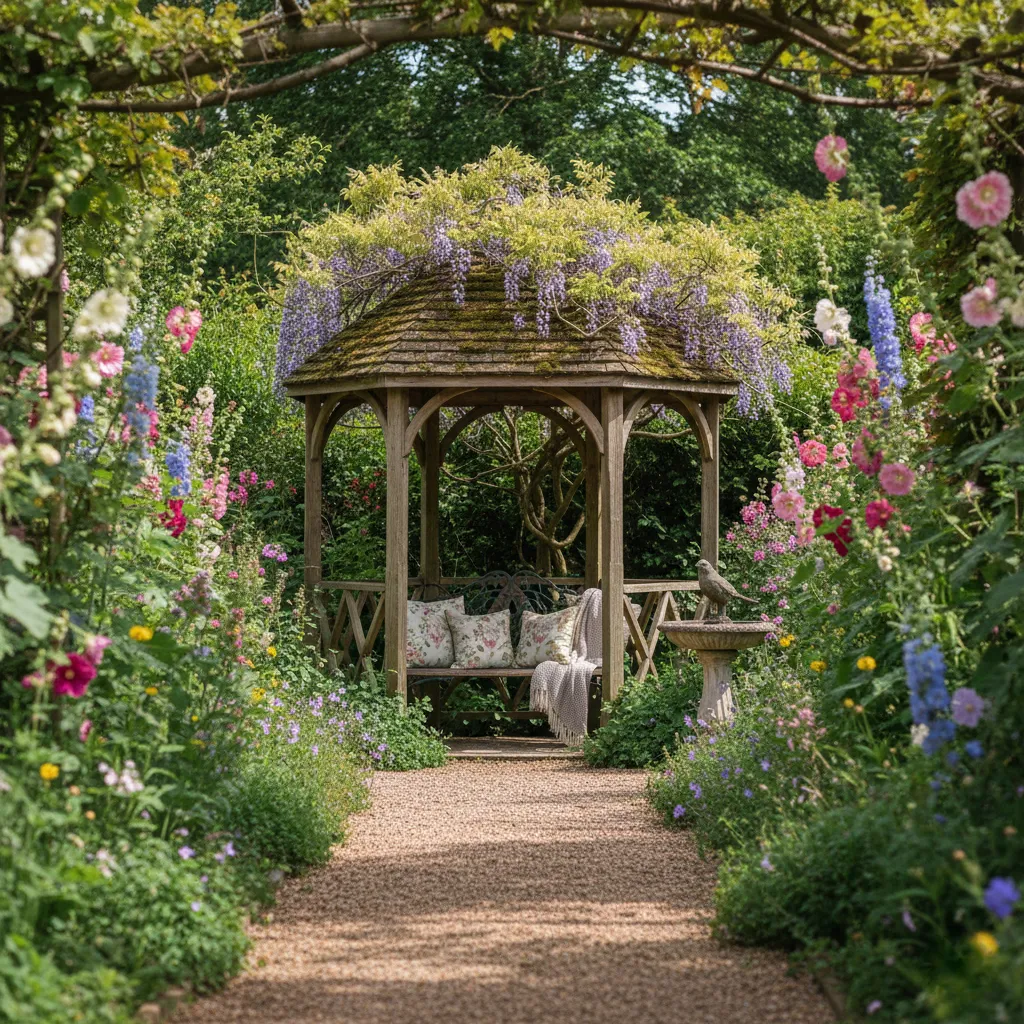
English gardens blend structured elegance with naturalistic charm, creating timeless outdoor spaces that feel both romantic and inviting. These landscapes balance formal symmetry with abundant plantings, incorporating classic elements like meandering paths, lush borders, and water features to achieve their signature look.
Foundation and Structure
1. Naturalistic Layout
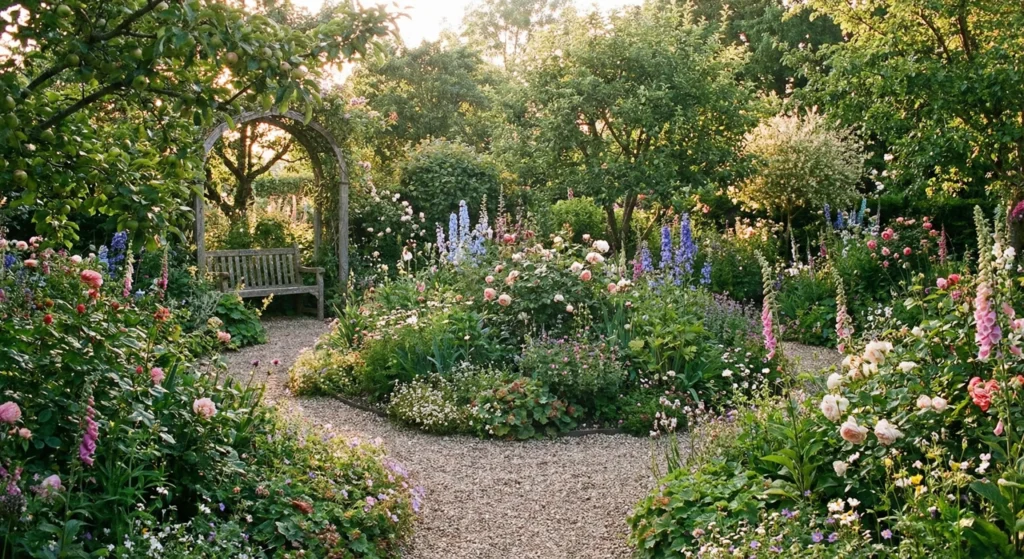
- Create organic shapes with winding pathways that meander through your garden, guiding visitors to different focal points
- Unlike linear French gardens, English designs embrace flowing forms with sweeping beds filled with mixed perennials, shrubs, and trees
- Aim for a layered planting approach with taller plants at the back and shorter ones in front for depth
2. Symmetry with Central Axis
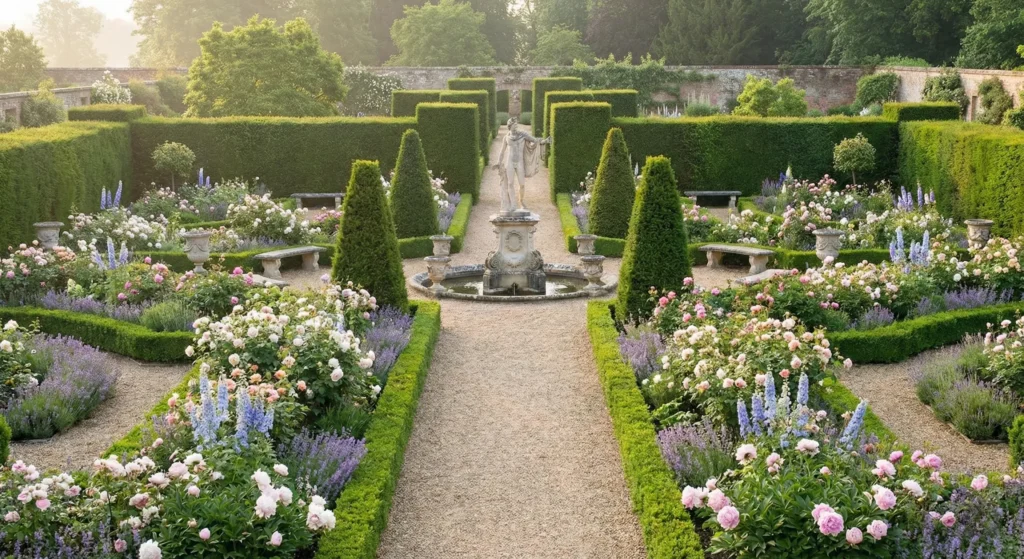
- Start with a central axis that provides underlying structure, then allow more fluid and organic forms to flow from it
- While English gardens appear wild and natural, this backbone of symmetry creates visual harmony
- Use hardscaping paths, retaining walls, and hedges to establish symmetrical designs with curves or straight lines
3. Garden Rooms and Boundaries
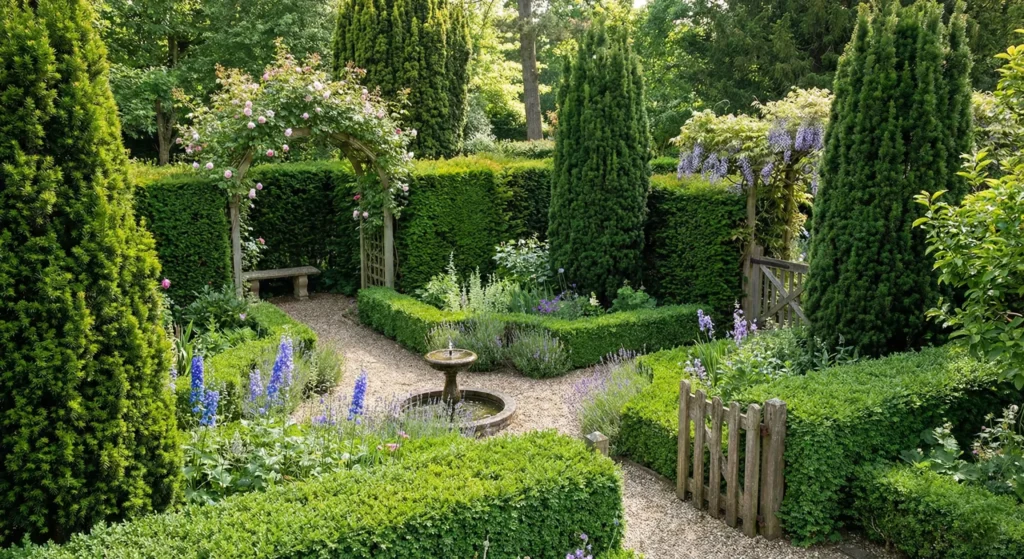
- Plant evergreen hedges like boxwood or yew to create separate “rooms” within your landscape for privacy and interest
- These structured elements divide the space while maintaining the naturalistic aesthetic
- Use upright evergreens to highlight architectural features or add focal points
Pathways and Hardscaping
4. Meandering Stone Paths
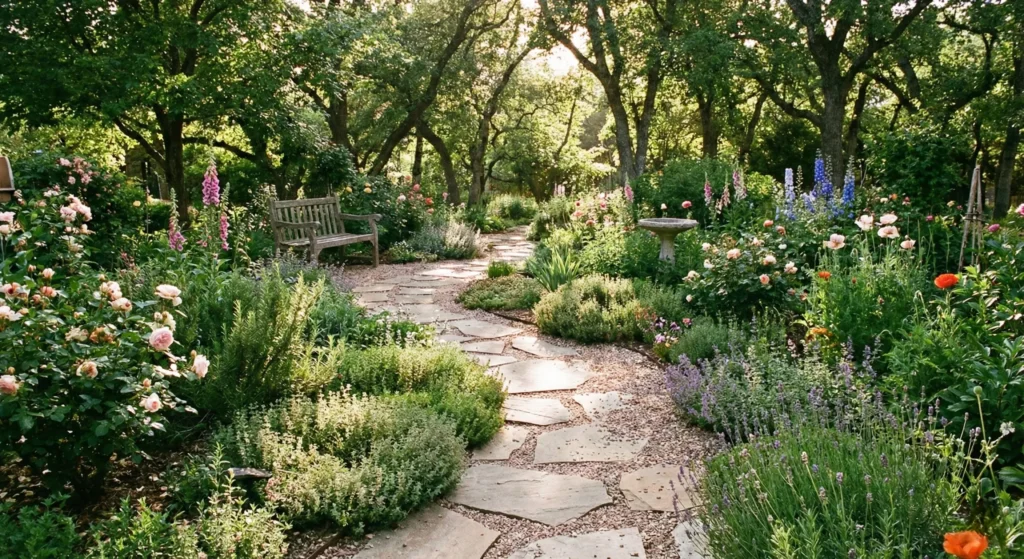
- Construct winding pathways from brick, stone pavers, or crushed gravel that follow the natural landscape
- Instead of straight lines, create meandering paths for a sense of intrigue and discovery
- Add borders of low-growing plants or herbs alongside paths for fragrant sensory experiences
5. Classic Stonework Elements
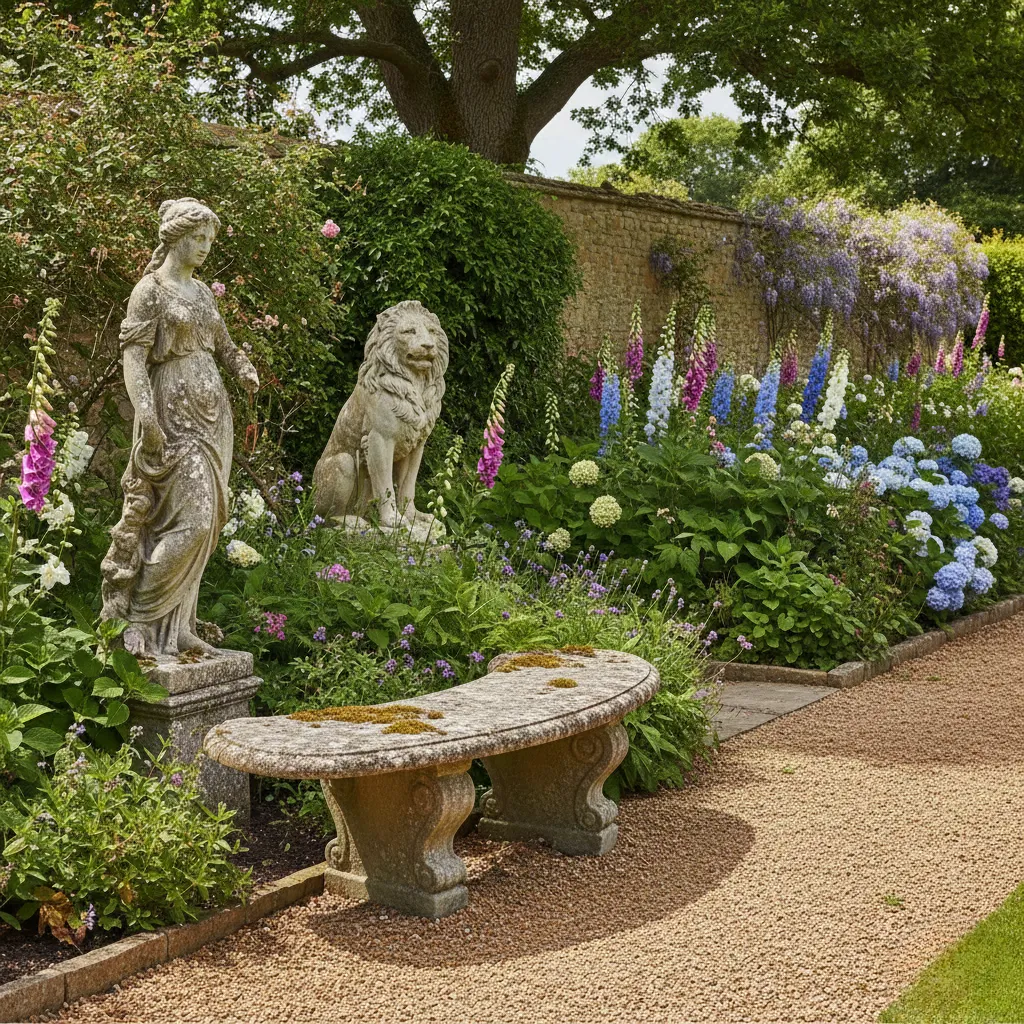
- Incorporate rustic stone benches, ornate statues, and gravel walkways for timeless quality
- Classic stonework defines spaces, offers pathways, and creates boundaries in subtle yet effective ways
- Stone can be laid out in patterns that complement the garden’s overall style
Abundant Plantings
6. Richly Layered Mixed Borders
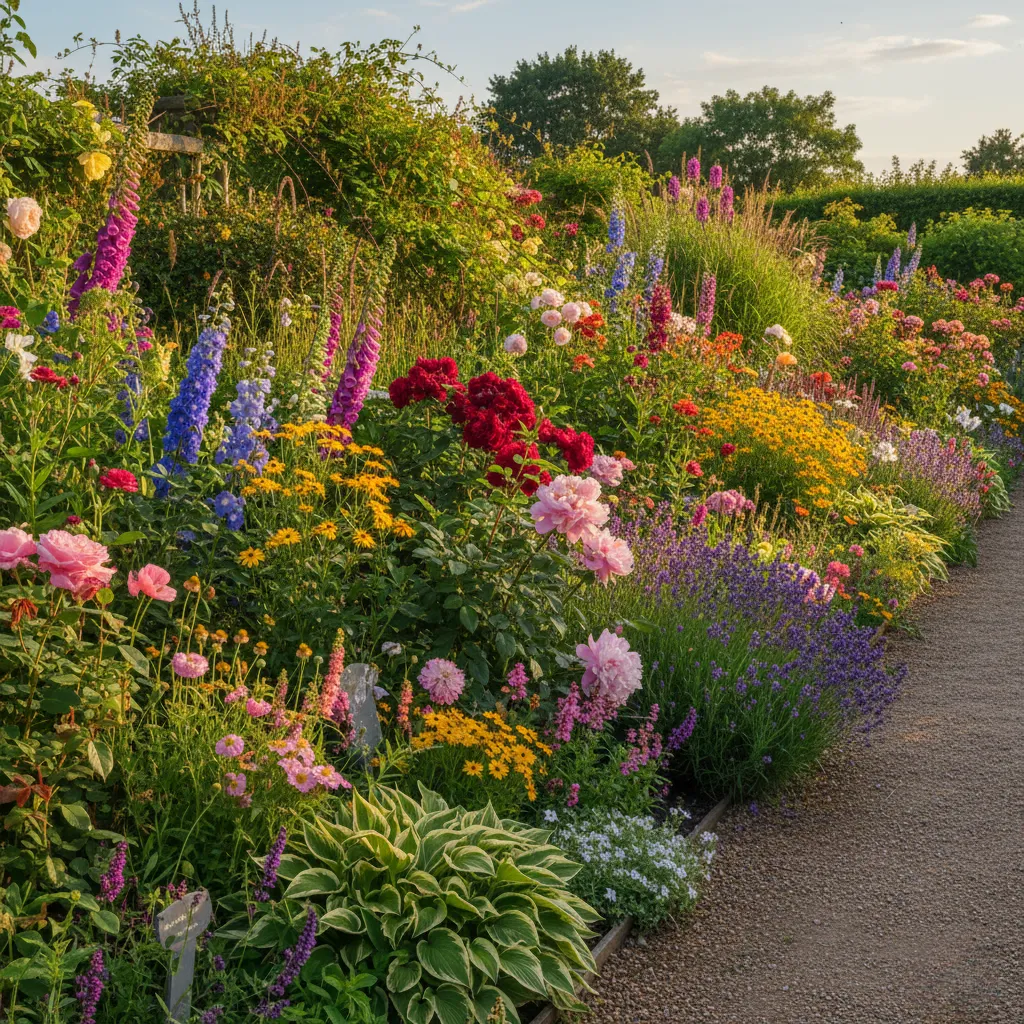
- Combine perennials, shrubs, and annuals in densely planted borders that are staples of English gardens
- Plant large enough numbers of the same species to create “drifts” for natural mass effect
- Ensure variety in species that bloom at different times for year-round interest
7. Cottage Garden Profusion
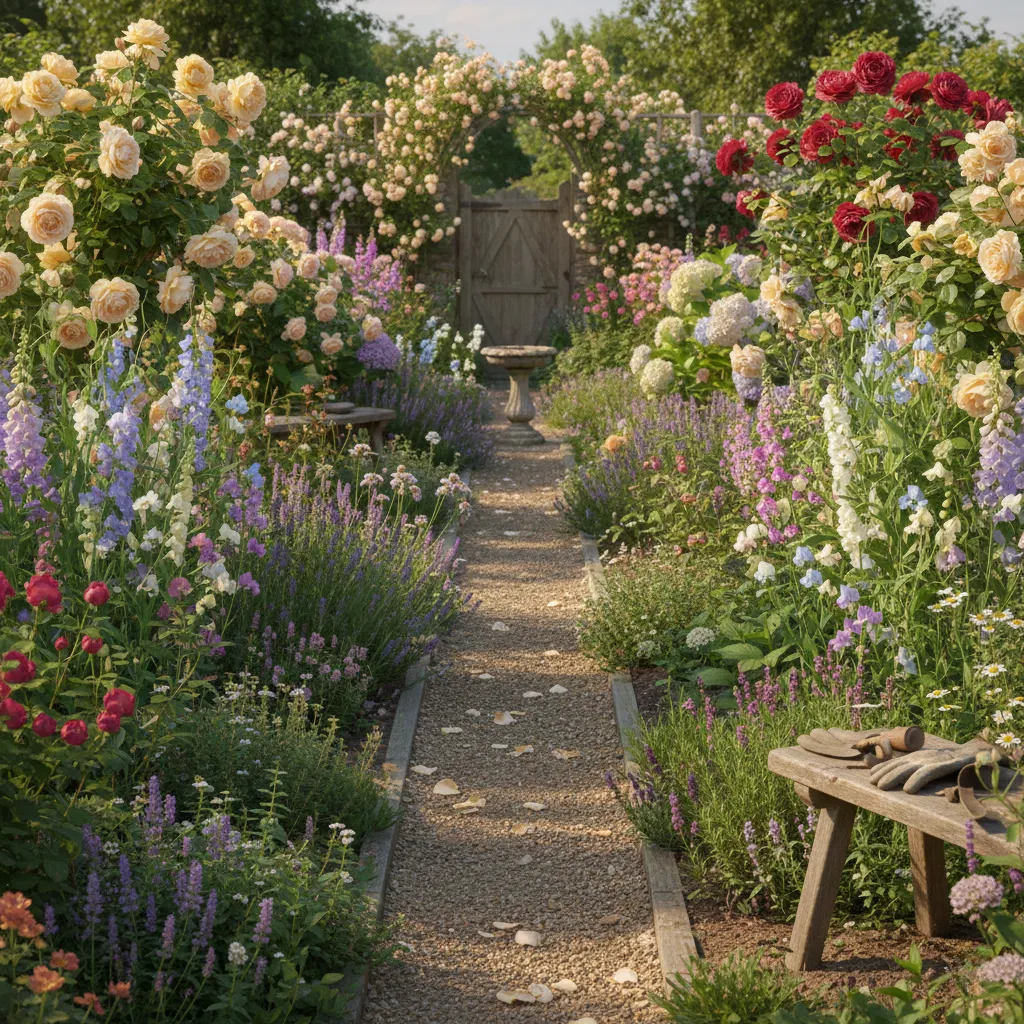
- Fill straight paths with billowing plants mixing ornamental and productive species for romantic abundance
- Include self-seeding flowers, roses, lavender, stocks, and sweet peas for scented favorites
- The key is extraordinary variety—flowering shrubs, herbaceous perennials, herbs, annuals, bulbs, and ground covers
8. Climbing Vines and Weaving Plants
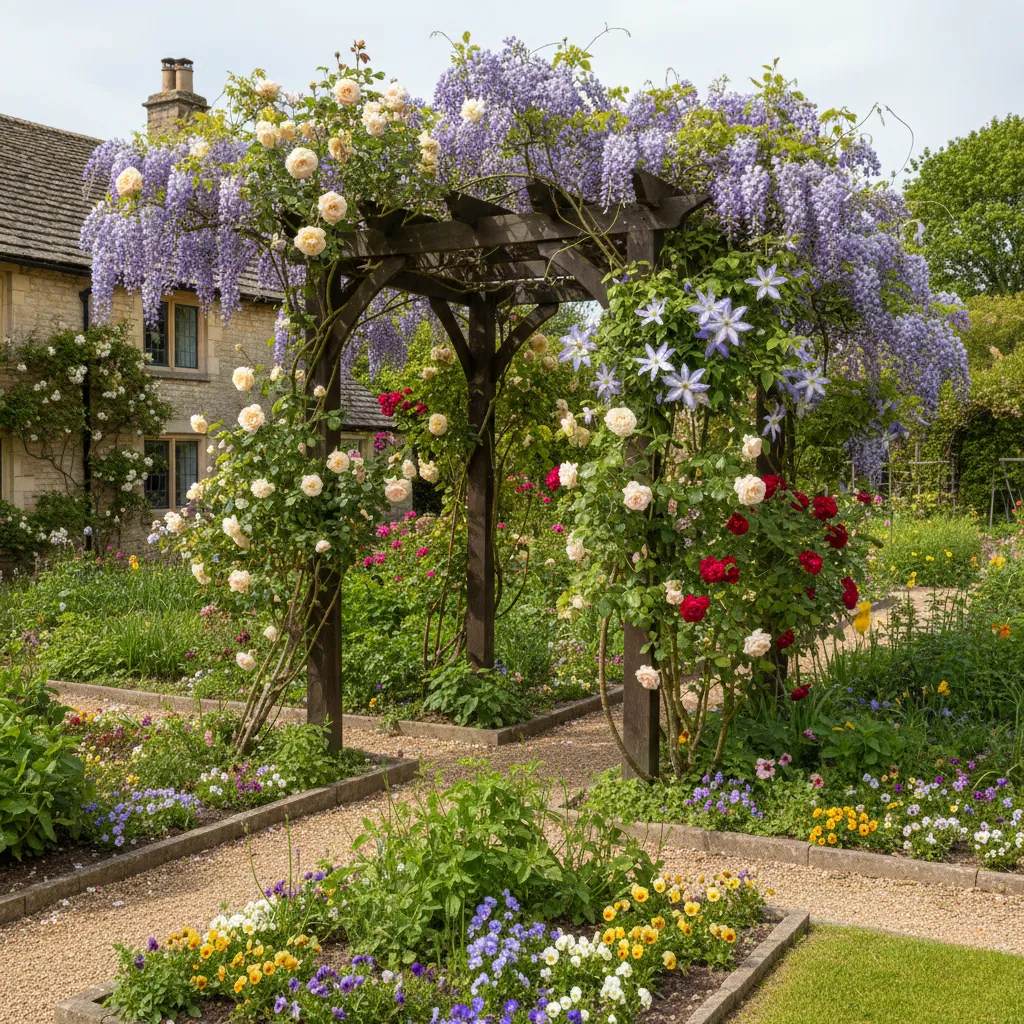
- Train roses, wisteria, or clematis to grow over pergolas, arbors, and trellises for vertical interest
- Use vining or sprawling plants like violas to “weave” through plantings and add depth
- Look for glorious flowering vines peeking over walls even within formal areas
Water Features
9. Ponds and Streams
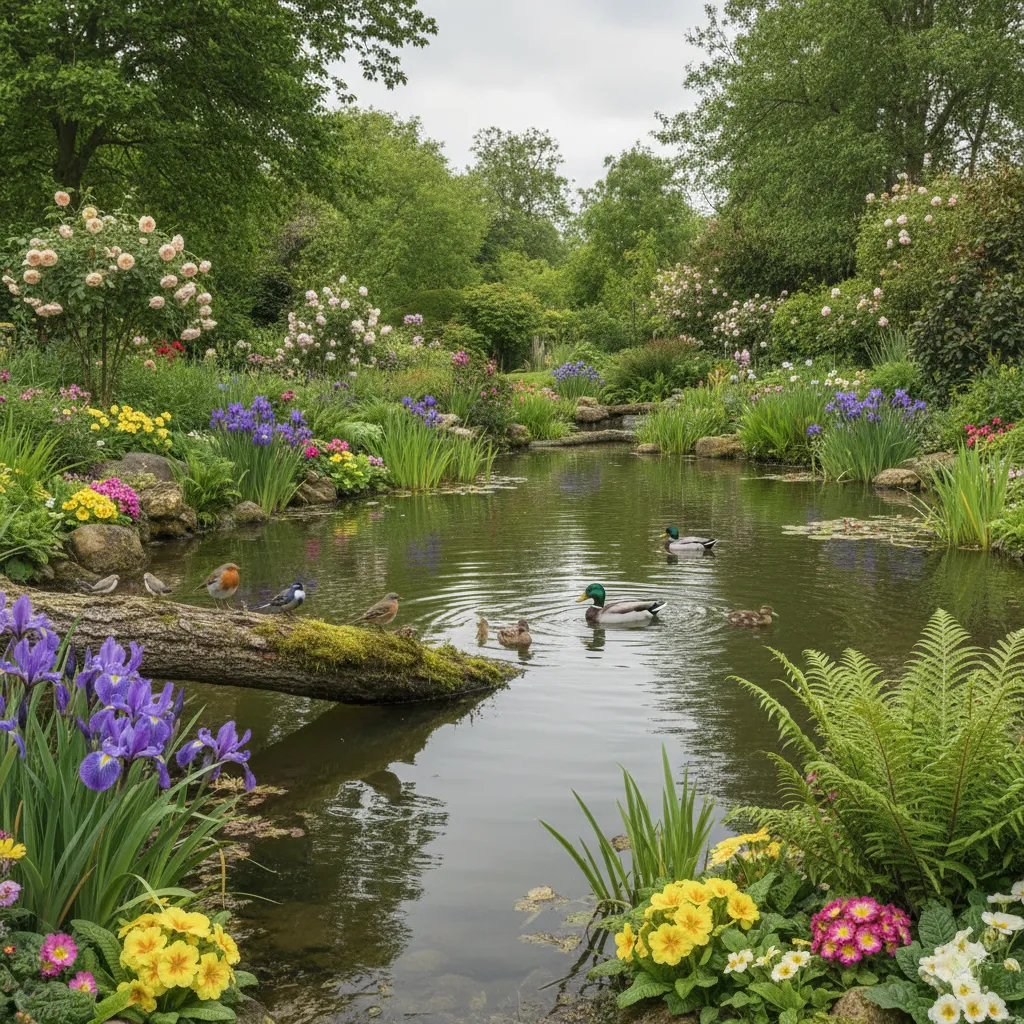
- Incorporate naturalistic water features like wildlife ponds fringed with moisture-loving plants
- These add reflections, soothing sounds, and habitat creation for birds and wildlife
- Soften pond edges with marginal plants like iris, primulas, and ferns for seamless integration
10. Fountains and Birdbaths
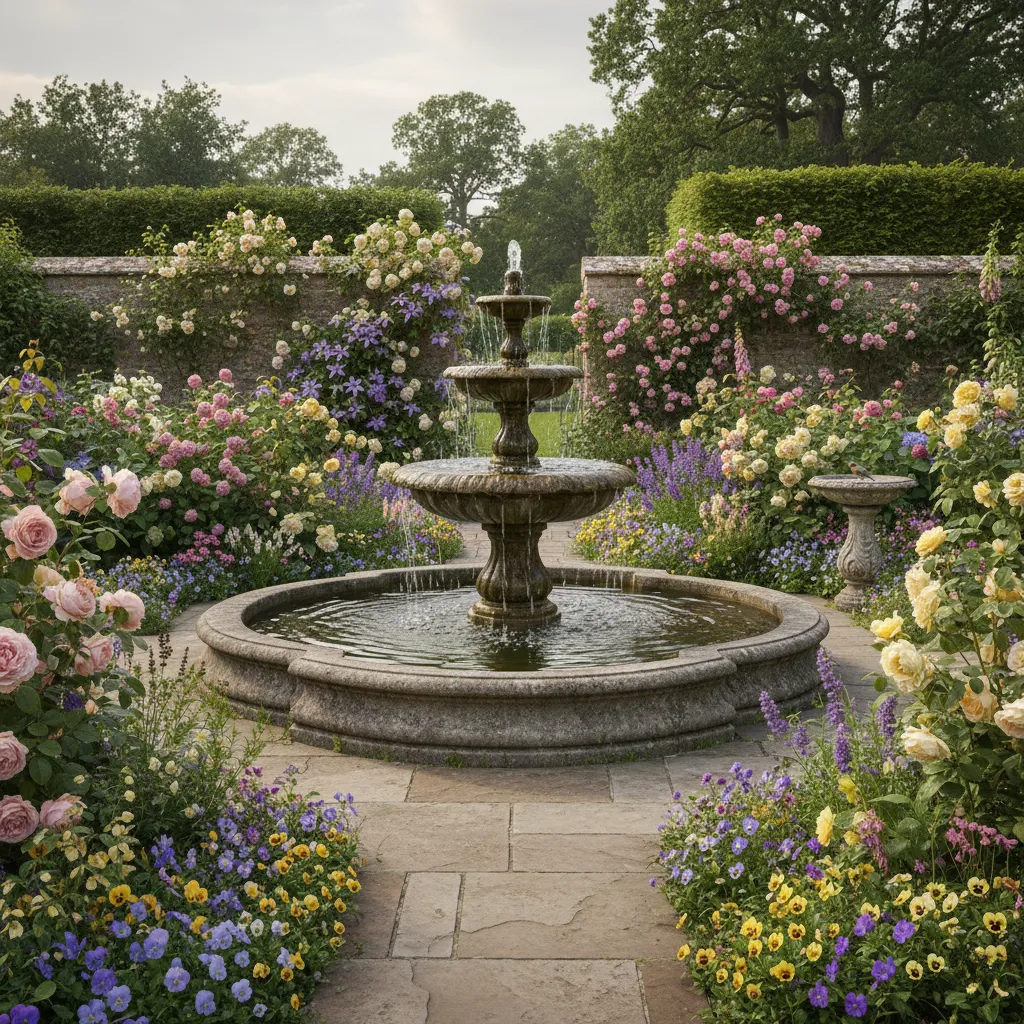
- Add grand multi-tiered stone or concrete fountains for traditional English landscape hallmarks
- Smaller spaces can be enhanced with tabletop fountains, birdbaths, or decorative water bowls
- Moving water contributes to the garden’s sensory experience with gentle sounds
Garden Structures
11. Pergolas and Arbors
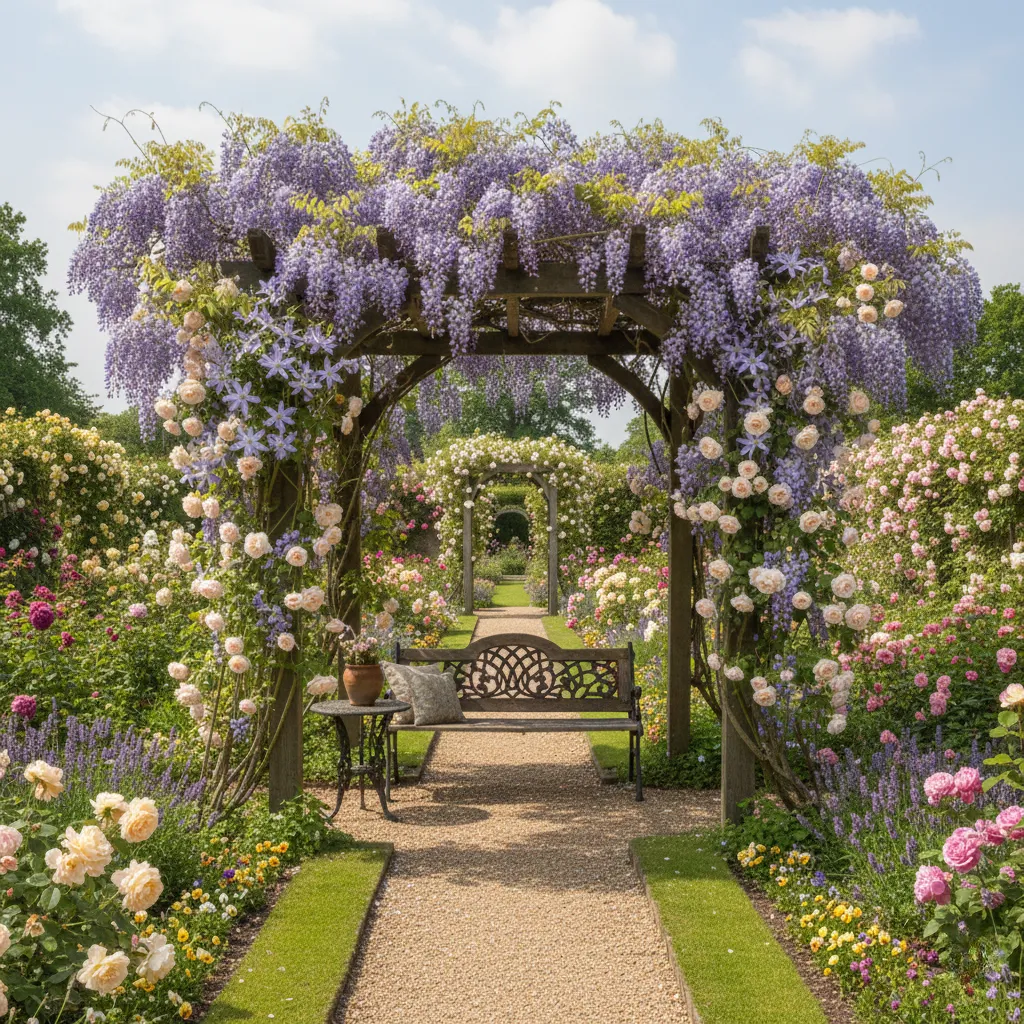
- Provide shade for seating areas with pergolas while arbors frame entryways or pathways
- These structures add height and vertical interest to the landscape
- Train climbing plants to grow over them for the quintessential English garden aesthetic
12. Inviting Entryways
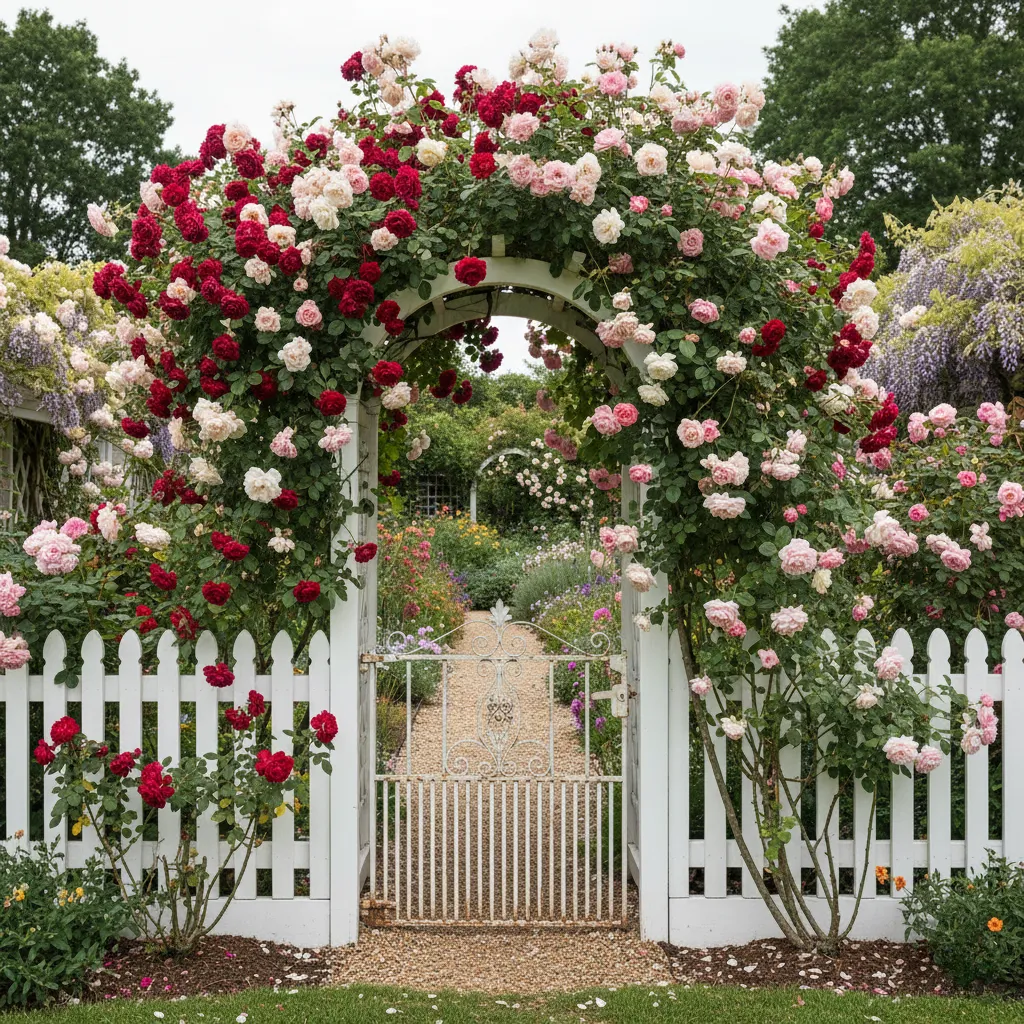
- Create welcoming entries using picket fences, gates, vine-covered arbors, and arches overgrown with roses
- These structures define transitions between garden spaces while adding romantic charm
- Perfect for establishing the classic English cottage garden look
Lawns and Trees
13. Lush Verdant Lawns
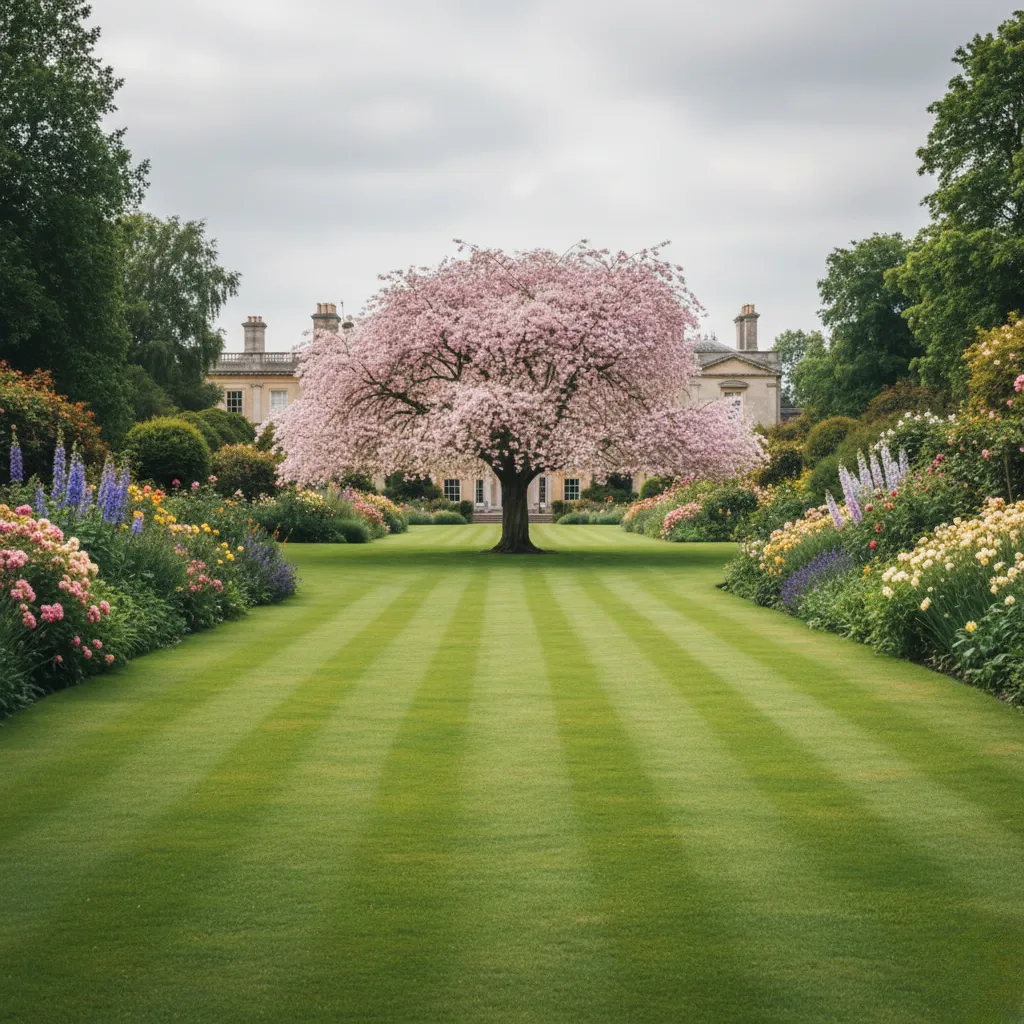
- Maintain a well-manicured lawn that serves as canvas for surrounding design elements
- Feature flowering trees or a solitary sculptural tree as focal point on the green expanse
- Rolling lawns set against groves of trees create the classic English landscape
14. Carefully Selected Trees and Shrubs
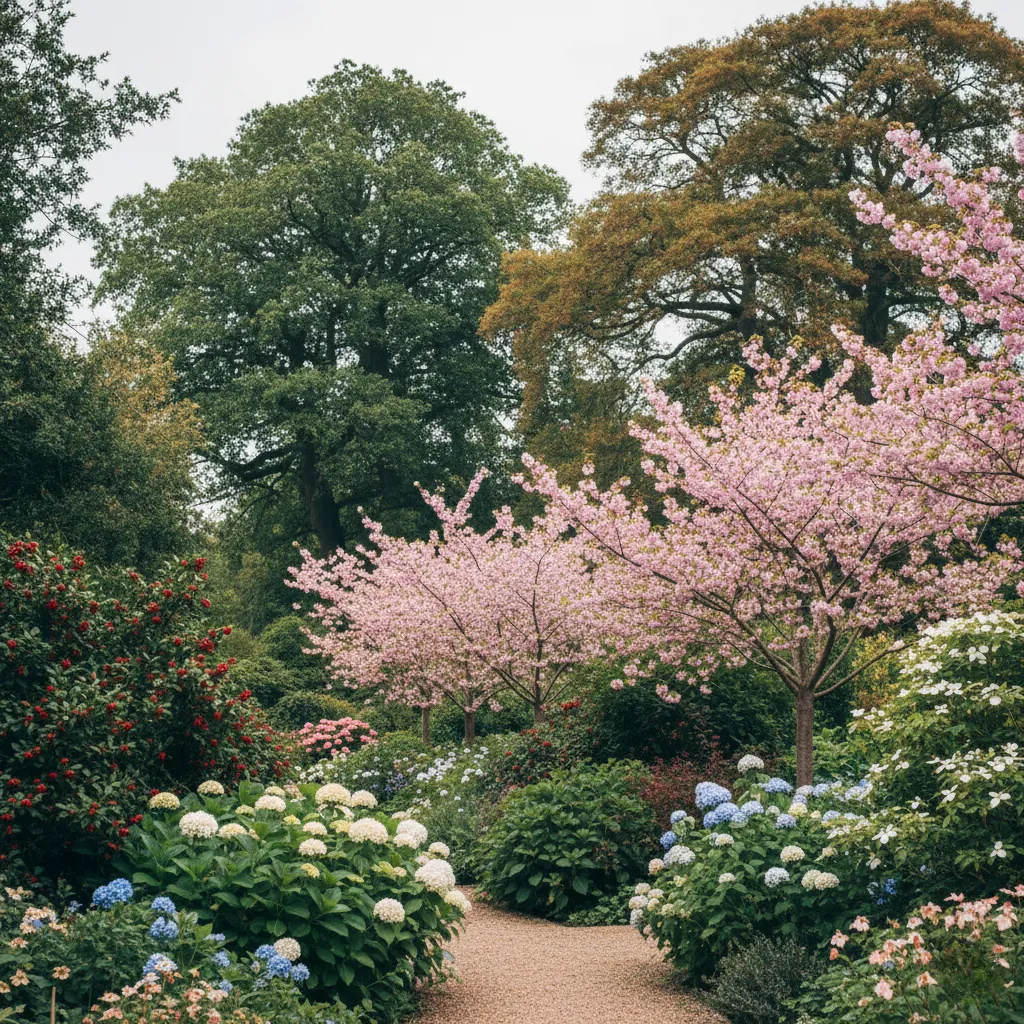
- Choose native oaks and beeches for larger gardens, ornamental apples and cherries for modest spaces
- Include shrubs providing seasonal interest through flowers, berries, or winter stems
- Woody plants create the garden’s permanent structure beyond seasonal herbaceous displays
Special Touches
15. Secret Nooks and Hidden Spaces