Cottage gardens blend romantic profusion with practical self-sufficiency, creating abundant outdoor spaces overflowing with colorful blooms, fragrant herbs, and edible plants. These charming designs balance whimsical informality with underlying structure, featuring meandering pathways, climbing vines, and mixed plantings that evoke simpler, more enchanting times.
Essential Boundaries and Structure
1. Low Picket Fence or Stone Wall
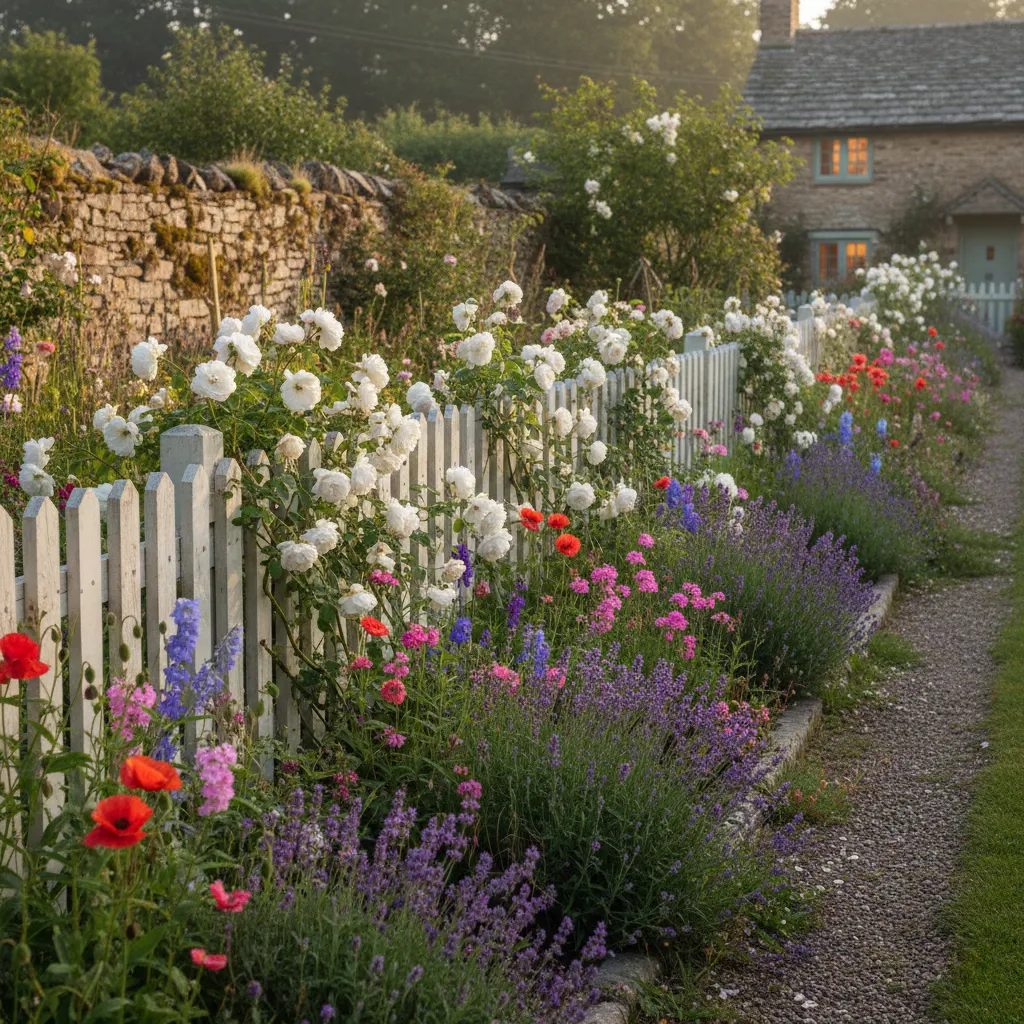
- Enclose your cottage garden with a low white picket fence or rustic stone wall that serves both decorative and practical purposes
- Originally designed to keep animals away from vegetables while keeping chickens and domestic animals contained safely
- Provides charming backdrops for flowering beds while supporting climbing plants beautifully
2. Meandering Pathways
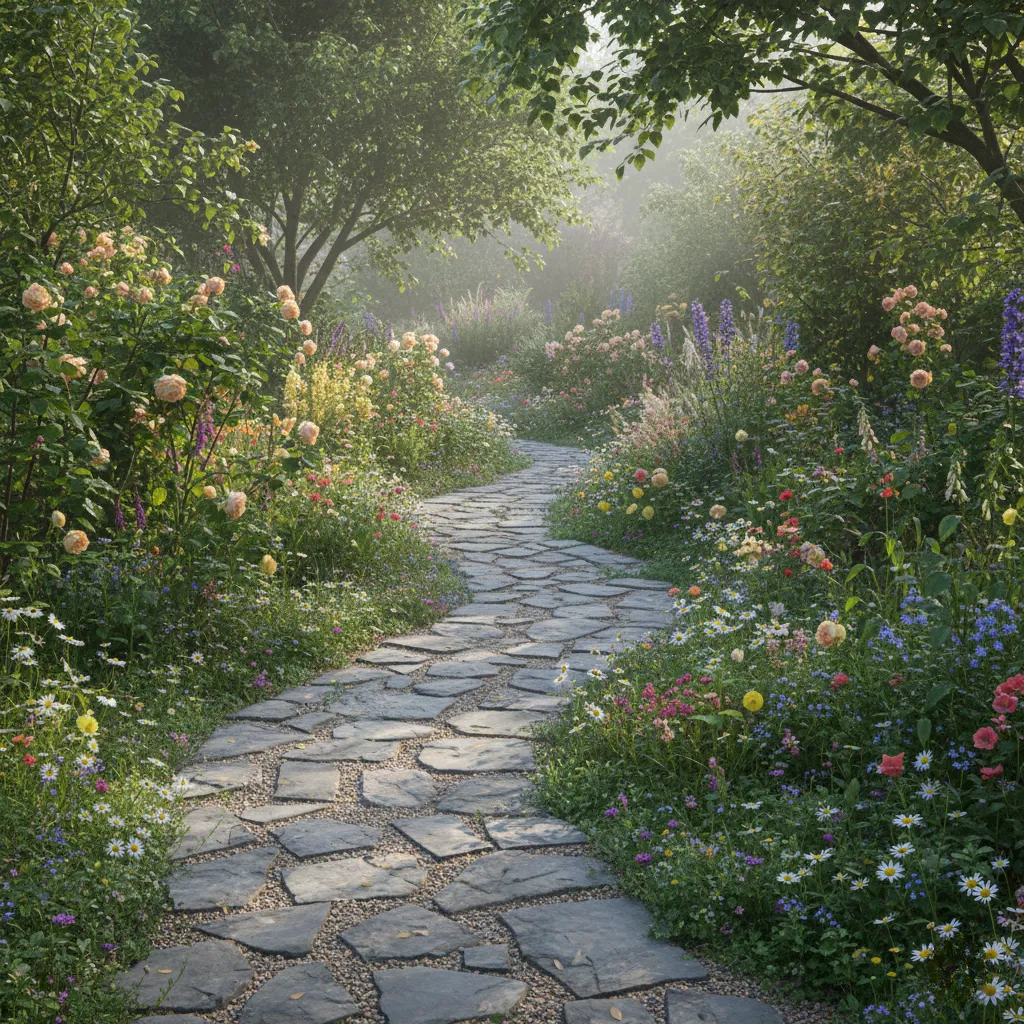
- Create curved walkways from flagstone, brick, gravel, or bark mulch instead of straight formal lines
- Winding paths encourage exploration and discovery while softening garden edges for leisurely strolls
- Mulched paths prevent weed growth while allowing soil to breathe and absorb water
3. Four-Bed Crossroad Layout
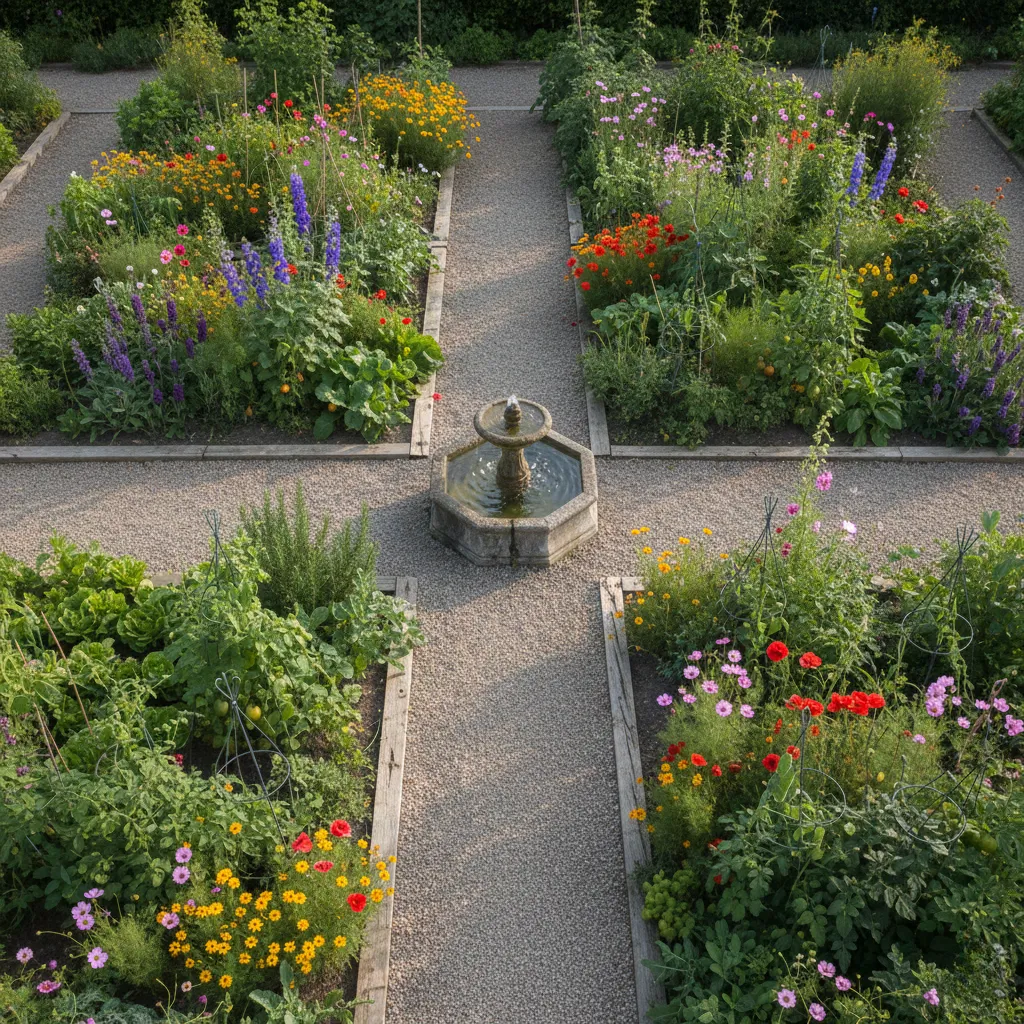
- Organize your cottage garden into four rectangular beds separated by intersecting paths for traditional design
- The central crossroads often features a small terrace, fountain, raised bed, or herb spiral as focal point
- This structure is perfect for implementing a four-year crop rotation system with vegetables
Abundant Plant Layers
4. Mixed Perennials and Annuals
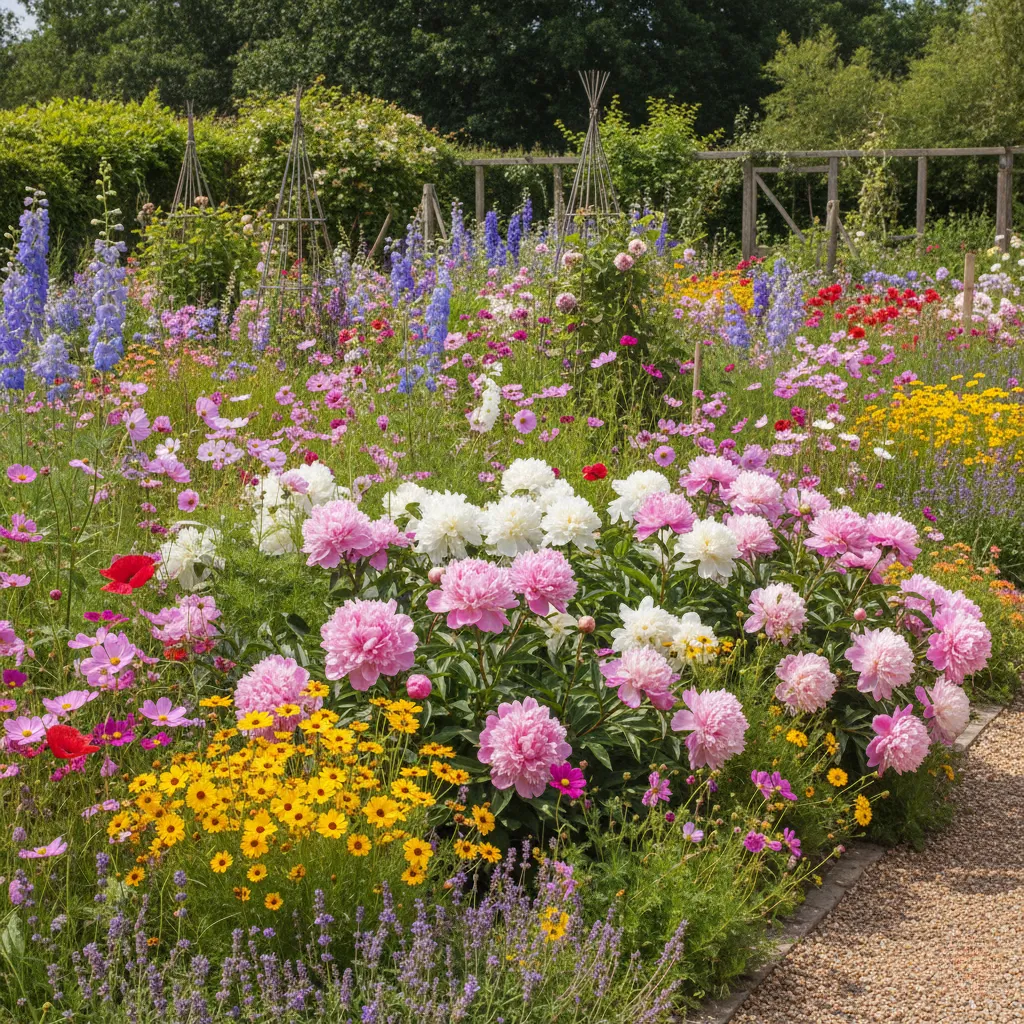
- Combine perennials, annuals, biennials, and self-seeding plants for a tapestry of color and texture throughout seasons
- Plant in dense drifts rather than sparse singles for the signature cottage garden profusion
- Layer cool and warm tones to create visual harmony while ensuring year-round interest
5. Height Variation Layering
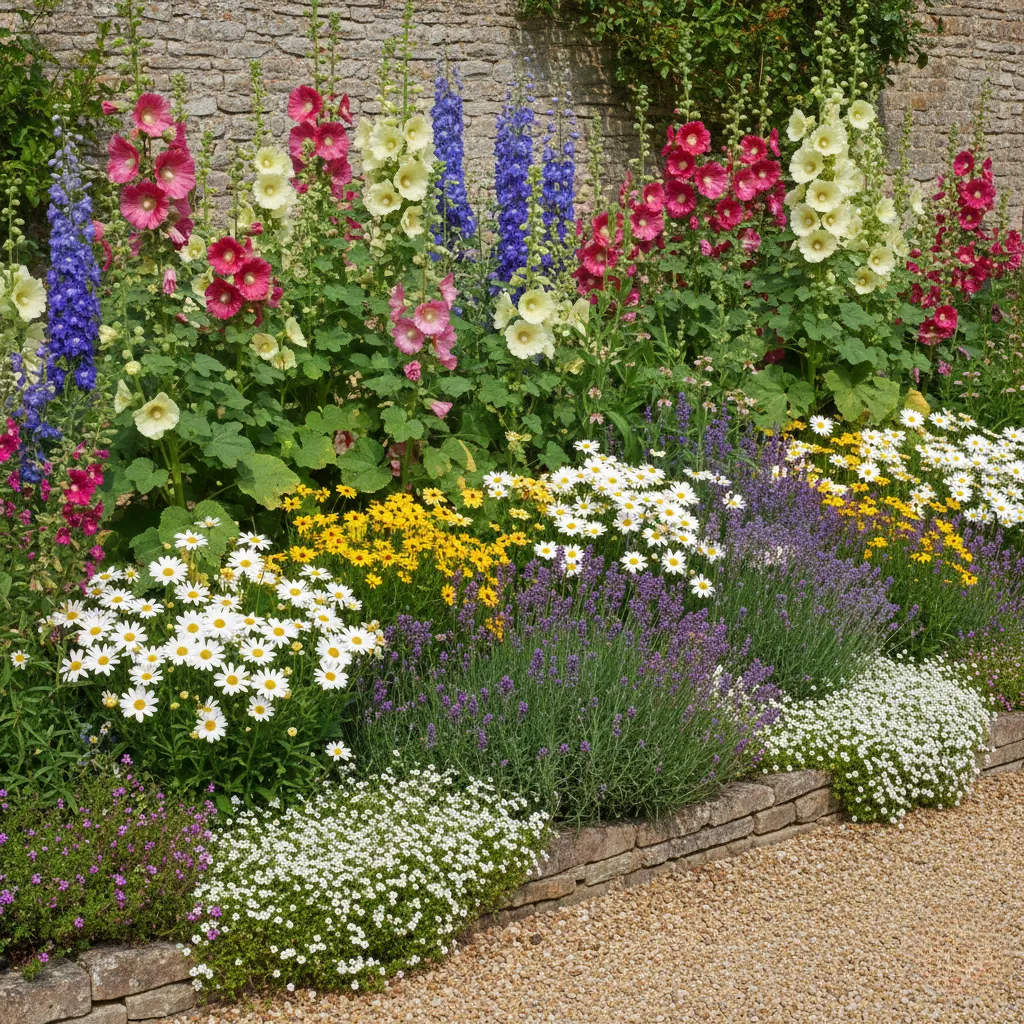
- Arrange tall plants like delphiniums, hollyhocks, foxgloves, and sunflowers at the back of beds
- Fill middle sections with medium-height bloomers like lavender, salvia, daisies, and cosmos
- Border the front with low-growing plants such as dianthus, alyssum, thyme, and pansies
6. Self-Seeding Encouraged Plants
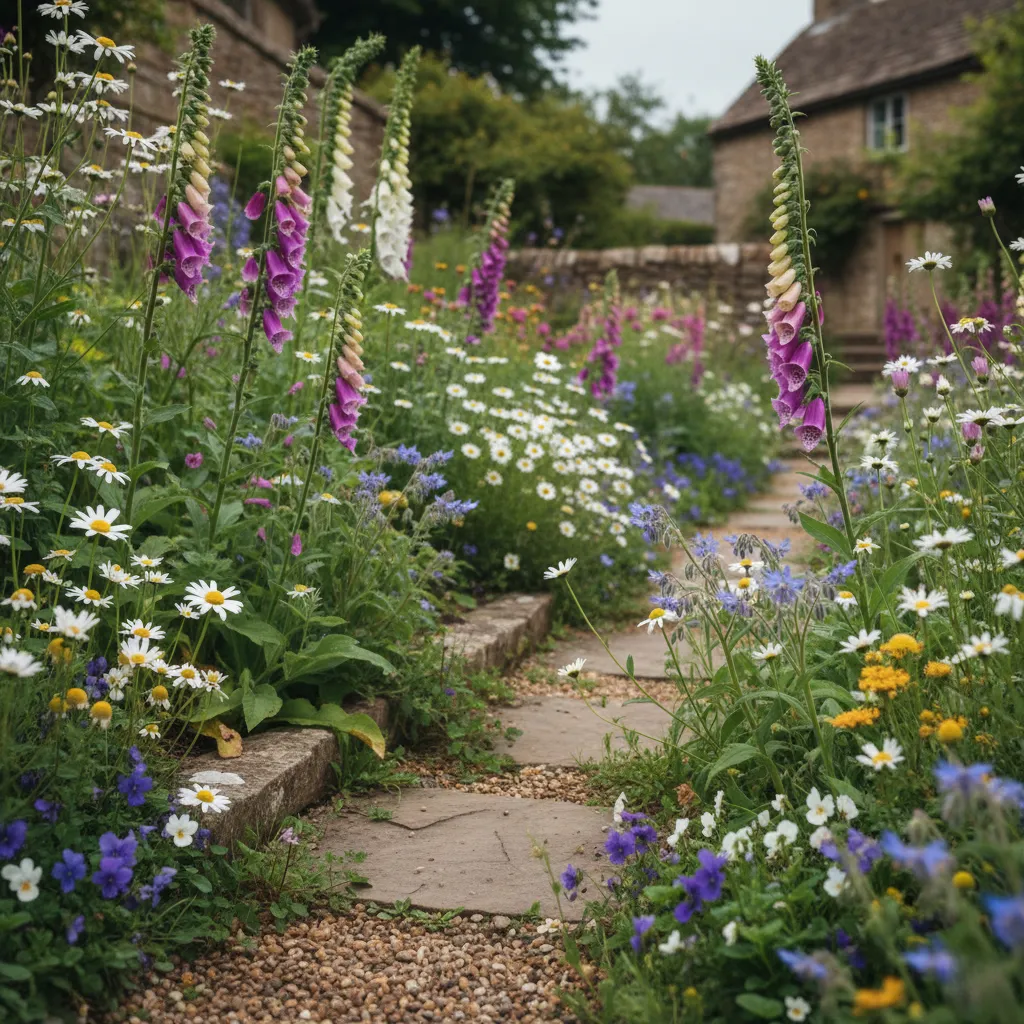
- Allow roses, foxglove, clematis, violets, daisies, and borage to go to seed and naturalize throughout your garden
- This charming rambling effect creates the abundant, overflowing look without extra effort or planning
- Originally an accidental byproduct of overworked gardeners but now signature cottage style
7. Fragrant Plant Selections

- Include sage, lavender, thyme, catmint, and other aromatic herbs originally used for cooking and herbal remedies
- Fragrant plants attract pollinators while covering barnyard odors historically
- Position scented varieties along pathways where their perfume is most appreciated by visitors
Edible and Productive Elements
8. Vegetable and Berry Integration
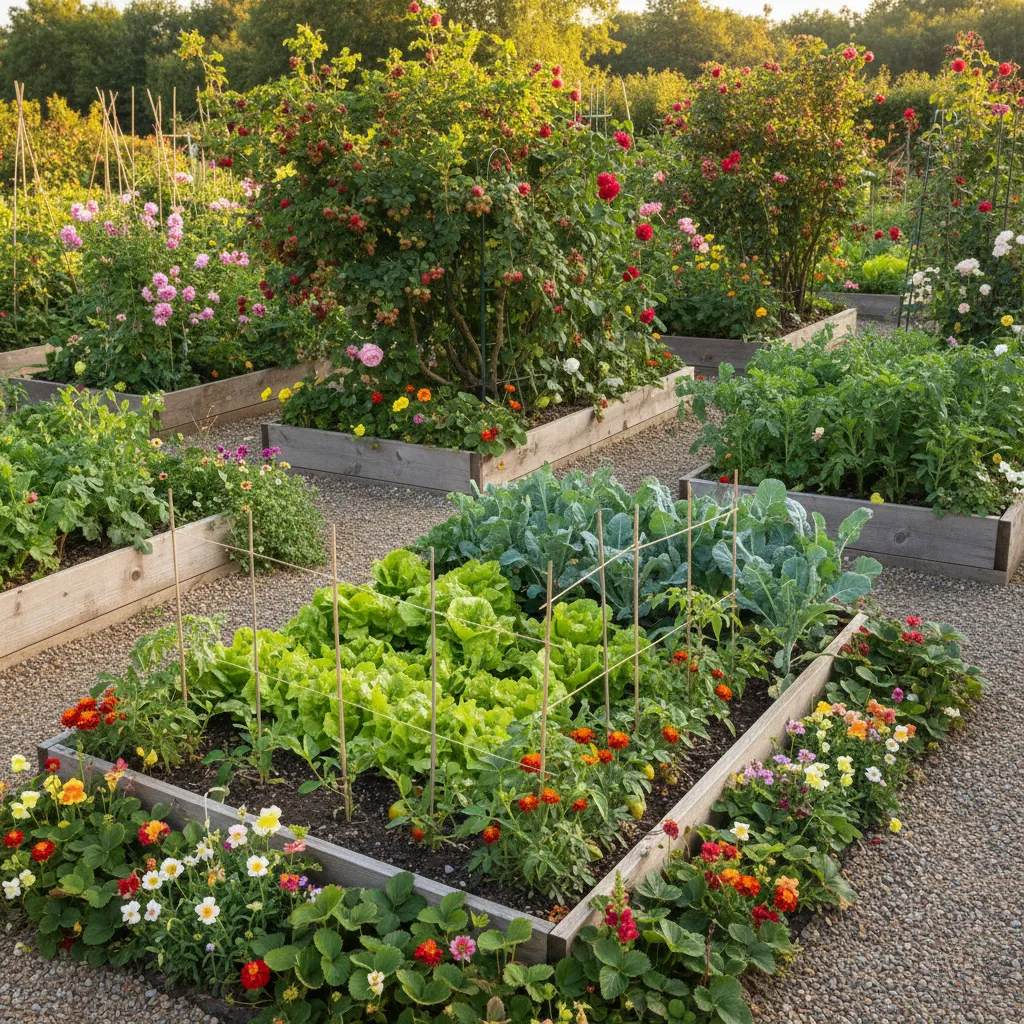
- Mix vegetables, berries, and fruit trees throughout ornamental plantings for traditional self-sufficiency
- Dedicate one bed each to light feeders, medium growers, and strong growers in rotation
- Interplant edibles with flowers to attract pollinators and ensure fruitful harvests
9. Culinary Herb Patches
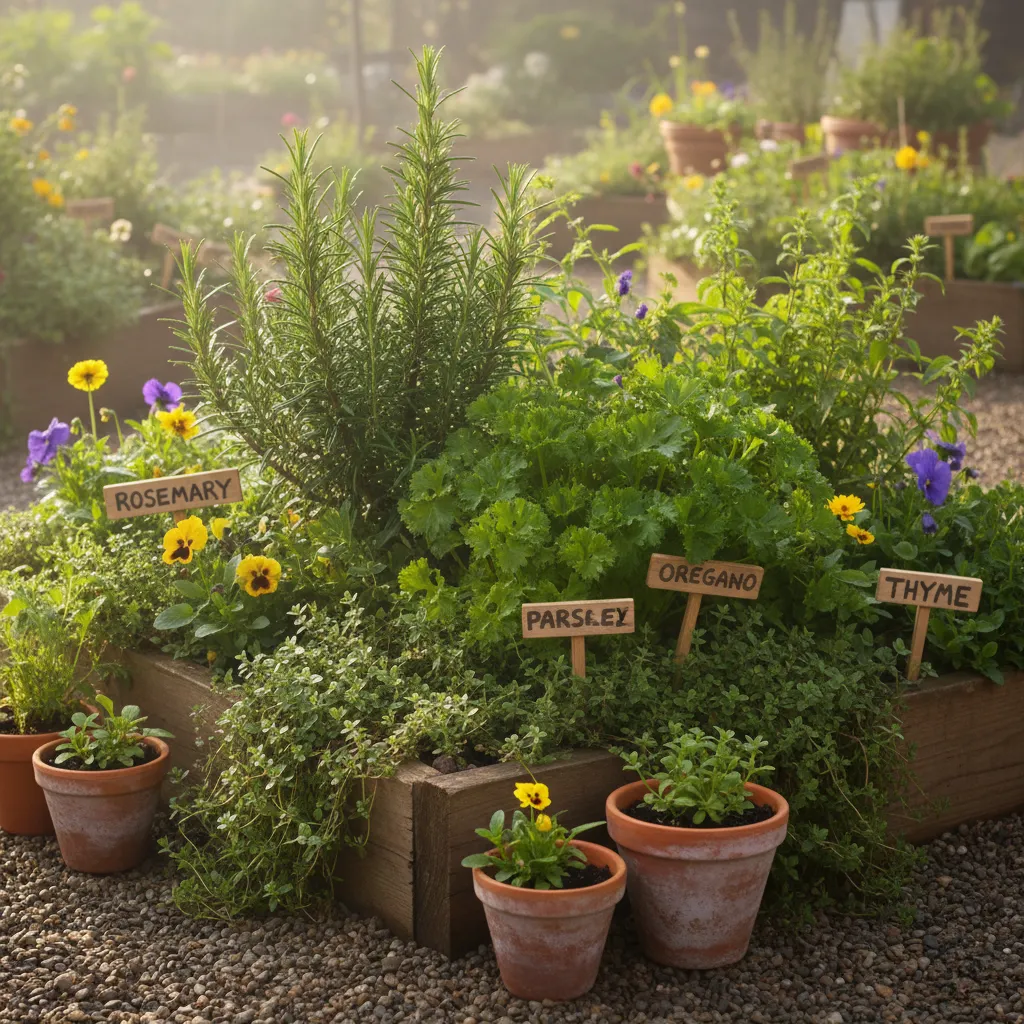
- Dedicate areas to kitchen herbs like rosemary, thyme, oregano, and parsley alongside decorative flowers
- These herbs serve dual purposes as both beautiful and functional garden residents historically
- Plant herbs near kitchen entrances for convenient harvesting during meal preparation time
10. Fruit Trees and Bushes
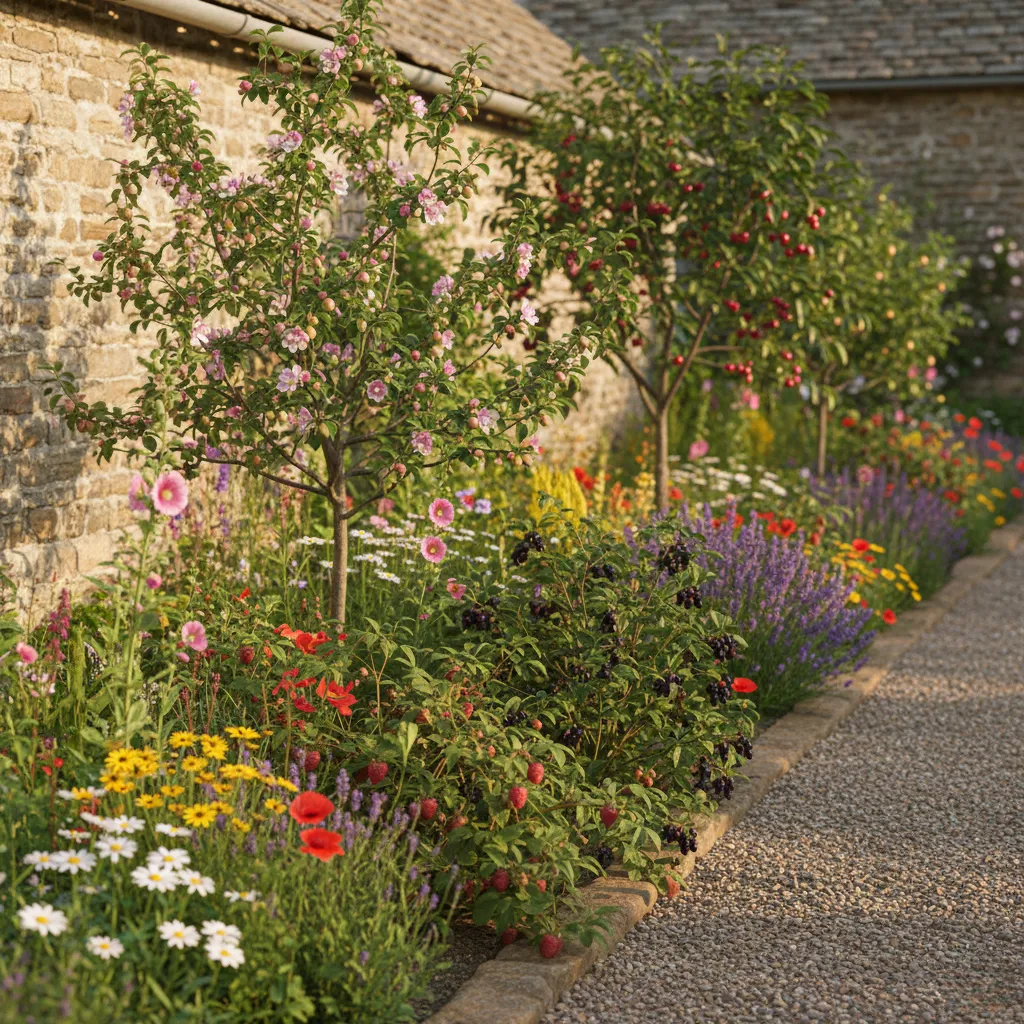
- Position fruit trees and berry bushes on the north side of the garden for optimal sun exposure
- These woody plants add structure and productive elements historically essential to cottage gardens
- Provide spring blossoms, summer fruit harvests, and fall foliage for year-round interest
Vertical Interest and Structures
11. Climbing Vines on Structures
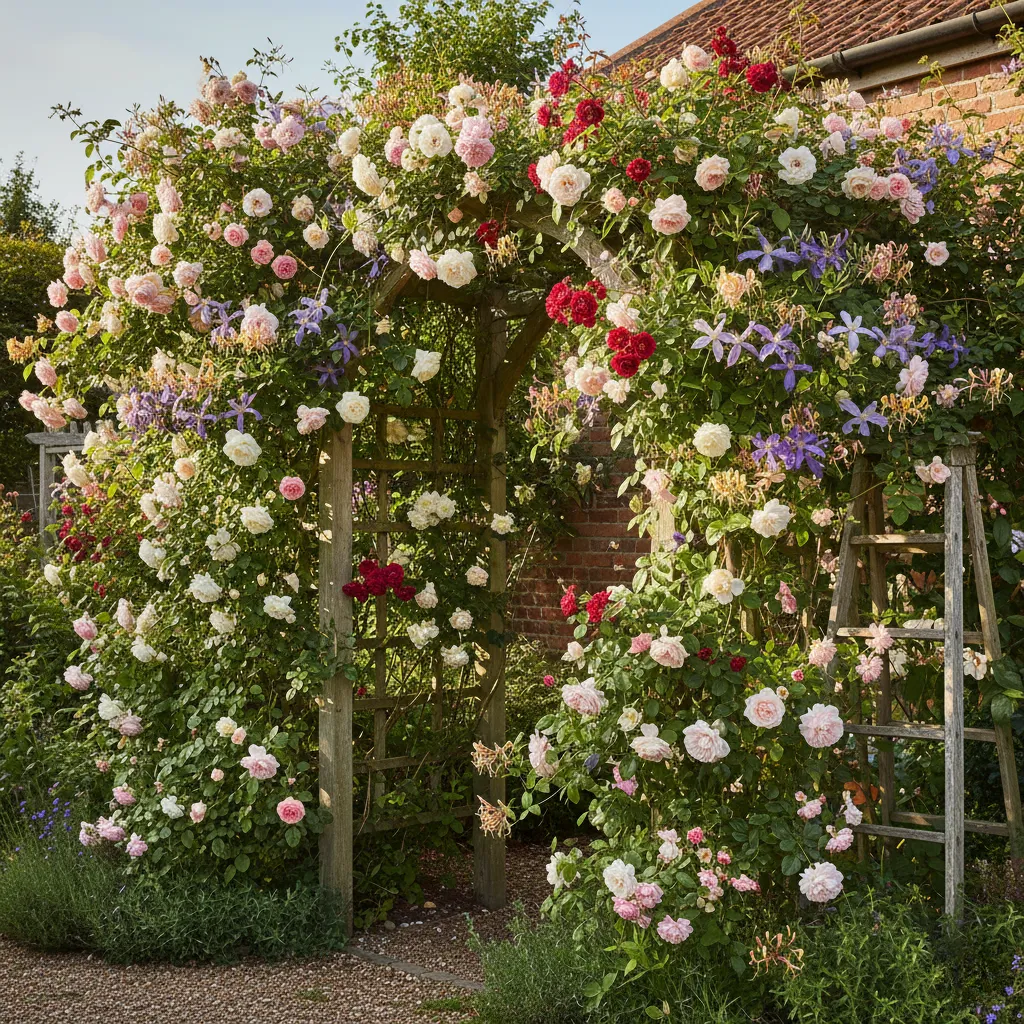
- Train roses, clematis, honeysuckle, or wisteria over arbors, pergolas, trellises, and fences
- Vertical elements maximize space while creating romantic overhead canopies throughout the garden
- Upcycle old ladders, barrels, or tools into unique rustic trellises for vintage charm
12. Arched Entry Arbors
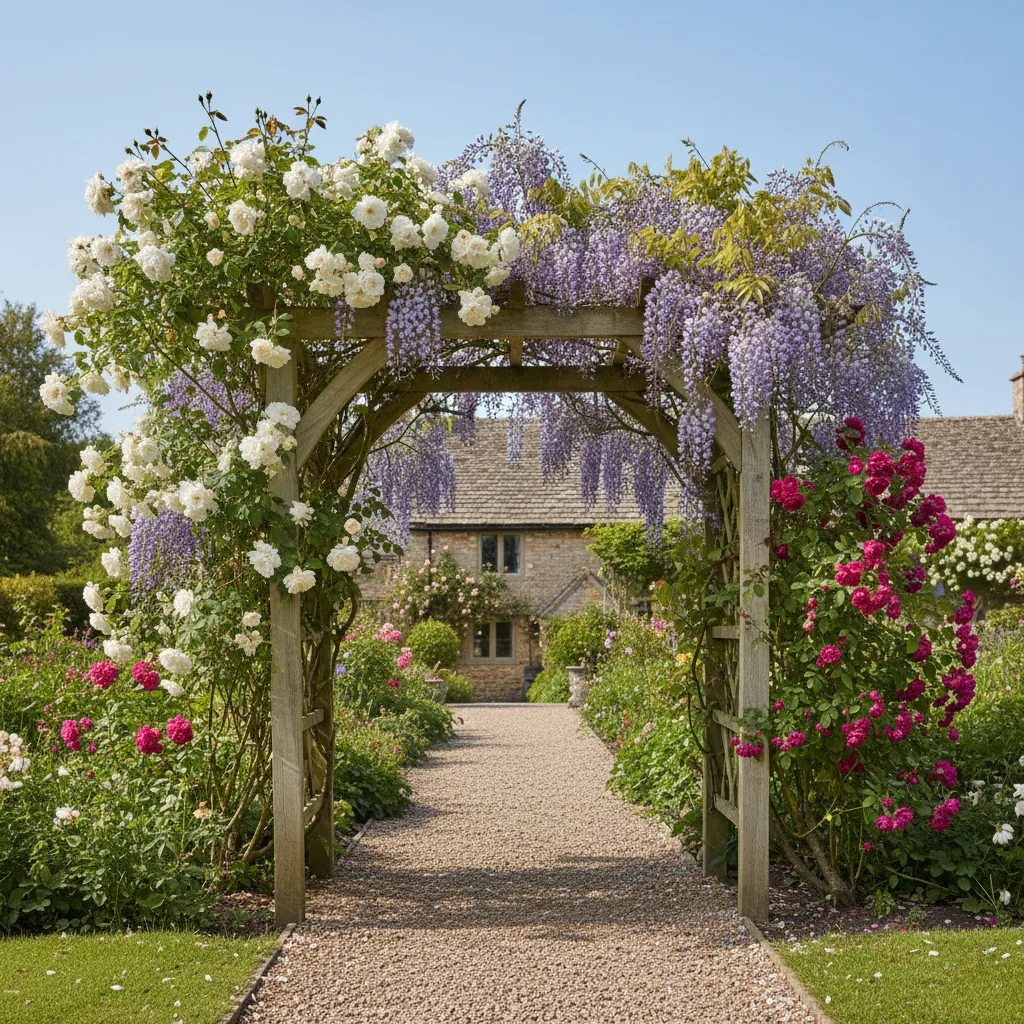
- Install vine-covered arbors or rose-draped arches at garden entrances for welcoming transitions
- These structures frame views and create inviting thresholds between different garden spaces beautifully
- Perfect for establishing the quintessential cottage garden aesthetic visitors will remember
Special Features and Focal Points
13. Central Gathering Space
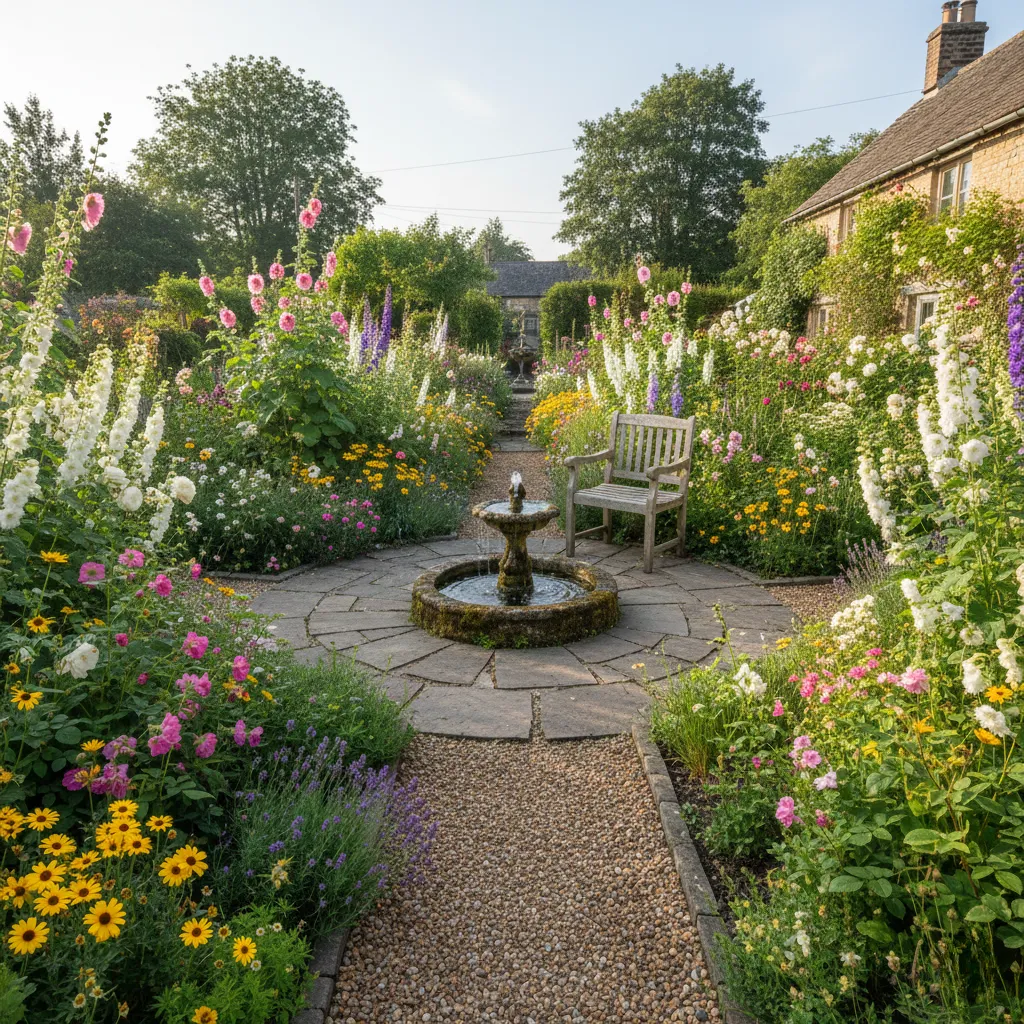
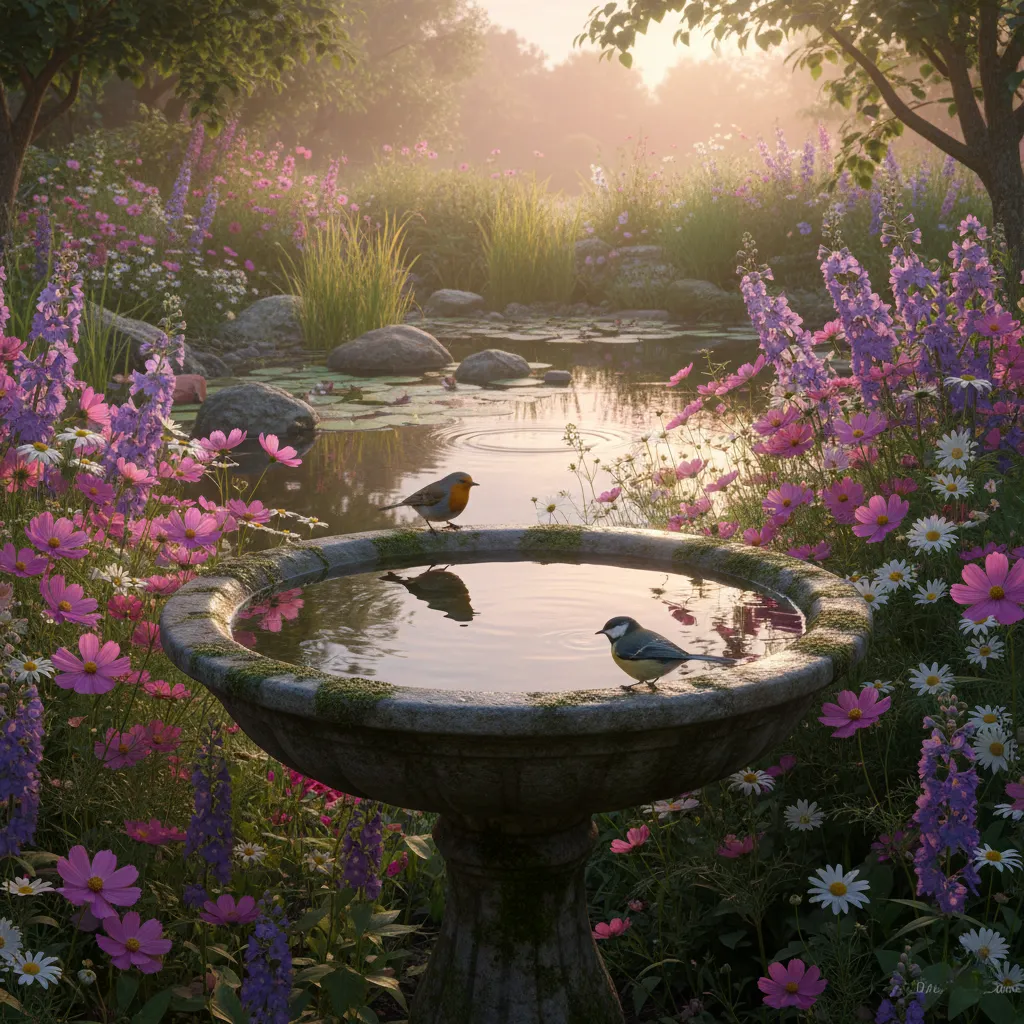
- Create a focal point like a terrace, fountain, birdbath, or herb spiral where paths cross
- This centerpiece anchors the design while providing practical function and visual interest
- Position seating to enjoy surrounding plantings from comfortable vantage points throughout garden
14. Multiple Seating Nooks
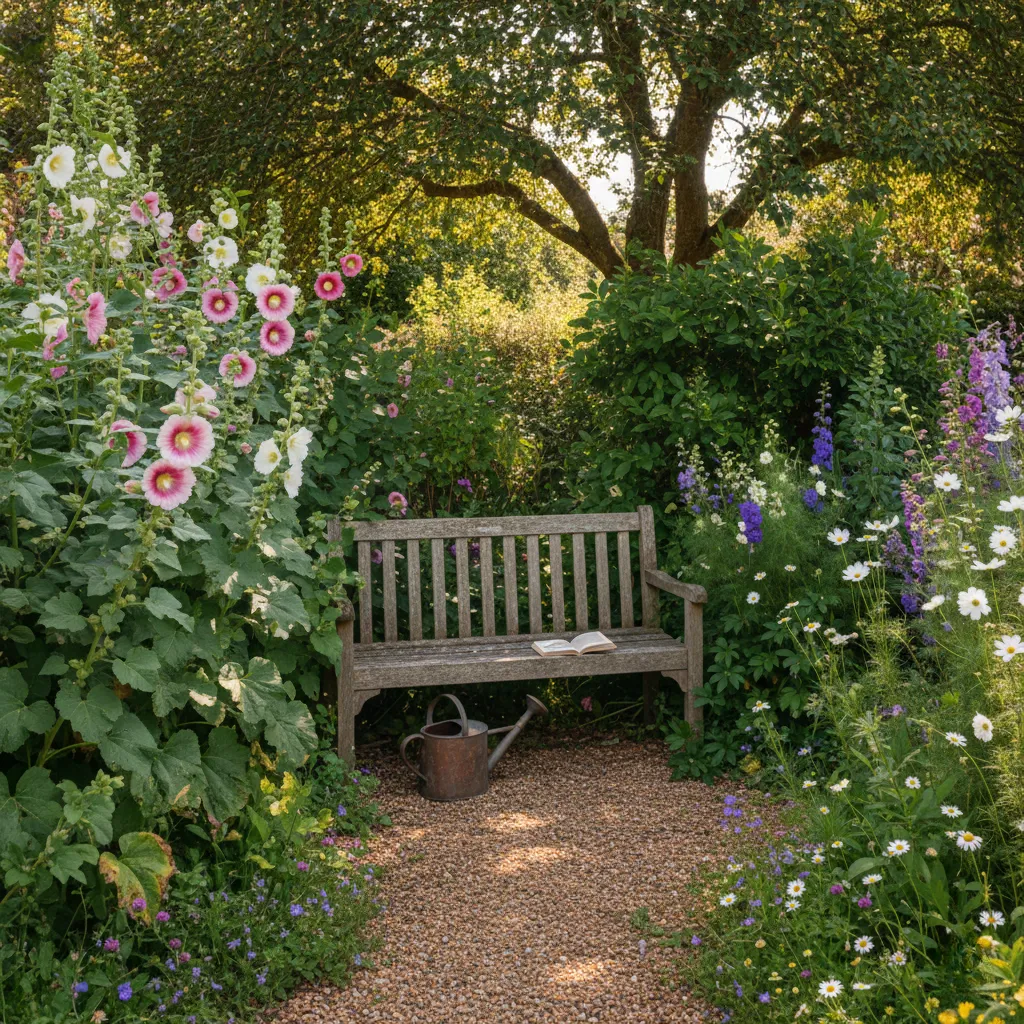
- Scatter rustic benches, vintage cafe tables, or simple wooden chairs throughout the garden
- Nestled seating areas offer secluded spots to soak in surroundings and rest during garden work
- Tuck away charming bistro sets for unexpected discoveries along winding pathways
15. Simple Water Features