
Designing a Zen garden is about creating a space that embodies simplicity, balance, and quiet contemplation through a carefully edited palette of natural elements—stone, gravel, sand, wood, moss, and restrained planting. Below are 15 design ideas rooted in authentic karesansui (dry landscape) practice and tea-garden tradition to help craft a tranquil, meditative landscape at any scale.
1) Start with the Seven Guiding Principles
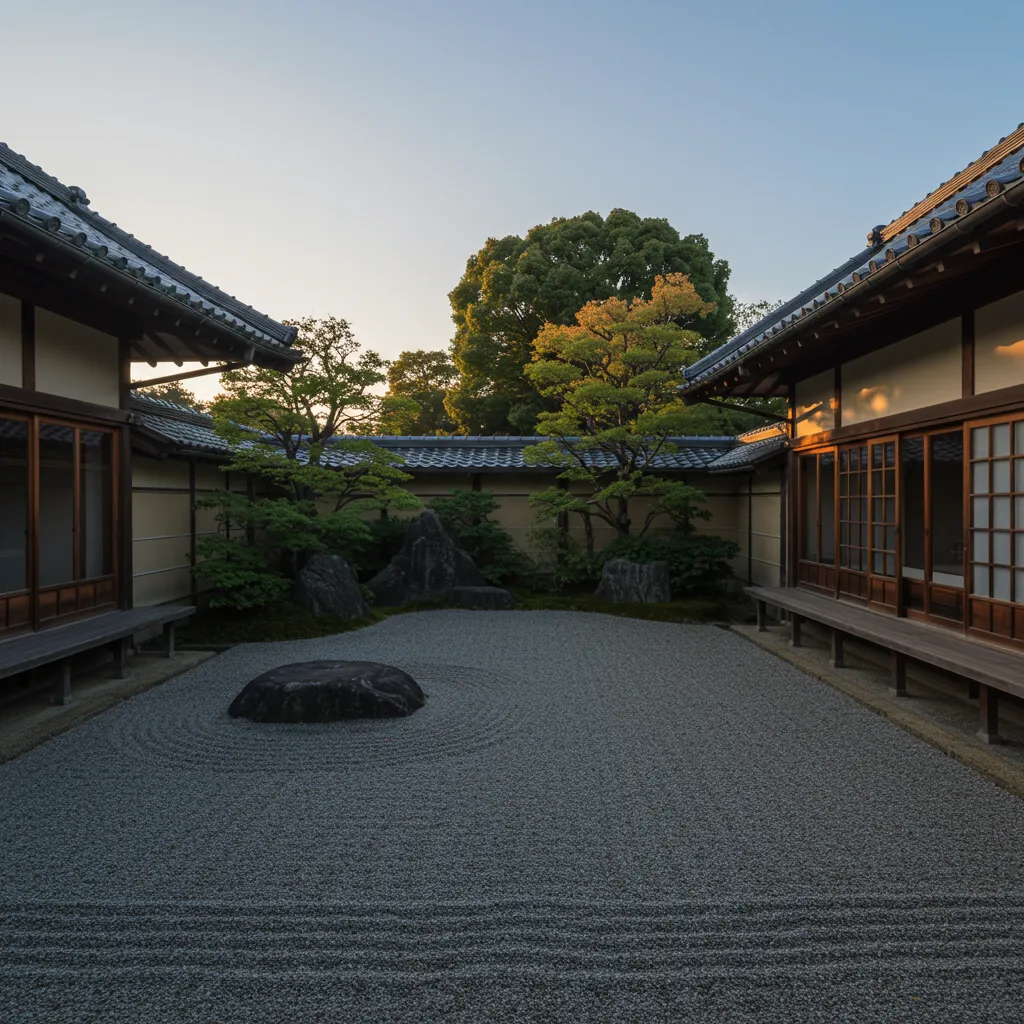
Use the classic Zen design virtues to steer every decision: austerity, simplicity, naturalness, asymmetry, subtlety, the unconventional, and stillness, keeping the composition minimal and uncluttered to support calm focus. These principles ensure each element contributes to contemplative quiet rather than visual noise.
2) Compose a Strong Stone Arrangement (Iwagumi)
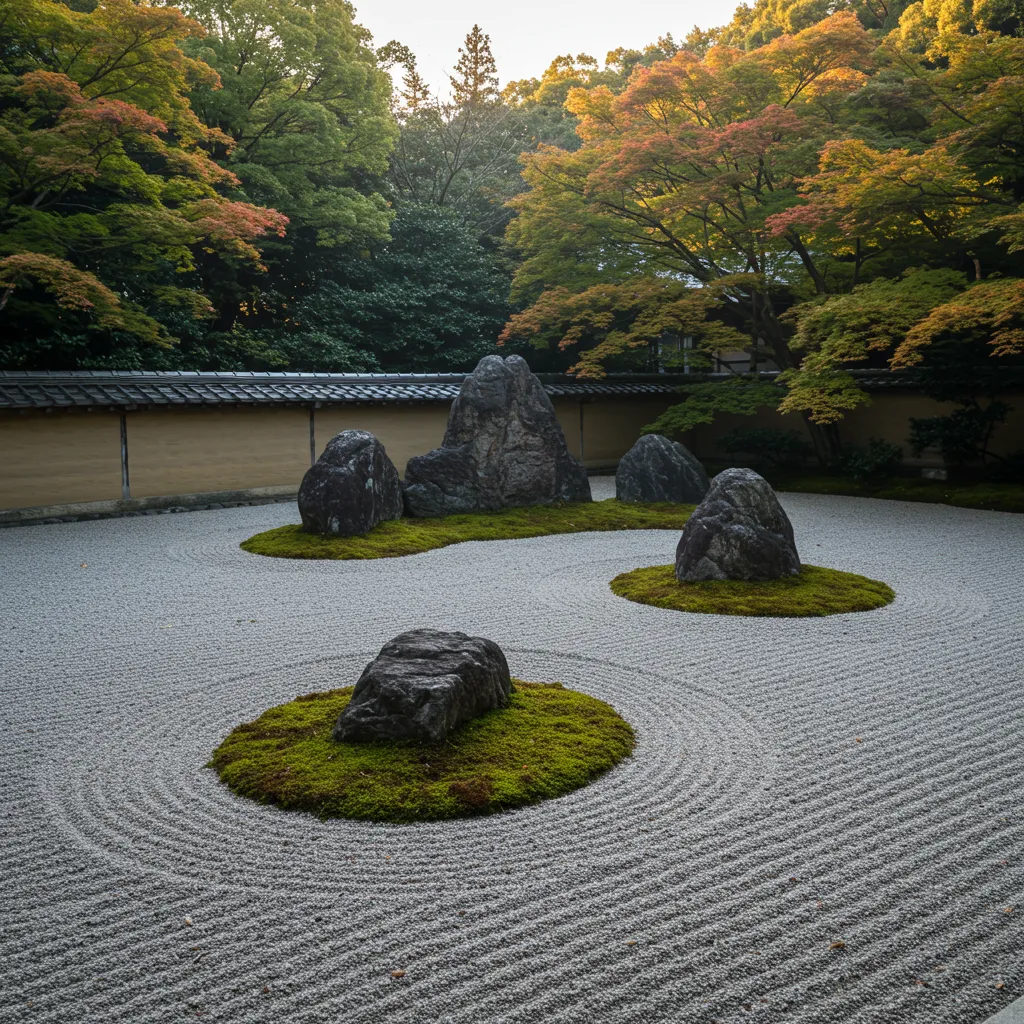
Make stones the primary “sculpture,” placing larger anchor rocks first and composing groupings that suggest mountains, islands, or headlands while maintaining asymmetry and scale harmony. Stone placement carries deep symbolism and sets the garden’s visual rhythm and spiritual gravitas.
3) Raked Gravel “Water”
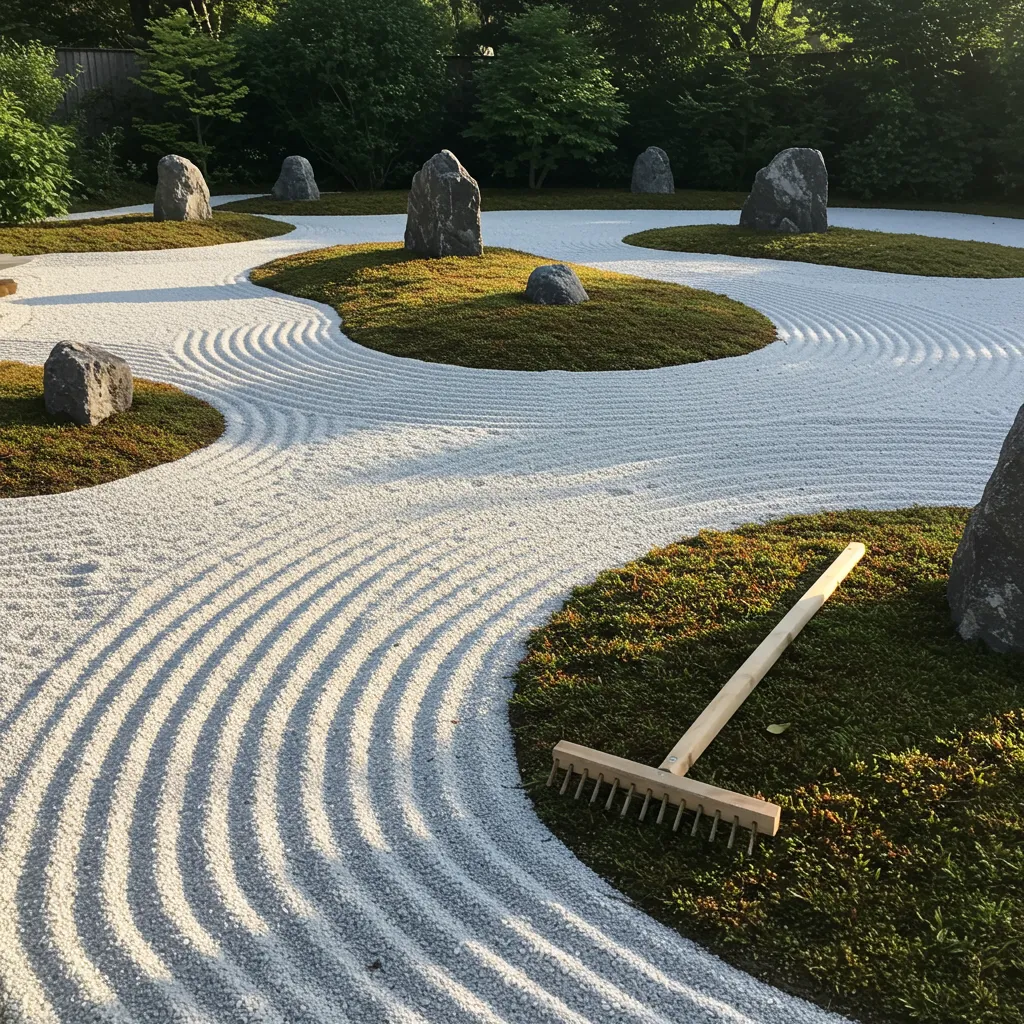
Replace literal water with a sea of fine gravel or sand raked into ripples, currents, and shorelines around stones, using lines to cue seasonal moods or serene movement. The daily ritual of raking is both maintenance and meditation, sharpening attention and presence.
4) Embrace Asymmetry and Negative Space
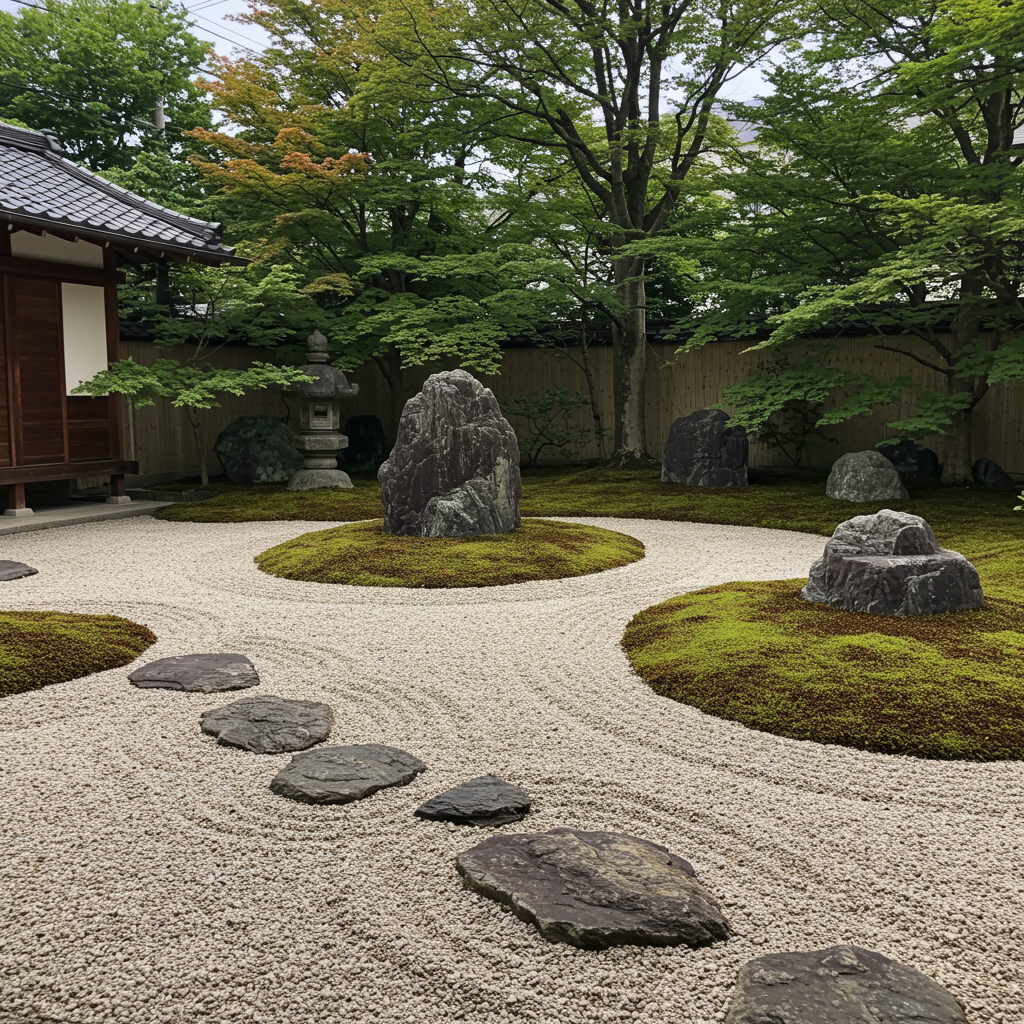
Avoid centerlines and formal symmetry; let voids of open gravel balance solid stone masses for tension and calm, mirroring natural landscapes rather than geometric gardens. This asymmetry keeps the composition alive and contemplative, rewarding slow looking.
5) Use Enclosure for Privacy and Focus
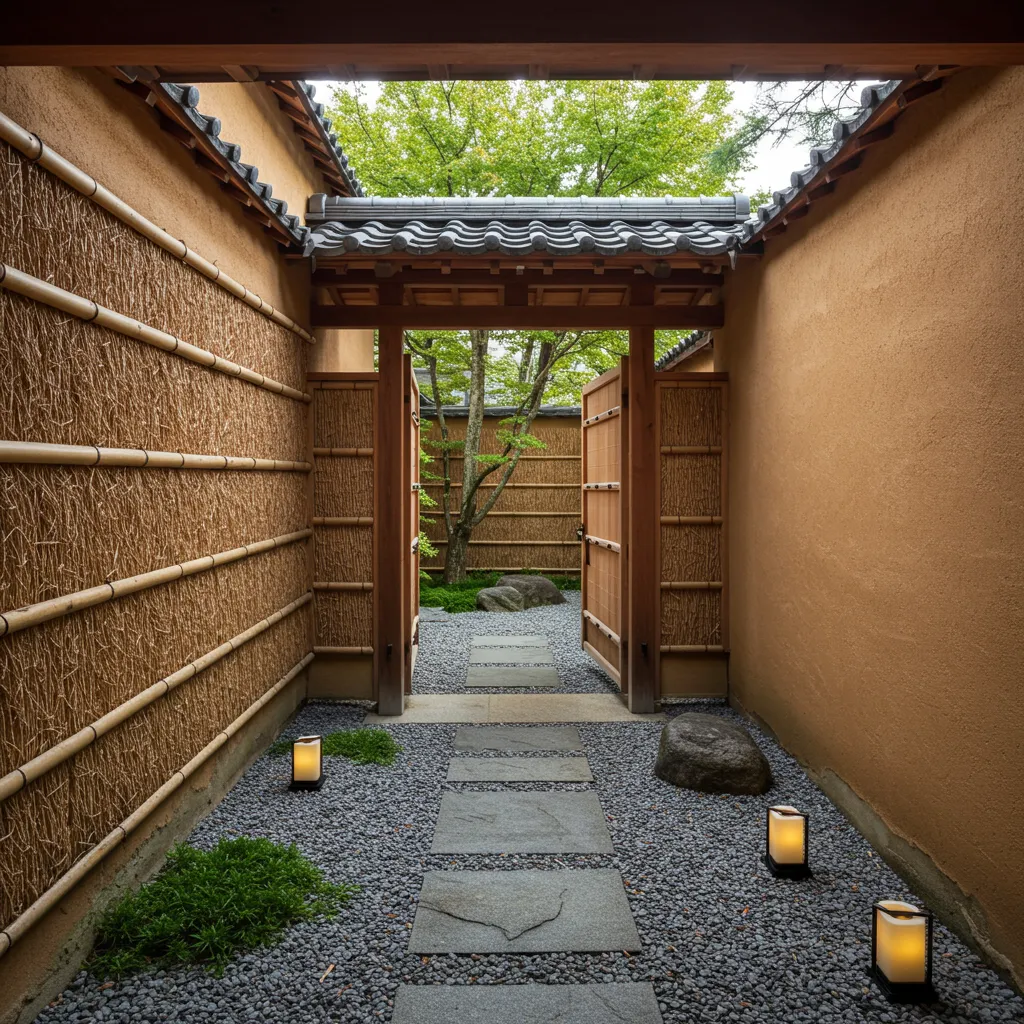
Define the garden with earthen walls, fences, hedges, or bamboo screens to create an inward-facing, quiet “room” that filters outside distraction and frames the scene. Enclosure supports the sense of refuge essential to a meditative experience.
6) Borrowed Scenery and Framed Views
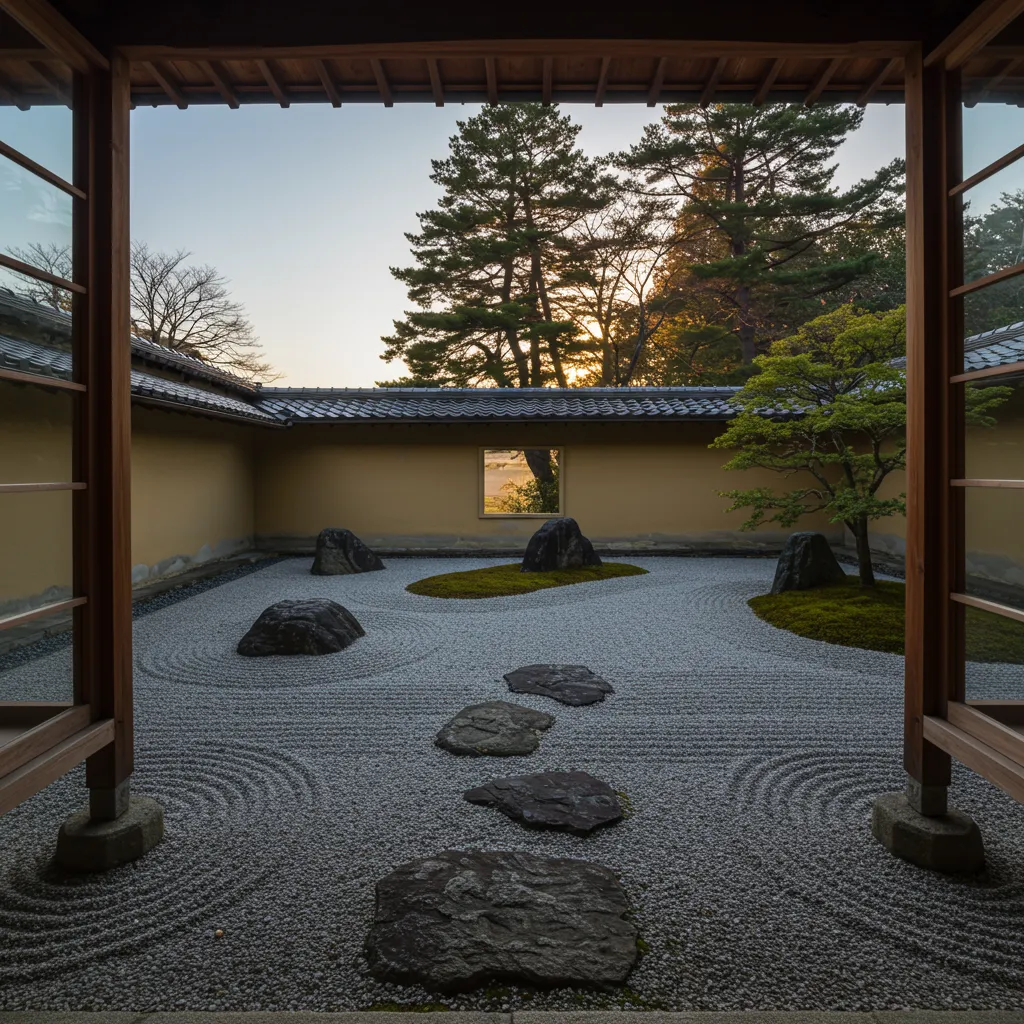
Position elements to “borrow” distant trees, rooftops, or sky as a backdrop, while editing or screening unwanted views to heighten depth and scale beyond the garden’s footprint. Strategic framing turns small spaces into seemingly expansive landscapes.
7) Moss for Age, Softness, and Stillness
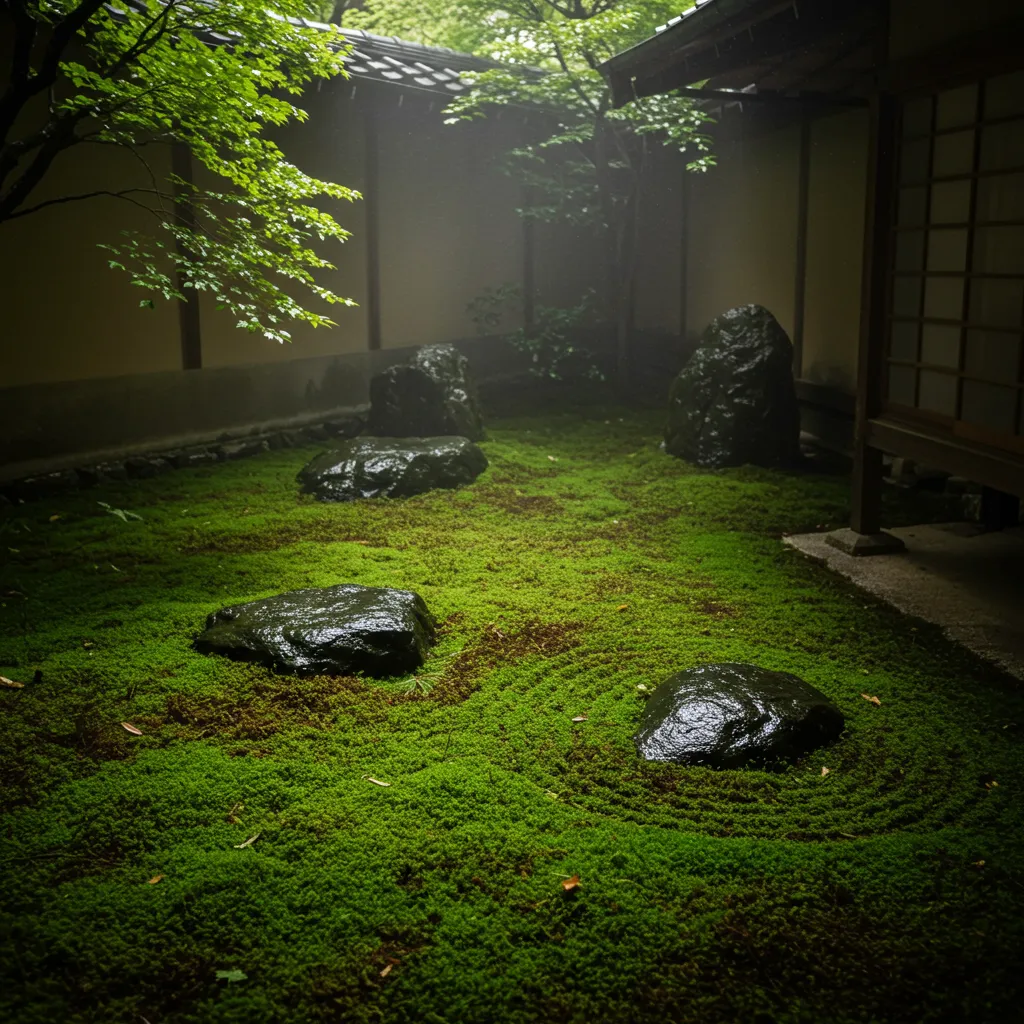
Introduce patches of moss around stone bases or in shaded pockets to convey age, patience, and quiet continuity, maintaining moist, low-light conditions for vigor. Moss softens hard lines, deepens mood, and visually “roots” stones into the earth.
8) The Tea-Garden Path (Roji)
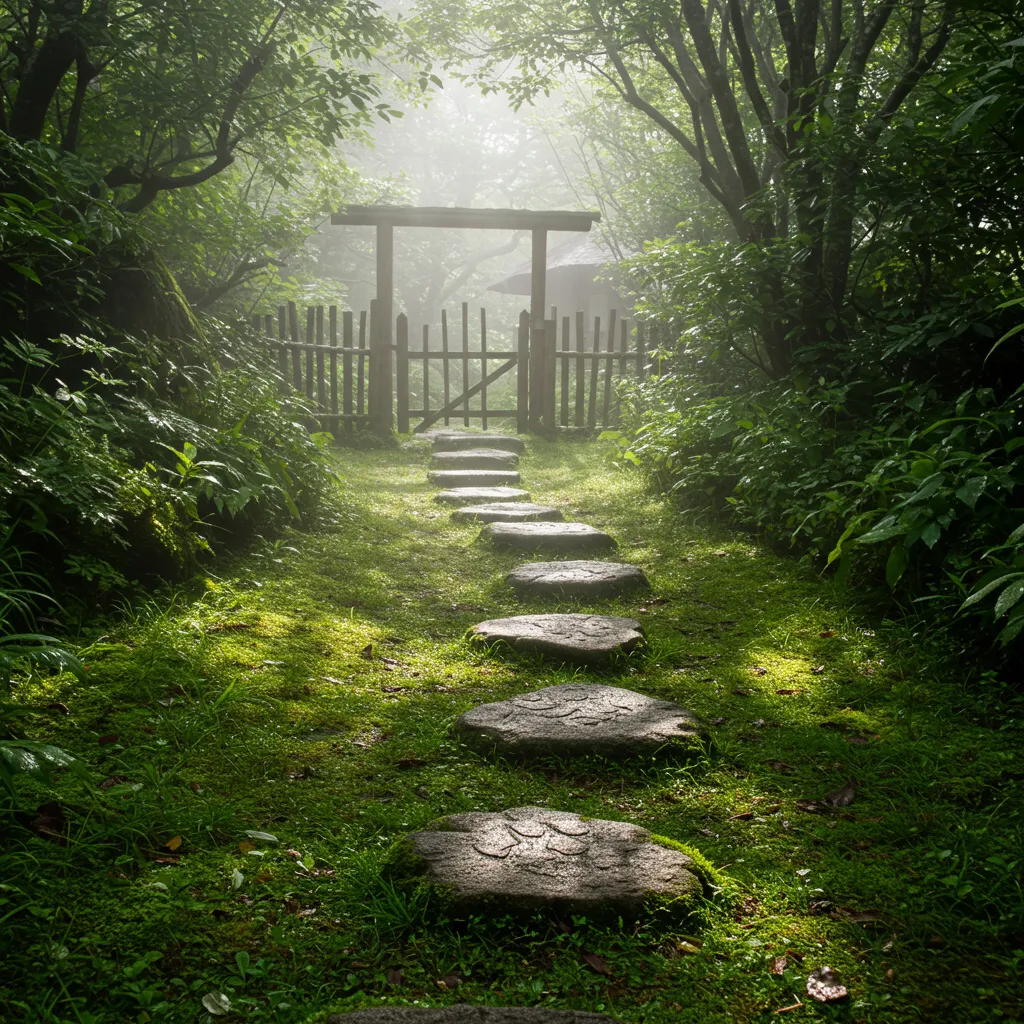
Create a transitional path of irregular stepping stones that slows pace and readies the mind, optionally dividing into outer/inner roji with a small waiting arbor and wicket gate. The path’s purpose is purification—leaving the mundane before entering a tranquil realm.
9) Tsukubai Ablution Basin
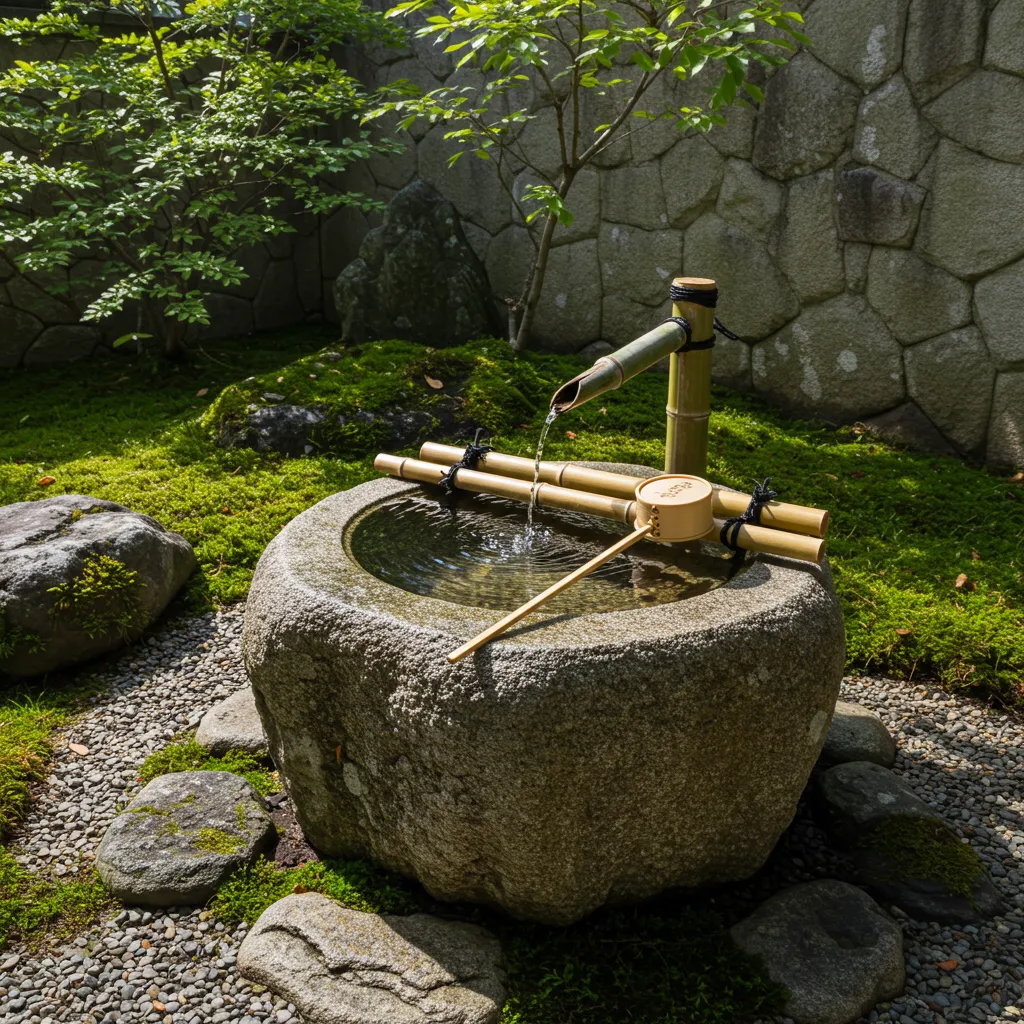
Add a low stone water basin with ladle and companion stones along the roji, symbolizing cleansing of body and mind before the “inner” garden or tea space. The tsukubai serves both symbolic and practical roles, anchoring a moment of mindful pause.
10) Lanterns and Night Subtlety
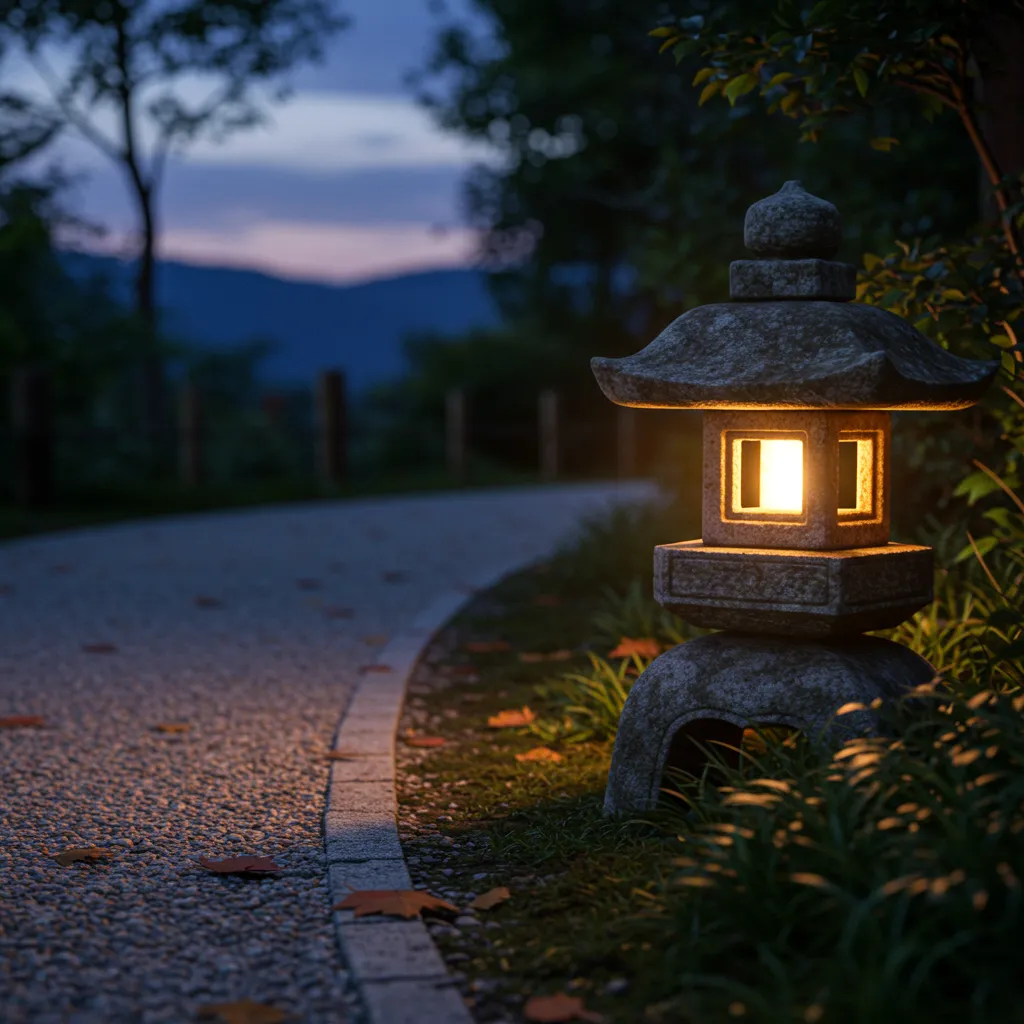
Use a stone lantern sparingly as a quiet accent, not ornament, placing it where its form deepens mood and its glow (if lit) reveals texture and pattern after dusk. In a roji context, lanterns are traditional but should never dominate the composition.
11) Minimal, Pruned Planting
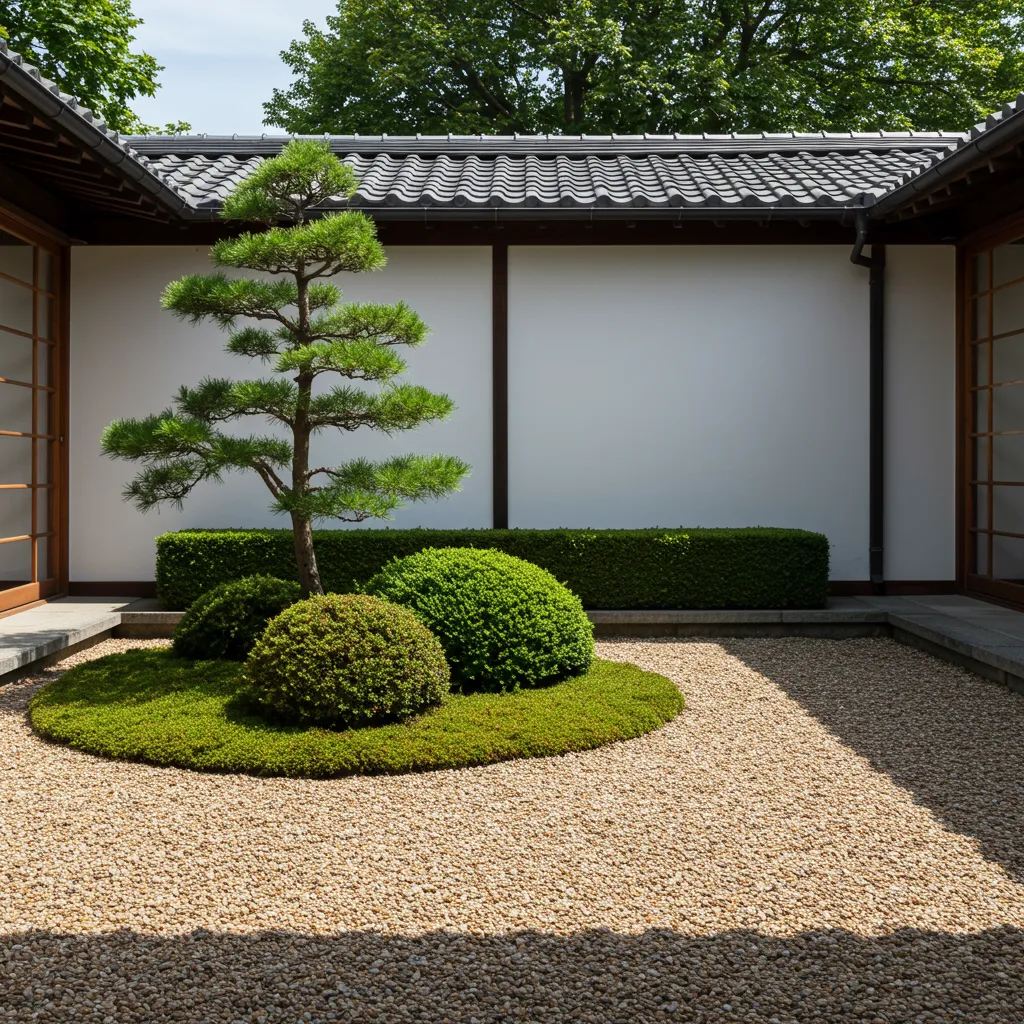
Keep plants few and purposeful—evergreens, small shrubs, and pruned trees to trace line and mass—supporting the dry landscape’s abstraction rather than competing with it. Planting should complete the composition with restraint and seasonal nuance.
12) Scale and Proportion
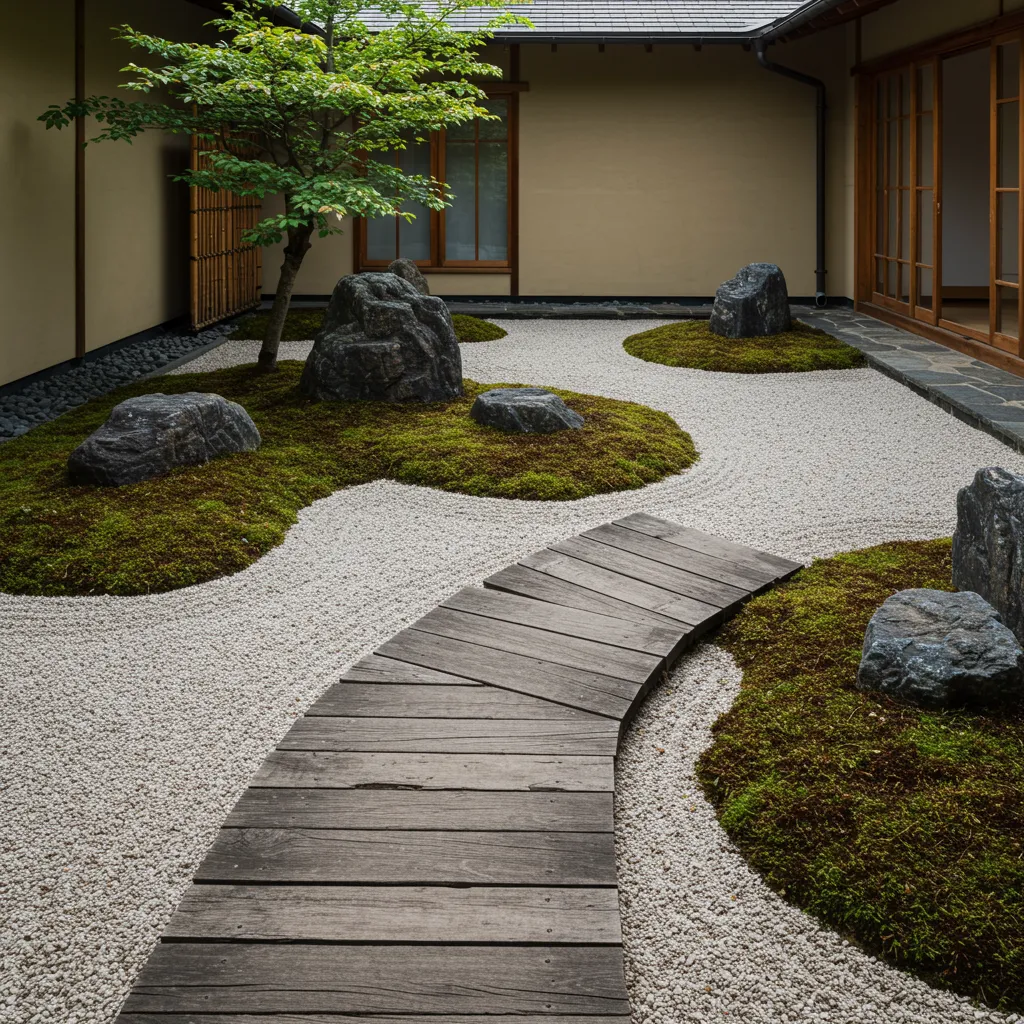
Match stone size, gravel texture, and element spacing to the site so features neither overwhelm a small courtyard nor disappear in a larger field. Right-sizing materials preserves visual calm and prevents distractions that break meditative focus.
13) Quiet Palette and Natural Materials
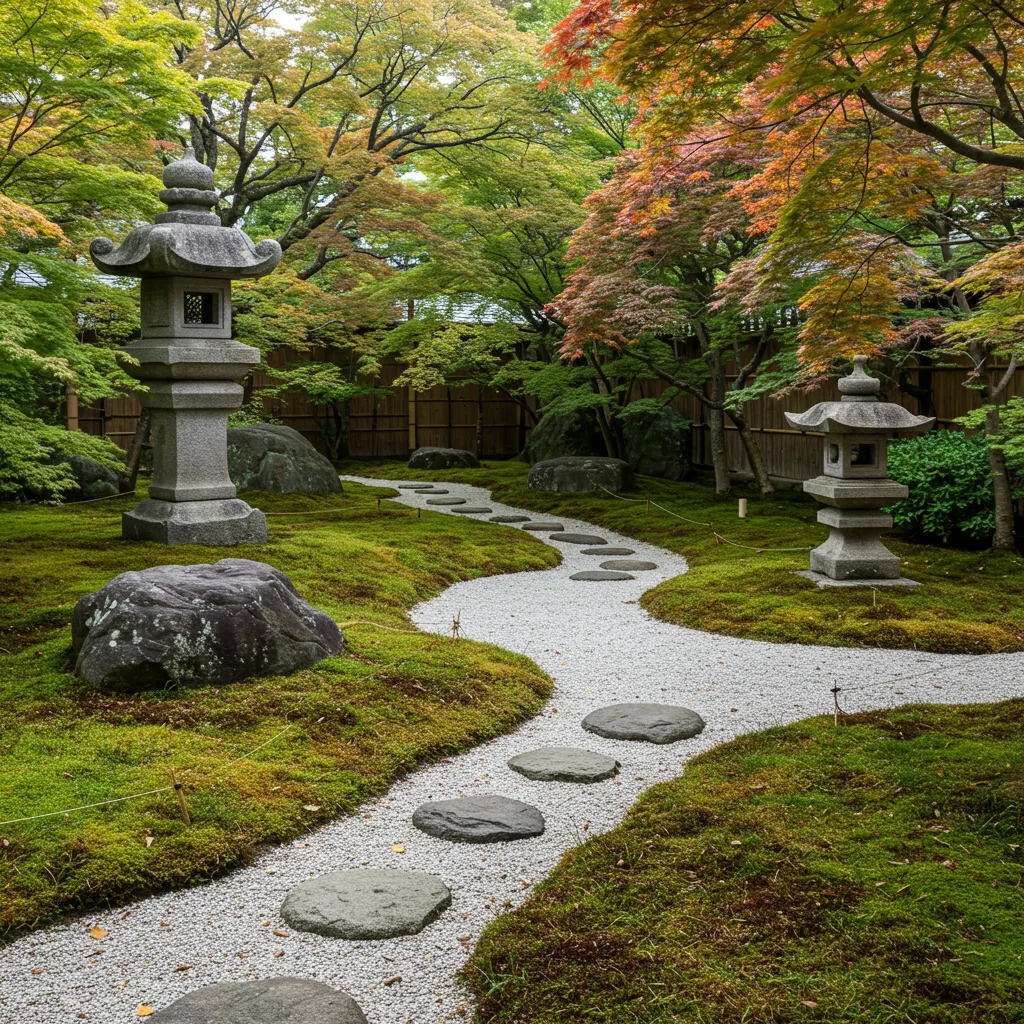
Favor muted colors—grays, soft greens, weathered wood—and avoid bright or synthetic materials so texture, shadow, and raked linework take center stage. Natural finishes help the garden feel timeless and grounded rather than decorative.
14) Seasonal Light and Shadow
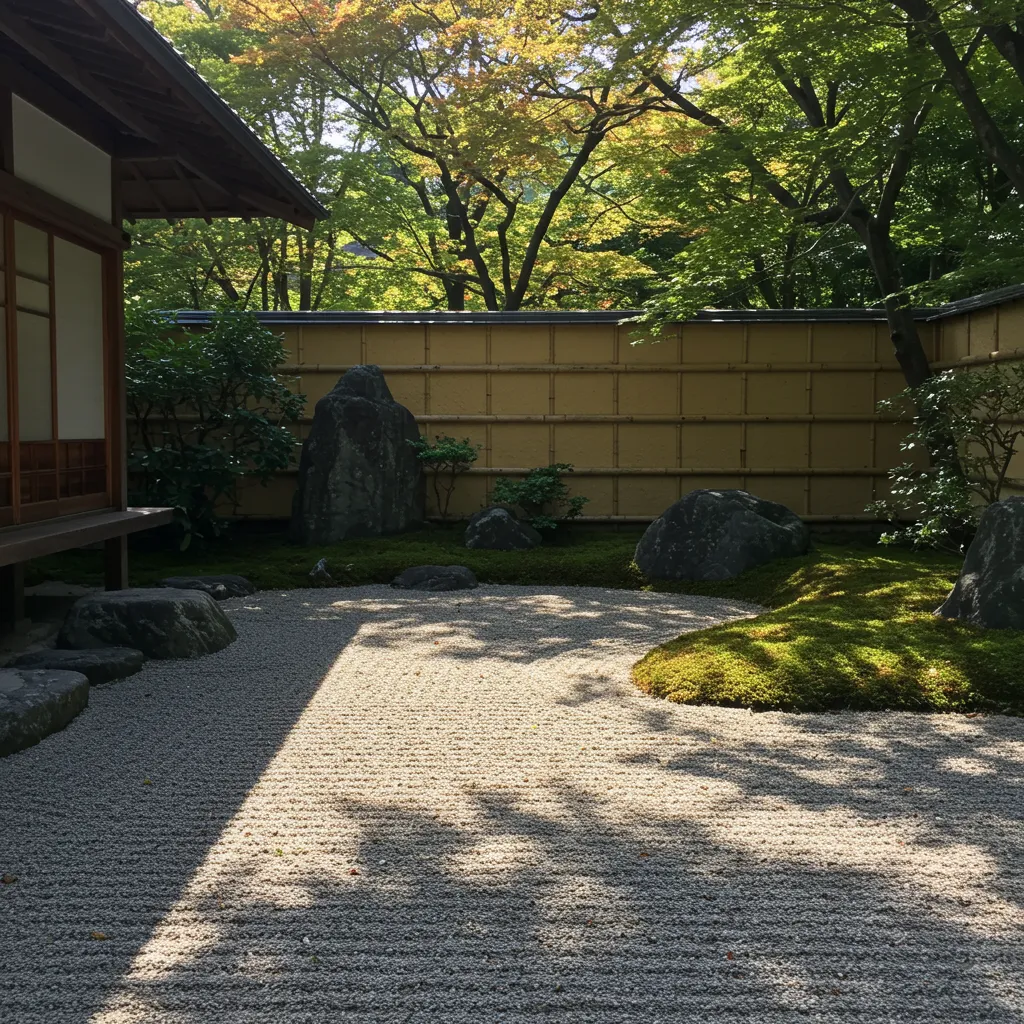
Site compositions to catch low-angle light that reveals raked textures at dawn and dusk, and use plant silhouettes or shoji-like screens to choreograph shadow play. Light animates gravel patterns and stone faces, renewing the scene without adding objects.
15) Ritual Maintenance as Practice

Treat sweeping, raking, leaf-picking, and moss misting as mindful acts that keep the garden’s “mind” clear, reinforcing the space’s purpose through daily attention. Care is not an afterthought; it is part of the garden’s living design.
Key Elements Checklist
- Stones first: anchor groups with asymmetry and meaning.
- Fine gravel or sand: durable, easy to rake into flowing patterns.
- Enclosure: walls, fences, or hedges to hold silence and focus.
- Moss accents: shade, moisture, and patience for a felt sense of age.
- Roji details: stepping stones, tsukubai, lantern, wicket gate (sparingly used).
Authentic Foundations at a Glance
- Karesansui is the dry landscape tradition—minimal elements, no water, symbolic representation of nature.
- The garden’s power lies in restraint, symbolism, and difficult simplicity that invites contemplation.
- Every choice should reinforce the seven guiding principles to keep the space coherent and serene.
By grounding design in these practices, a Zen garden—whether a courtyard corner or a full roji approach—becomes a place of stillness where stone, line, and light do the quiet work of focus and renewal.