
Pick a sturdy upright variety like ‘Limelight’ or ‘Annabelle’, make sure it fits your USDA zone, and plant it in a sunny‑to‑dappled spot with 6–8 hours of light. Test the soil and adjust the pH to 5.5–6.0, then mix garden soil, compost, pine bark, sand, and slow‑release fertilizer before digging a hole twice as wide as the root ball.
Mulch two inches deep, water deeply with a soaker hose, and prune a central leader each season to keep the tree shape tidy. Add warm LED lights for dramatic evenings, and you’ll soon be celebrating a burst of pastel blooms—keep going to discover more tricks.
Choose the Right Hydrangea Variety for Tree‑Style Growth
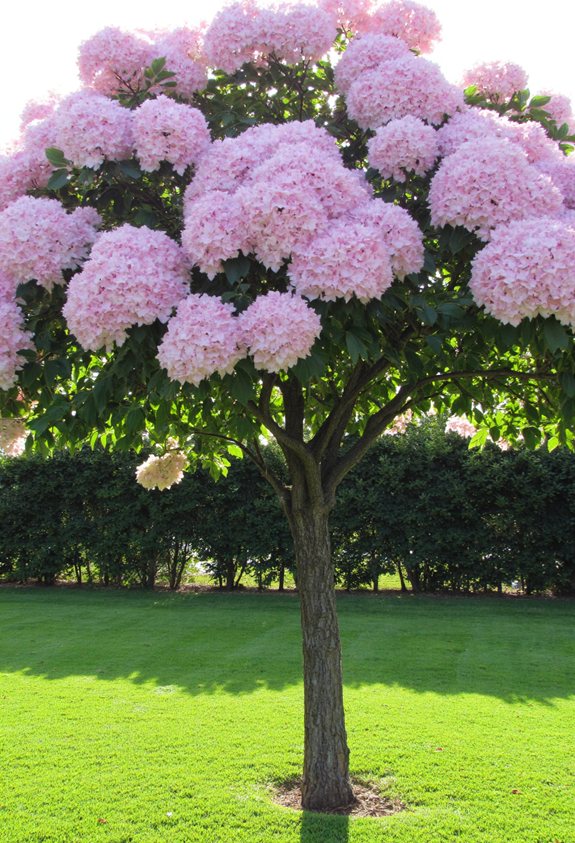
When you pick a hydrangea for a tree‑style garden, think of it like choosing a teammate for a school project—some varieties just thrive when you give them space to grow tall and spread out.
Choose a sturdy, upright type like ‘Limelight’ or ‘Annabelle.’ These varieties develop strong trunks, handle pruning well, and keep their big, fluffy blooms visible from every angle. Additionally, selecting hydrangeas that require warm hues can enhance the overall aesthetic of your garden space.
Check Your Climate Zone Before Planting
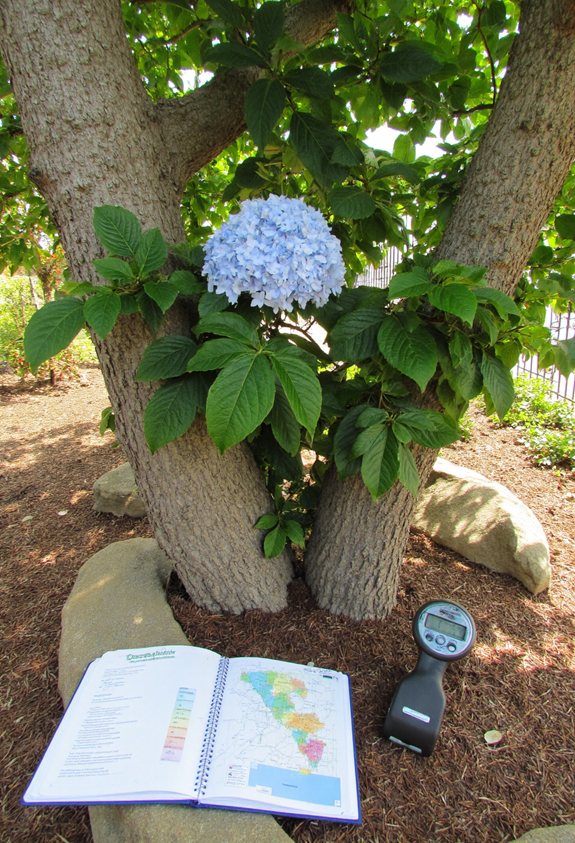
You’ve picked a bold variety like ‘Limelight’ or ‘Annabelle,’ but before you start staking it out, you need to see if your local climate will give it a fair chance.
Look up your USDA zone, compare it to the plant’s hardiness range, and note winter lows.
If you’re in a marginal zone, consider micro‑climates or a protective mulch blanket to boost survival. Additionally, ensuring seasonal or bulky storage needs in your garden can help with the overall health of your plants by providing organized space for gardening tools and supplies.
Pick the Ideal Garden Spot for Sun and Shade
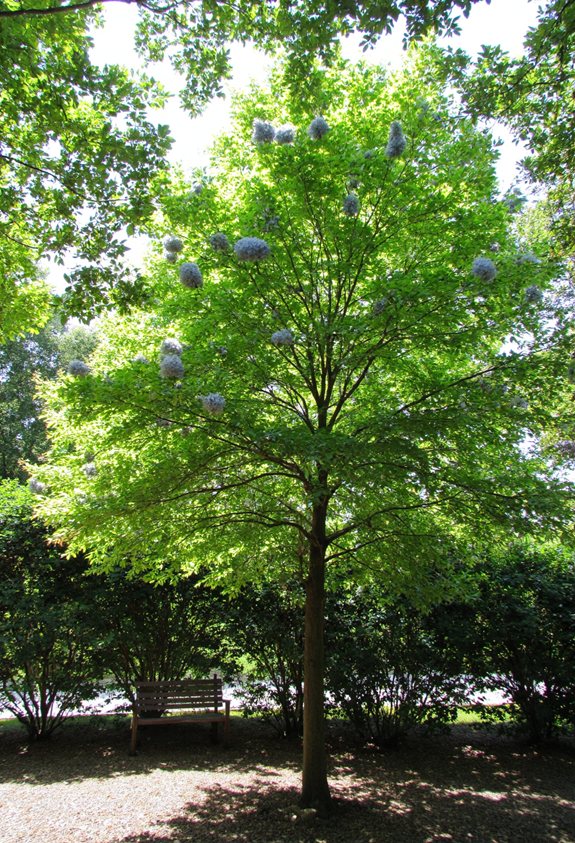
Where does your hydrangea love to lounge—basking in bright morning light or chilling in cool afternoon shade?
You’ll want a spot that gets gentle sun for a few hours, then dappled shade in the heat of day.
Aim for a north‑ or east‑facing wall, where morning rays kiss the leaves but harsh afternoon glare stays away, keeping roots cool and happy. It’s also important to monitor garden space throughout the day to ensure your hydrangea receives the optimal light conditions it thrives in.
Test and Amend Soil pH for Optimal Bloom Color
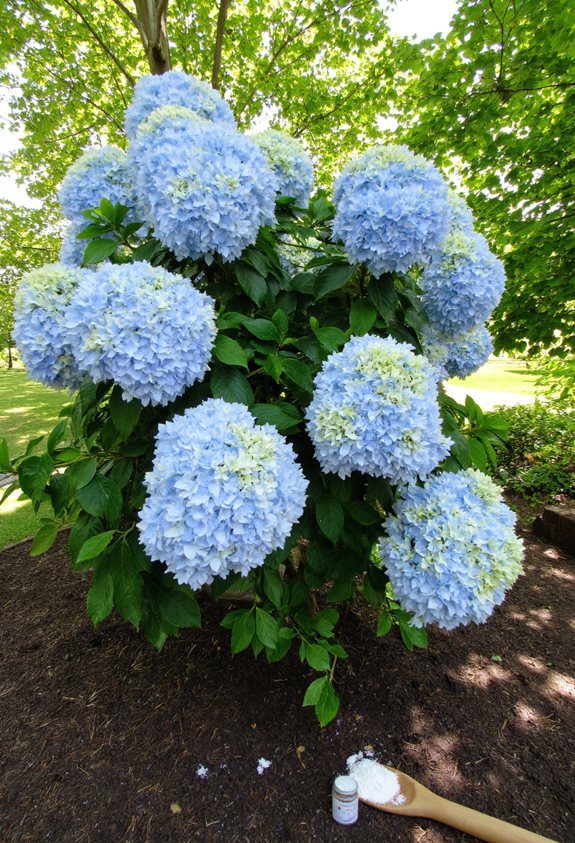
If you’ve ever wondered why some hydrangeas turn pink while others stay blue, the secret lies in the soil’s pH.
Grab a simple test kit, dip it in a sample, and read the color change.
If it’s acidic (below 6), add garden lime; if it’s alkaline (above 7), mix in elemental sulfur.
Adjust gradually, retest, and watch your blooms shift into perfect hue. Incorporating lush green plants will enhance the overall beauty of your garden while promoting healthy hydrangea growth.
Prepare a Nutrient‑Rich Planting Mix
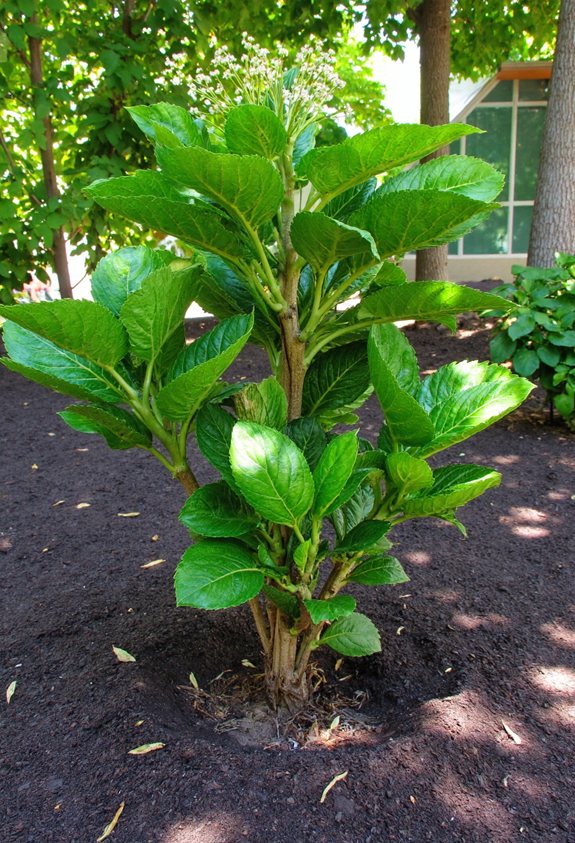
When you blend the right ingredients, the planting mix becomes a cozy, nutrient‑packed bed that coax your hydrangea’s roots to thrive.
Mix two parts garden soil, one part compost, and a handful of pine bark for drainage.
Stir in slow‑release fertilizer and a pinch of sand for aeration.
Moisture‑proof the blend, then pat it down around the plant, feeling the earthy scent promise healthy growth. Additionally, incorporating textured textiles into your garden area can enhance the overall aesthetic appeal while providing a comfortable space to enjoy your hydrangea tree.
Dig the Correct‑Size Planting Hole
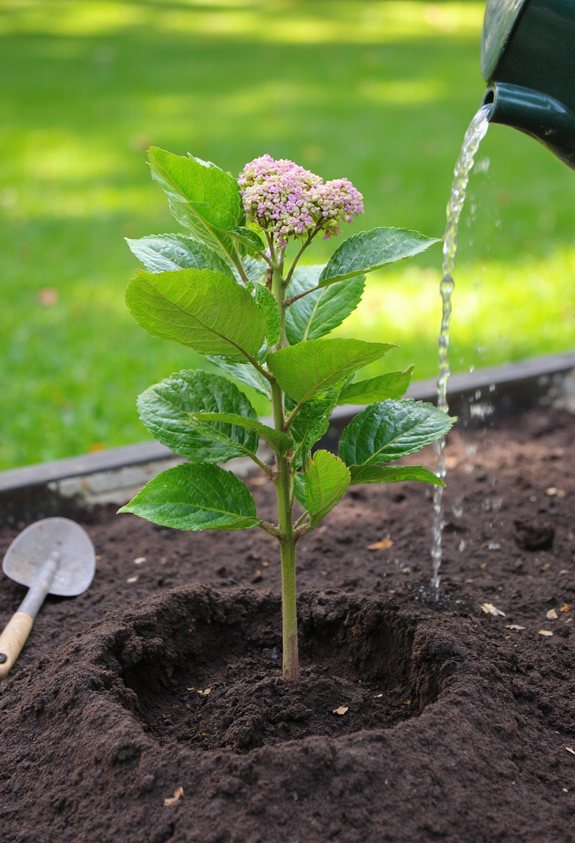
Even before you start digging, picture the hole as a comfy bed for your hydrangea’s roots—big enough to let them stretch but not so huge they feel lost.
Make the hole twice as wide as the root ball and just as deep.
Loosen the soil around the edges, then gently place the plant, ensuring it sits level before backfilling. Additionally, consider using seasonal flowers in your garden design to create a visually stunning backdrop for your hydrangea tree.
Position the Sapling for Balanced Trunk Development
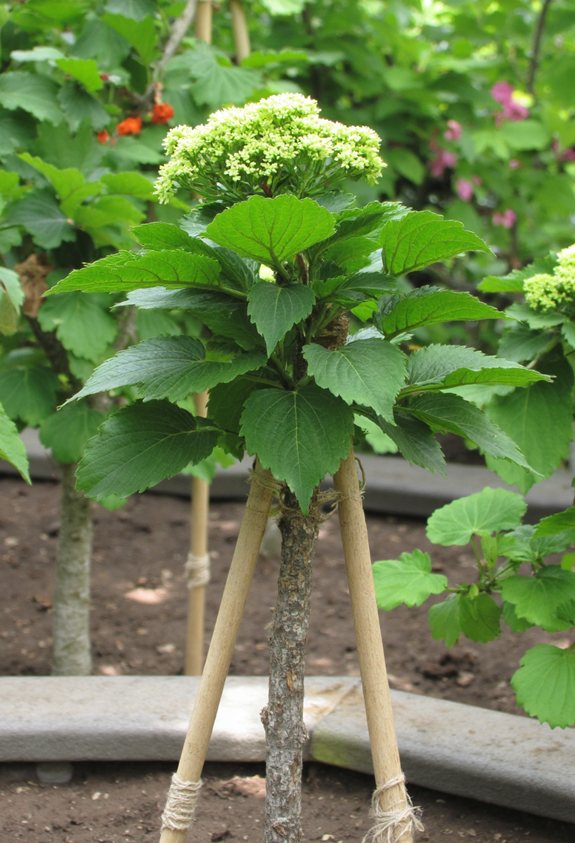
Because a straight, sturdy trunk starts with the right pose, you’ll want to set the sapling so its main stem leans just a touch toward the center of the garden bed. Plant it slightly off‑center, then gently push the base toward the middle, ensuring the roots spread evenly. This tiny tilt encourages balanced growth, preventing a wobbly trunk later on. Additionally, ensuring the sapling receives 6-8 hours of sunlight will foster robust growth and healthy development.
Water Properly After Planting to Set Roots
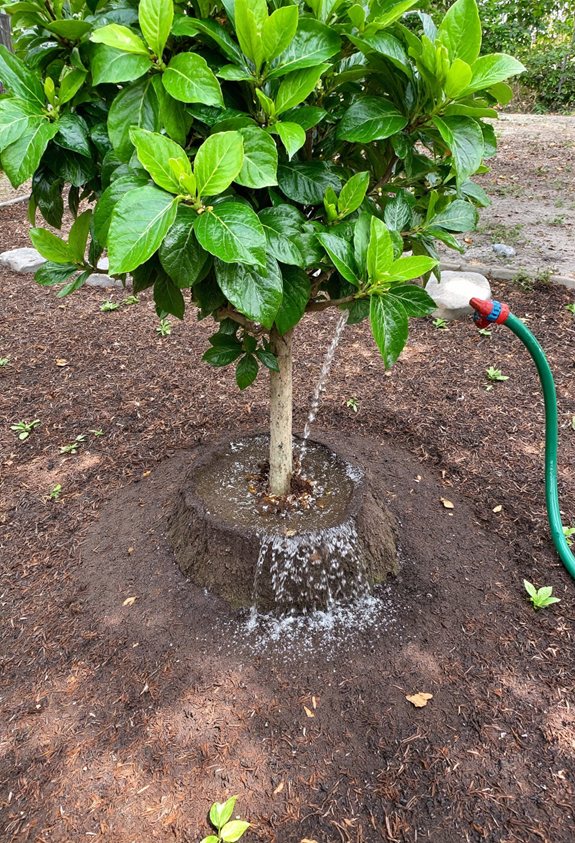
If you give your new hydrangea a good soak right after planting, the roots will settle in faster and start drinking up nutrients like a thirsty marathon runner. Water deeply, then let the soil dry slightly before the next soak.
- Use a soaker hose for even moisture.
- Water for 15‑20 minutes each session.
- Check soil moisture with your finger before re‑watering. Additionally, incorporating evergreen planters around the hydrangea can provide a lasting aesthetic appeal during the winter months.
Mulch to Conserve Moisture and Suppress Weeds
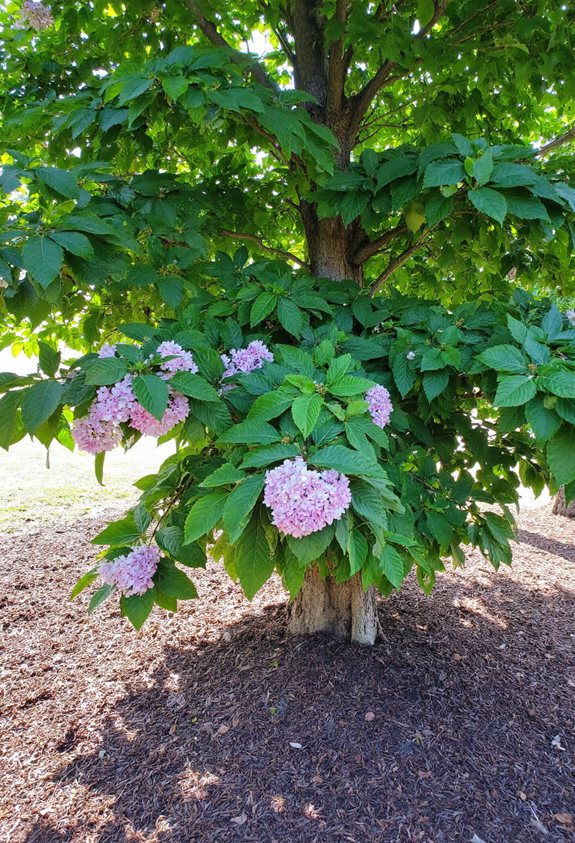
When you spread a layer of mulch around your hydrangea, you’re giving the soil a cozy blanket that locks in moisture and tells weeds to stay out of the party.
Choose bark chips, pine needles, or shredded leaves, then spread two to three inches thick.
Keep it a few inches from the trunk to prevent rot, and enjoy a tidy, damp garden that looks great all season. Additionally, using natural elements like mulch not only enhances your garden’s aesthetics but also supports healthy plant growth.
Establish a Regular Watering Schedule for Young Trees
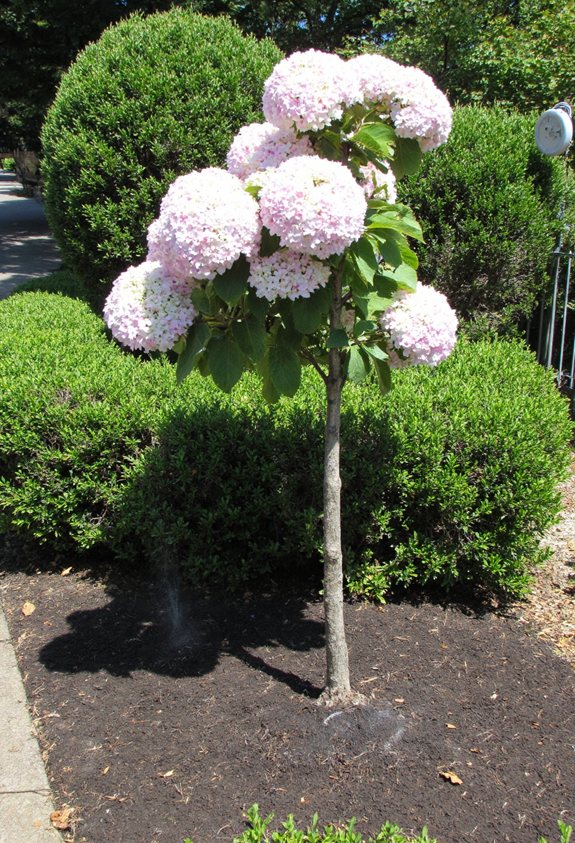
Ever wondered why a young hydrangea tree seems to thirst more than a grown‑up oak? You’ve got to water it often, but not too much. Follow a simple rhythm and watch it thrive.
- Water early morning, 2–3 gal per week.
- Check soil moisture; soggy means pause.
- Adjust for rain, temperature, and wind. To create a vibrant garden, consider incorporating colorful fall decor that complements your hydrangea’s natural beauty.
Apply Starter Fertilizer for Early Growth Boost
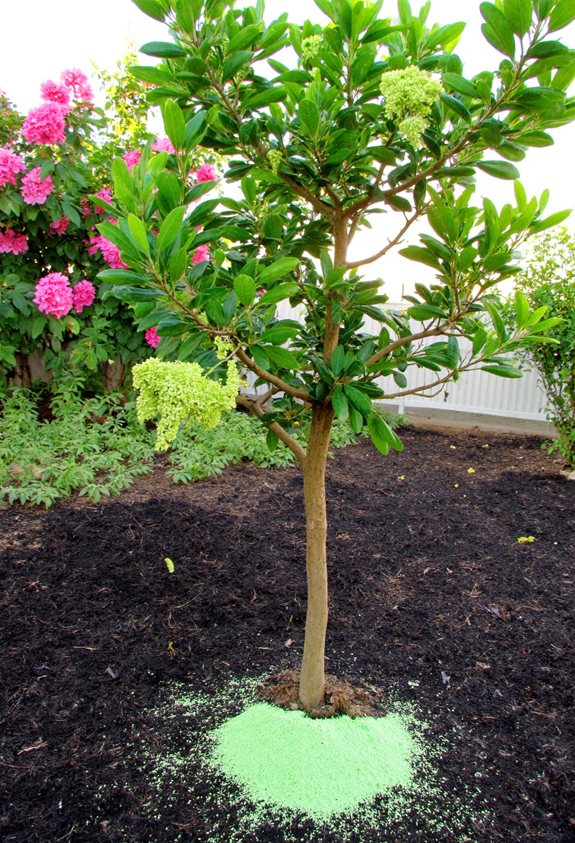
Even though your hydrangea tree is still a sapling, it’s ready for a boost that can kick‑start its growth, and a starter fertilizer does just that.
Sprinkle a balanced, slow‑release granule around the root zone, then water gently. The nutrients will seep in, feeding new shoots and leaf buds.
Think of it as giving your tree a nutritious breakfast, so it can grow tall and strong quickly.
Prune for Shape During the First Year
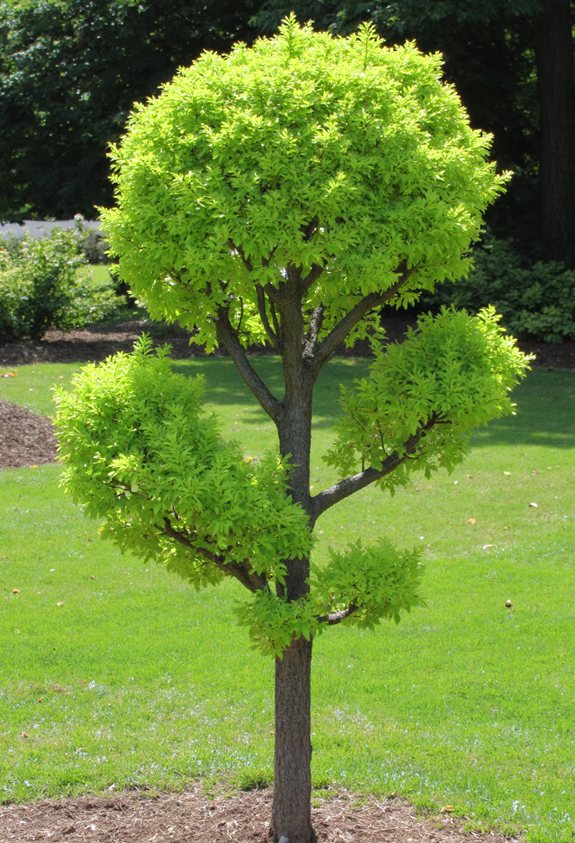
After giving your hydrangea a nutrient boost, it’s time to shape it up.
In the first year, you’ll gently trim to encourage a tidy silhouette and stronger branches.
Follow these steps:
- Cut back the tallest stems to a healthy bud.
- Remove crossing branches that create an X.
- Trim about a third of new growth to keep the tree balanced.
Identify and Remove Dead or Damaged Branches
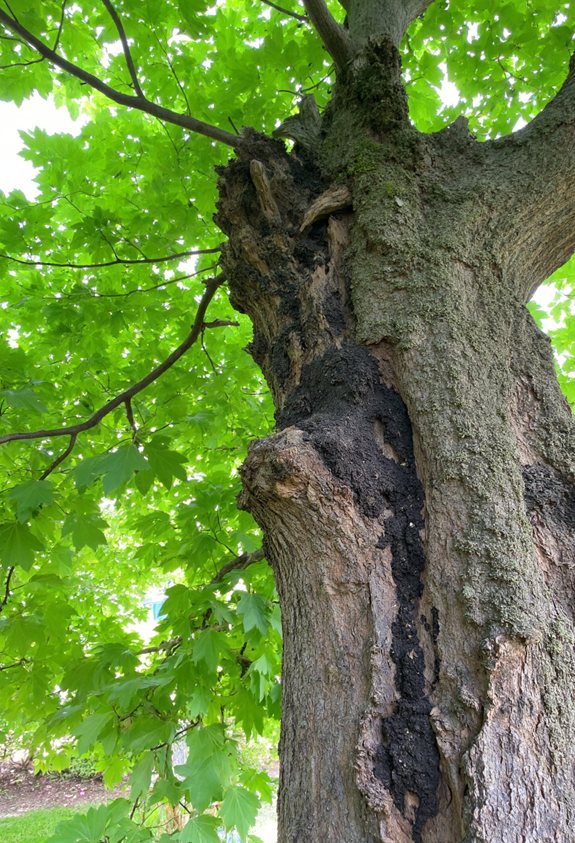
When you spot a branch that’s brown, brittle, or hanging limp, it’s a clear sign it’s dead or damaged and needs to go.
Grab clean, sharp pruners and cut back to healthy wood, making a smooth angle just above a bud or leaf scar.
Discard the junk, then step back and admire the refreshed silhouette, feeling proud of your tree‑care skills.
Use Selective Cutting to Encourage a Strong Central Leader
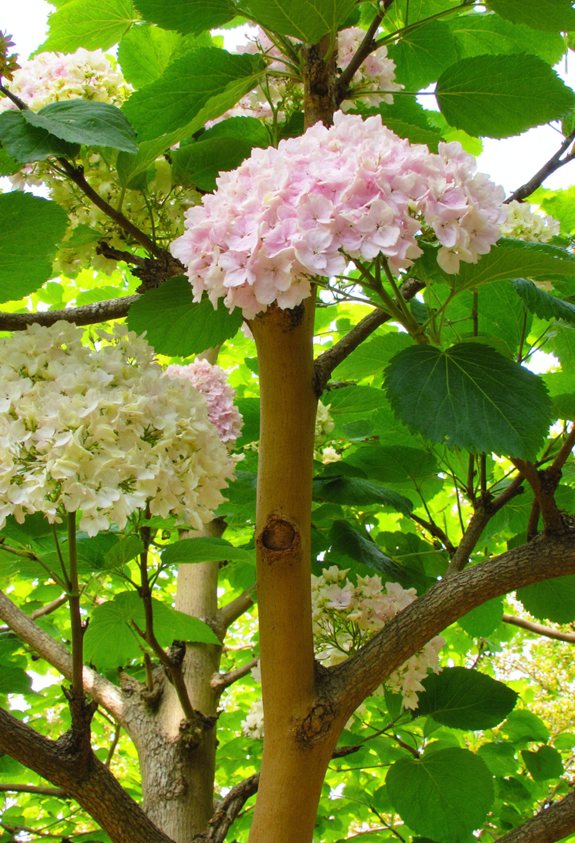
Now that you’ve cleared away the dead wood, it’s time to shape the tree’s backbone.
Pick the strongest upright stem and make it the leader.
Trim competing shoots just enough to let the leader dominate.
- Cut ¼‑inch back from the bud.
- Remove any side branches that cross the leader.
- Keep the cut smooth to avoid ragged edges.
Train Branches With Soft Ties for Desired Silhouette
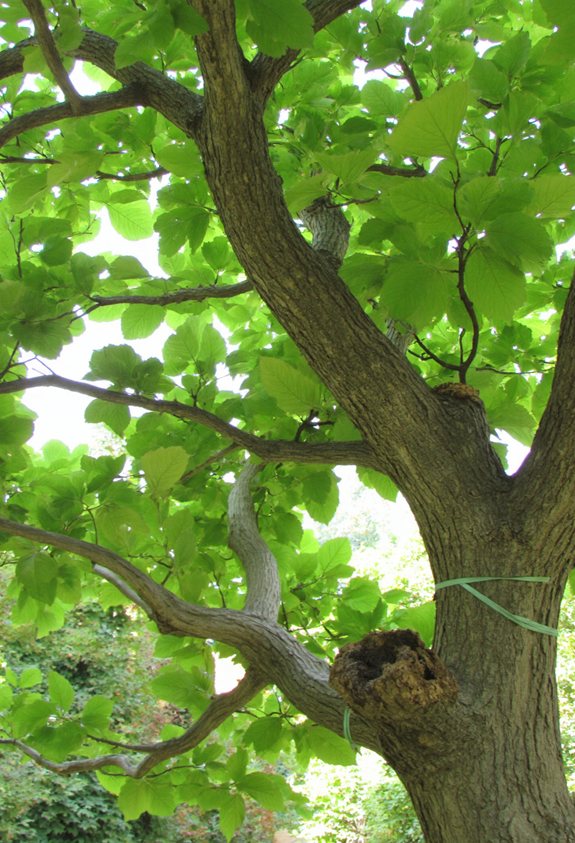
Ever wondered how a hydrangea can become a living sculpture?
Grab soft garden ties and gently loop them around each branch, then guide the wood toward the shape you imagine—like a graceful arch or a tidy cone.
Adjust the ties as the plant grows, keeping tension light so the bark isn’t hurt.
Celebrate each small bend, and watch your tree’s silhouette evolve into a personal masterpiece.
Summer Pruning Tips to Control Height and Spread
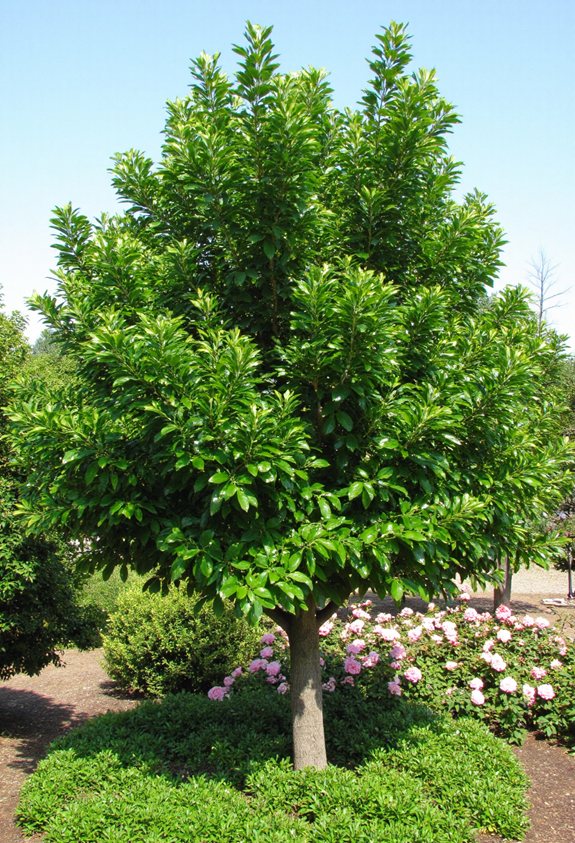
After shaping your hydrangea’s silhouette with soft ties, the next step is to keep its size in check during the hot months. Summer pruning prevents leggy growth and keeps the tree tidy.
- Trim back new shoots by one‑third, focusing on the tallest stems.
- Pinch off side buds to limit spread.
- Remove any dead or weak branches for airflow.
Winter Pruning Strategies for a Clean, Compact Form
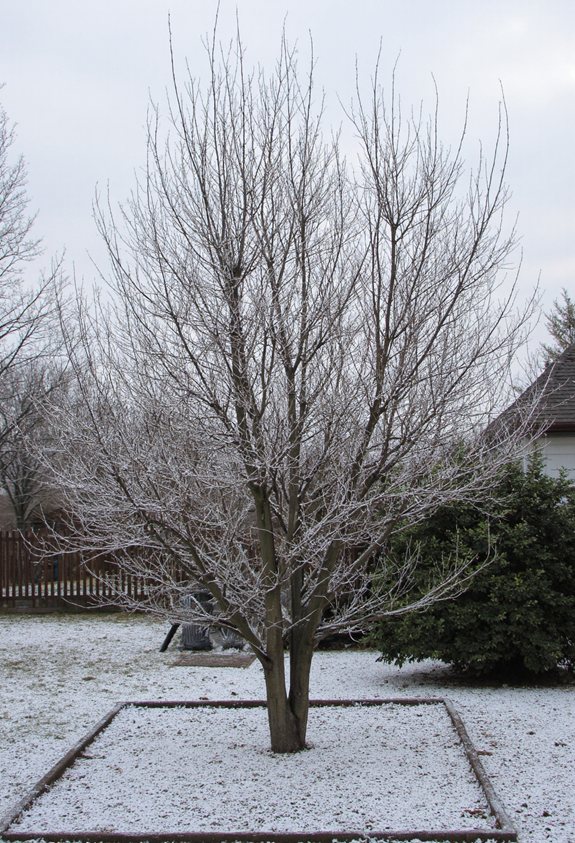
When the frost settles and the garden goes quiet, it’s the perfect time to give your hydrangea a winter makeover.
Trim back any dead or crossing branches, cutting them to a clean angle.
Shorten long stems to about a foot, keeping the shape tidy.
Remove weak shoots, then step back and admire the compact, sculpted silhouette you’ve created.
Feed With Balanced Fertilizer to Promote Lush Foliage
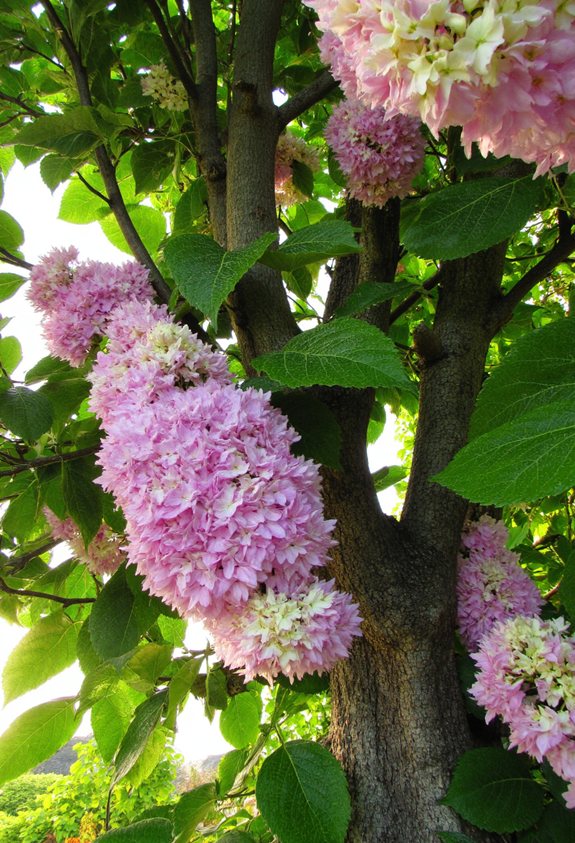
Now that your hydrangea looks tidy from winter pruning, it’s time to feed it so the leaves can burst with life.
A balanced fertilizer supplies nitrogen, phosphorus, and potassium in the right ratios, keeping foliage vibrant.
- Choose a 10‑10‑10 formula.
- Apply in early spring, then every six weeks.
- Water thoroughly after each feeding.
Boost Bloom Production With Phosphorus‑Rich Feed
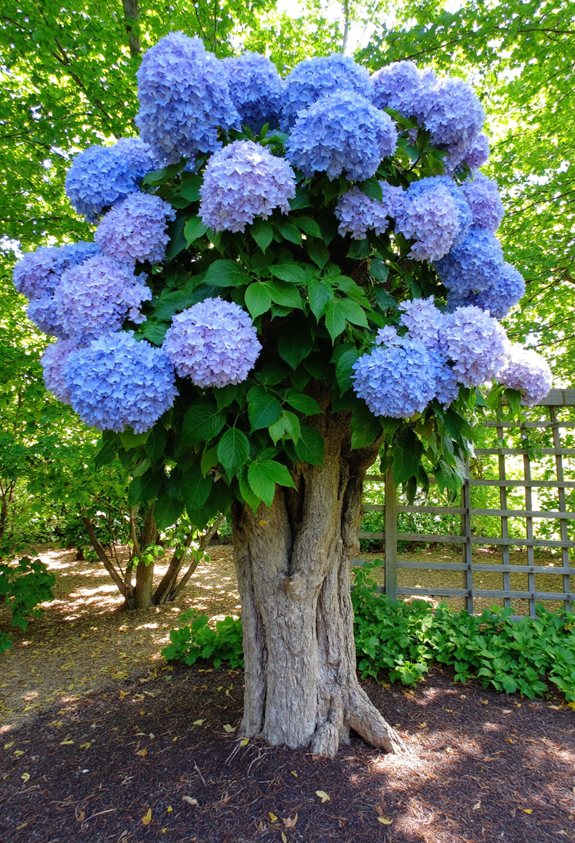
Ever wondered why some hydrangeas burst into massive, colorful blooms while others stay modest?
Phosphorus is the secret spark that fuels flower buds.
Sprinkle a phosphorus‑rich fertilizer in early spring, then again after the first flush.
Water it in well, and watch buds swell like balloons.
Too much? Stick to label directions—your hydrangea will thank you with spectacular, show‑stopping blossoms.
Adjust Soil pH to Change Flower Color (Blue vs. Pink)
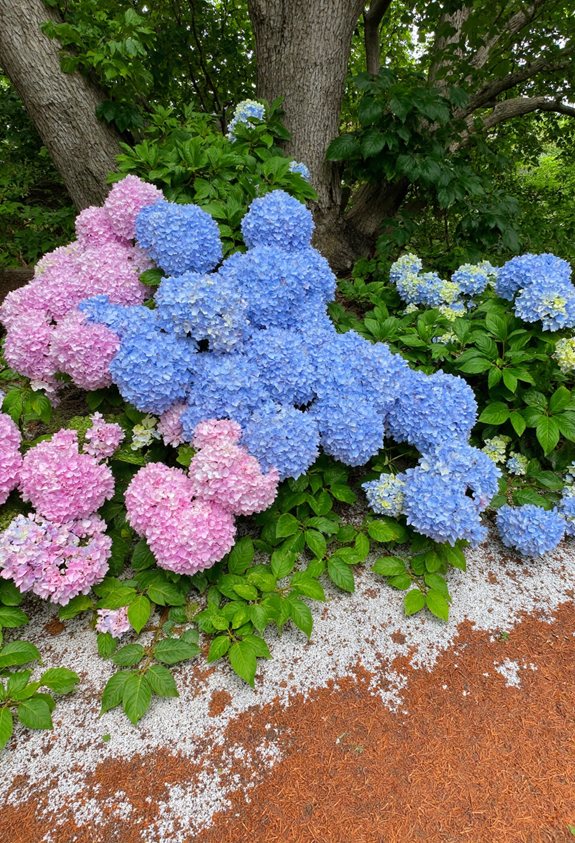
How can you turn a pink hydrangea into a dreamy blue one just by tweaking the soil? First, test your pH; hydrangeas love 5.5–6.0 for blue. Add elemental sulfur to lower pH or lime to raise it for pink blooms. Keep the soil moist and watch the magic happen.
- Test pH
- Add sulfur or lime
- Water consistently
Manage Pests Like Aphids and Spider Mites Naturally
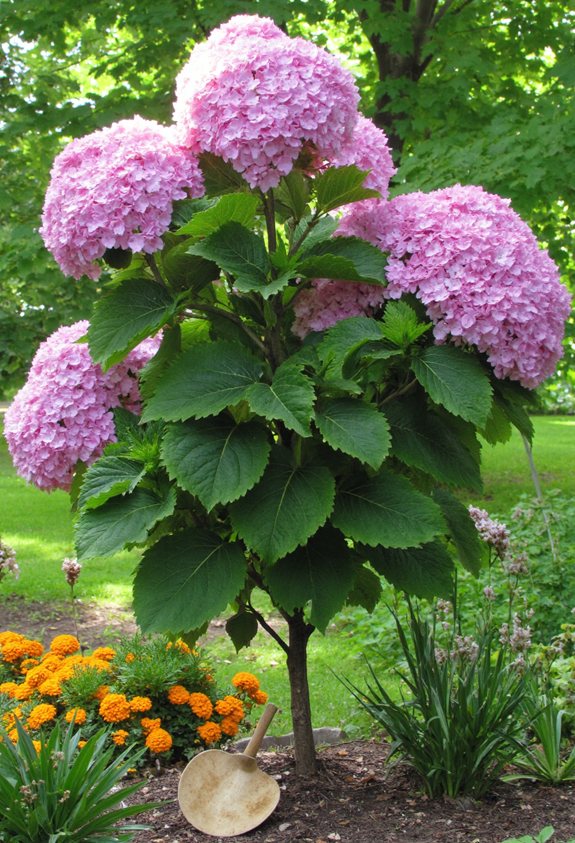
If you spot tiny, soft‑bodied aphids or speckled spider mites crawling over your hydrangea leaves, don’t panic—nature already gives you a toolbox.
Spray a strong jet of water to dislodge them, then sprinkle neem oil or insecticidal soap.
Plant marigolds nearby; their scent repels pests.
Encourage ladybugs and lacewings, they’ll feast on aphids, keeping your garden happy and pest‑free.
Treat Common Diseases Such as Powdery Mildew
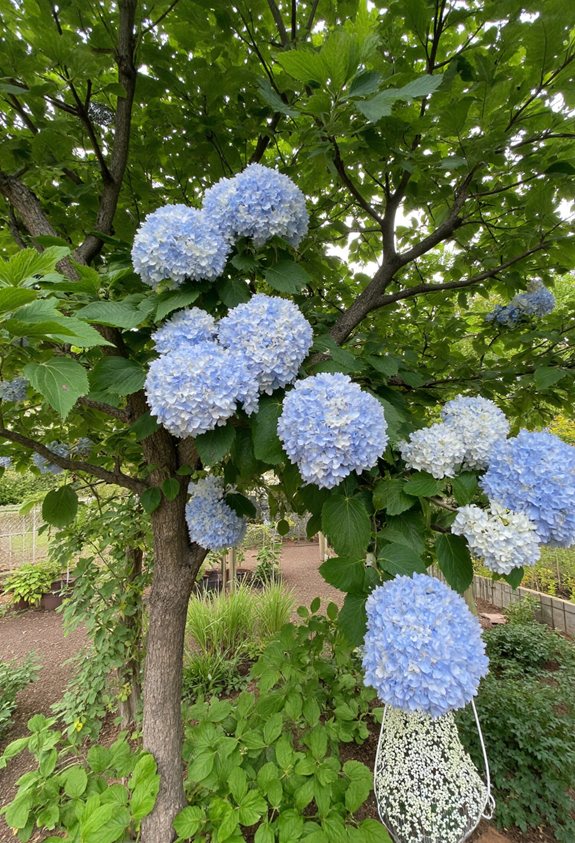
When powdery mildew shows up as a white, dusty coating on your hydrangea’s leaves, it’s a clear sign the plant needs a quick rescue. You’ll want to act fast, or the fuzz spreads. Here’s how to save it:
- Prune affected stems and discard them safely.
- Apply a homemade spray of milk and water (1:9 ratio).
- Use a fungicidal soap every 7‑10 days until it clears.
Protect the Tree From Extreme Frost and Heat Waves
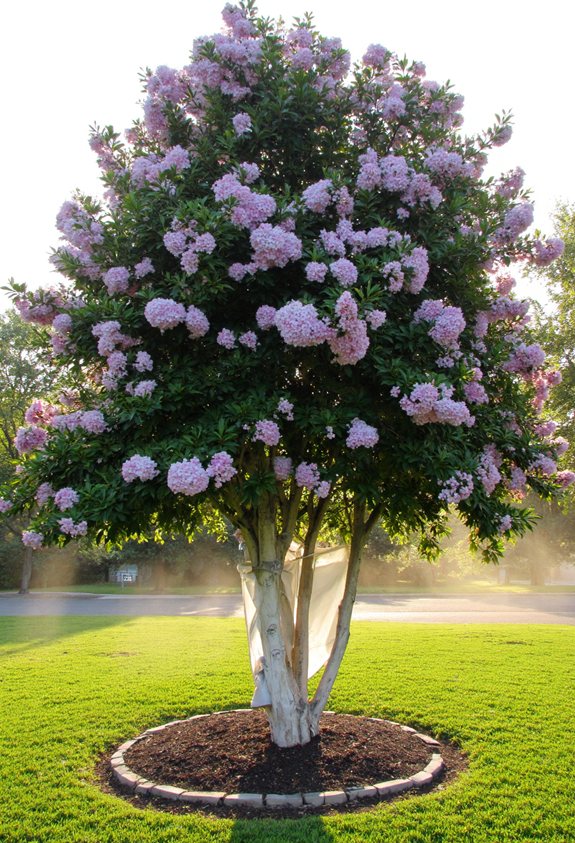
Even on the coldest mornings, a sudden frost can turn your hydrangea’s tender buds into icy sculptures, while a scorching heat wave can make the leaves look like they’ve been left in a sauna.
Wrap the trunk in burlap, mulch the base, and water deeply before a freeze.
In heat, shade the tree, mist the foliage, and keep soil moist but not soggy.
Install Support Stakes for Heavy Bloom Loads
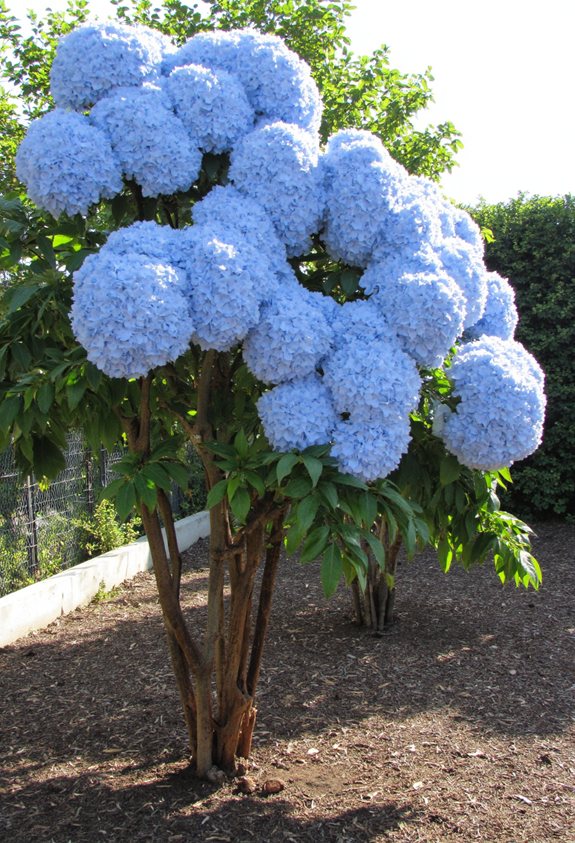
Because hydrangea blooms can get surprisingly heavy, you’ll want to give those flower clusters a sturdy partner before they start drooping.
Drive a stake into the soil near each branch, then tie the stems loosely with soft garden twine. Keep it gentle so the plant can still move in the breeze.
- Choose a rust‑proof stake.
- Insert it at a 45° angle.
- Tie stems, leaving slack for growth.
Use Evergreen Hydrangea Varieties for Year‑Round Interest
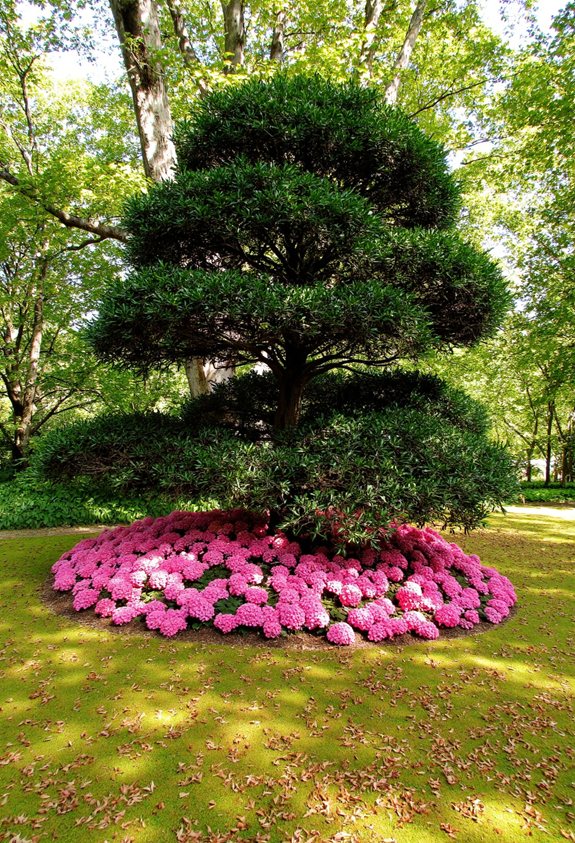
If you pick an evergreen hydrangea, you’ll enjoy color and foliage all year, not just during the blooming season.
Choose varieties like ‘Annabelle’ or ‘Endless Summer’ for glossy leaves that stay green through winter.
Their constant backdrop makes garden design easier, and you’ll love the surprise of fresh greenery when everything else looks sleepy.
Plant them in well‑drained soil, water regularly, and watch them thrive.
Combine Companion Plants for Aesthetic Appeal
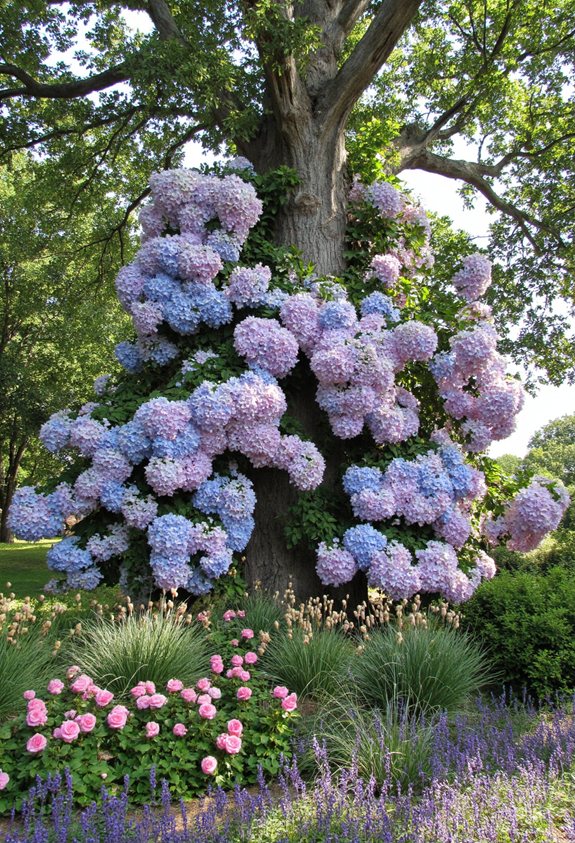
When you pair a hydrangea with the right companions, the garden instantly feels more lively and balanced.
Choose plants that contrast color, texture, or height for visual interest.
Consider these three favorites:
- Lavender – soft purple, fragrant, drought‑tolerant.
- Japanese forest grass – airy, feathery, bright green.
- Hostas – broad leaves, shade‑loving, varied shades.
Create a Seasonal Maintenance Calendar
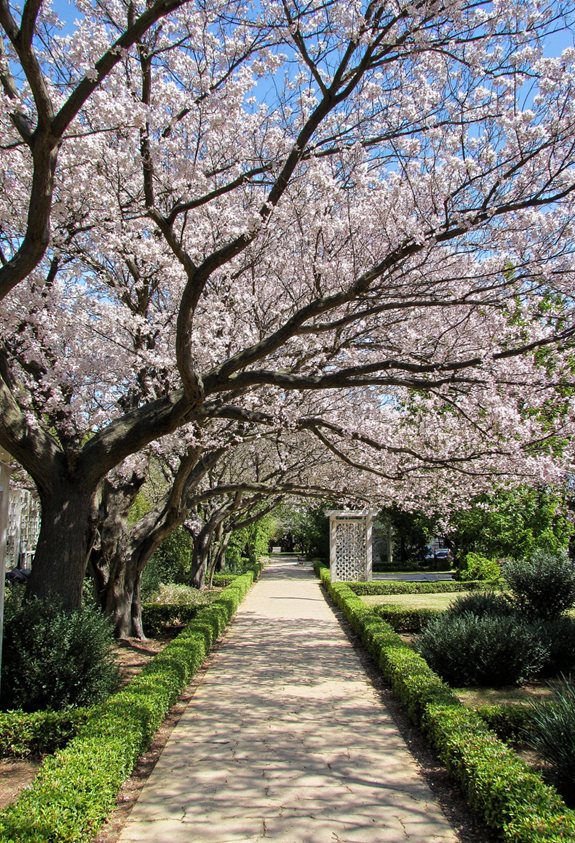
After picking the perfect companions for your hydrangea, the next step is keeping everything thriving year‑round.
Sketch a simple calendar: prune in early spring, mulch in late spring, fertilize in summer, water deeply during dry spells, and protect roots with straw in fall.
Check for pests in autumn, then give the tree a gentle winter rest.
Stick to this rhythm, and your hydrangea will sparkle all season.
Repot or Transplant a Mature Hydrangea Tree Safely
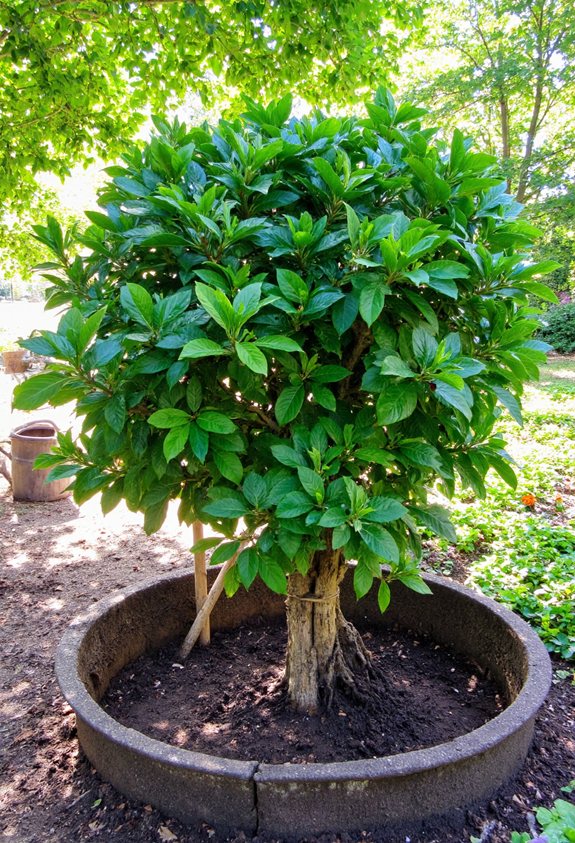
Even though your hydrangea has been standing tall for years, moving it isn’t as scary as it sounds—think of it like giving a favorite pet a new, comfy bed.
First, water it well, then gently loosen soil around roots.
Next, choose a pot with drainage and add fresh compost.
Finally, place it in a shady spot and water regularly.
- Water thoroughly
- Loosen roots carefully
- Re‑plant in fresh, well‑draining soil
Propagate New Trees From Cuttings or Layering
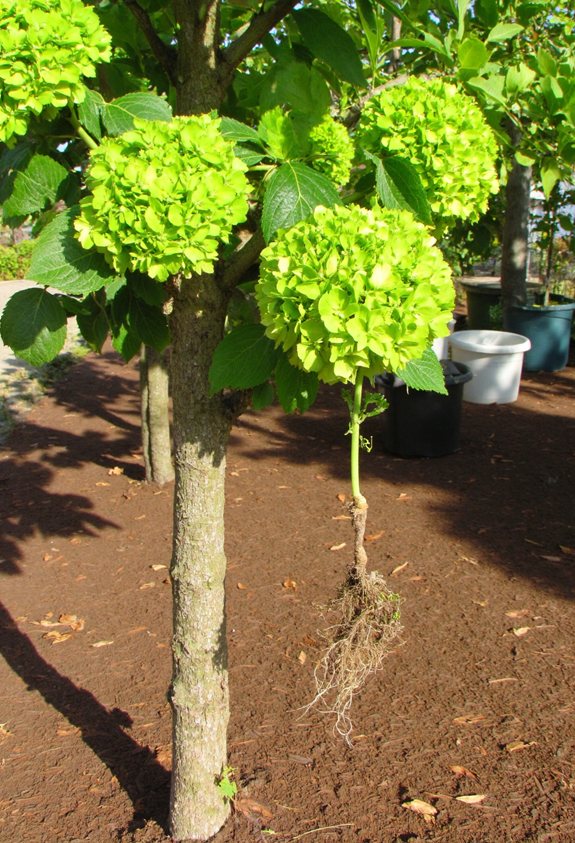
You’ve just settled your hydrangea into a new pot, and now it’s time to make a whole family of them.
Snip a 6‑inch stem, strip lower leaves, dip in rooting hormone, and plant in moist soil; keep it humid with a plastic bag.
For layering, bend a low branch, cover the node with soil, and wait weeks. Roots will form, and you’ll have new trees ready to thrive.
Harvest and Preserve Hydrangea Flowers for Crafts
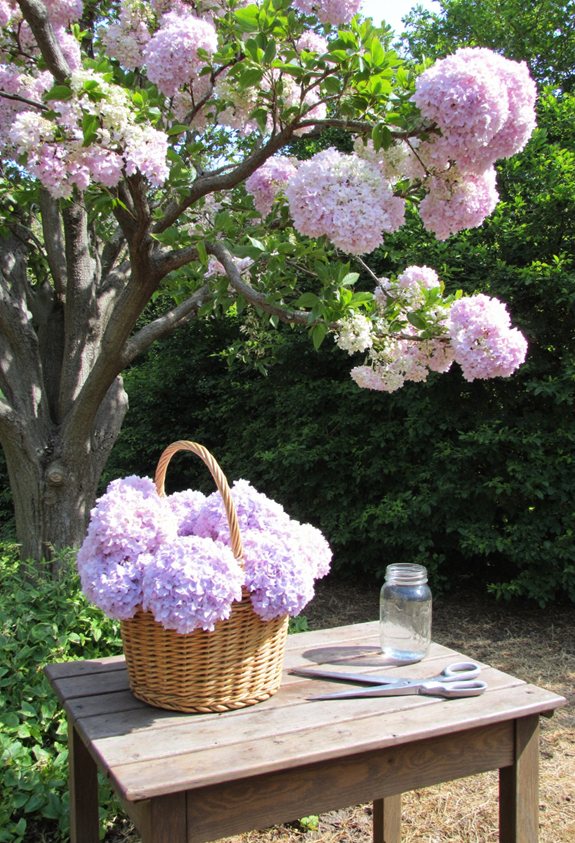
Ever wondered how to turn those fluffy hydrangea blooms into lasting keepsakes for your art projects?
Pick fresh buds early, then press them between parchment and a heavy book for a week.
Dry them, and you’ll have vibrant petals for scrapbooks or resin art.
- Press and dry
- Seal with clear spray
- Embed in resin
Design a Garden Path That Highlights the Tree’s Form
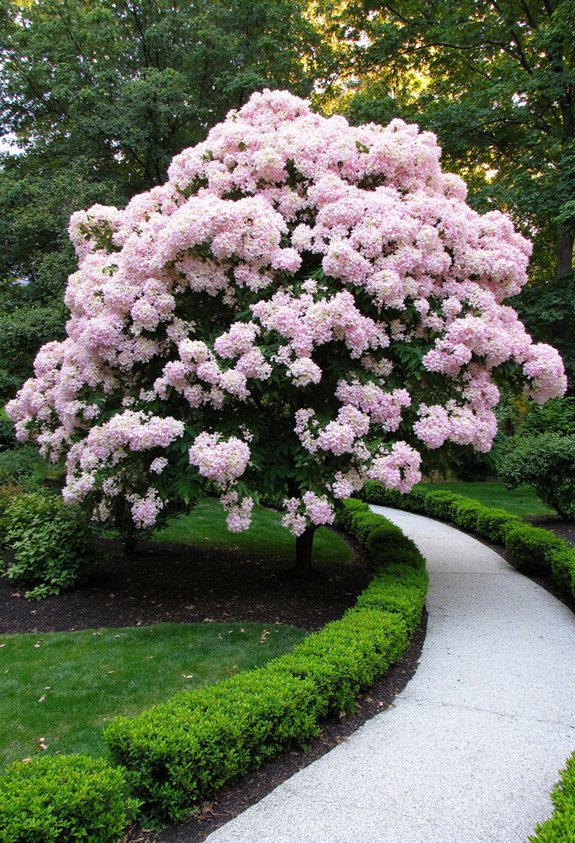
A gentle, winding path that hugs the base of your hydrangea tree can turn a simple garden into a living sculpture.
Choose soft mulch or stepping stones that curve naturally, letting the tree’s branches frame each turn.
Add low, fragrant herbs beside the path for scent, and sprinkle a few colorful pebbles for sparkle.
Walk it often; you’ll feel the tree’s rhythm guiding every step.
Light up Your Hydrangea Tree With Landscape Lighting
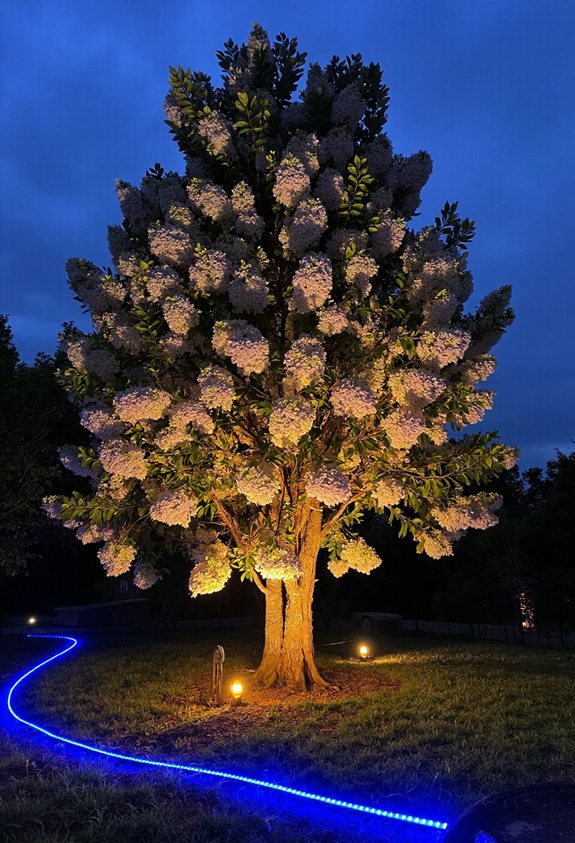
When the sun dips and the garden quiets, a few well‑placed lights can turn your hydrangea tree into a nighttime star. Pick warm LEDs, aim them low, and let shadows dance.
- Spotlights at the base for dramatic silhouettes.
- String lights woven through lower branches for a festive glow.
- Floodlights behind the trunk to highlight bark texture.
Enjoy the magical evening showcase.
Troubleshoot Yellow Leaves and Stunted Growth
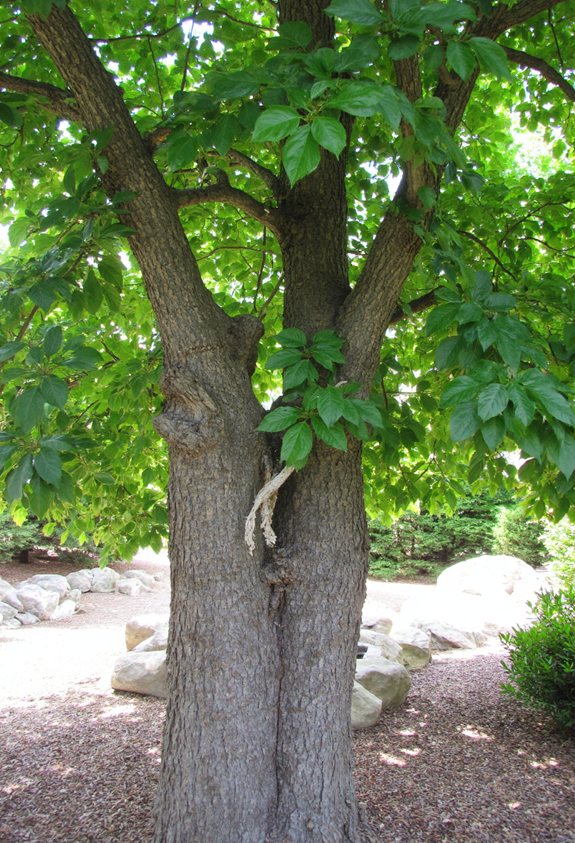
If your hydrangea’s leaves are turning yellow and the plant isn’t growing like it should, you’re probably dealing with a mix of water, nutrient, or light issues that can be fixed with a few simple steps.
Check soil moisture—over‑watering drowns roots, under‑watering dries them out.
Add balanced fertilizer in spring, and guarantee it gets morning sun, not scorching afternoon heat.
Trim dead stems to improve airflow.
Plan for Long‑Term Growth: When to Thin or Re‑shape
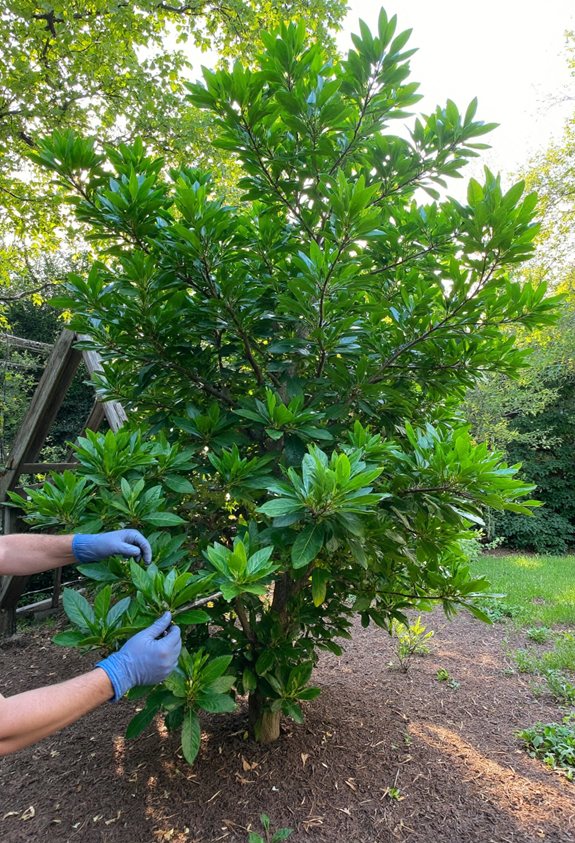
Yellow leaves and stunted growth often mean your hydrangea’s root system is stressed, so the next step is to think about how the plant will fill out over the years.
You’ll want to prune before it gets out of hand, keep the shape tidy, and encourage strong branches.
- Thin crowded stems in early spring.
- Re‑shape after the first bloom, cutting back over‑grown tips.
- Remove dead wood every winter for healthier growth.
Celebrate the First Bloom With a Garden Party Idea
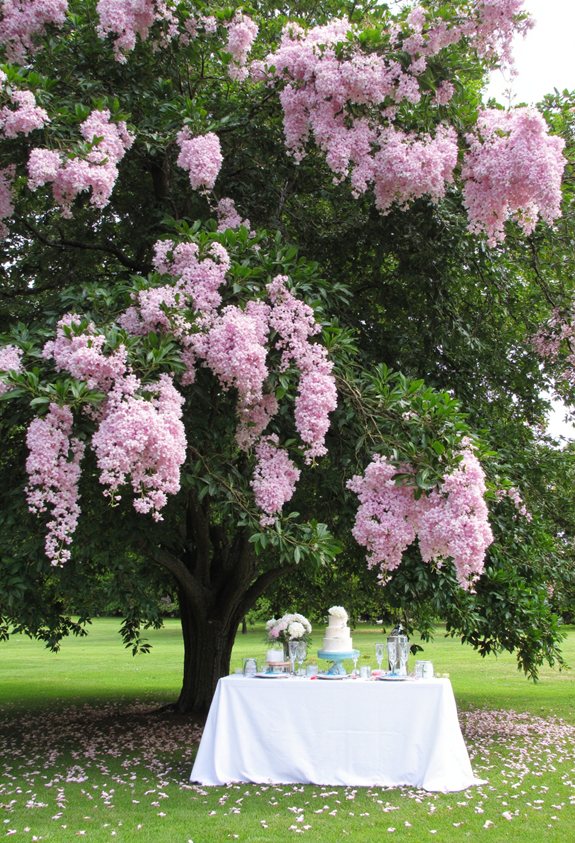
Ever noticed how a hydrangea’s first bloom looks like a burst of confetti in your backyard?
Invite friends for a “Bloom Bash” under the tree.
Serve pastel cupcakes, lemonade, and tiny flower‑shaped cookies.
Hang twinkling lights and set up a photo booth with oversized flower props.
Play breezy music, share stories, and toast the garden’s new star.