A tiny apartment balcony can do more than hold a chair and a few forgotten pots. The trick is to plan the path, the seat, and the storage before you start decorating. A table against the short wall might free an entire walkway; a plant tower can replace a line of pots on the floor.
These balcony makeover ideas focus on layouts that make each inch useful, whether you want coffee with a view, a quiet reading spot, or two small zones for different activities. Measure the door swing, check your building rules and load limits, and keep drainage clear. Images are AI-generated illustrations.
1. Keep a Clear Path from the Door
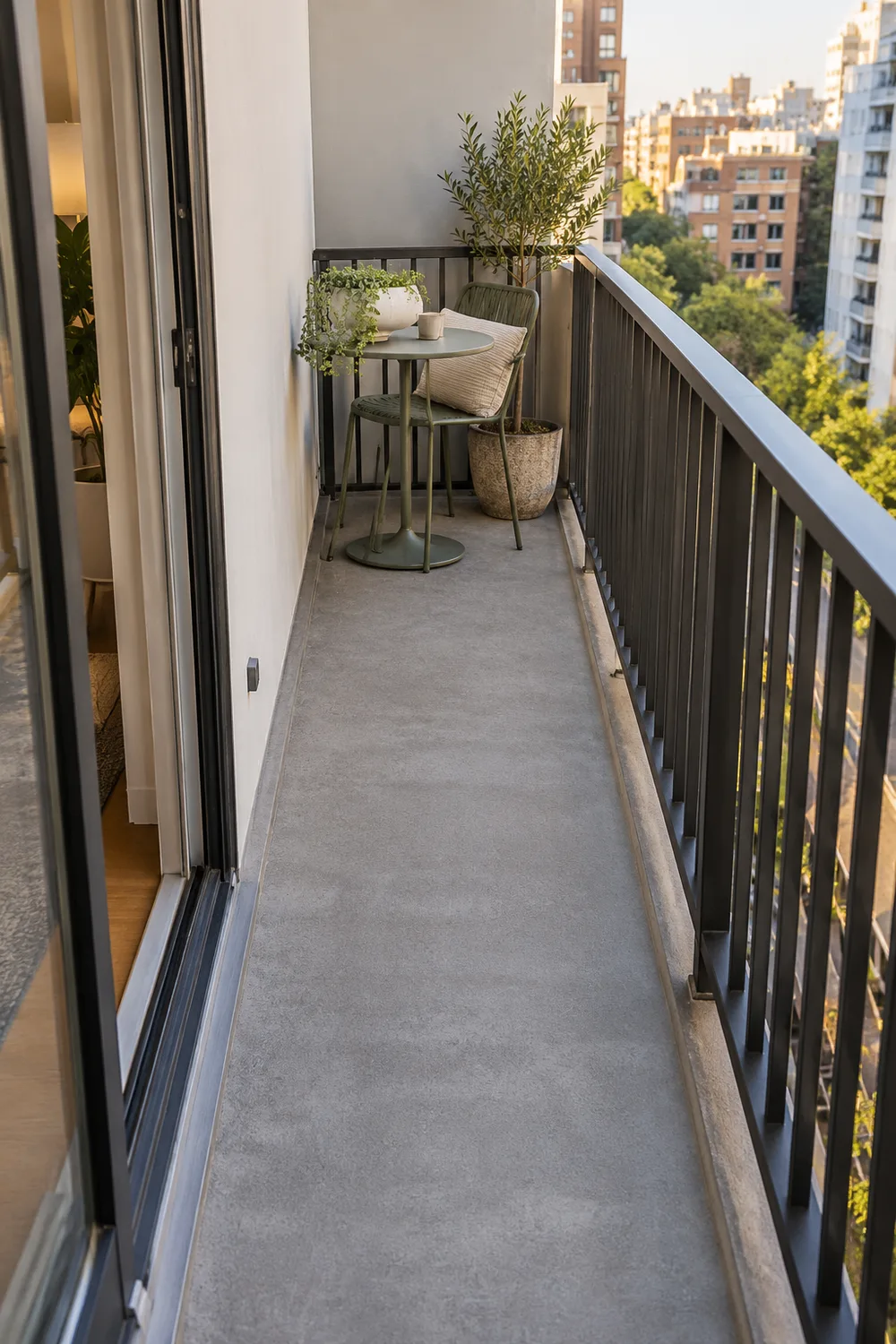
If your balcony feels like an obstacle course, start at the doorway rather than at the railing. Reserve a clear route from the threshold to the far end, then place one chair and a small table where the space naturally widens.
Test the door swing and walking path with cardboard cutouts before buying furniture. A single usable destination feels better than decor that blocks every step.
2. Turn the Short End into a Dining Nook
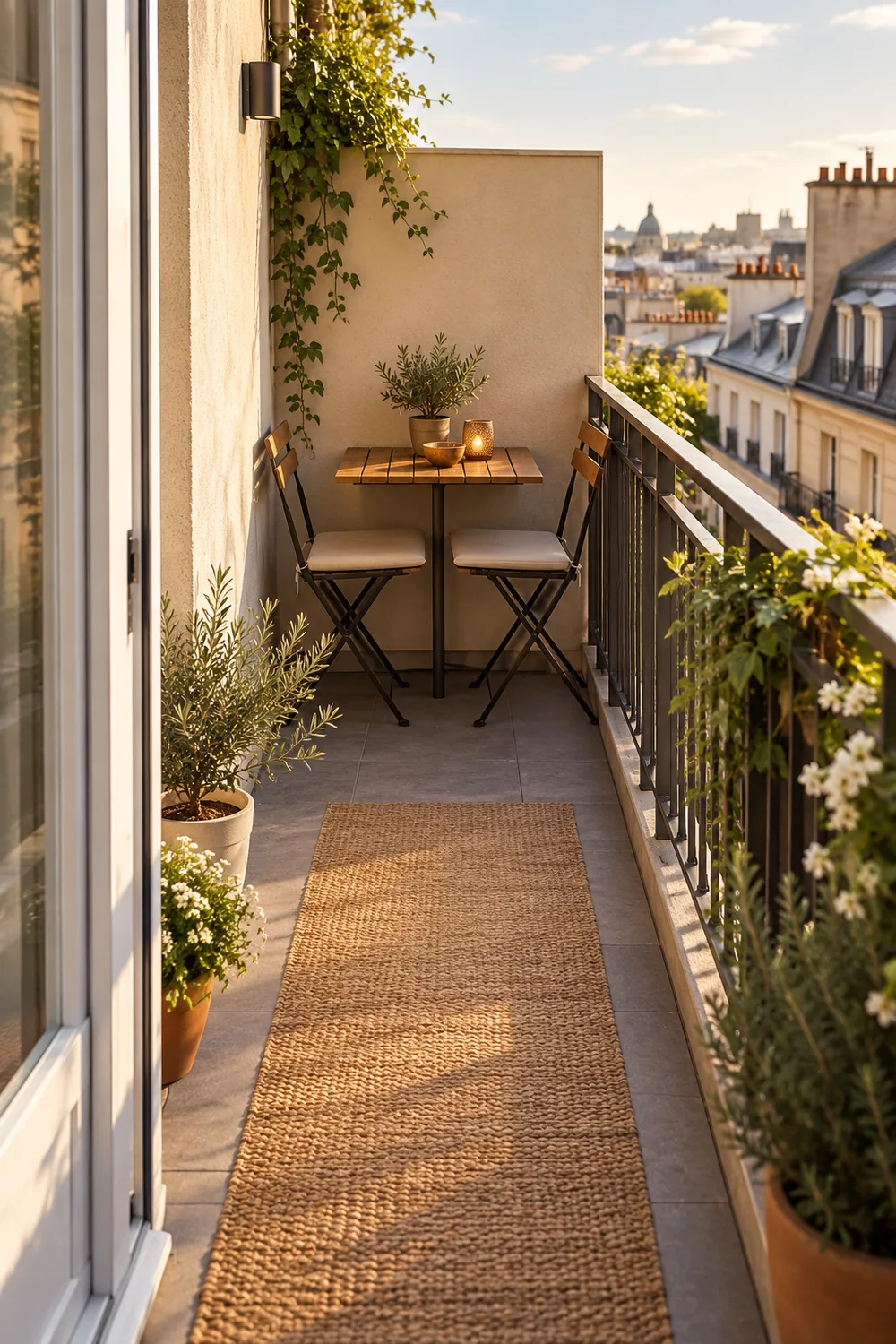
On a long, narrow balcony, the short end often works harder than the long sides. Place a compact table against that end wall and set two slim chairs opposite each other, leaving the rest of the balcony as a simple approach.
Measure the chairs when pulled out, not just when tucked in. That small check keeps your dinner setup from swallowing the walkway.
3. Face the View with a Railing Perch
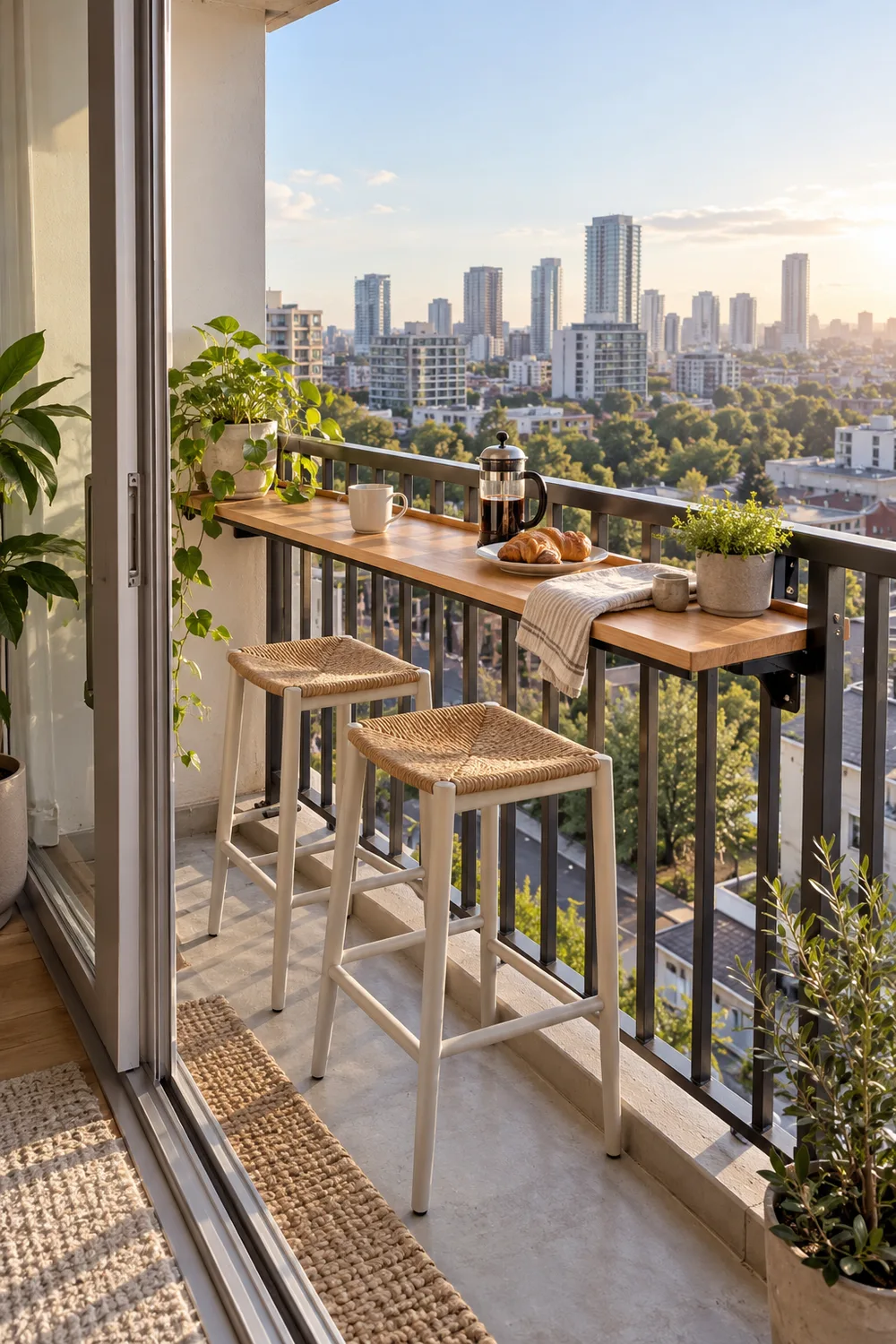
When the view is the best feature, arrange seating to face it. A narrow counter made for a compatible railing can create a breakfast spot with far less floor depth than a conventional table and chairs.
Use only hardware permitted by your building and rated for your exact railing; keep the surface and everything on it within the balcony boundary. Leave enough room behind the stools to reach the door safely.
4. Fit a Curved Chair into the Far Corner
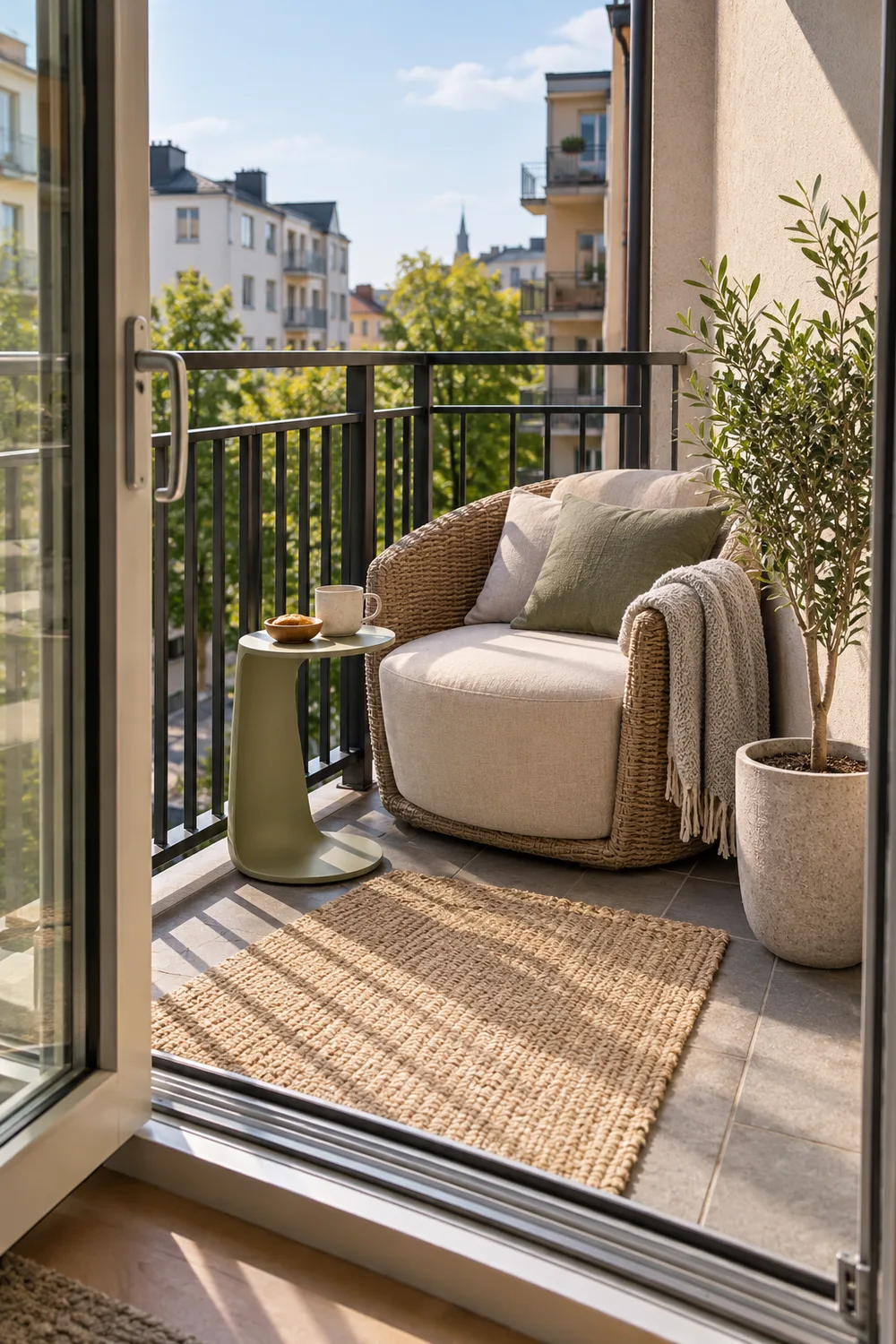
An awkward corner can become the most comfortable seat if the furniture follows its shape. A rounded outdoor chair softens the tight angle, while a tiny side table provides a place for your cup without adding a second large footprint.
Check the chair’s full depth, including the space needed to sit down. Position it at the far end so the door opens freely.
5. Run a Slim Bench Along the Long Wall
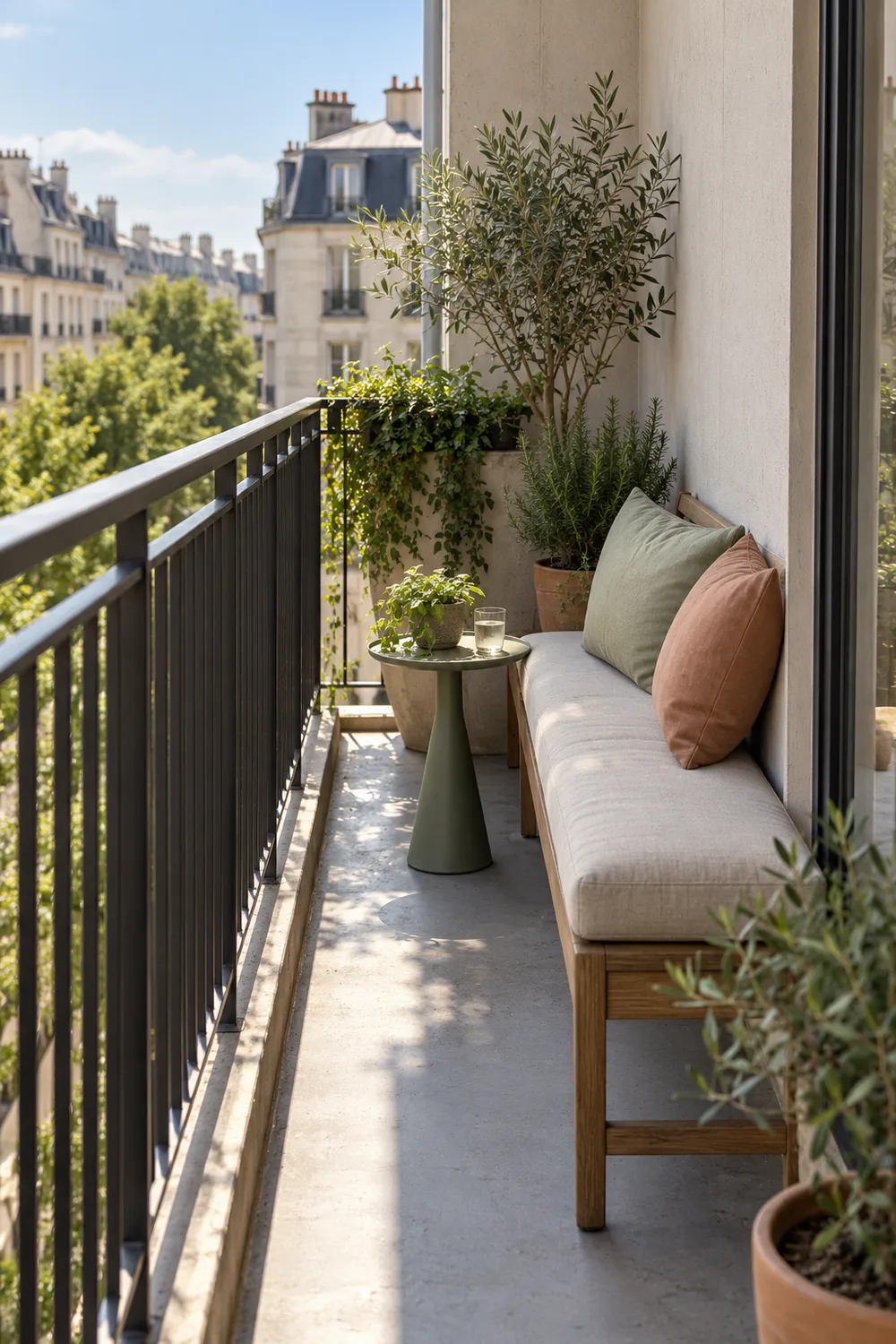
A shallow bench can seat two people along the wall while leaving a single clear lane by the railing. The straight line also makes an elongated balcony feel orderly instead of crowded with several mismatched chairs.
Choose a freestanding outdoor-safe bench and compare its depth with your actual walkway. Keep cushions removable so you can dry and store them between uses.
6. Choose Furniture That Folds Flat
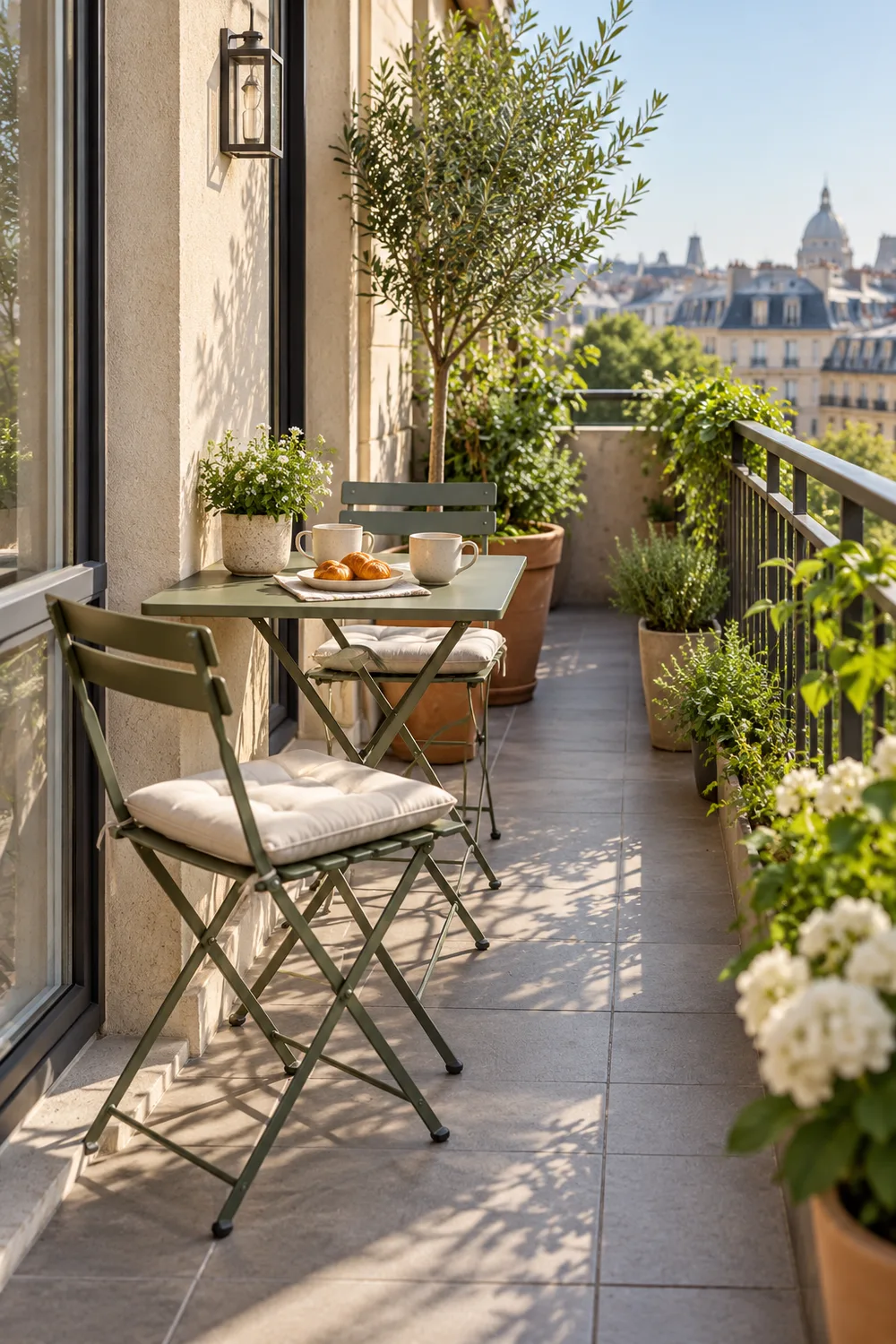
A foldable table makes the balcony change jobs in minutes: coffee for two in the morning, open floor for stretching or tending plants later. Place it near the wall so the chairs can tuck in between uses.
Check the folded dimensions as carefully as the open ones and decide where the pieces will live. For lower-cost pieces, see our budget balcony ideas.
7. Nest Extra Stools Under a Table
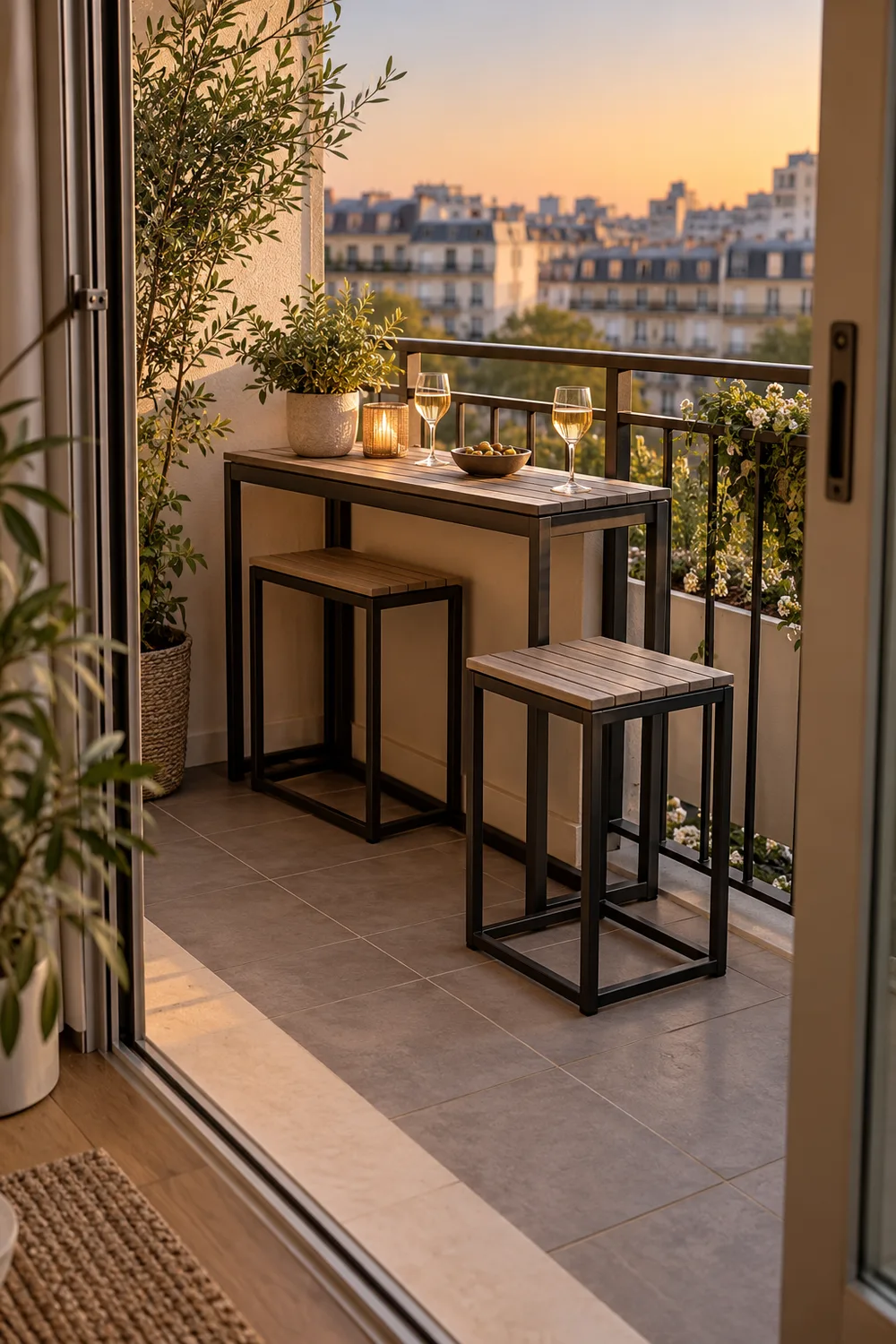
Occasional guests do not need permanent chairs taking up your everyday floor space. Two nesting stools can slide beneath a slim table, then come out when you want a second seat or a temporary plant perch.
Choose stable outdoor-rated pieces with dimensions that truly nest. Keep a clear route back to the door after both stools are in use; a flexible setup should still feel easy to move through.
8. Gather Greenery into One Vertical Corner
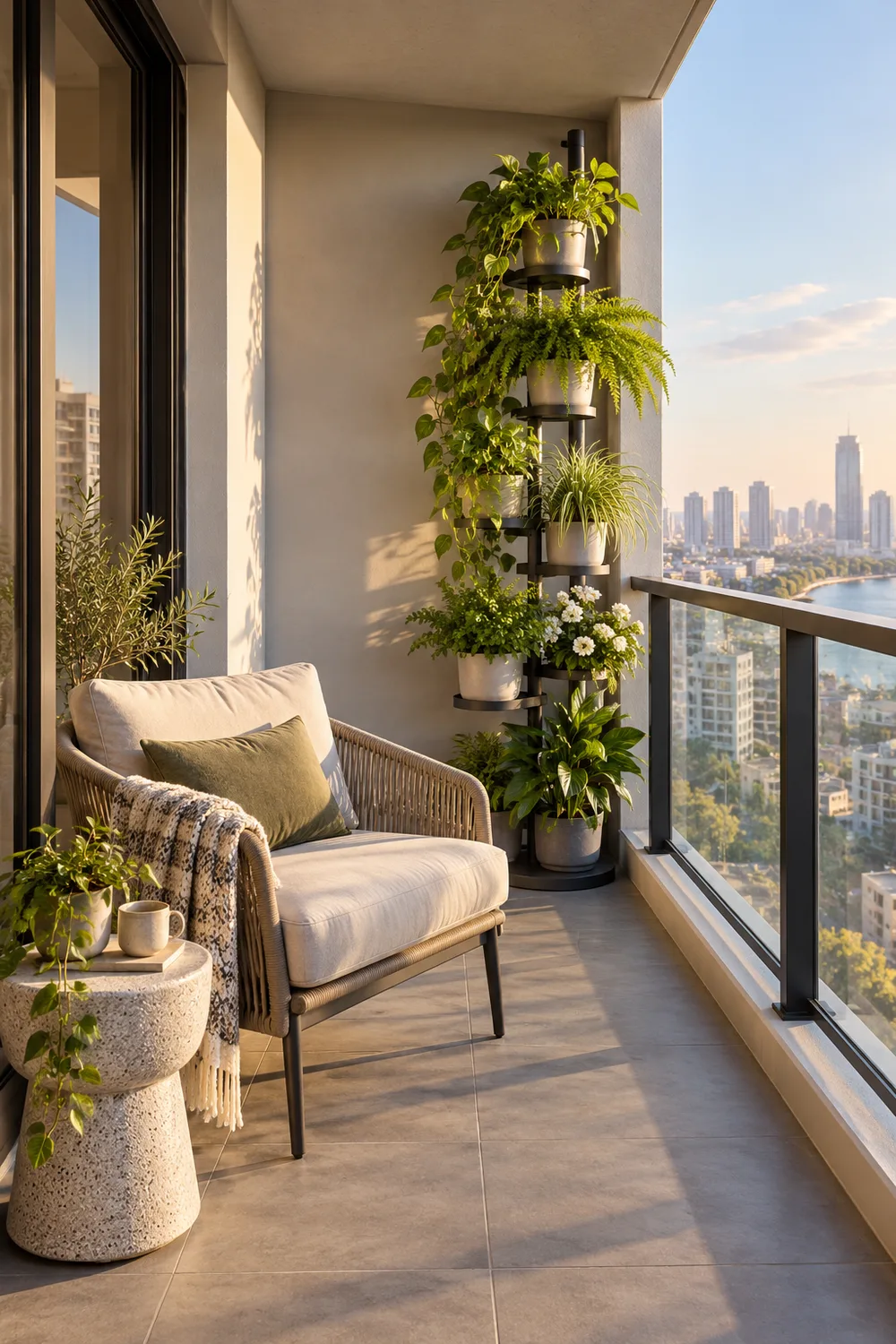
Scattered pots can make a small balcony feel smaller than it is. Move the greenery into a single freestanding tiered display at the far corner, leaving the floor near your chair and doorway open.
Place heavier containers on lower tiers and choose plants for the actual light and wind. If you want to grow more than a decorative cluster, explore our urban garden balcony ideas.
9. Store the Extras Beneath Your Seat
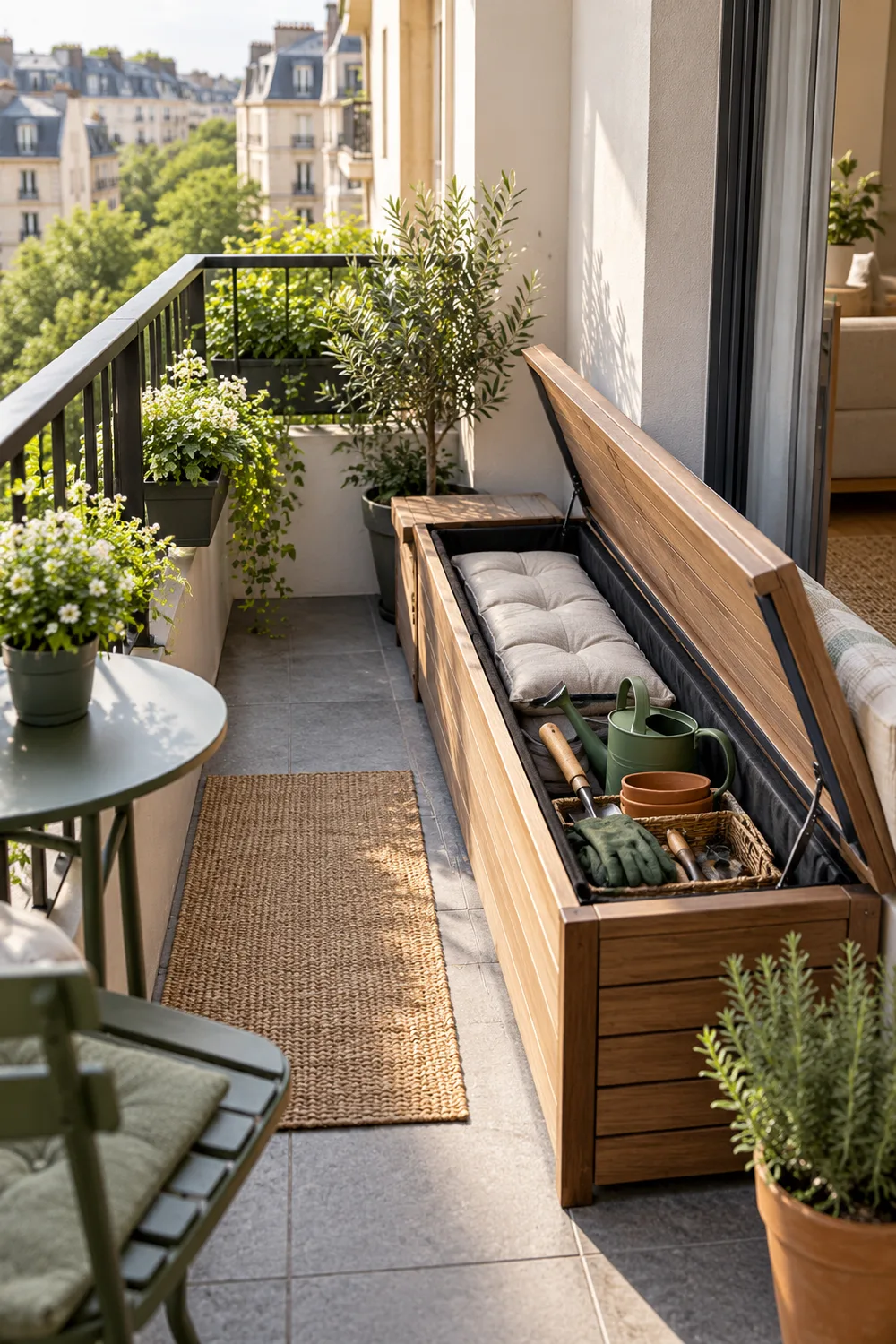
The space beneath a seat can replace a separate deck box. A compact storage bench keeps cushions, a watering can, and small tools out of sight, so the floor reads as a living area instead of a supply closet.
Check that the lid opens without hitting the railing or wall. Use a suitable weather-resistant liner, and keep the bench’s total weight within your balcony’s limits.
10. Roll a Cart Between Your Activity Zones
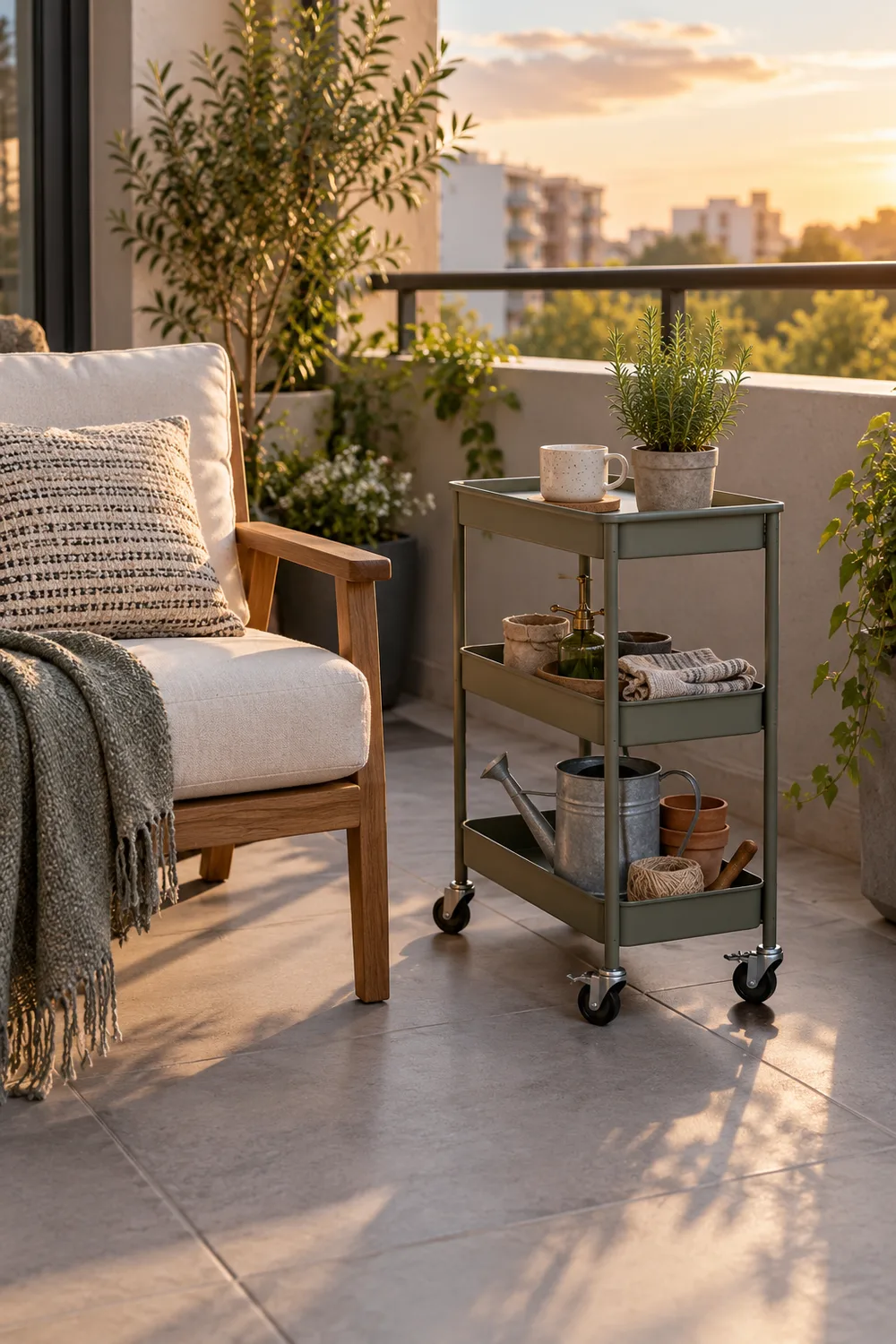
A slim cart can serve as a side table beside your chair, then become a potting station when you move it to the plants. You get two useful surfaces without filling the balcony with two fixed pieces of furniture.
Pick an outdoor-suitable cart with locking wheels, place heavy supplies on the bottom, and park it away from the path. Bring it inside before severe weather.
11. Make a Foldaway Laptop Spot
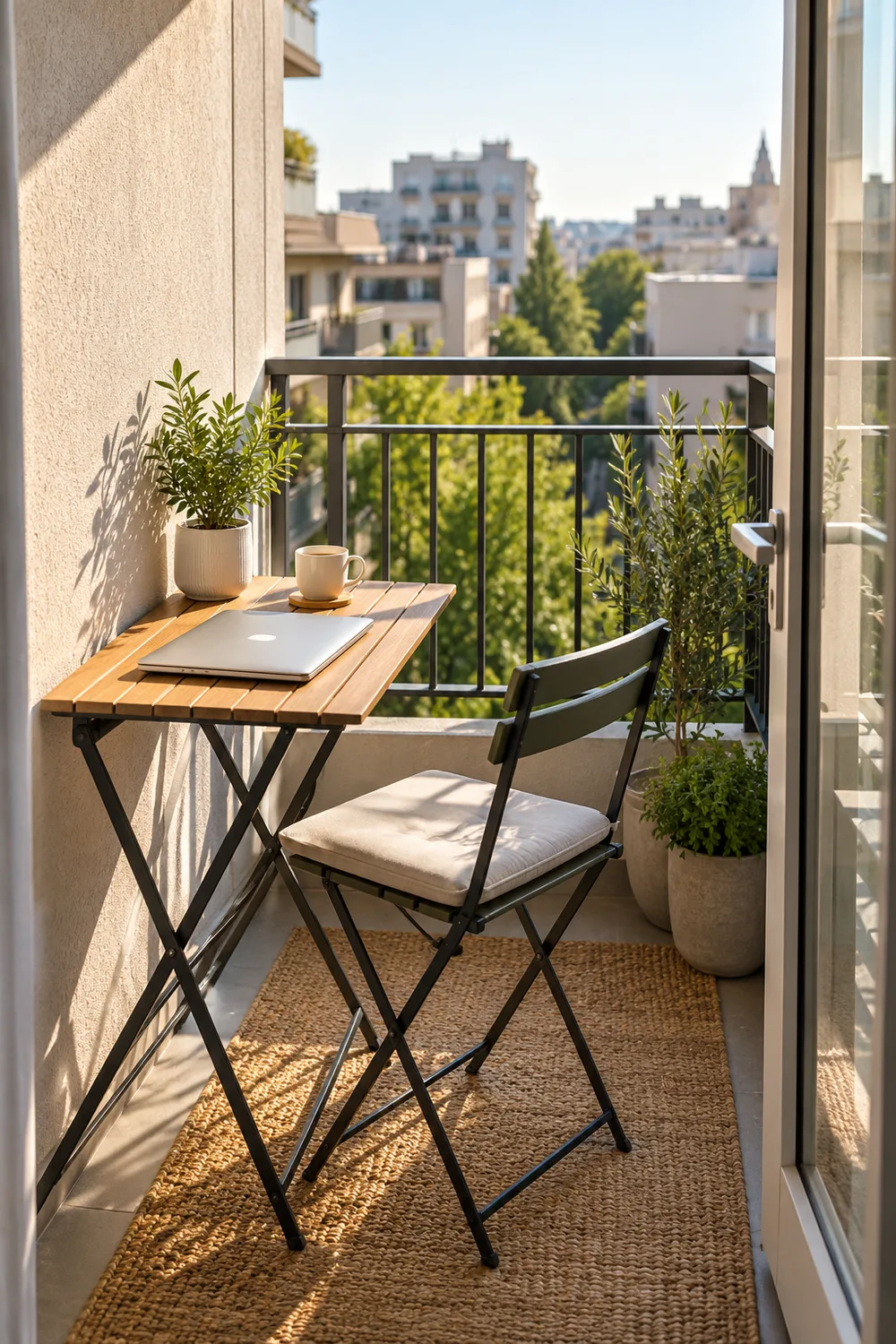
A quiet hour outdoors does not require a permanent desk. A shallow freestanding folding table can hold a laptop and drink, then disappear when you want the balcony back for dinner or lounging.
Set it where screen glare is manageable and a chair can pull out without blocking the door. Keep electronics protected from weather, and avoid running an extension cord across the threshold.
12. Give a Long Balcony Two Small Zones
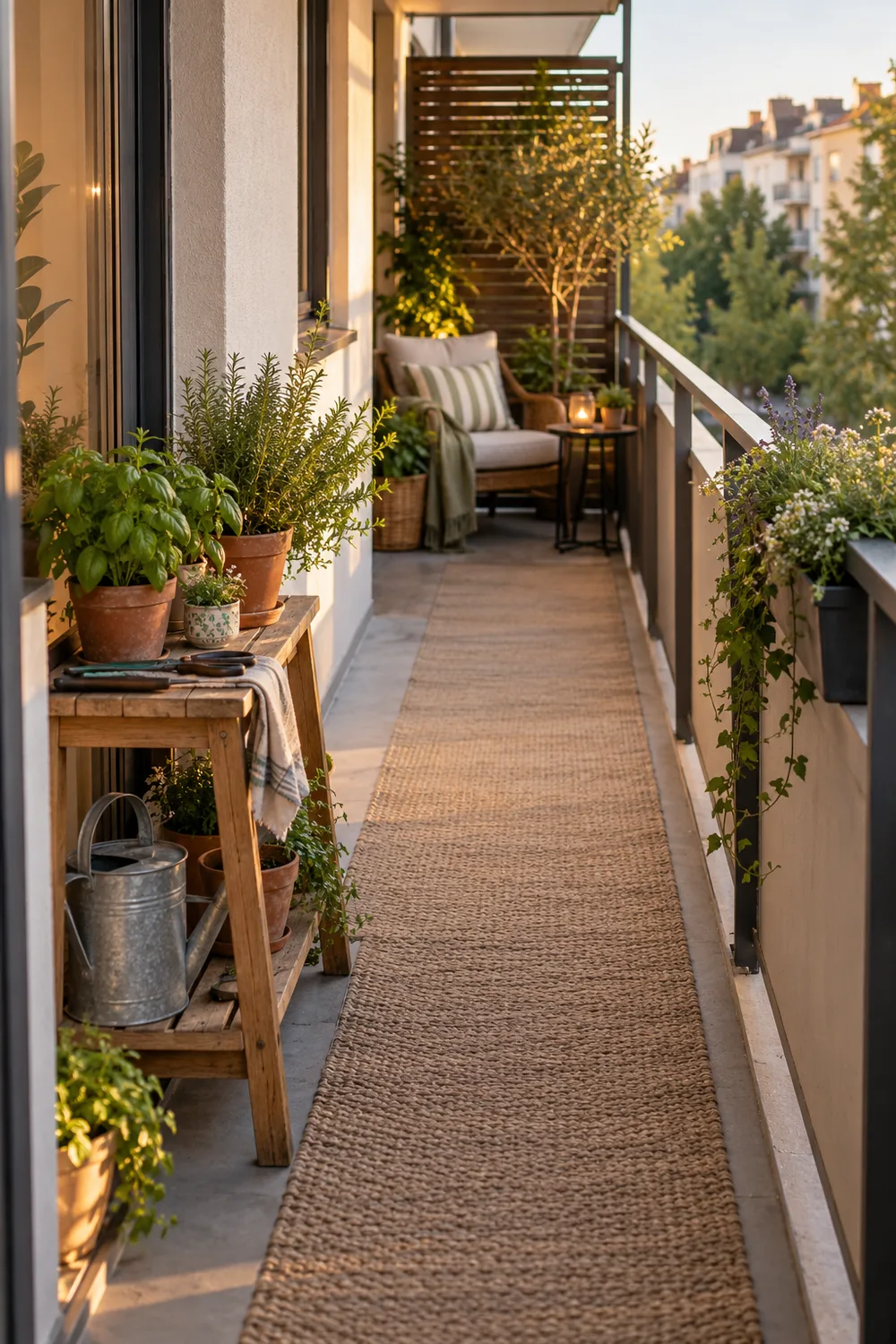
If you have length but little width, arrange activities in sequence. A small herb or potting station can sit near the door, with a reading chair at the far end and one clear passage connecting them.
Use a restrained runner or repeated planter color to make both ends feel related. The zones do not need dividers; their different functions give the balcony structure.
13. Move Small Planters to the Perimeter
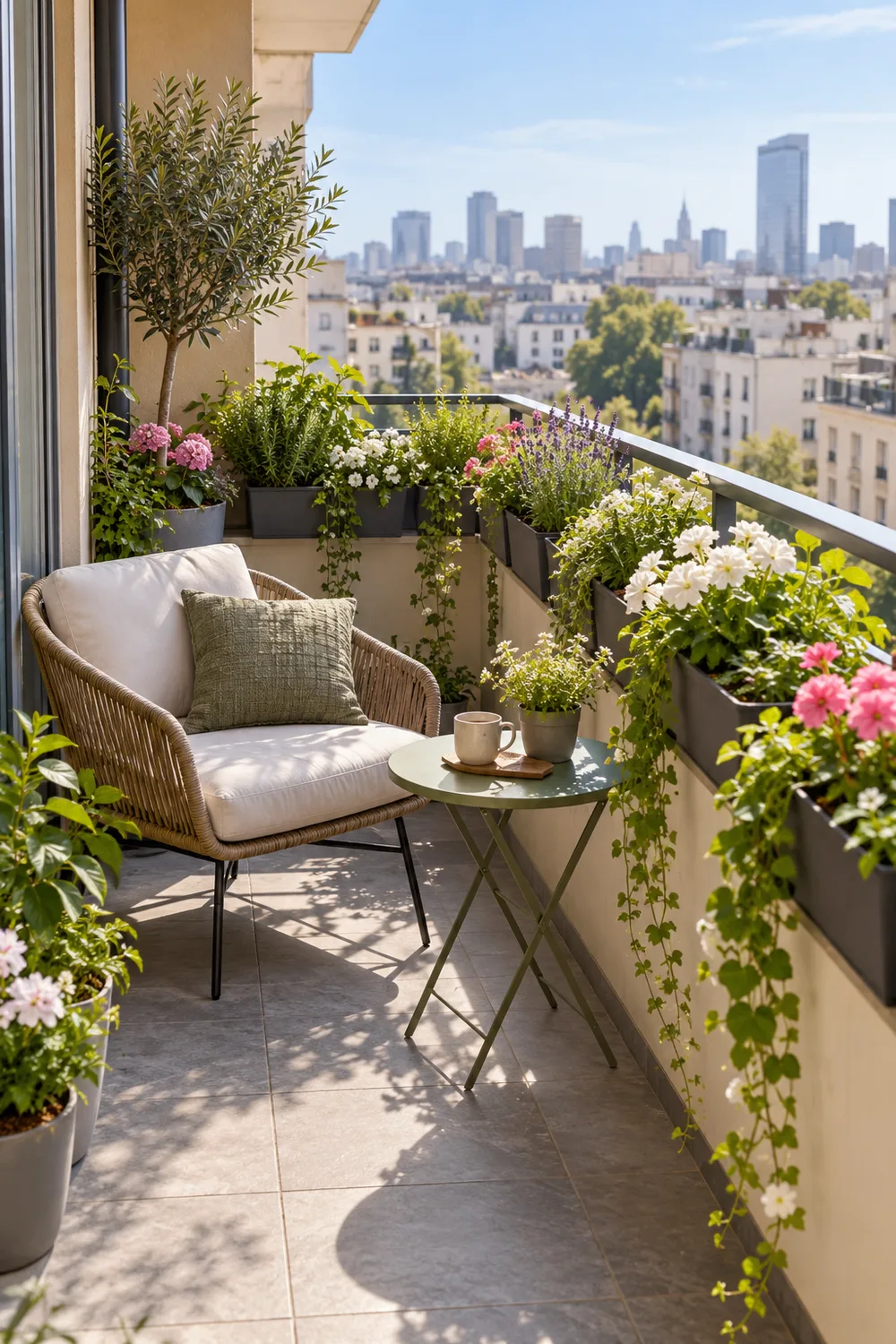
A ring of greenery can frame a tiny balcony while preserving its center for a chair and table. Instead of scattering containers where your feet belong, group small planters along the inside edge and keep the floor visibly open.
Use secure, building-approved containers and respect railing load rules. Leave drainage and safety features clear, and choose plants suited to the exposure. Our balcony herb garden guide can help with a compact edible version.
14. Let Open-Frame Furniture Show the Floor
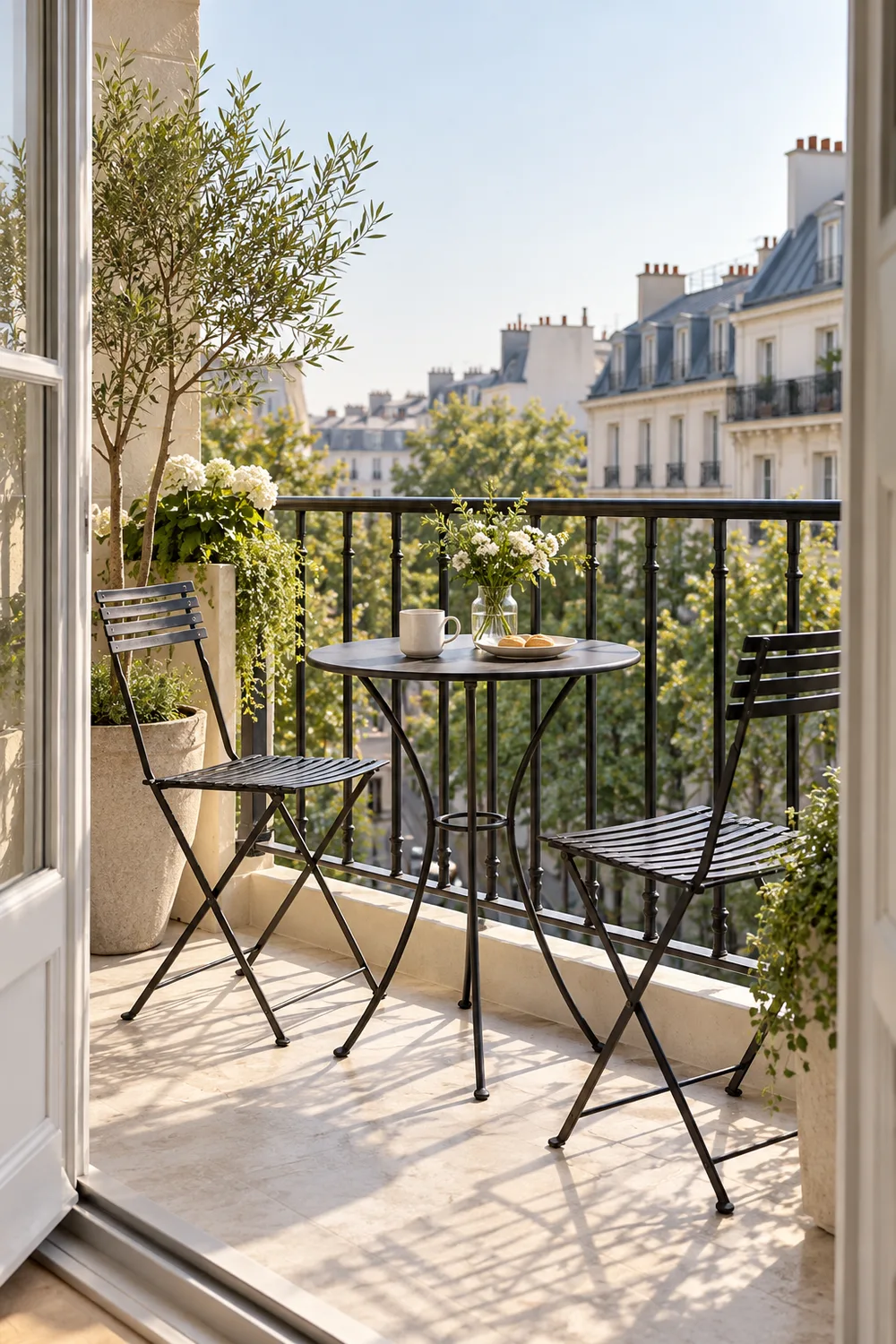
Two chairs can occupy the same footprint yet make a room feel very different. Slim open-frame metal pieces let you see the floor and railing through them, so the view remains the focus.
Look for comfortable outdoor-safe chairs with a stable base, not just a delicate silhouette. Repeat the thin lines in one compact table, then stop adding furniture before the open feeling disappears.
15. Repeat a Light Palette from Floor to Seat
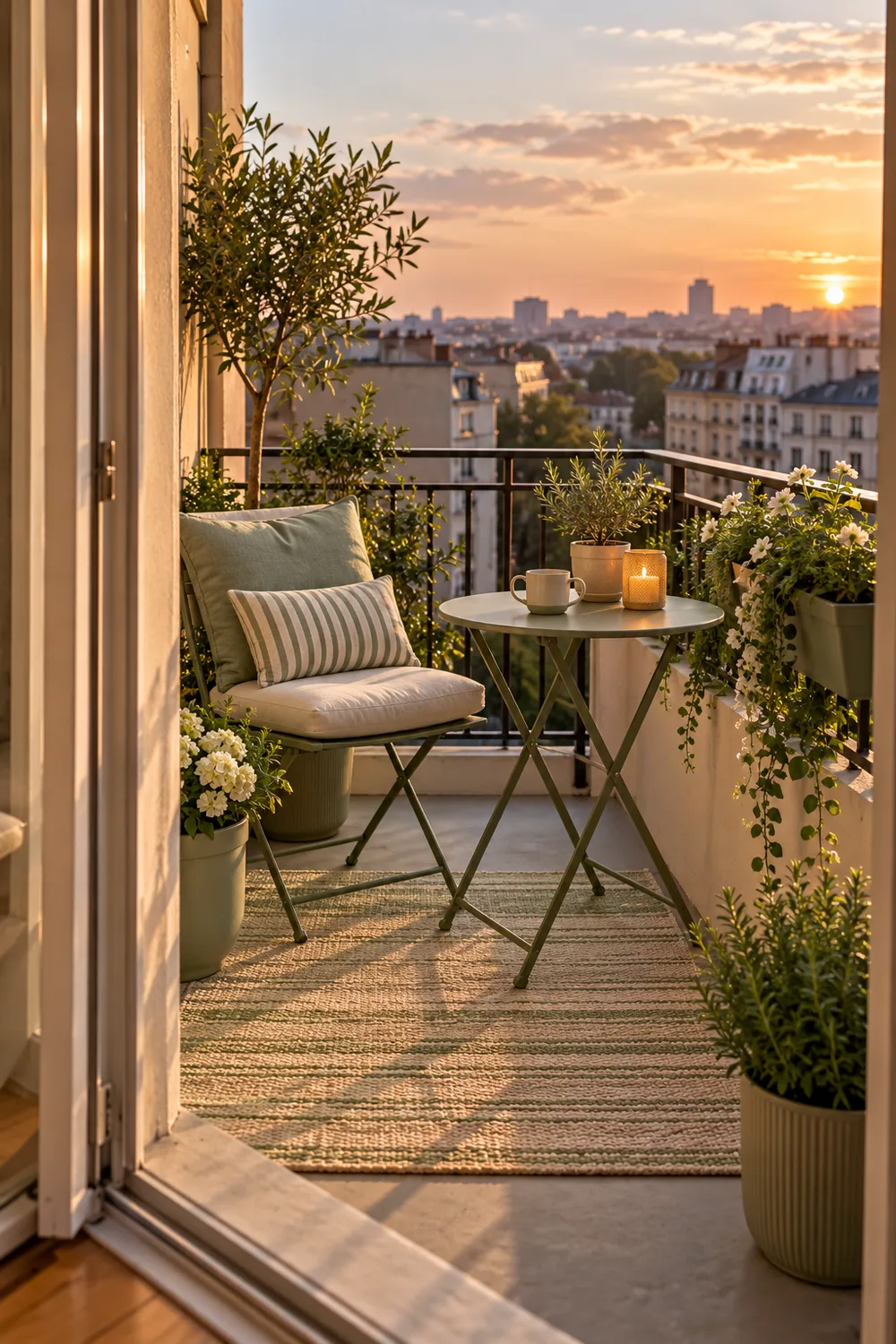
A tiny balcony feels more coherent when the floor, seat cushion, and planters share a short color story. Soft cream with muted sage, for example, lets individual pieces blend rather than competing for attention.
Start with the largest surface and repeat one accent in two smaller places. Choose outdoor-ready materials and keep the arrangement simple; the visual breathing room is part of the makeover.
Begin with the layout change that removes your biggest daily frustration, then add only the pieces that support that use. When the door, walkway, and view all have room to breathe, even a very small balcony feels ready to enjoy.