A small apartment balcony can feel like extra living space without a renovation or a big shopping list. Start with the part that bothers you most: the bare floor, nowhere to sit, a lack of privacy, or lighting that makes you head inside at dusk. These budget-friendly ideas use compact furniture, secondhand finds, portable decor, and simple plant choices to make a narrow outdoor space work harder. Measure first, keep the door and drainage clear, and check your building’s rules and balcony load limits before adding anything to the railing. The images below are AI-generated illustrations of the ideas.
1. Cover the Concrete with Interlocking Deck Tiles
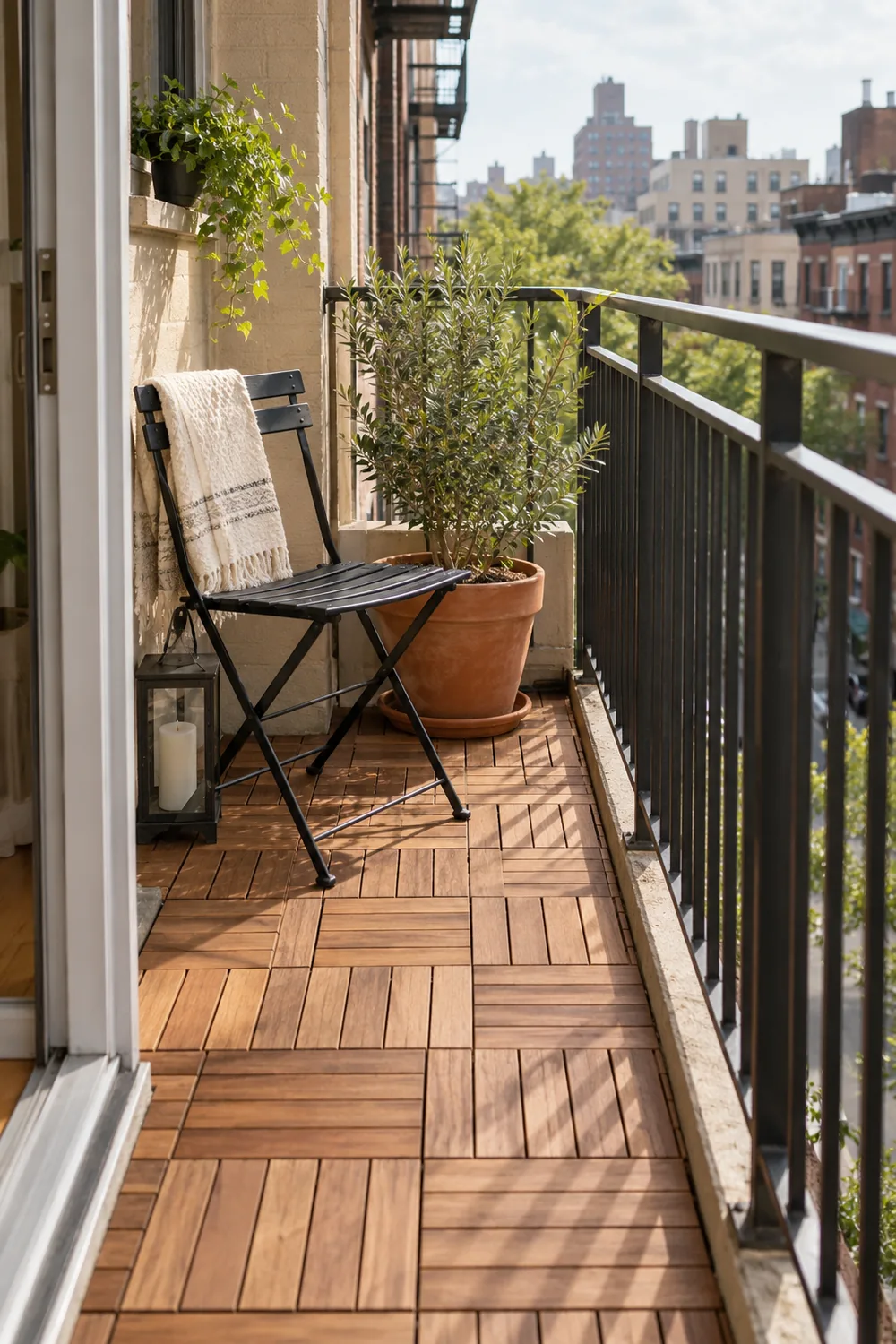
A tired concrete floor can make even a sunny balcony feel unfinished. Removable interlocking tiles add warmth without paint or permanent construction, and you can cover only the seating zone if a full floor is outside your budget.
Measure the space before buying, leave drainage points clear, and choose outdoor-rated tiles that lift for cleaning. A small patch beneath your chair still gives the balcony a deliberate, finished look.
2. Choose a Folding Bistro Set
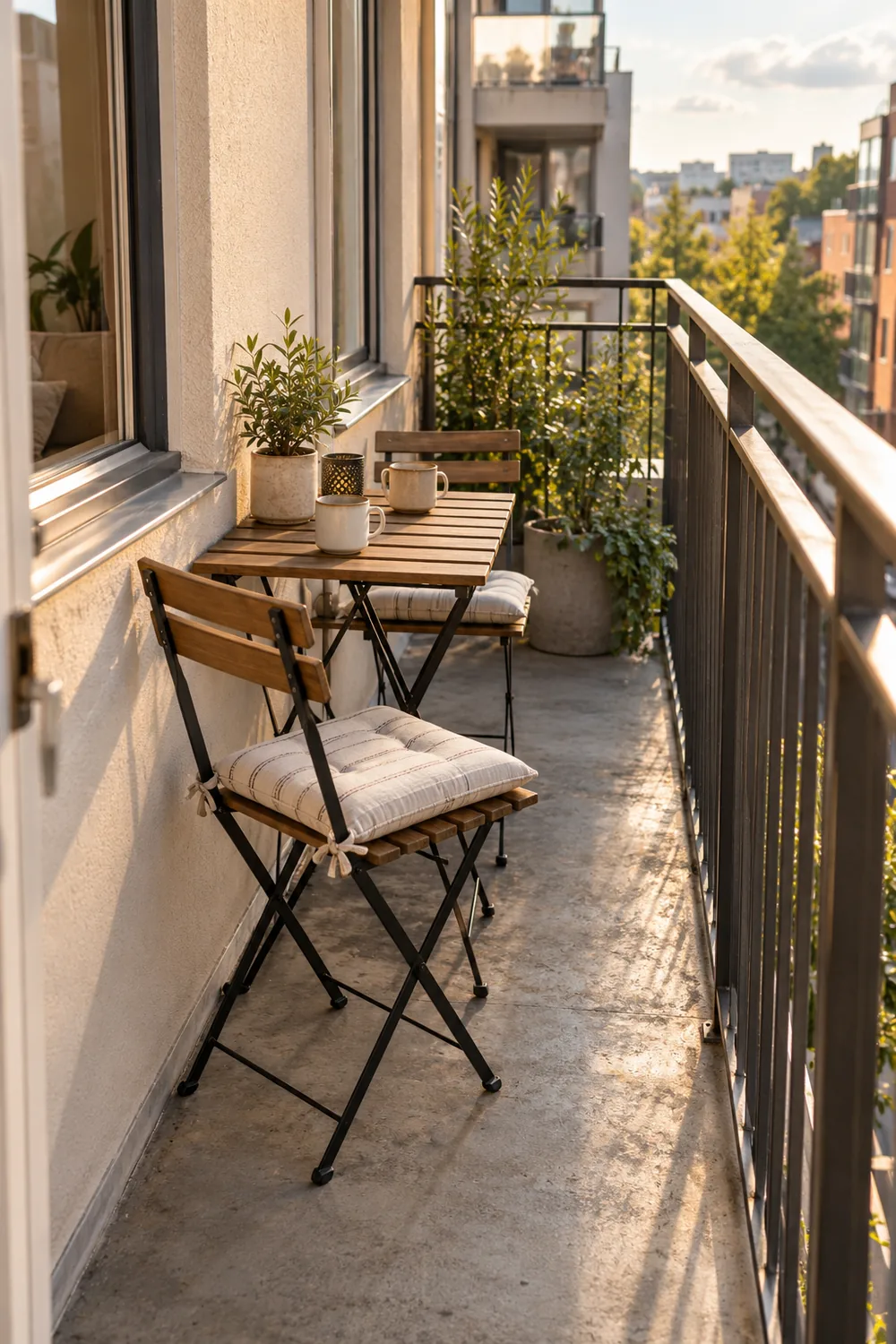
A little table turns a neglected balcony into a place for coffee, meals, or laptop breaks. A folding bistro set is especially useful when every inch of walking space matters.
Look for secondhand metal or treated wood and check the unfolded dimensions before you buy. When you need the floor back, fold the chairs flat against the wall rather than squeezing around permanent furniture.
3. Give a Secondhand Bench a New Cushion
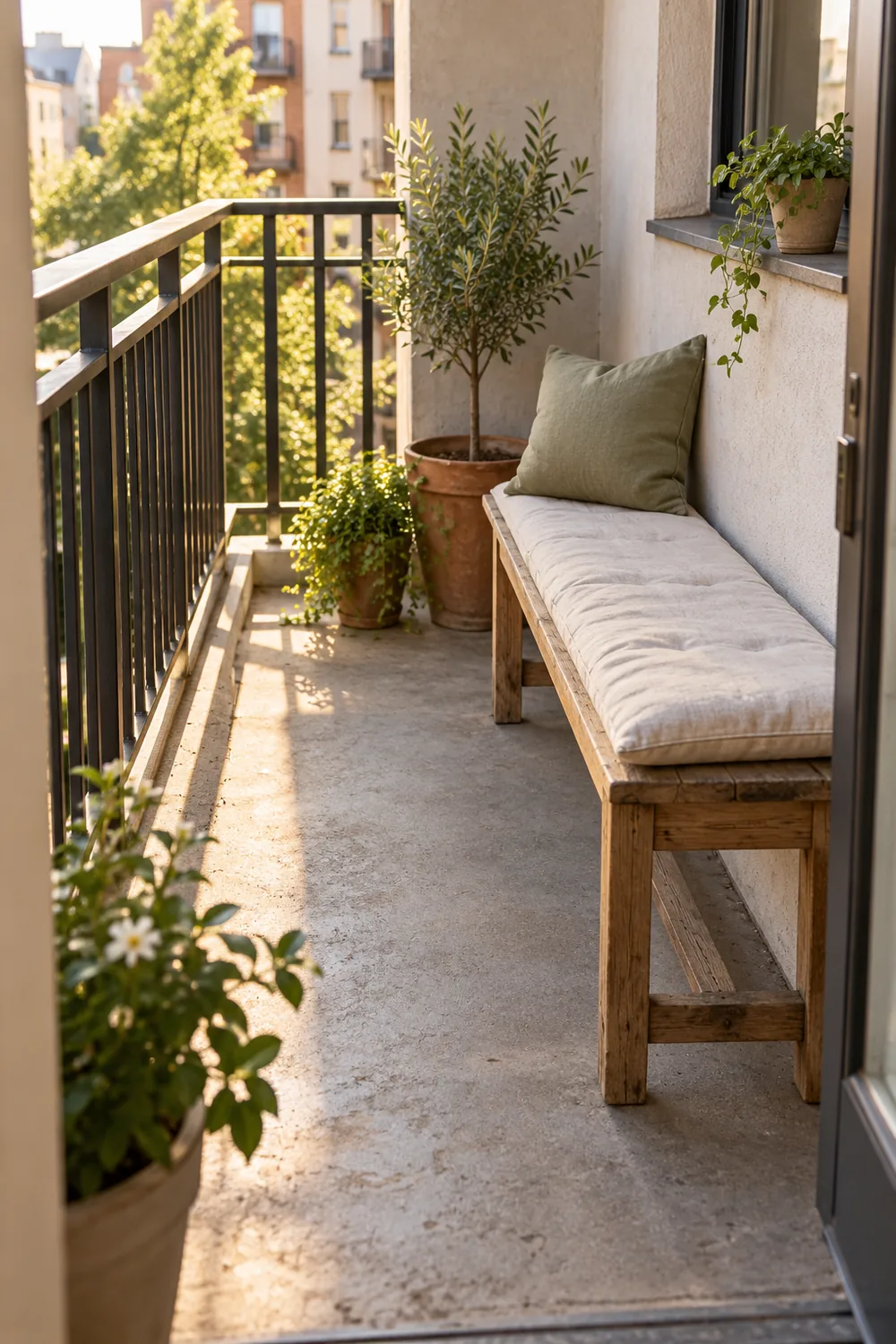
A slim used bench can offer more comfortable seating than a bulky lounge chair while hugging the wall. A single outdoor cushion makes a plain find feel inviting without paying for a whole matching set.
Check that the frame is sturdy, refresh it with an appropriate outdoor finish if needed, and bring the cushion in during heavy rain. Keep enough room to open the door and pass by easily.
4. Lay Down a Washable Outdoor Rug
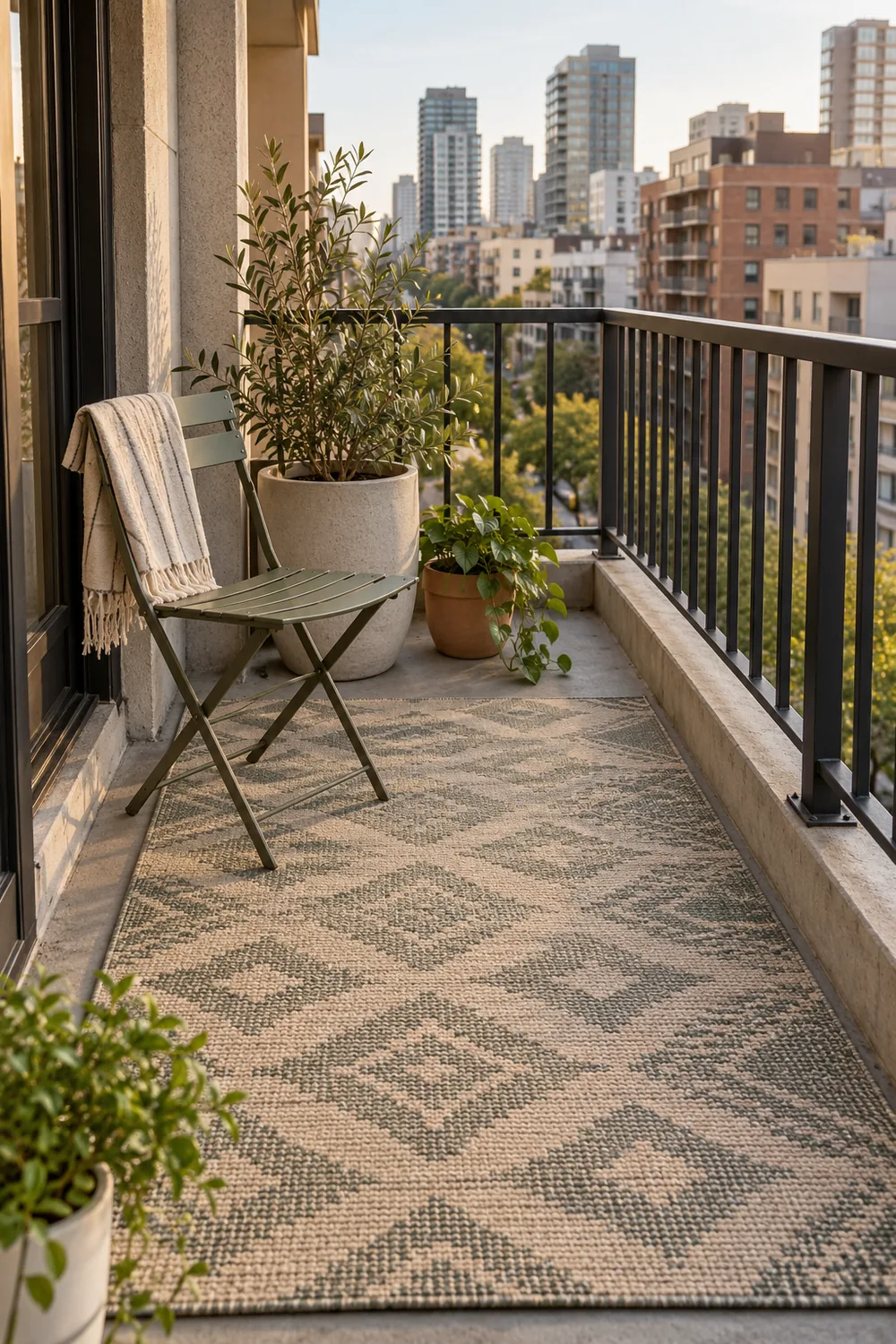
An outdoor rug softens hard flooring and helps define your sitting area without changing the balcony itself. A modest patterned rug also hides everyday scuffs better than a solid pale one.
Choose a size that leaves the door and drainage clear, and check that the material dries quickly. On windy balconies, use a suitable non-slip outdoor pad or furniture to keep its corners in place.
5. Make a Low Reading Nook with Floor Cushions
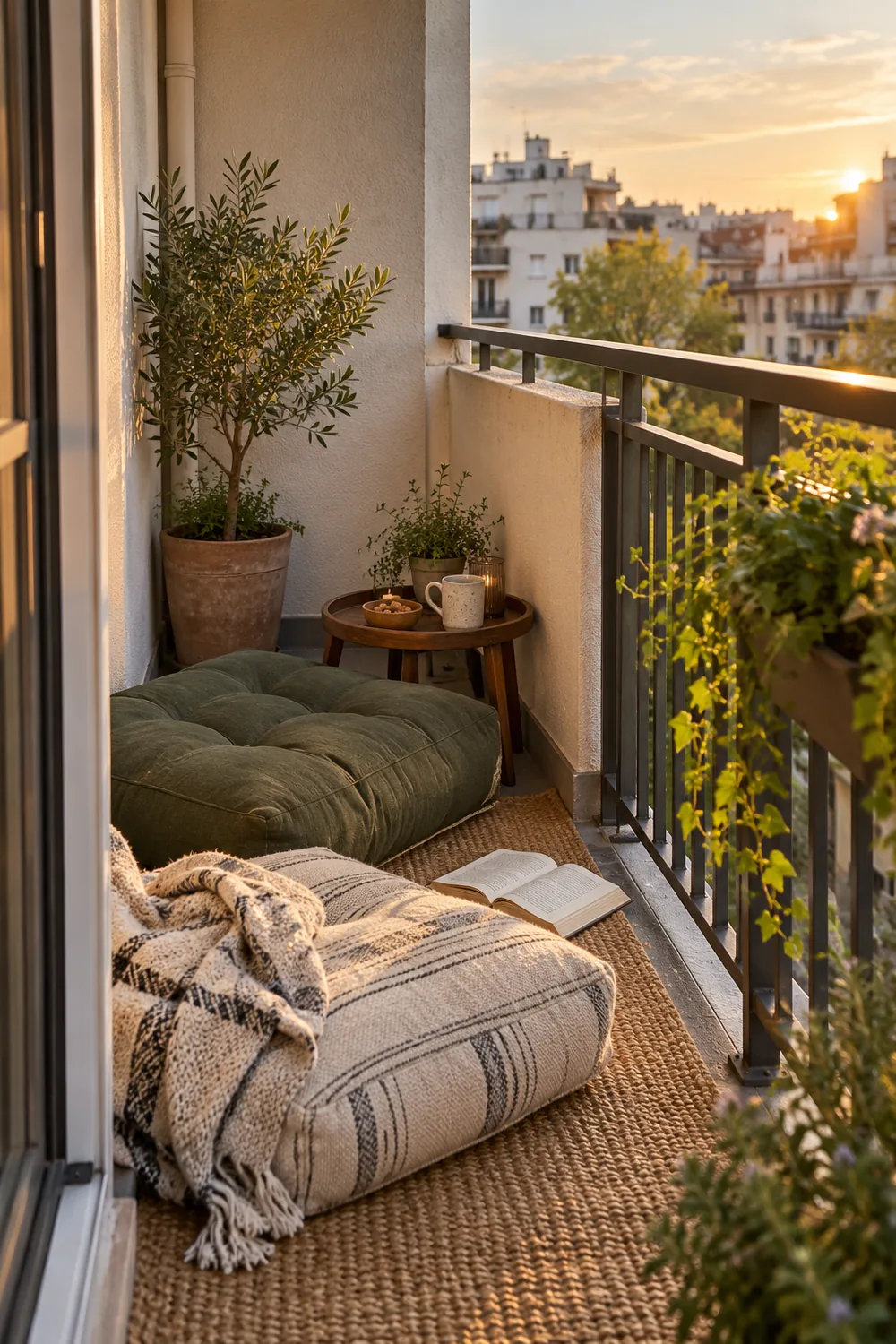
If a chair makes your narrow balcony feel cramped, floor cushions can create a relaxed spot for reading or morning coffee. They are easy to move indoors, so the space can serve more than one purpose.
Start with one or two cushions made for outdoor use and a small tray instead of a full table. Store the textiles inside when the forecast turns wet; they will last longer and stay comfortable.
6. Use a Storage Bench for Double Duty
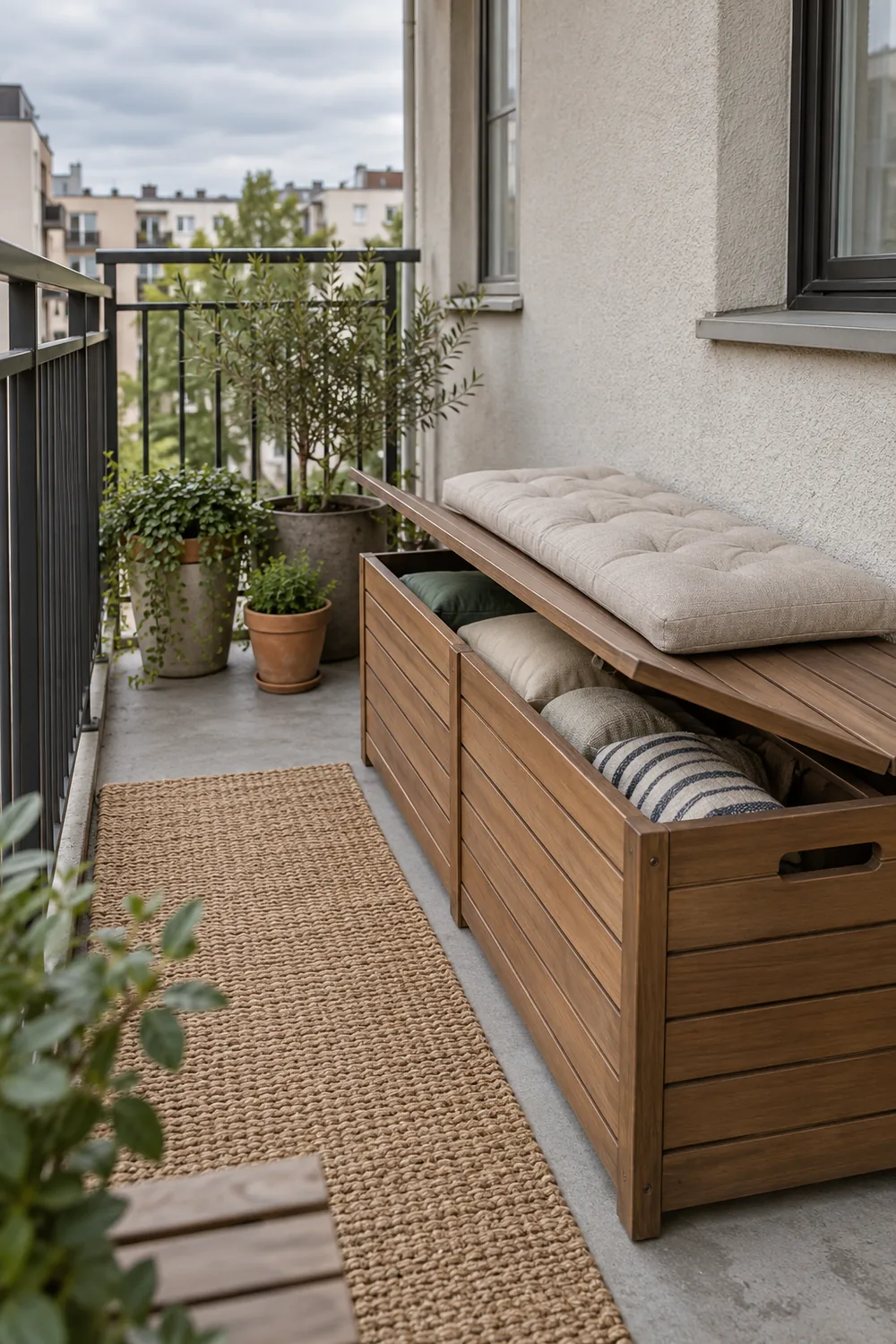
A compact outdoor storage bench gives you a seat and a home for the things that otherwise collect by the door. That combination is worth considering when there is no room for separate seating and storage.
Compare the bench depth to your actual walkway, and make sure the lid opens without hitting the railing. Keep textiles in a weather-resistant liner if the box is not fully waterproof.
7. Refresh a Thrifted Side Table
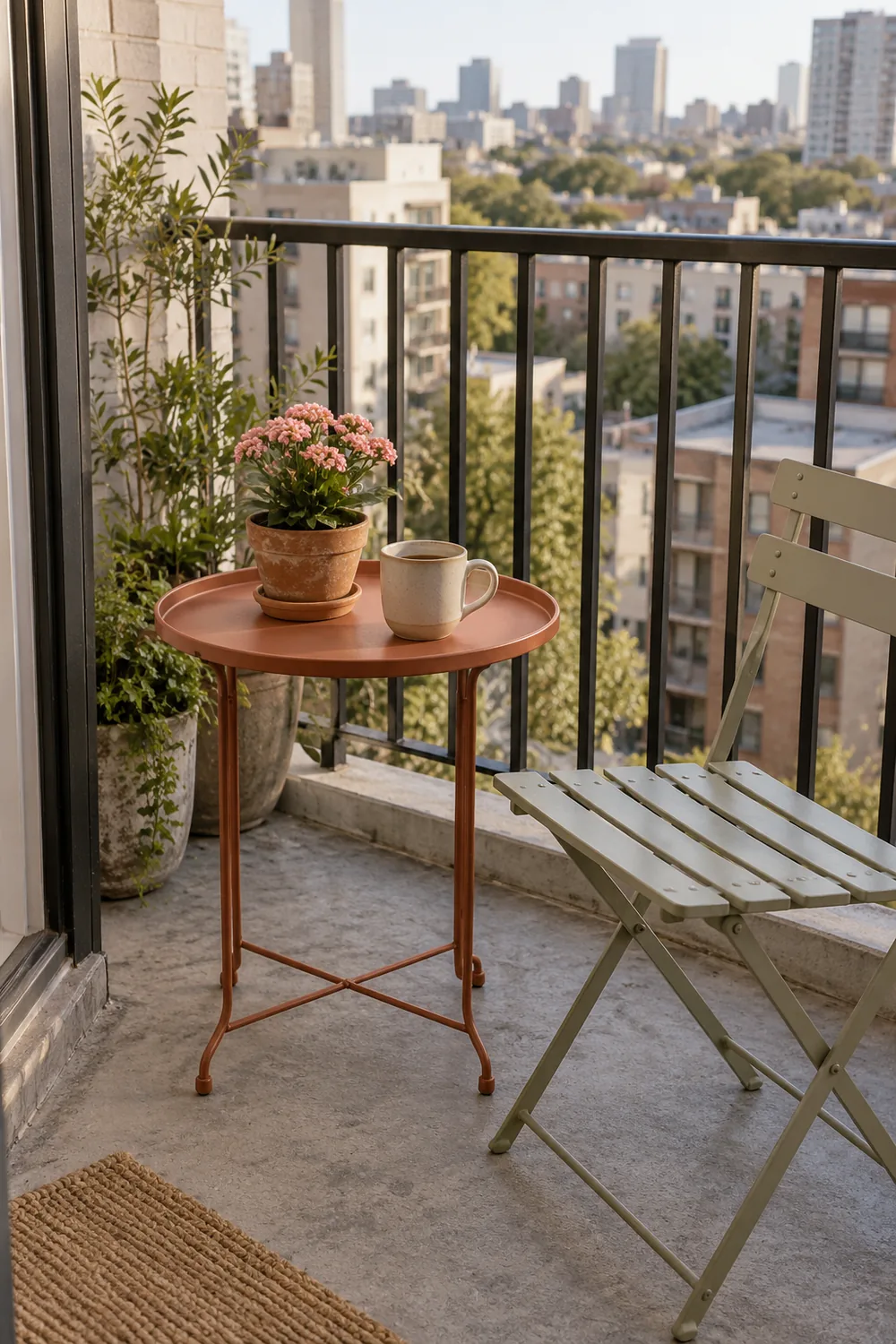
A small used side table can hold a drink, a book, and a plant for much less than a new patio set. It also lets you create a useful seating corner with just one existing chair.
Choose a stable shape that fits beside the seat rather than in the path. If the finish is worn, clean it and use paint suitable for the material and outdoor exposure, then let it cure before use.
8. Keep Extra Seats Stackable
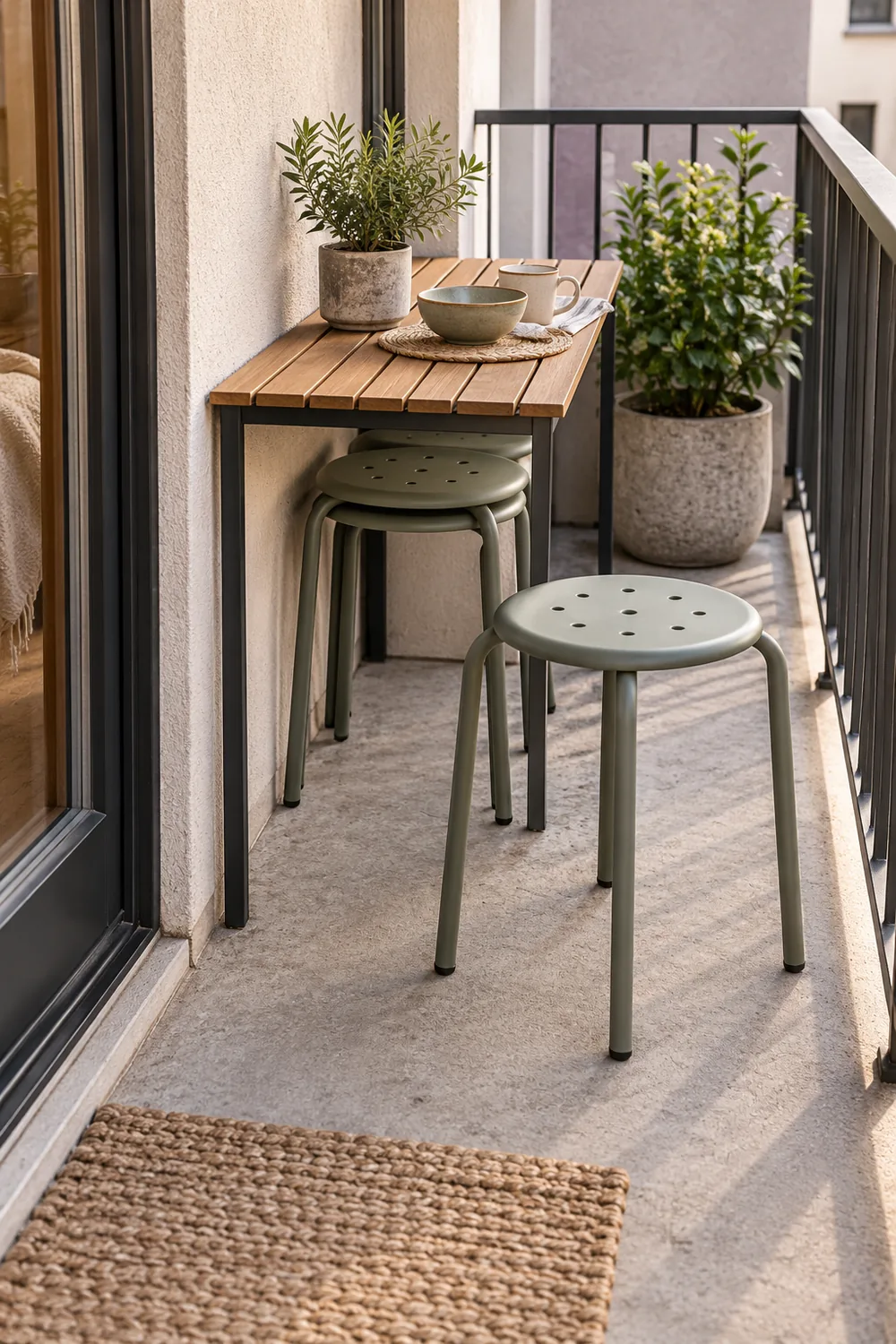
Extra seating sounds helpful until it consumes the whole balcony every day. Lightweight stackable stools solve that problem: bring one out for a guest and keep the rest tucked beneath a table.
Look for outdoor-safe materials and a stable footprint. Their flat tops can also serve as a temporary plant stand or drink perch, but move them indoors or secure them when high winds are expected.
9. Go Vertical with a Ladder Plant Shelf
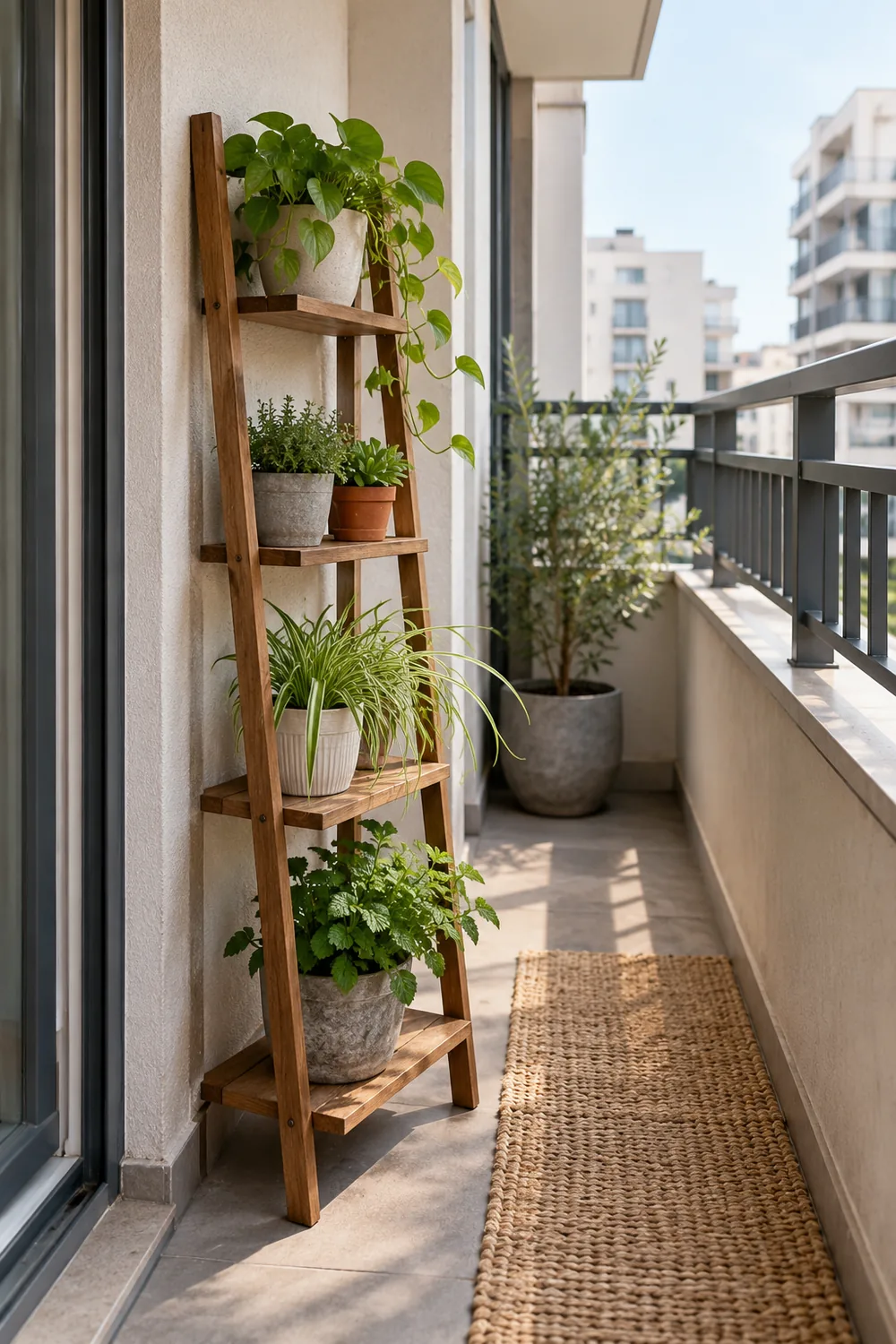
A freestanding ladder shelf draws the eye upward and collects small plants in one corner instead of scattering pots across the floor. That leaves more room for your feet and your chair.
Choose a shallow shelf that sits flat and cannot tip easily; place heavier pots on the lower levels. For more greenery-focused inspiration, explore these urban garden balcony ideas.
10. Bring Flower Boxes Inside the Railing
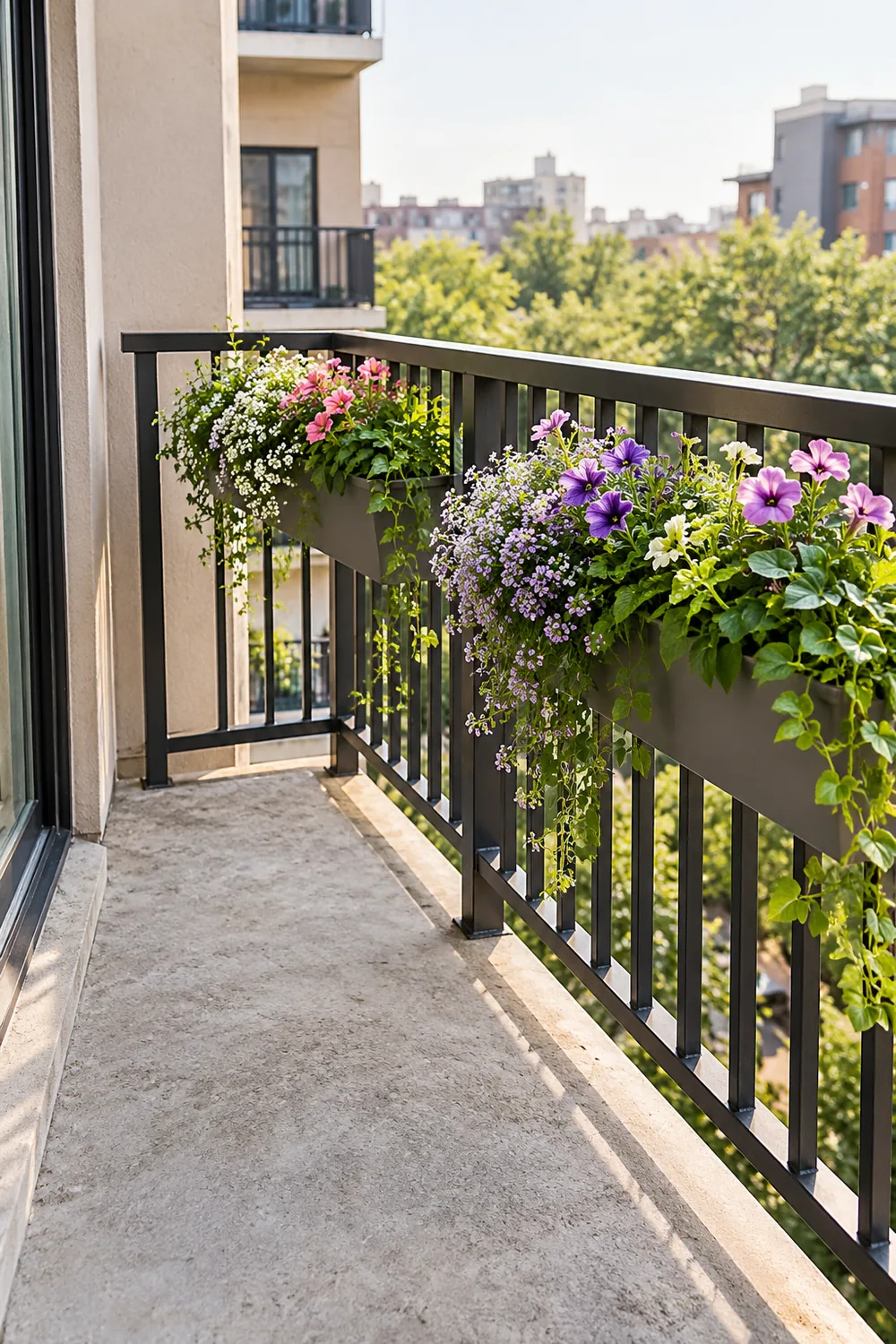
Rail planters add a generous band of color without claiming precious floor space. A pair of inexpensive boxes is often enough to make a plain metal railing feel softer and more personal.
Mount them on the inside only, use brackets suited to your railing, and follow your building rules and load limits. Pick plants for your actual sun exposure and avoid anything that could fall onto the space below.
11. Grow a Three-Pot Herb Garden
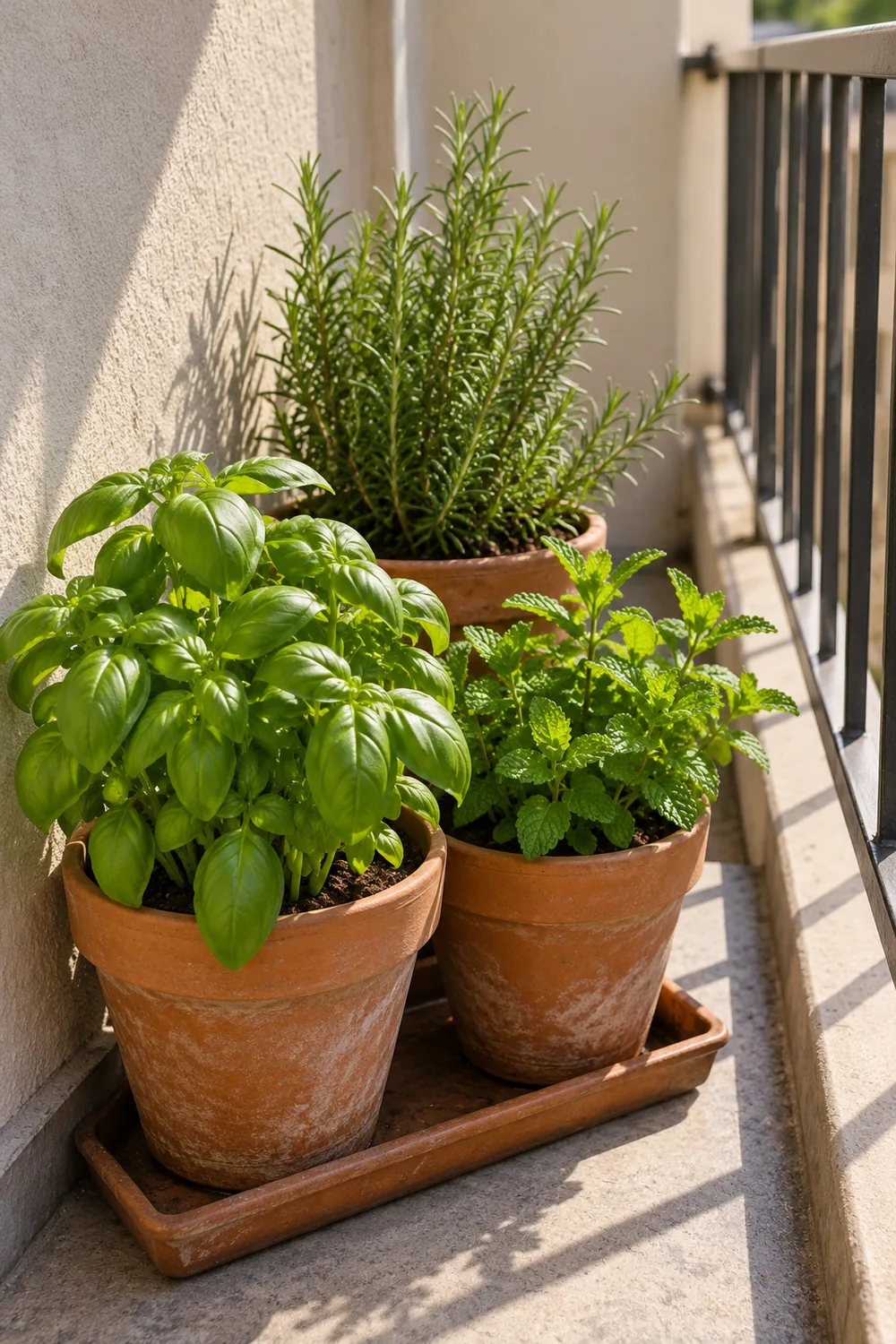
Fresh herbs make a small balcony feel useful as well as pretty. Three separate pots are easier to move around than one large planter, and you can start with plants you actually cook with.
Check each herb’s light and watering needs before grouping them; mint, for example, is easier to contain in its own pot. Set the pots on a tray to keep watering tidy. More ideas are in our balcony herb garden guide.
12. Mix and Match Secondhand Planters
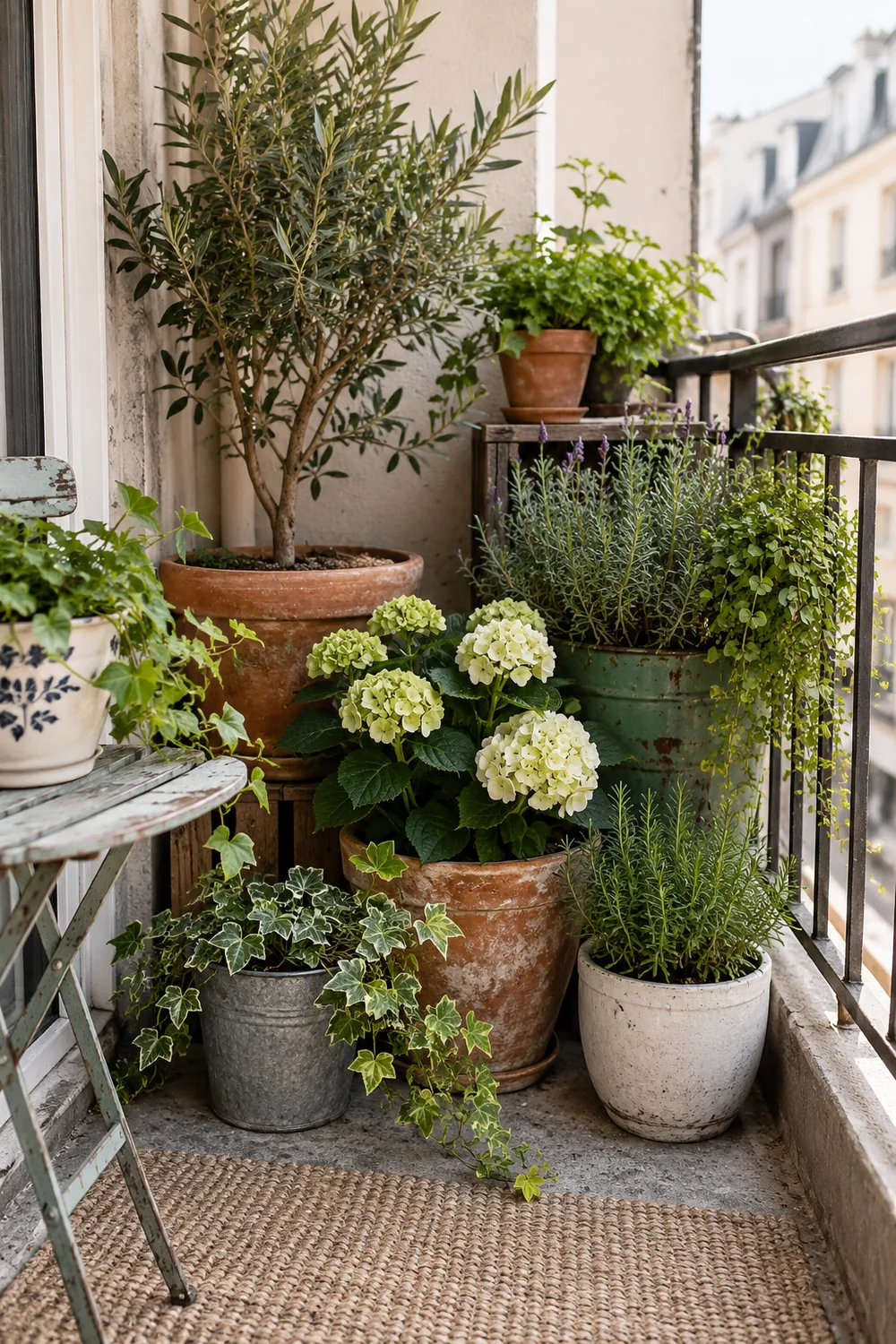
You do not need a matching collection of new pots for a cohesive balcony. Thrifted terracotta, a simple ceramic pot, and one weather-safe metal container create depth when their colors share a loose theme.
Group them at different heights in one corner rather than lining the entire walkway. Check for drainage holes or use nursery pots inside decorative containers, and keep saucers from overflowing onto neighbors below.
13. Create Privacy with a Freestanding Screen
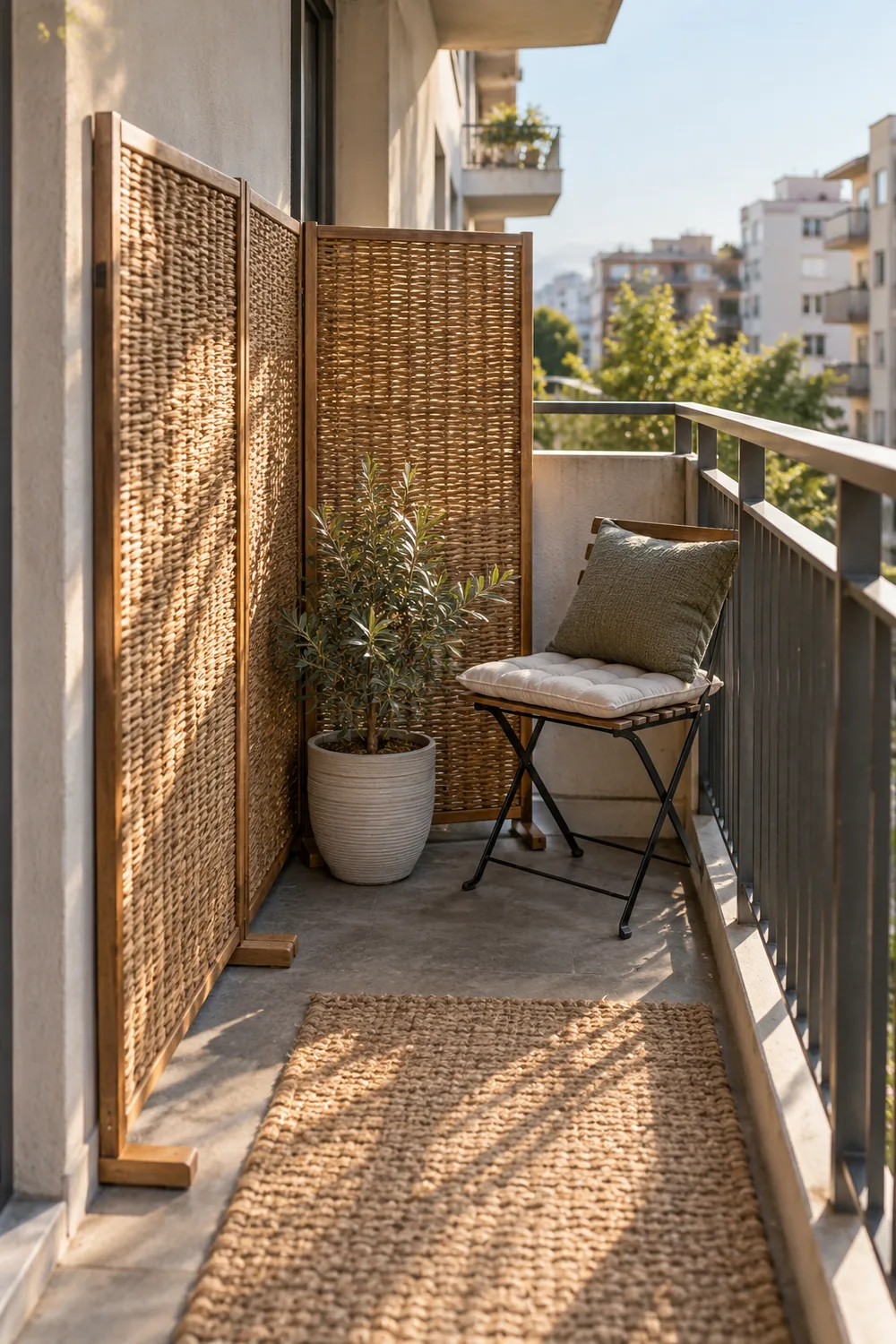
A freestanding screen can soften the view from a nearby apartment without drilling into a wall or covering the whole railing. The best one shields your seat while keeping the balcony open and airy.
Find a narrow, stable model that fits entirely within your space, and check building rules before buying. Wind is the deciding factor: bring lightweight screens inside when the weather picks up.
14. Add a Compact Shade Umbrella
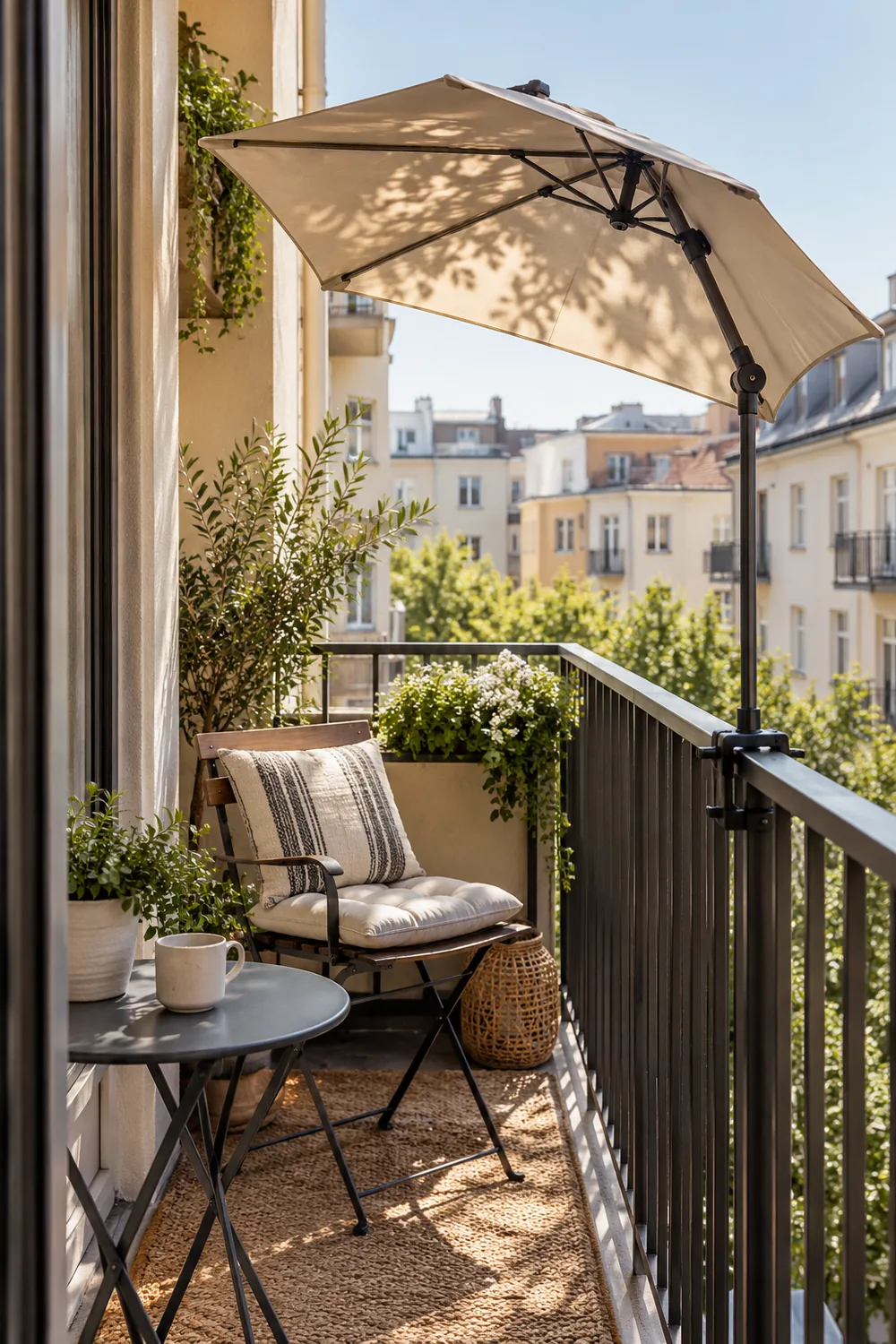
A small adjustable umbrella can make an exposed balcony usable during the sunniest hours. Unlike a large patio canopy, it can target one chair and fold away when you want the view back.
Only use a compatible, secure mount if your building permits it, and keep the canopy within your balcony boundary. Close and store it whenever you leave or winds rise; a pretty setup is never worth a loose umbrella.
15. Set Out a Pair of Solar Lanterns
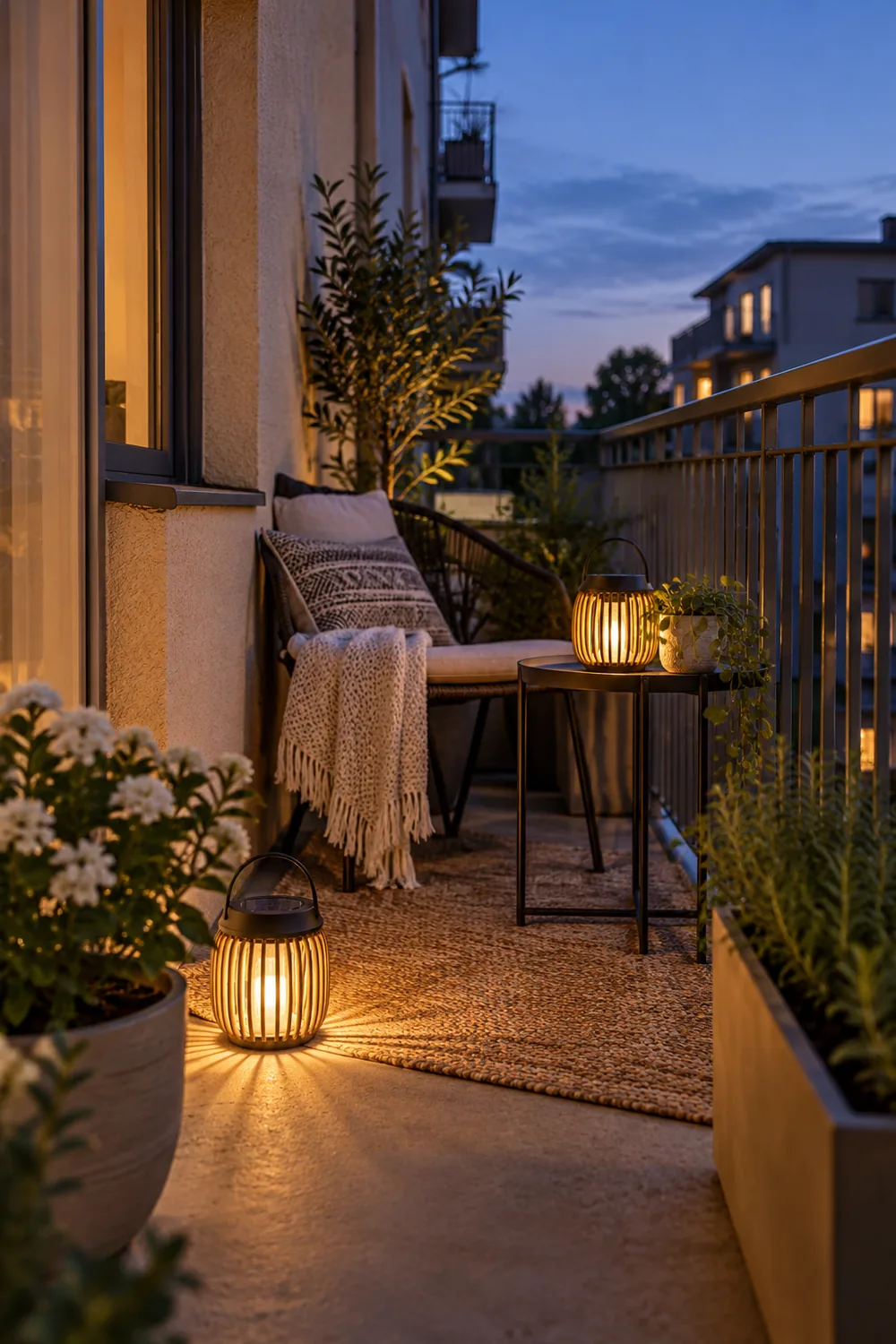
Solar lanterns give your balcony a gentle glow without routing a cable through the door. Two small lights at different heights look more intentional than a dozen scattered gadgets.
Place one beside the chair and another in a sheltered sunny spot where it can charge. Check that the lanterns are rated for outdoor use, and move them inside during severe weather to extend their life.
16. Clip Up Outdoor String Lights
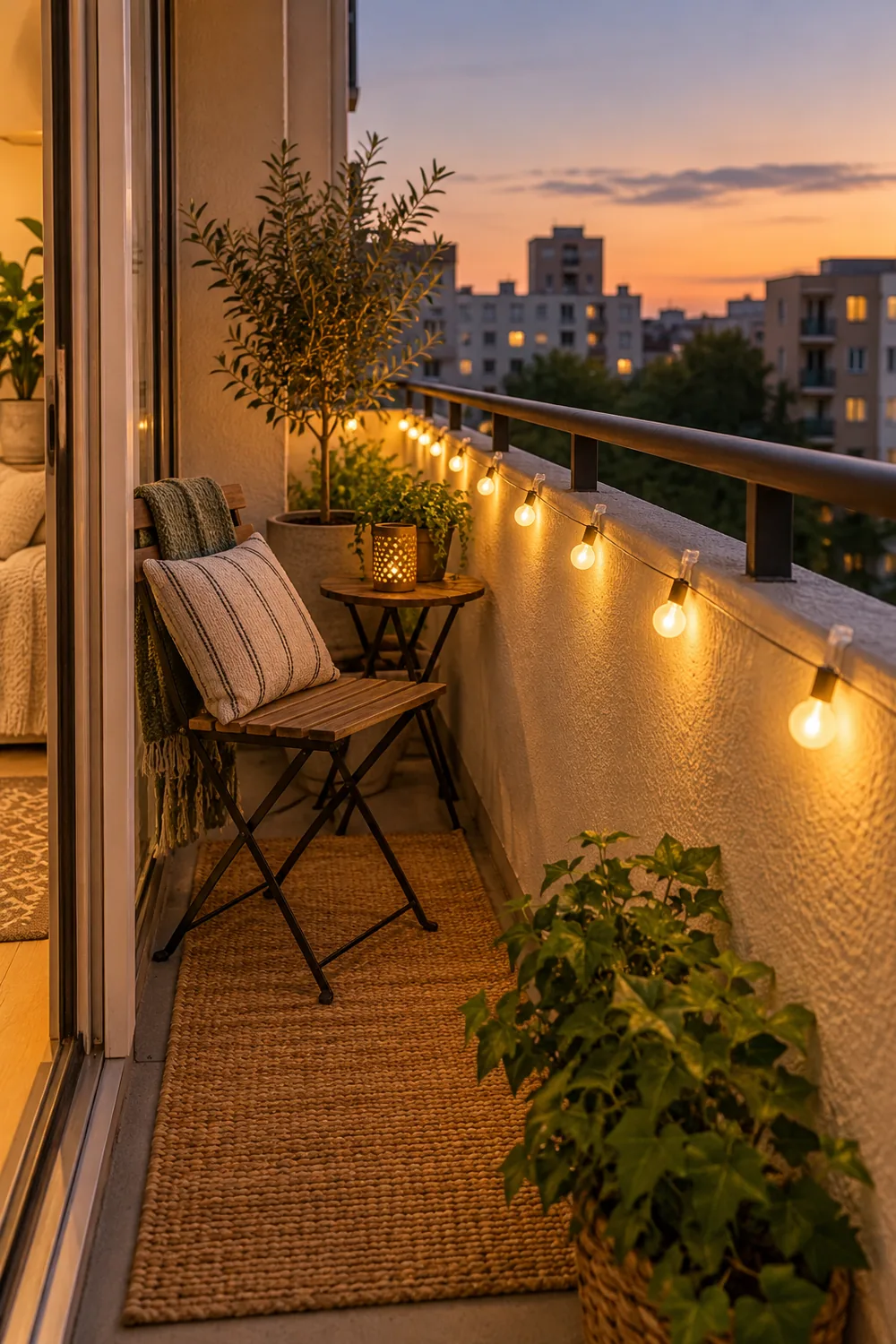
A short strand of warm lights instantly changes how a balcony feels after dark. Keep the line simple along an inside wall or approved rail section so it frames the seat instead of tangling across the space.
Choose outdoor-rated battery or solar lights and removable clips suited to the surface. Keep cords away from the doorway and never run lights where water can collect around a connection.
17. Try a Rechargeable Table Lamp
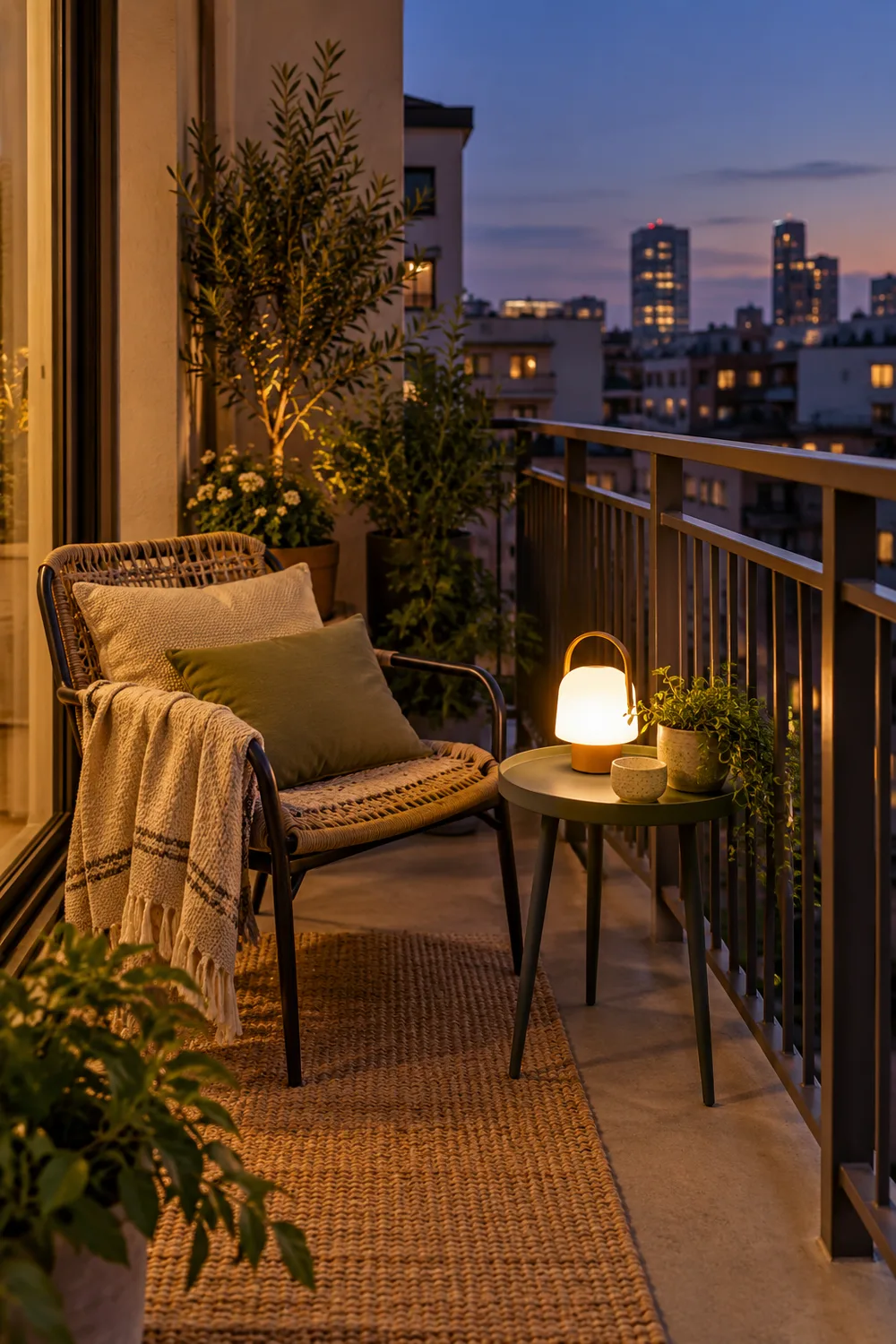
A cordless table lamp makes an ordinary side table feel like a tiny outdoor café. It is easy to move inside for charging and gives more focused light than decorative string lights when you want to read.
Look for an outdoor-rated model with a steady base, warm light, and simple controls. Keep it on a stable surface away from the edge, and store it indoors when it is not in use.
18. Roll Out a Slim Serving Cart
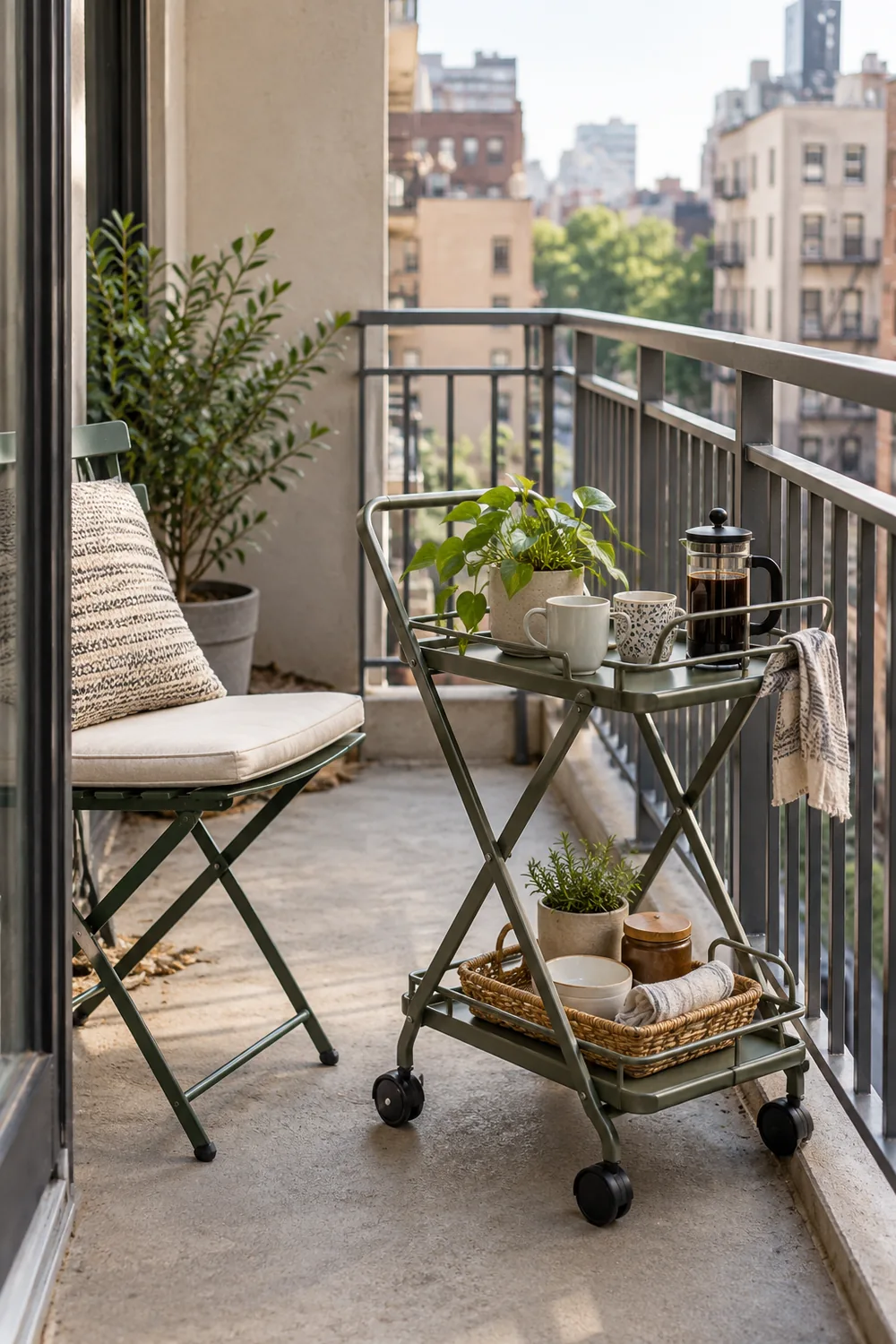
A small rolling cart can hold drinks, plant supplies, or a casual breakfast without becoming a permanent obstacle. It is especially useful if your balcony shifts between gardening and sitting.
Pick a narrow outdoor-safe cart with locking wheels and keep heavy items on the bottom tier. Roll it back inside after use if the metal is not weather-resistant, leaving the walking path clear.
19. Change the Look with Pillow Covers
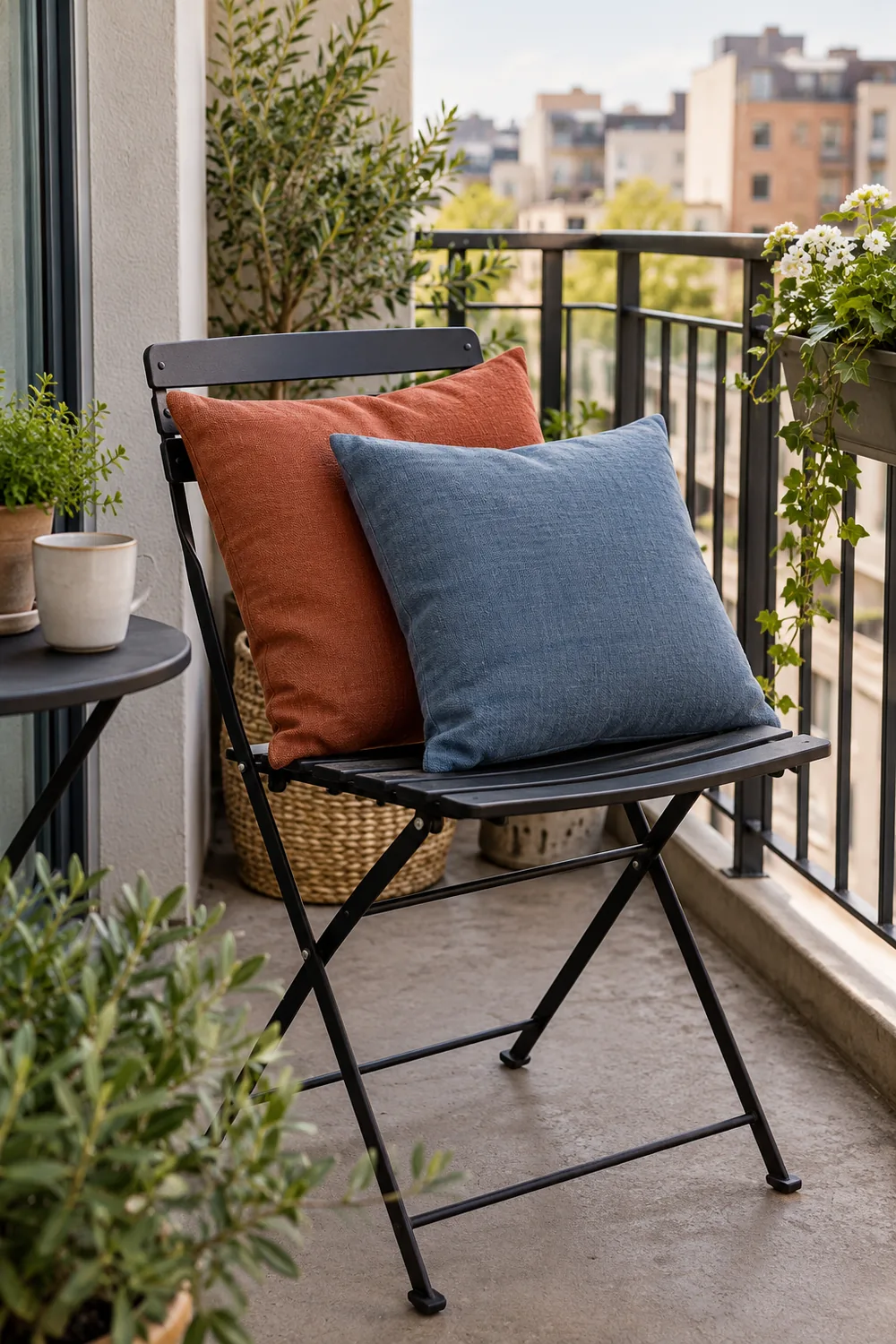
New outdoor furniture can wait. Swapping the covers on cushions you already own adds color and makes a basic folding chair feel connected to the rest of your home.
Use weather-resistant fabric in two colors that work with your pots or rug, and choose removable covers for easy washing. For a coordinated transition through the door, borrow a palette from your budget apartment living room.
20. Paint Plain Terracotta Pots
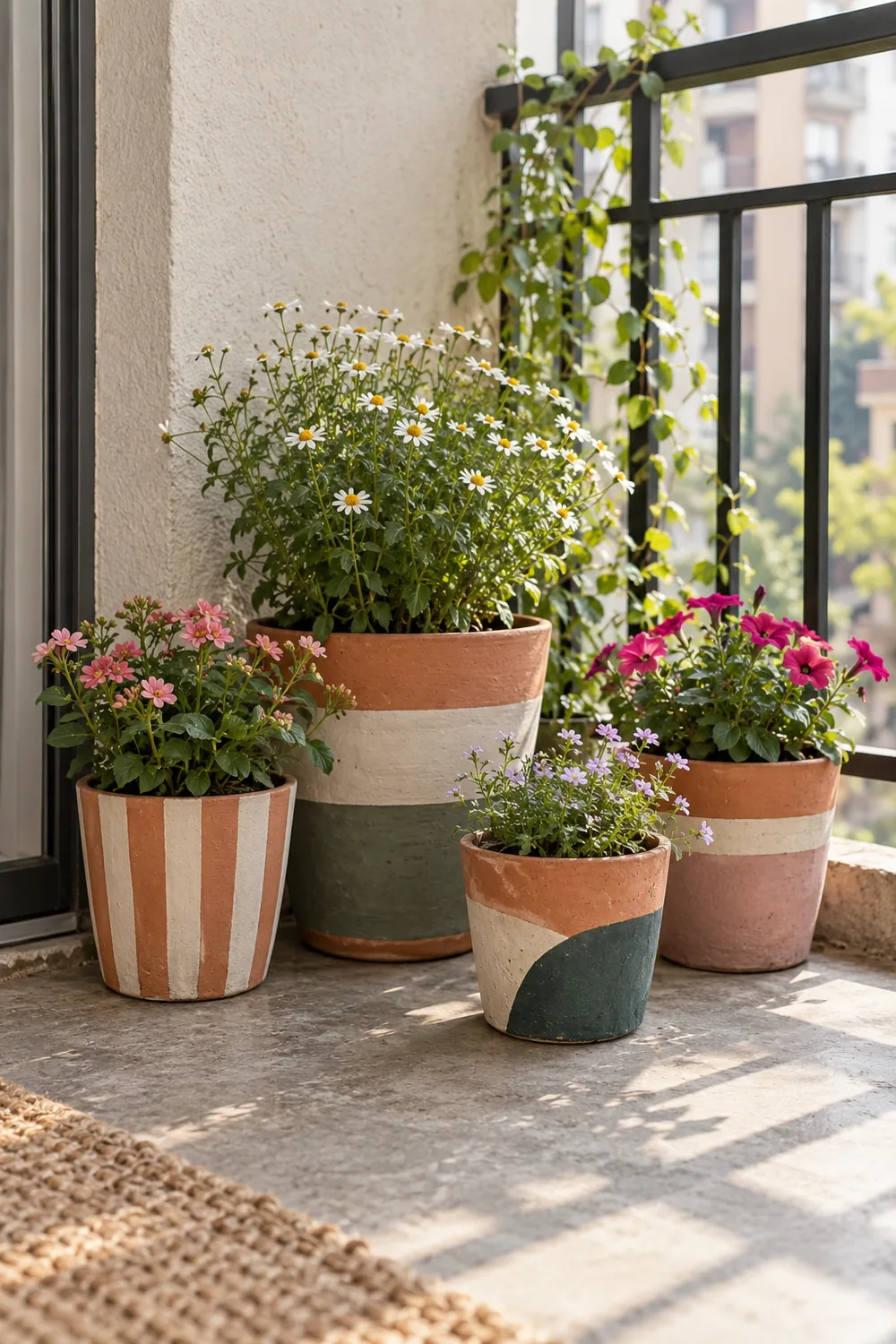
Inexpensive terracotta pots become a small custom collection with a few painted stripes or color blocks. It is a low-commitment way to test a bolder palette before buying cushions or a rug.
Keep the design simple and use materials suitable for porous pots and outdoor conditions. Let the paint dry thoroughly, maintain drainage, and group the finished pots together for more impact.
21. Make Watering Easier with Self-Watering Pots
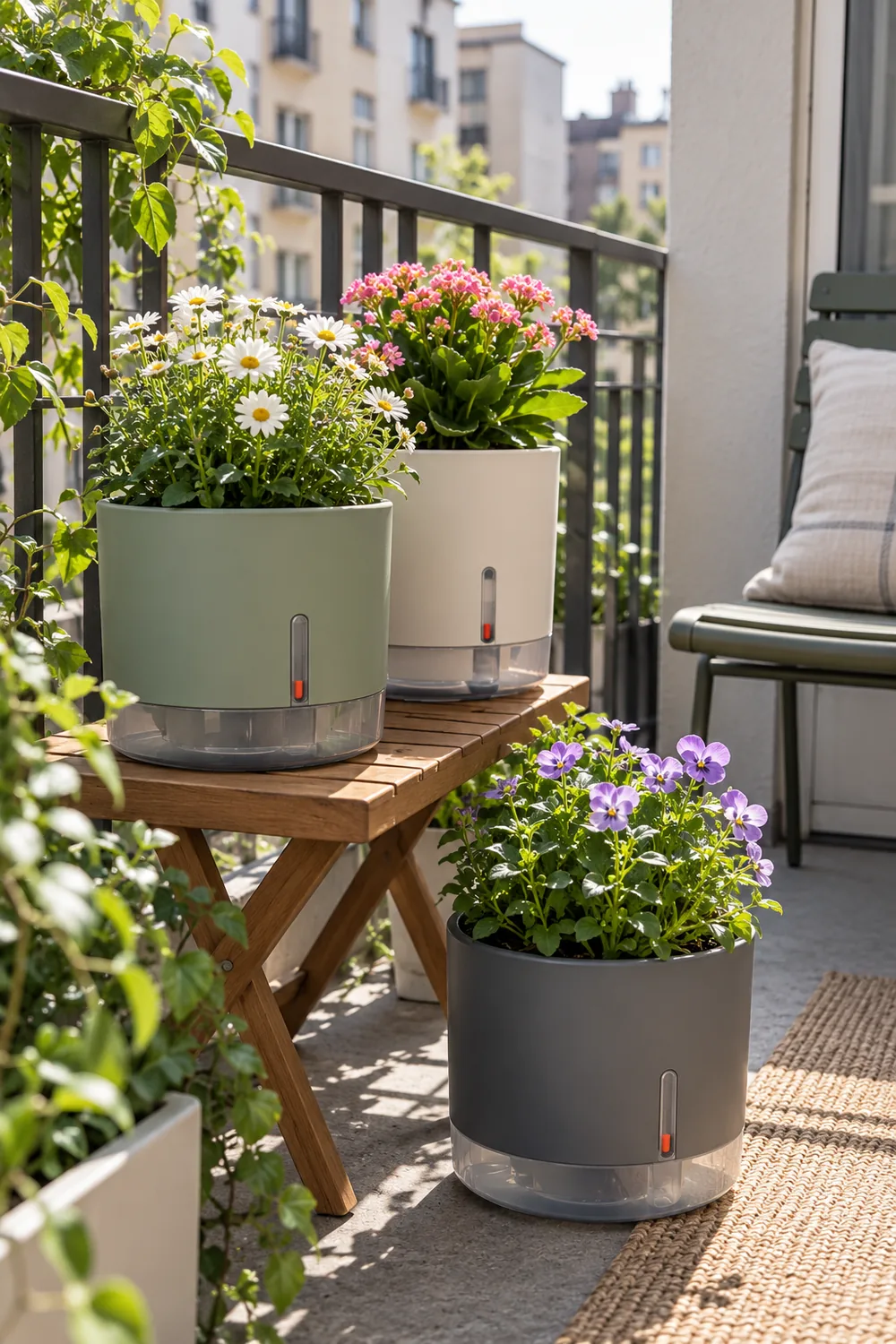
Self-watering planters can help a sunny balcony stay presentable when your schedule makes daily checks difficult. They also keep several small containers looking tidy in one compact group.
Choose sizes that suit the plants rather than oversized reservoirs, and check the water level regularly. These pots are a helper, not a substitute for matching plants to your balcony’s light, heat, and wind.
22. Repurpose Two Low Crates as Shelves
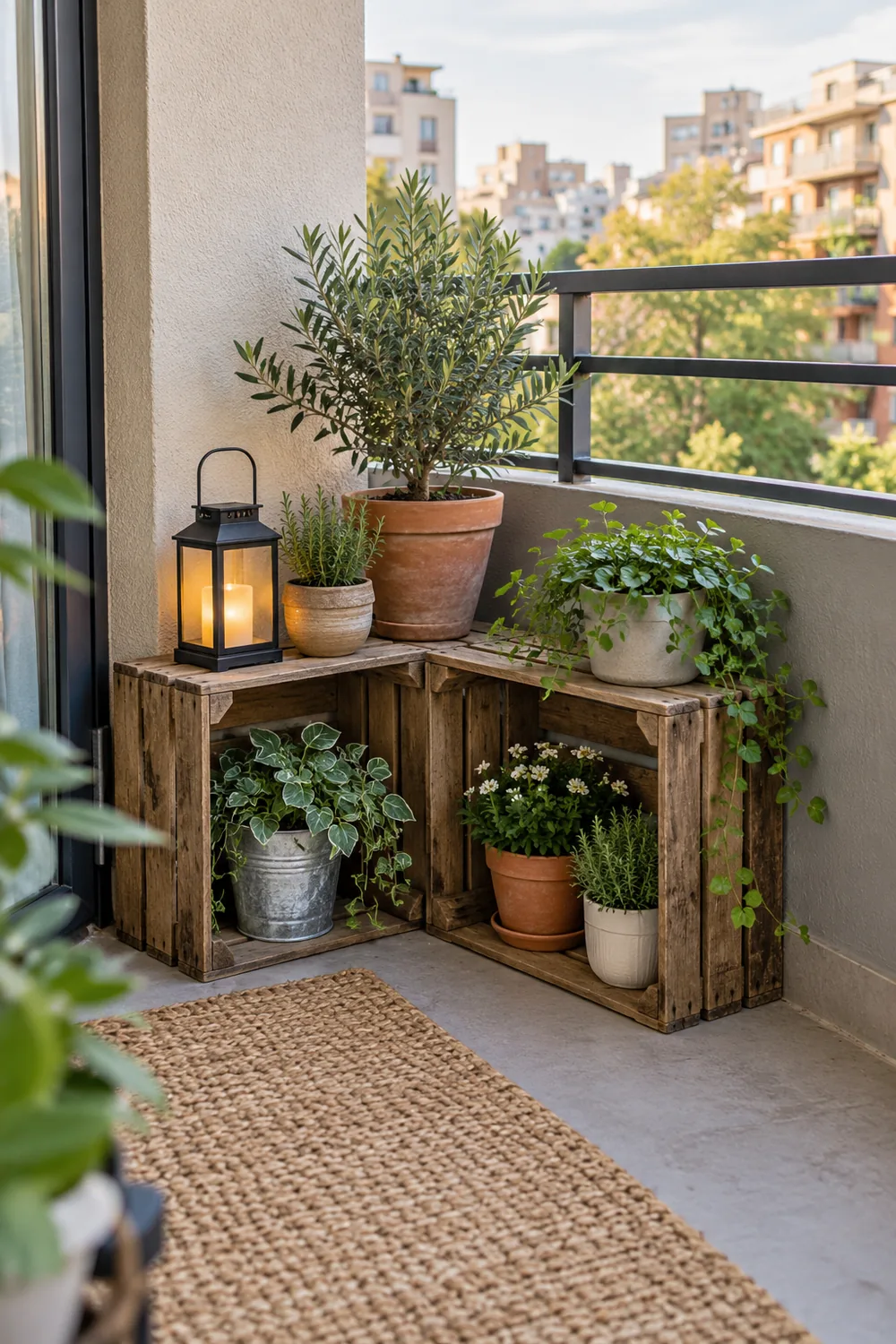
Two sturdy reclaimed crates can make an inexpensive display for a few pots and a lantern. Set them low against the wall and you gain useful levels without buying a tall shelf.
Sand rough edges, use an appropriate outdoor finish, and avoid stacking crates high or putting heavy planters on top. The display should stay stable and leave a clear route to the door.
23. Soften the Railing with Privacy Fabric
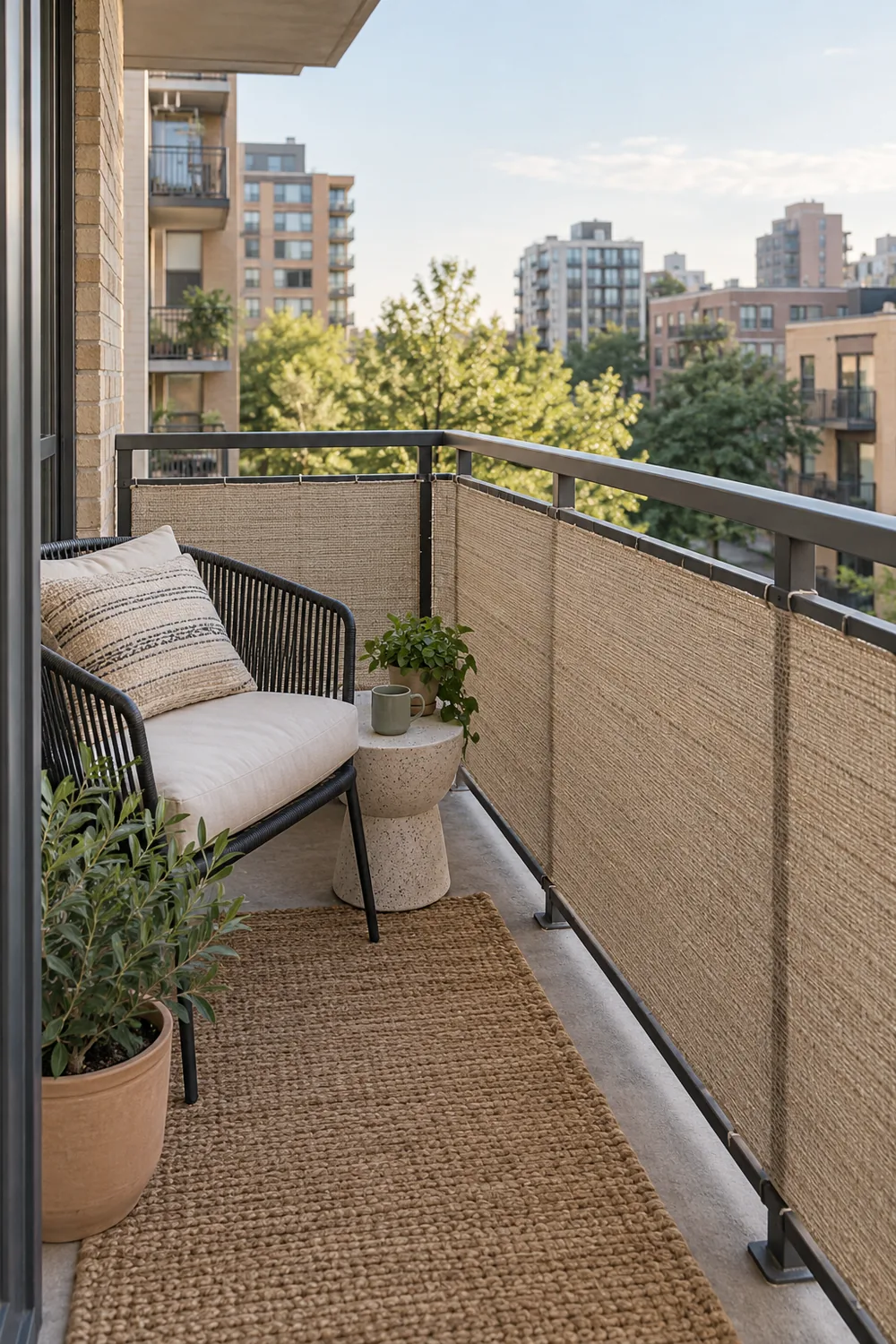
A simple outdoor privacy panel can hide a distracting lower-level view and make a chair feel less exposed. A neutral woven finish works with almost any plant and furniture color.
Check your building’s rules first. Fasten an approved panel securely on the inside of the railing, keep it below the top rail, and inspect it after strong wind. Never leave loose fabric to flap or fall.
24. Hide Supplies in a Small Deck Box
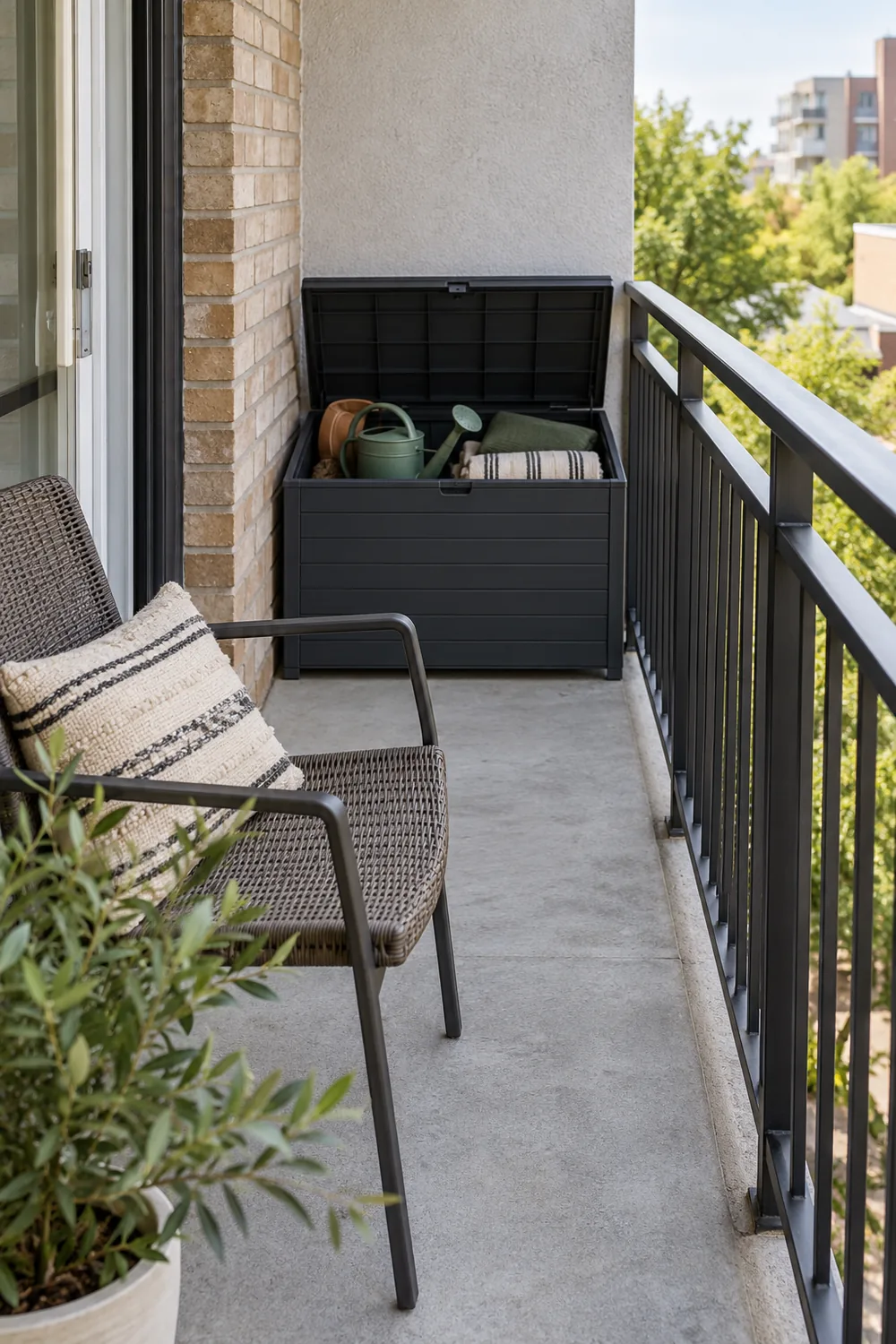
If you already have seating, a small deck box can keep gardening supplies, spare covers, and a watering can out of sight. Choose a low box for an unused end rather than another piece of furniture beside the door.
Measure the lid clearance and check the waterproof rating before storing fabric. Keep the box within your building’s load limits and leave a comfortable path through the balcony.
25. Let One Plant Make the Statement
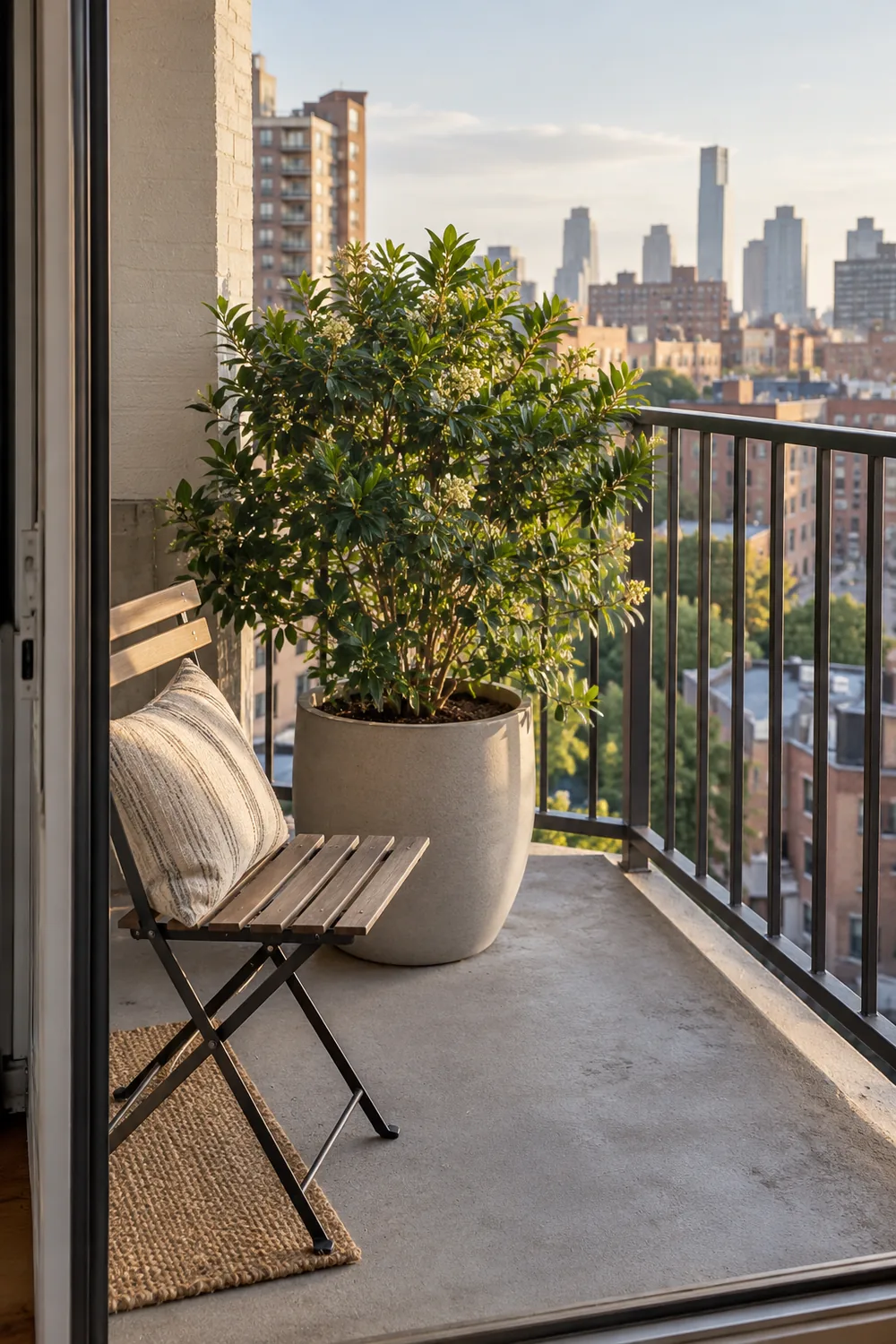
A balcony does not need a dozen pots to feel green. One healthy, well-placed plant can give a small space a focal point while leaving room to sit and move.
Choose a species suited to your sun and climate, start with a manageable pot size, and place it near the wall rather than at the exposed edge. The simpler layout is often the least expensive one to maintain.
You do not need all 25 ideas to make a difference. Pick one useful change, keep the layout easy to move through, and build a balcony you will actually use.