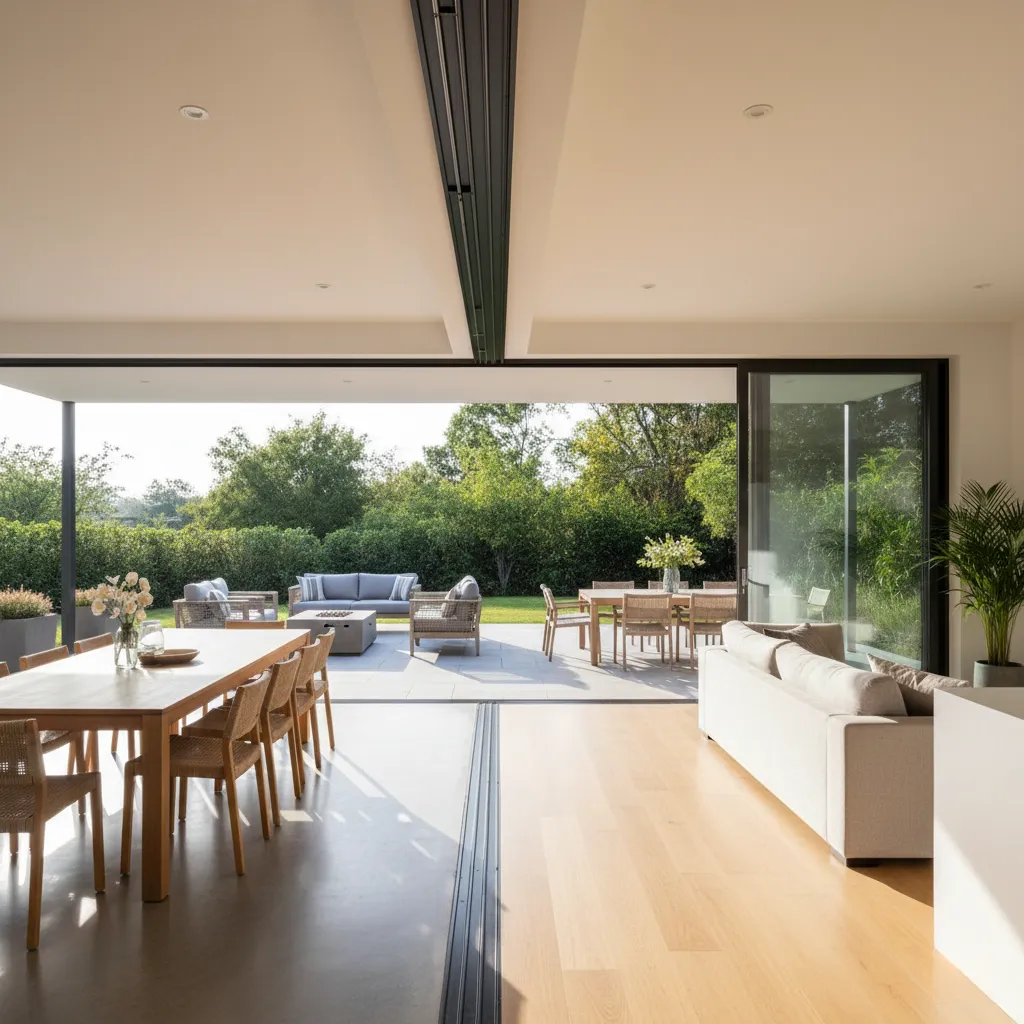
Open-concept living and dining room combos maximize space while creating a seamless flow that’s perfect for entertaining and modern family life. The key to success lies in creating distinct zones without sacrificing the open, airy feel that makes these layouts so appealing.
Defining Separate Zones
1. Area Rugs for Visual Division
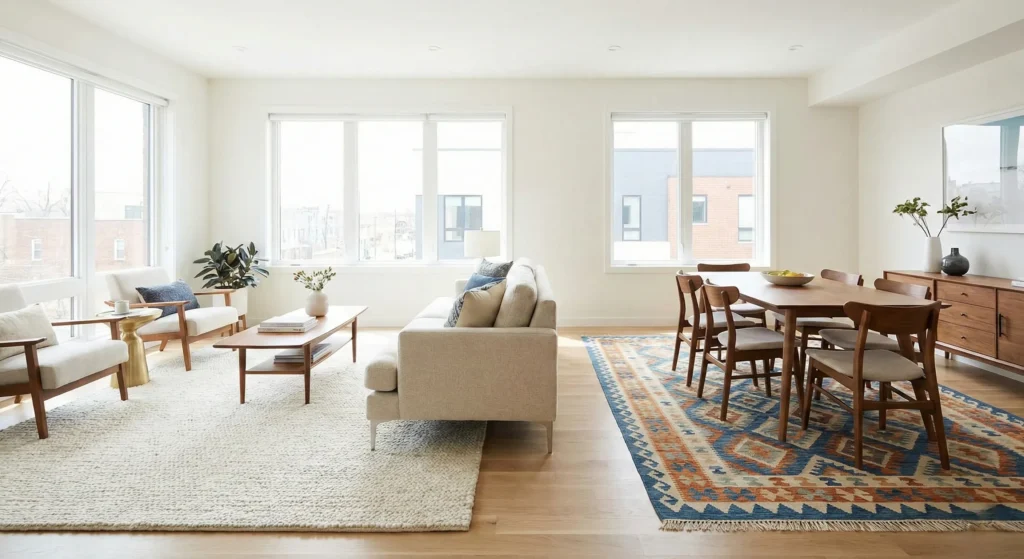
- Anchor each space with its own area rug to visually separate the living and dining zones
- Choose rugs with complementary colors or patterns that tie the spaces together while defining boundaries
- Ensure dining rugs extend at least 24 inches beyond the table on all sides so chairs remain on the rug when pulled out
2. Furniture Placement as Dividers
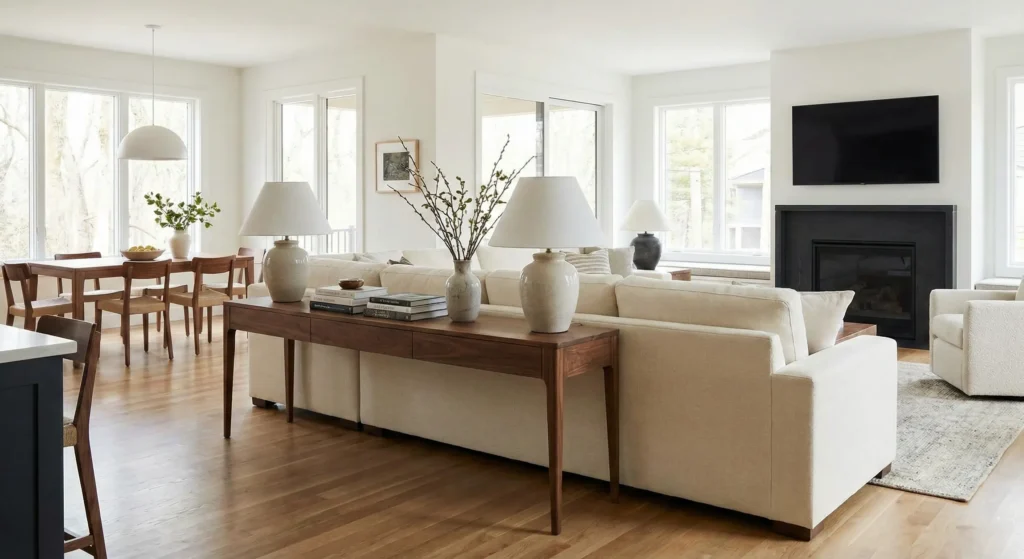
- Position the sofa with its back to the dining area to create a natural visual barrier between zones
- Place a console table behind the sofa for additional separation while adding functional surface space
- Use the furniture layout itself to guide traffic flow and establish distinct purposes for each area
3. Consistent Color Palette Throughout
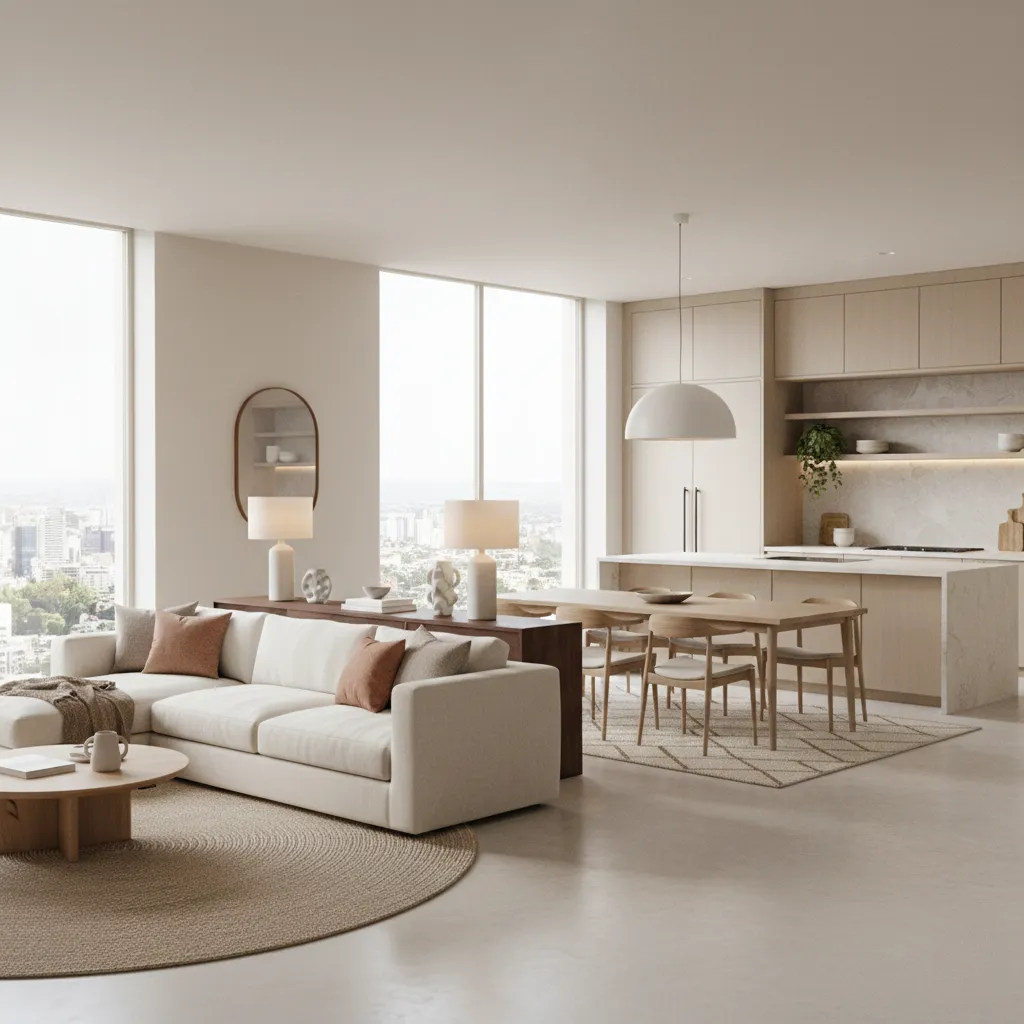
- Use the same or complementary colors across both zones for a unified and free-flowing atmosphere
- A harmonious color palette creates strong visual connection while maintaining cohesiveness
- Consider matching color palettes across kitchen, dining, and living areas to draw the eye naturally from zone to zone
Lighting Strategies
4. Statement Dining Chandelier
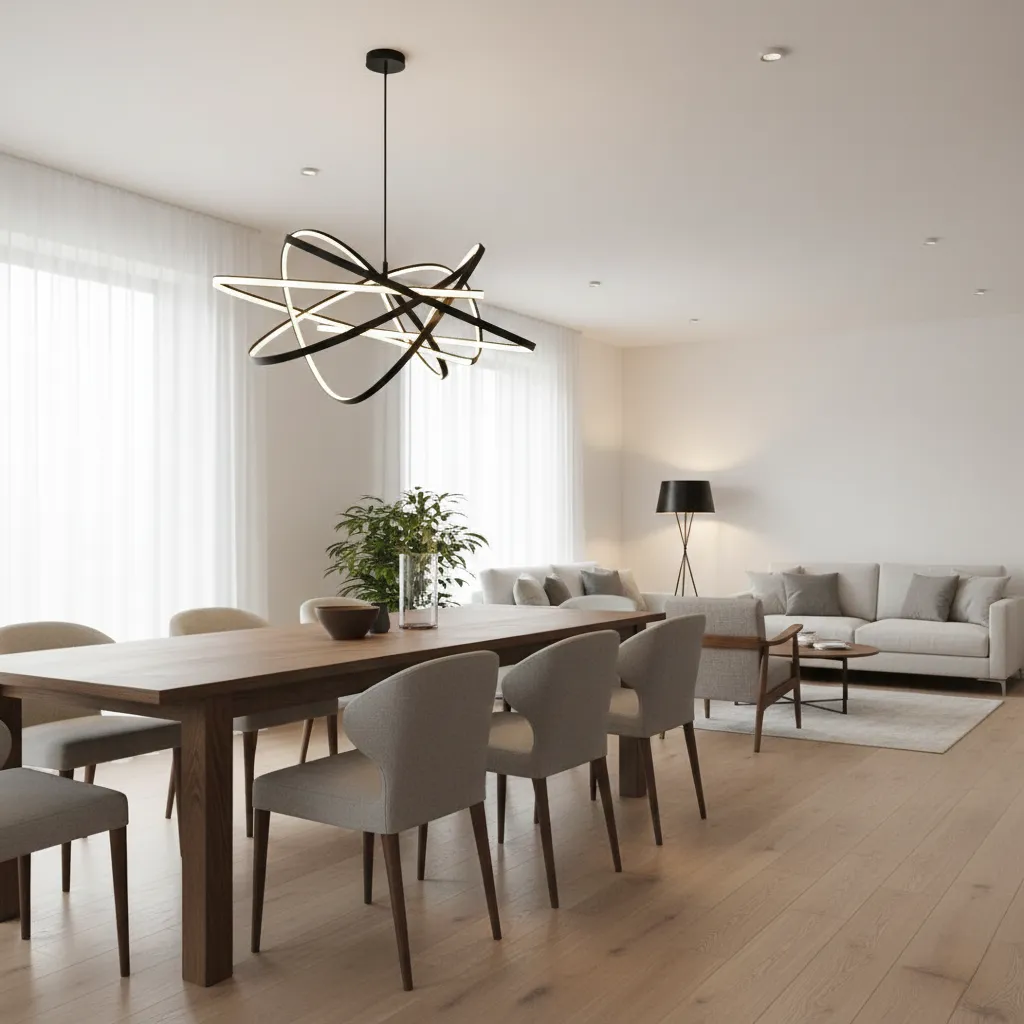
- Hang a bold pendant light or chandelier above the dining table to give the area purpose and focal point
- The lighting fixture helps the dining zone hold its own in an open plan layout
- Choose a chandelier that complements the living room lighting for visual continuity
5. Layered Living Room Lighting
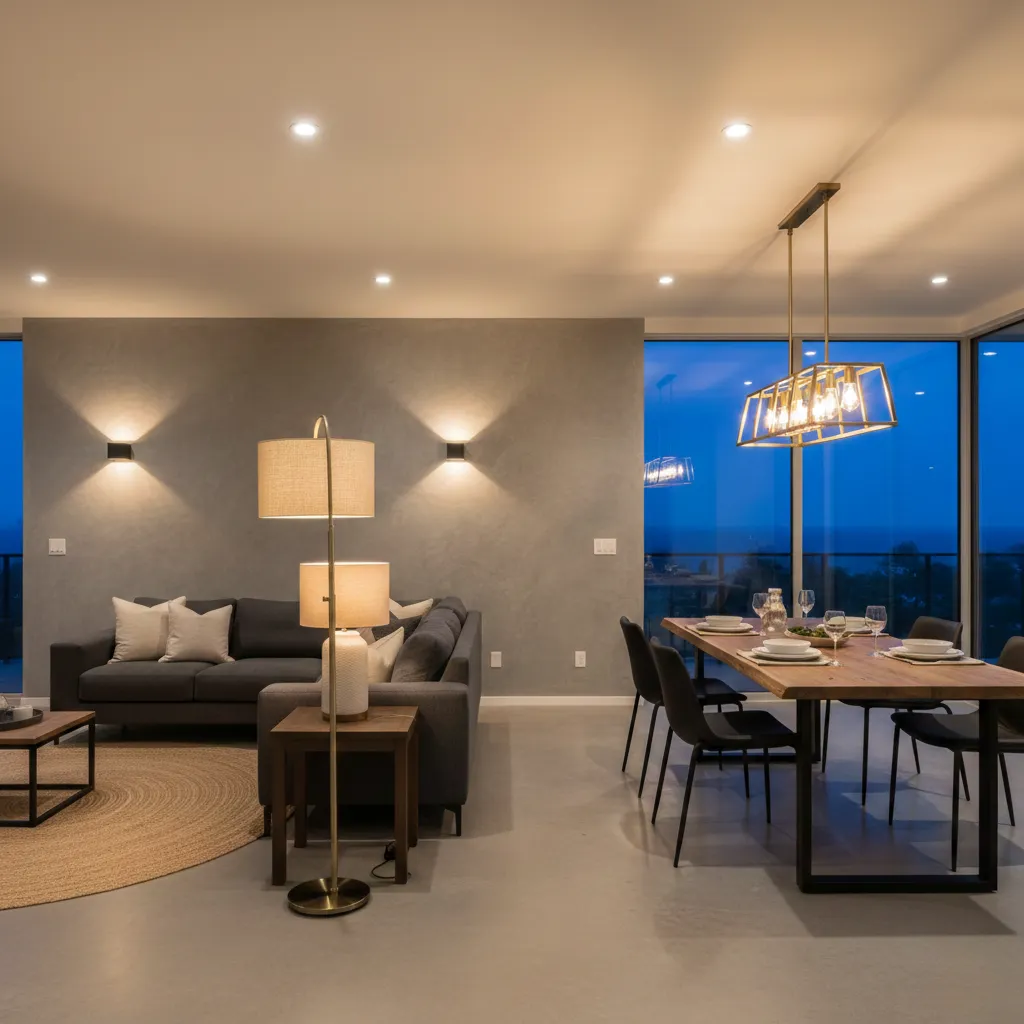
- Combine floor lamps, table lamps, and recessed lighting in the living area for flexible ambiance
- Adjustable lighting allows you to set different moods for dining versus lounging
- Use dimmers to control brightness levels independently in each zone
6. Matching Light Fixtures
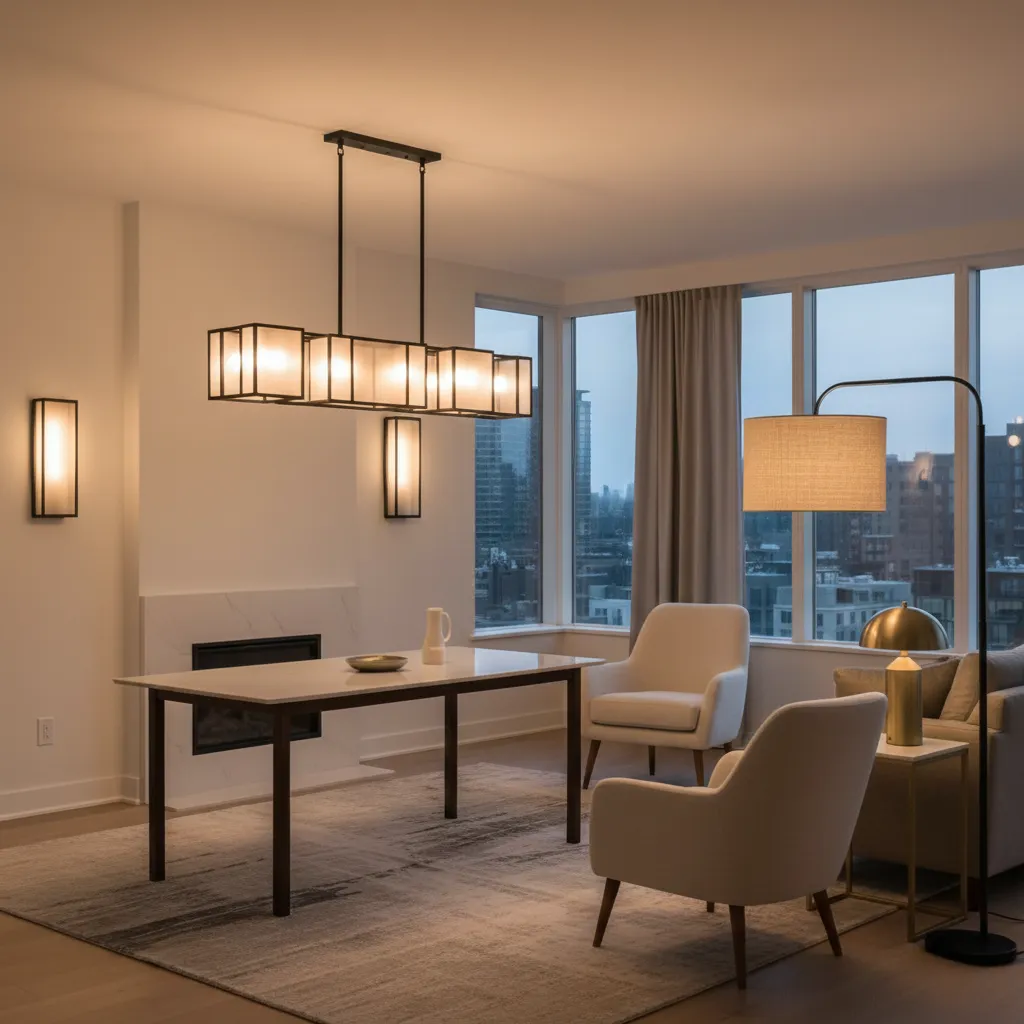
- Coordinate light finishes and styles between spaces to create cohesive flow
- Carry the same metals or design language from dining chandelier to living room sconces
- This simple swap creates visual harmony without requiring major renovations
Furniture Selection
7. Mix Heavy and Light Pieces
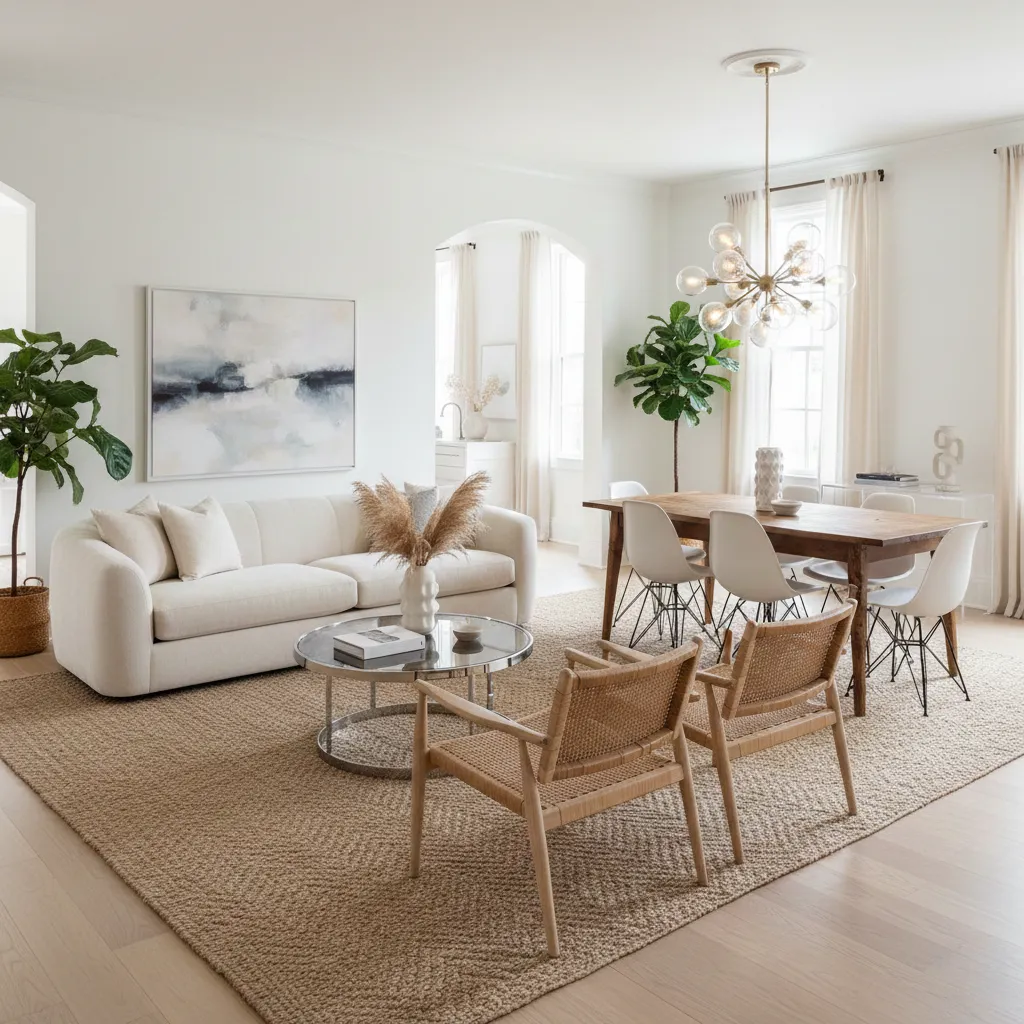
- Pair solid upholstered sofas with open, airy chairs to prevent the space from feeling cramped
- Lighter furniture pieces keep sightlines clear and maintain the open concept feel
- This balance creates visual interest while preserving spaciousness
8. Multifunctional Furniture
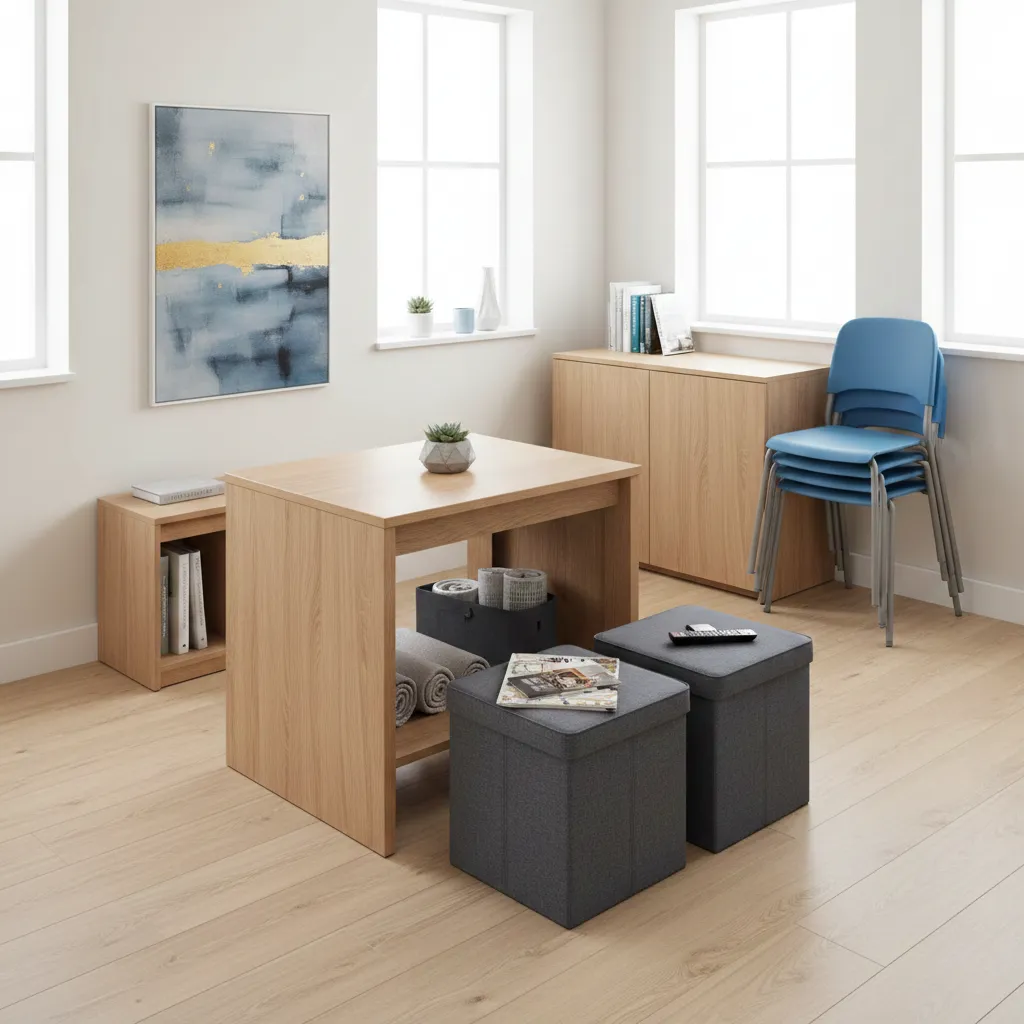
- Choose convertible dining tables that expand for guests and fold away when not in use
- Use storage ottomans that double as seating while hiding clutter
- Stackable chairs save space while accommodating dinner parties
9. Swivel Chairs Between Zones
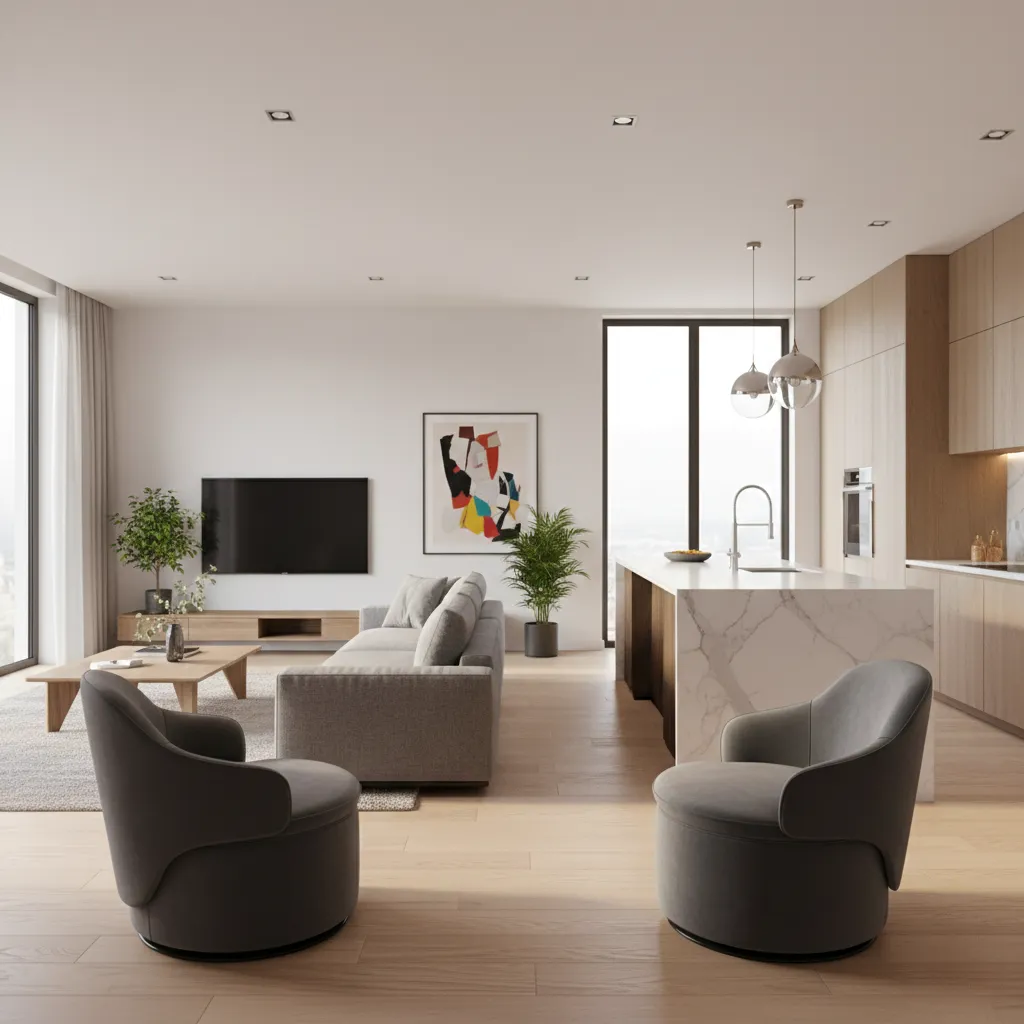
- Place a pair of swivel chairs between living and kitchen so guests can face either space
- These versatile seating options facilitate conversation in both areas
- Perfect for maintaining connection during meal prep and entertaining
Design Elements for Cohesion
10. Open Shelving Display
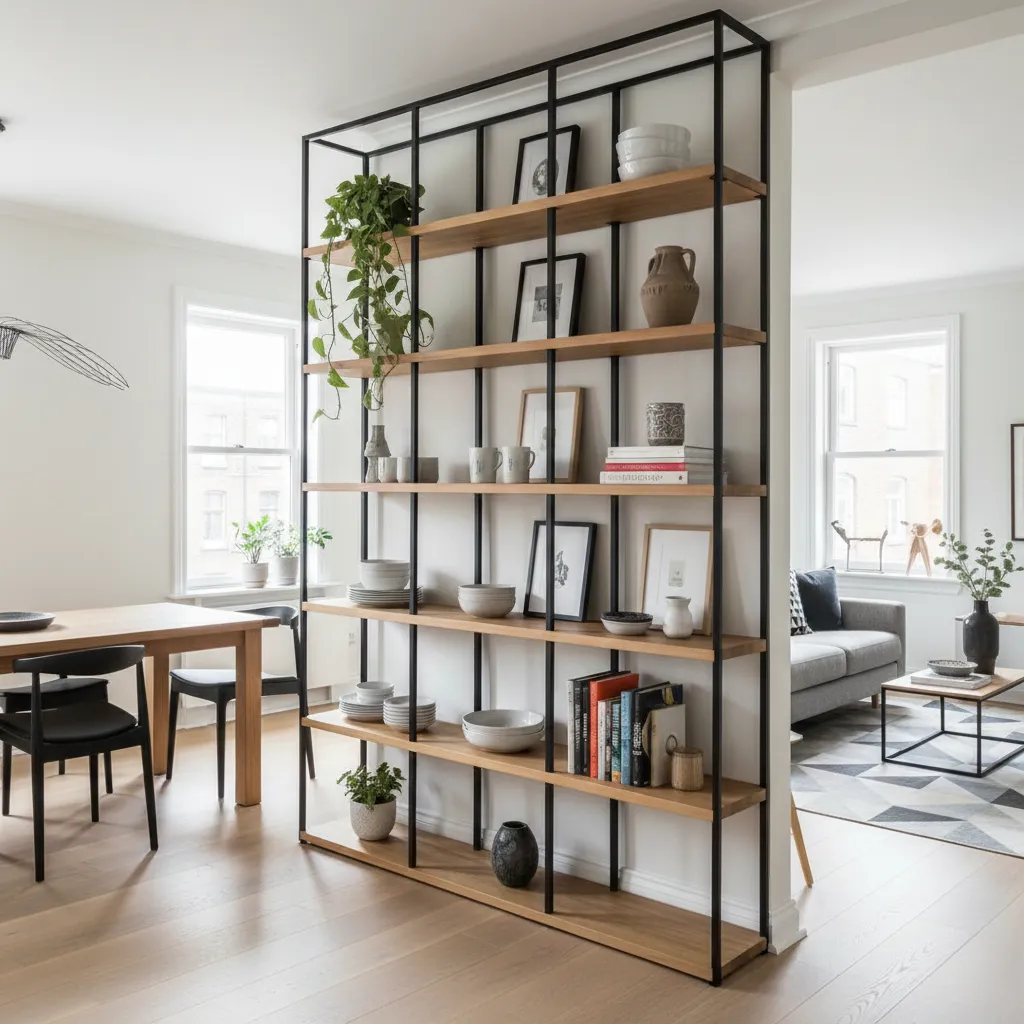
- Install open shelving to display stylish dishware and decor items that bridge both spaces aesthetically
- Choose shelf materials that complement existing furniture like warm wood or sleek metal
- Create a personal gallery of cherished items that adds personality to the combo space
11. Symmetrical Arrangements
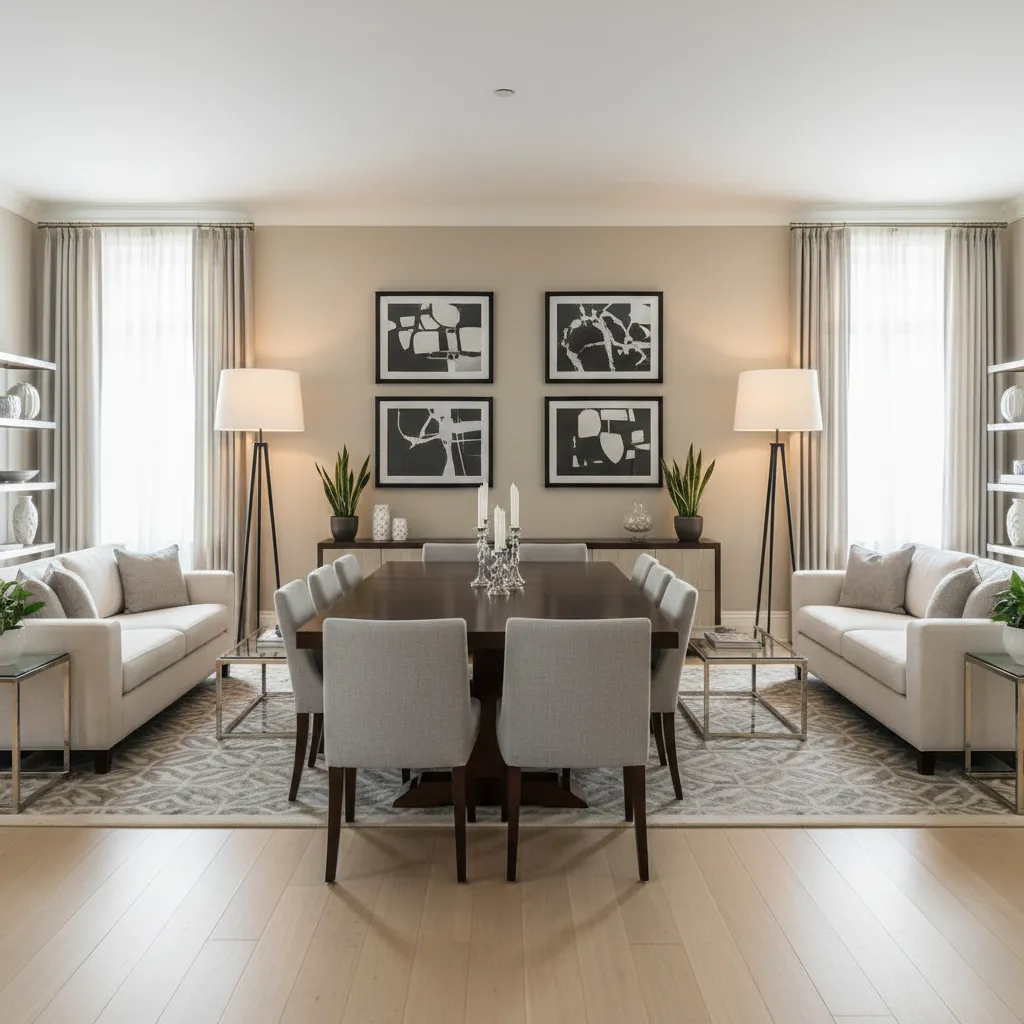
- Use symmetrical tables, centerpieces, and wall arrangements to elevate the overall look
- Place rectangular dining table at center surrounded by evenly spaced chairs for cohesive feel
- Mirror gallery walls on either side enhance visual interest while fostering pleasing order
12. Textured Accents Throughout
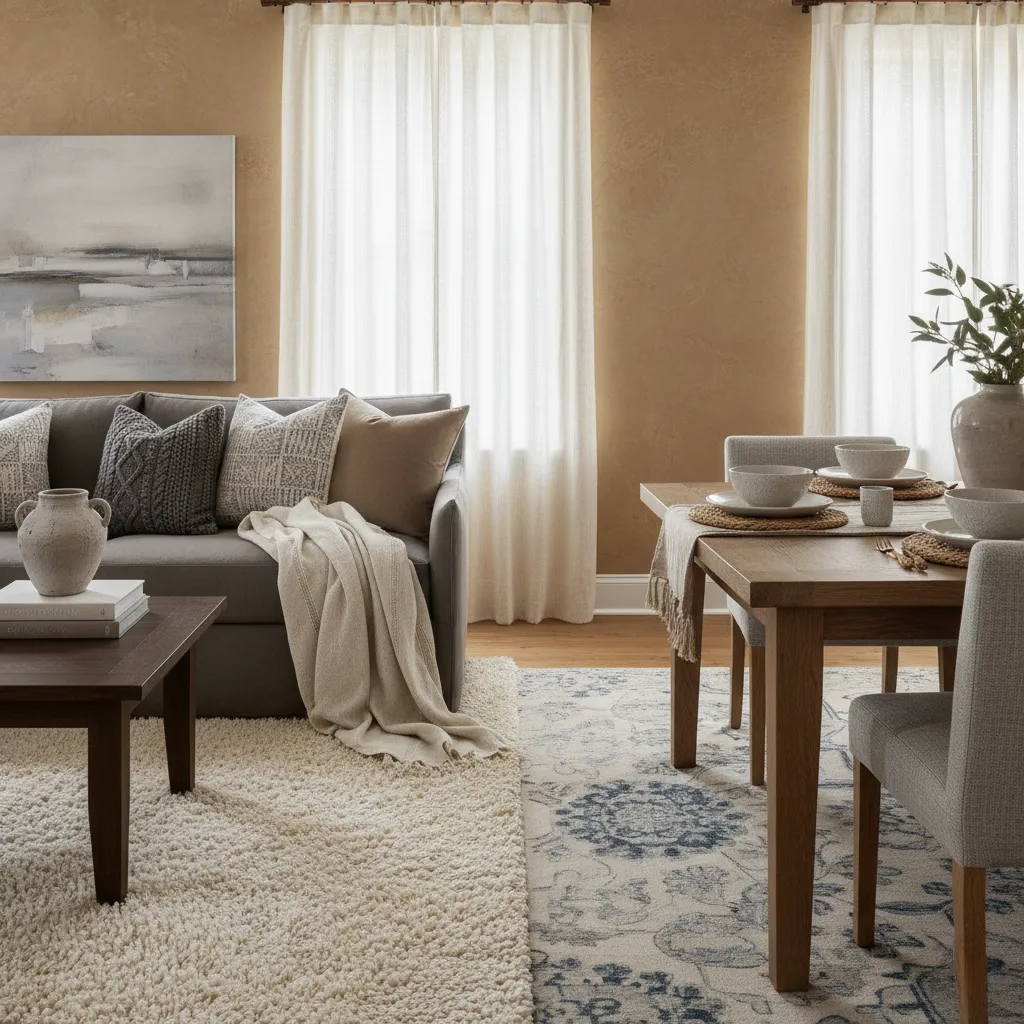
- Layer textures across both zones with throw pillows, curtains, table linens, and upholstery
- Incorporate cozy elements like textured tablecloths, placemats, and area rugs
- These tactile details add warmth and depth without overwhelming the space
Maximizing Space and Flow
13. Embrace Minimalism
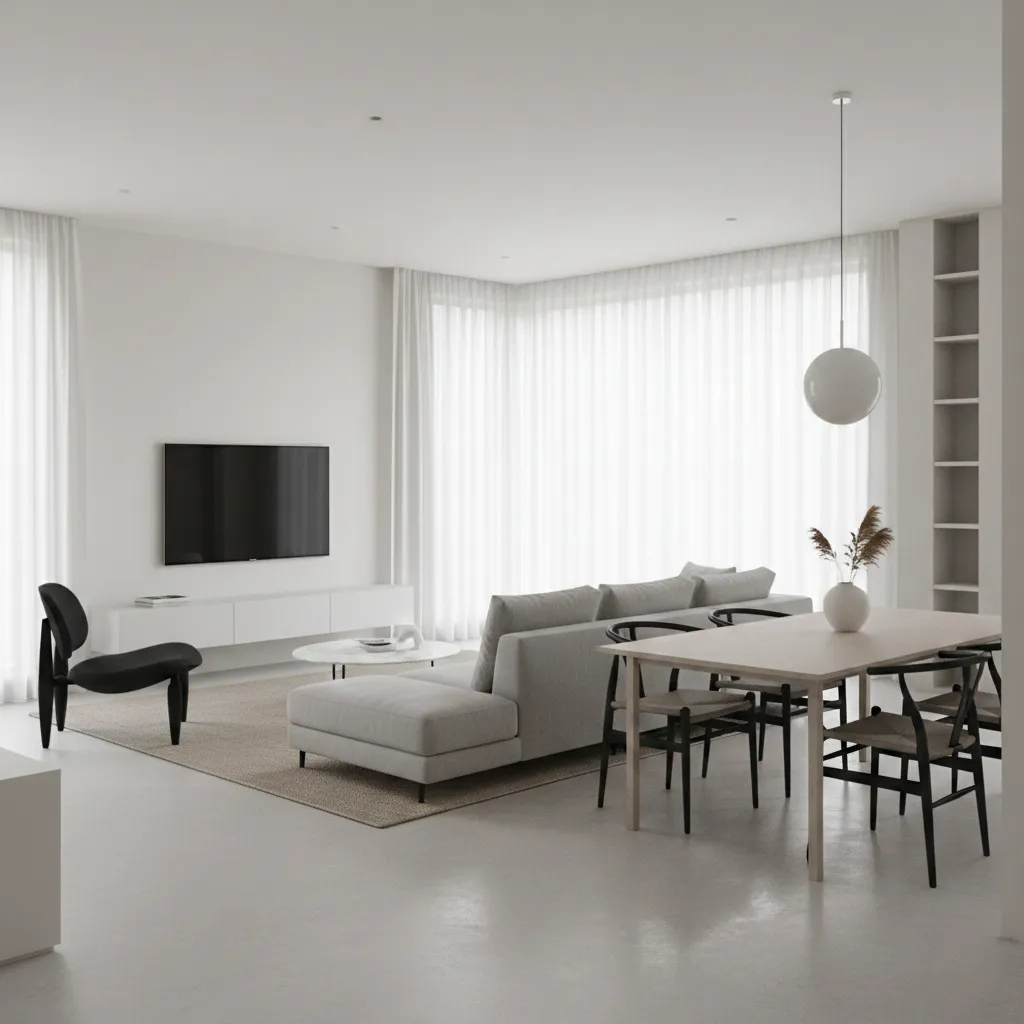
- Use neutral color palette and sleek furniture to create airy feel that highlights spaciousness
- Focus on simplicity and functionality to cultivate calm in open layouts
- Remove visual clutter by choosing furniture with clean lines
14. Maximize Natural Light
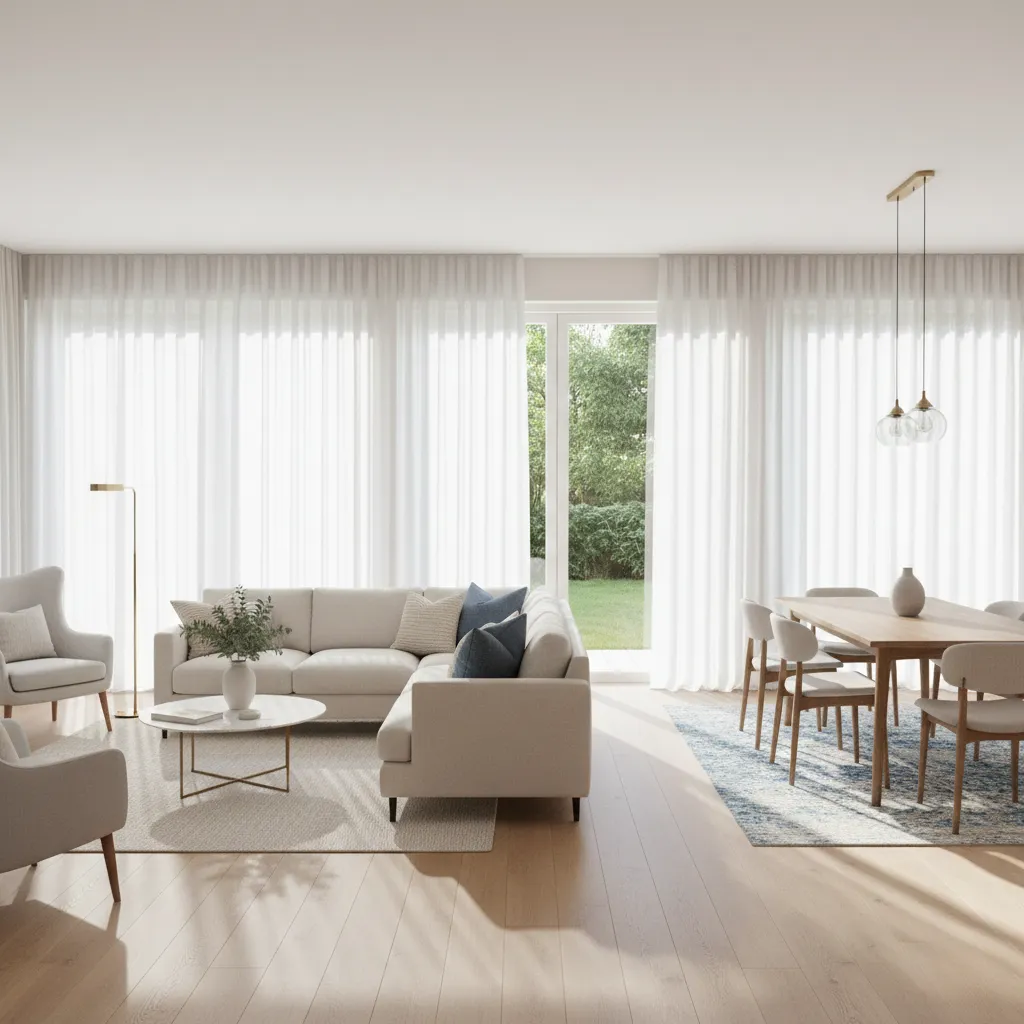
- Use large windows or sliding glass doors to usher in natural light making both areas feel larger
- Natural light makes spaces feel more vibrant and expansive
- Consider sheer curtains that filter light while maintaining privacy
15. Outdoor Connections