You can turn pallets into bright herb trellises, bend branches into a romantic arch for roses, or snap together a metal lattice for cucumbers that looks sleek and stays sturdy.
A repurposed ladder gives tomatoes a runway with perfect airflow, while a simple bamboo‑stake‑and‑wire‑mesh combo supports beans without breaking the bank. Indoor herbs love a vertical shelf, and a rope‑wrapped post adds ivy flair.
Even a solar‑lit trellis can jazz up evenings, and a chicken‑wire‑and‑rebar frame offers rugged, low‑cost charm—keep scrolling for the full 23‑step guide.
Pallet‑Wood Trellis for Herbs
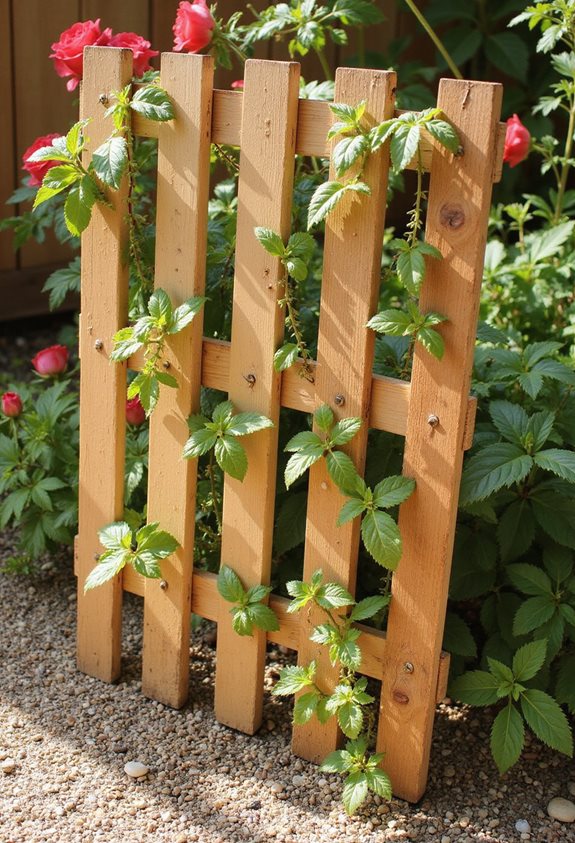
When you’re looking for a cheap, eco‑friendly way to keep your herbs upright, a pallet‑wood trellis is a perfect choice. You’ll sand the slats, then nail them into a simple A‑frame that fits your garden bed. Paint it bright, and watch basil and thyme climb like tiny climbers. It’s sturdy, looks rustic, and saves money—plus, you’ll feel like a garden wizard every time you harvest fresh flavor. Incorporating a space-saving design allows you to maximize your herb garden potential without sacrificing aesthetics.
Rustic Branch Arch for Climbing Roses
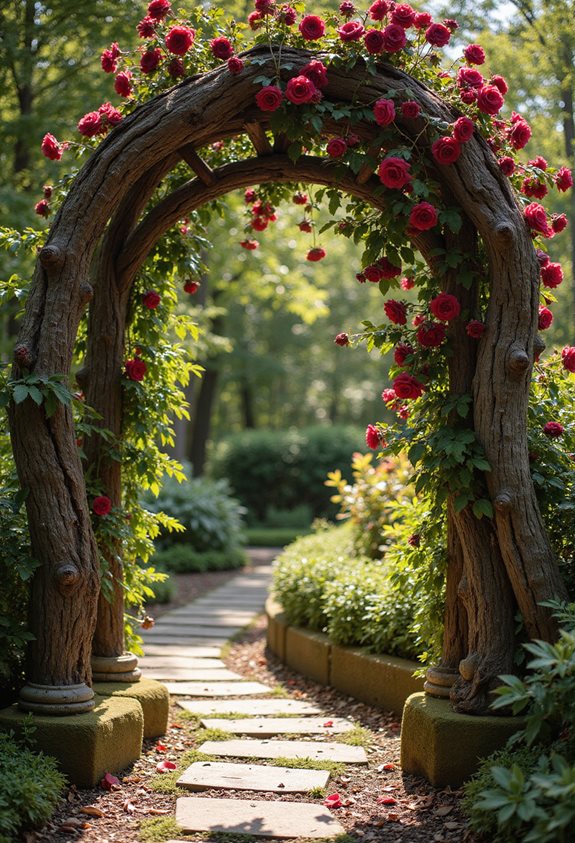
Ever wondered how a simple branch can turn your garden into a fairy‑tale rose haven?
You can gather sturdy, curved branches, shape them into an arch, and secure them with garden twine or a wooden frame.
Plant climbing roses at the base, let tendrils hug the wood, and watch them bloom into a romantic canopy.
It’s rustic, cheap, and instantly magical. Incorporating elements from your garden, such as greenery and flowers, can enhance the overall aesthetic of your trellis.
DIY Metal Lattice for Cucumbers
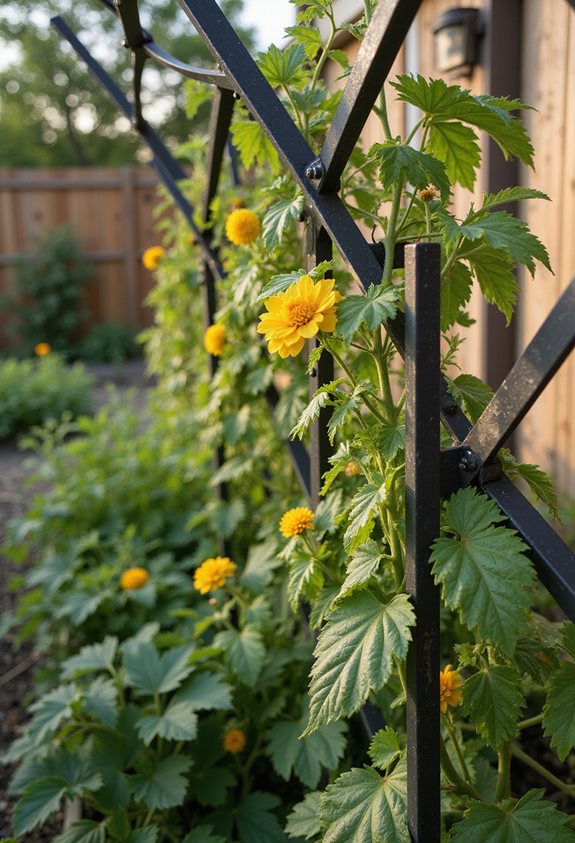
A sturdy metal lattice can turn a simple cucumber patch into a vertical garden that’s both practical and eye‑catching, just like the rustic branch arch did for roses. You’ll attach the lattice to sturdy posts, then weave the vines through the bars as they grow. The metal stays strong, resists rust, and lets sunlight reach every leaf. Watch cucumbers climb, and enjoy easy harvesting without sprawling vines. Additionally, using vertical space utilization in your garden design can maximize your planting area and enhance the aesthetic appeal of your outdoor space.
Repurposed Ladder Trellis for Tomatoes
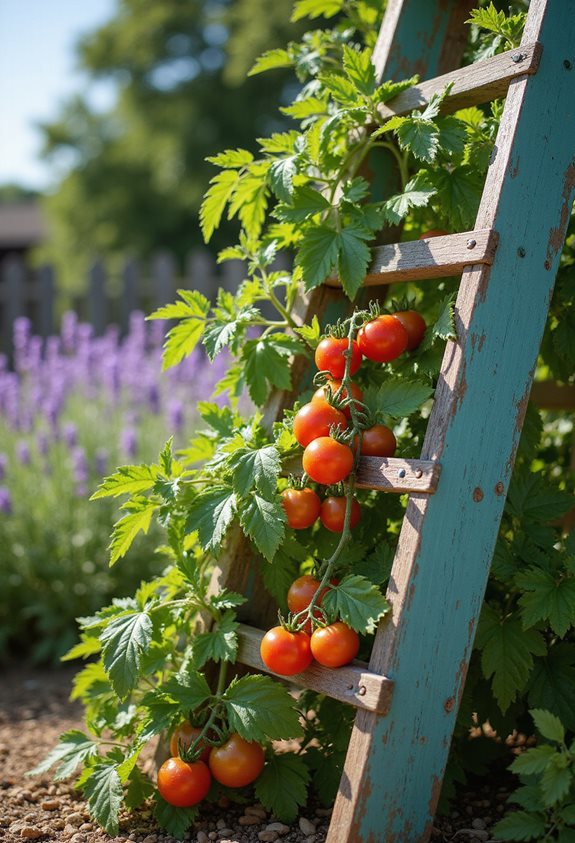
Ever wondered how a forgotten garden ladder can become a tomato‑taming hero? You’ll lean the sturdy rungs against the fence, tie string or zip‑ties at each step, and let vines climb. The ladder’s height gives tomatoes space, while the gaps let air circulate, preventing mildew. Plus, it looks quirky—your veggies get a stylish, sturdy runway without spending a dime. Additionally, ensuring proper airflow in your garden setup can further enhance plant health and promote robust growth.
Simple Bamboo Stakes With Wire Mesh
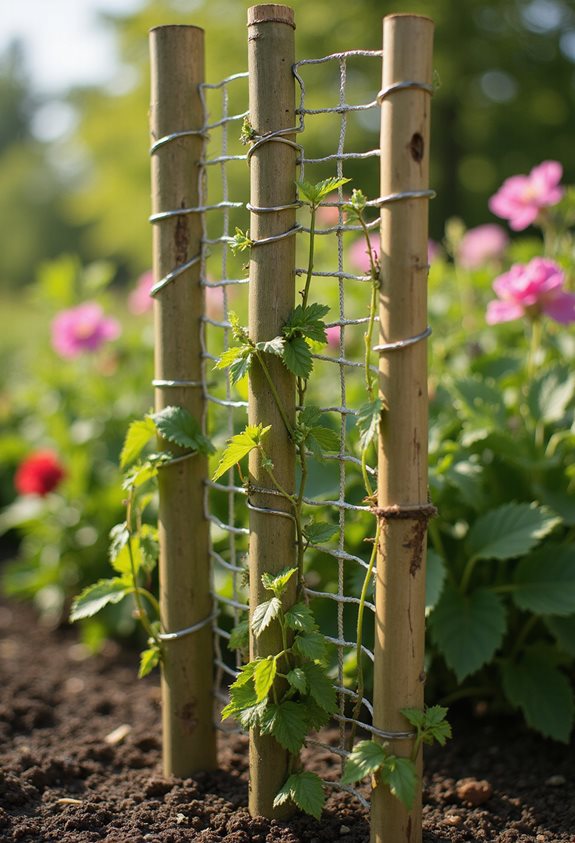
If you’ve got a bunch of bamboo sticks lying around, turn them into sturdy plant supports by wrapping each one in a little wire mesh.
Cut the bamboo to the right height, then coil the mesh tightly, securing ends with pliers.
The result is a light yet durable stake that lets vines climb without breaking.
Your garden looks organized, and you’ll love the quick, budget‑friendly upgrade. Additionally, using various supporting materials can enhance the stability of your trellis.
Hanging Gutter Trellis for Strawberries
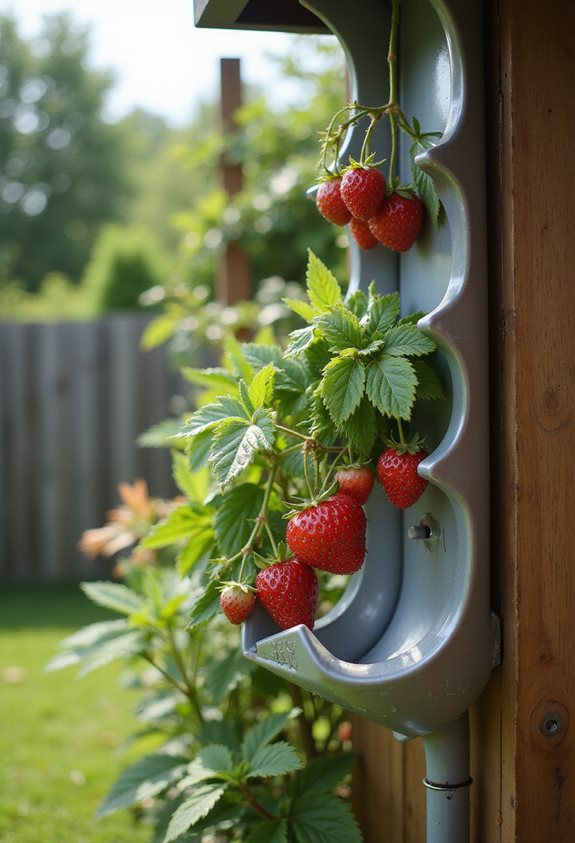
When you repurpose an old rain gutter as a hanging trellis, you turn a boring piece of metal into a strawberry‑loving playground.
Cut the gutter lengthwise, attach sturdy hooks, and suspend it from a balcony or fence. The ridges hold pots, while the open slots let vines drape and berries peek out. It’s cheap, clever, and makes harvesting a breeze—plus it looks surprisingly cool. Additionally, using this trellis can enhance natural pest management by allowing for better air circulation and visibility of pests.
PVC Pipe Grid for Peas and Beans
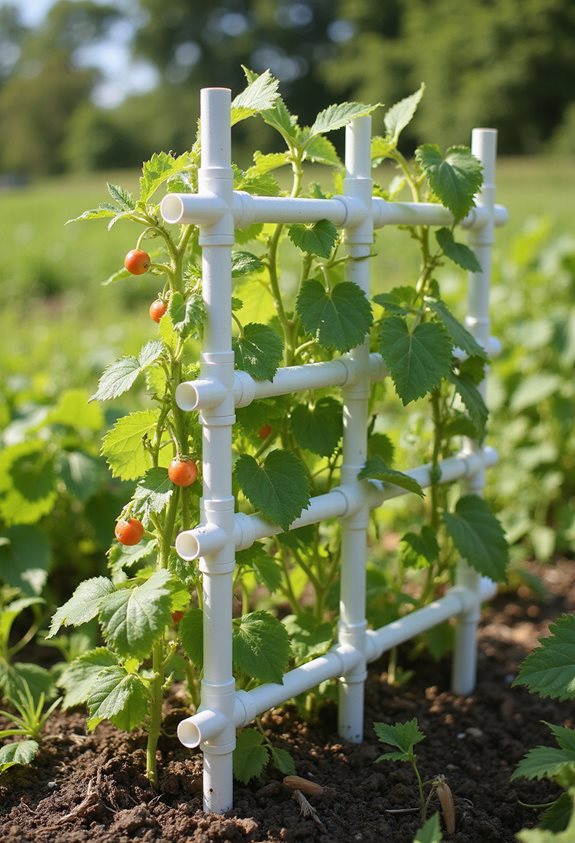
The rain‑gutter trellis showed how a simple cut and a few hooks can turn junk into a strawberry haven, and the same DIY spirit works wonders for peas and beans.
Cut PVC pipe into 2‑foot sections, drill holes every six inches, then snap a grid together with zip ties. Plant seeds at each intersection, water daily, and watch vines climb, turning ordinary plastic into a vibrant, low‑cost garden showcase. This setup is particularly effective for climbing plants like peas and beans, allowing them to thrive as they reach for the sky.
Concrete Block Frame With Wire Mesh
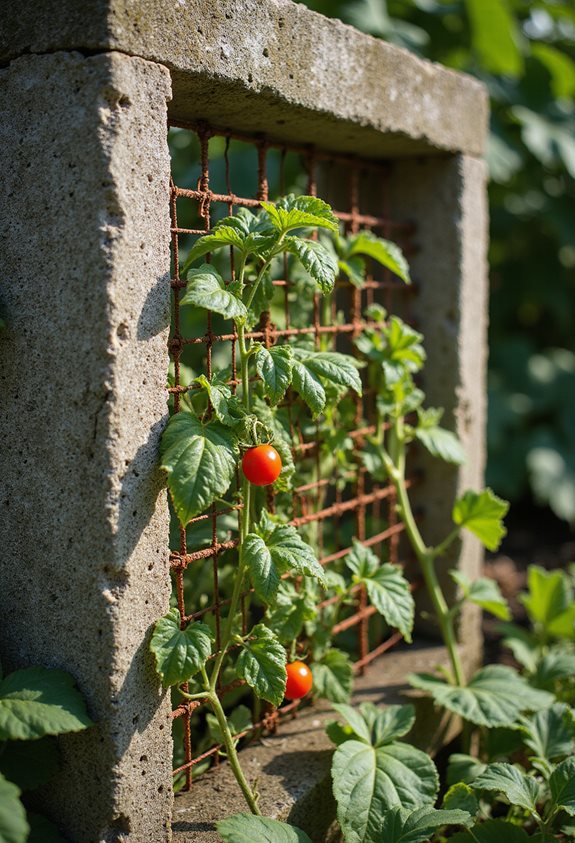
Ever wondered how a stack of plain concrete blocks can become a sturdy, stylish home for your climbing beans?
You line up three blocks, cement them together, then staple a galvanized wire mesh to the front.
The mesh creates a perfect grid for vines to twine, while the blocks stay grounded even on windy days.
It’s cheap, durable, and looks surprisingly chic in any garden. Using vertical space effectively in garden setups can significantly enhance your growing potential.
Old Window Frame Trellis for Vines
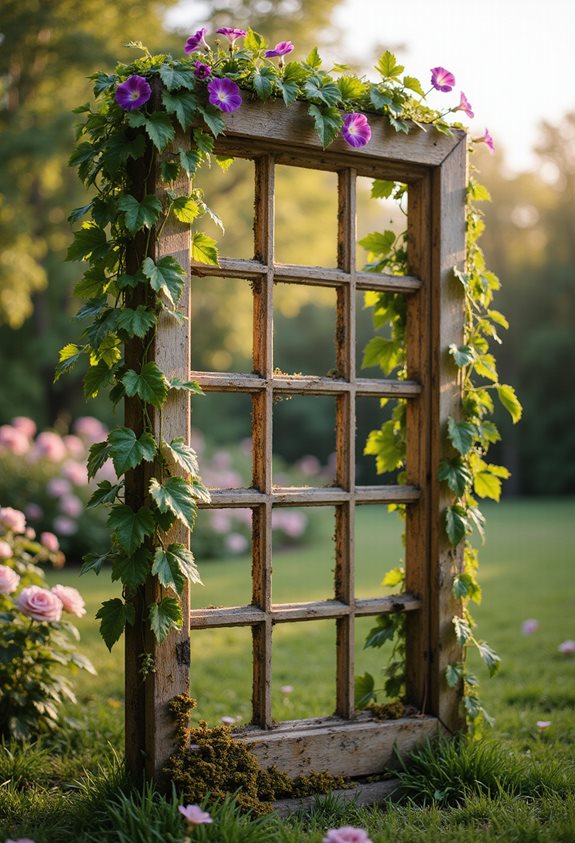
Ever wonder how a forgotten window frame can turn into a charming vine trellis?
You’ll strip paint, sand rough edges, then secure garden netting across the glass panes.
Plant climbing beans or sweet peas, and watch them weave through the old panes.
The frame adds vintage flair, while the vines bring life, turning a discarded relic into a lively garden centerpiece. This project not only gives a second life to materials but also incorporates rustic decor elements that enhance your outdoor space.
Recycled Wine Bottle Stake for Succulents
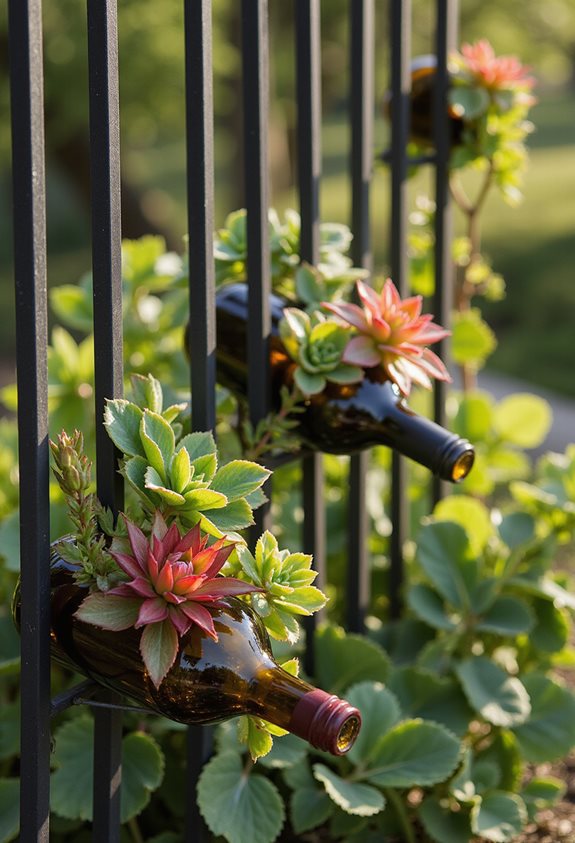
A repurposed wine bottle can become a quirky, sturdy stake for your succulents, and you’ll love how easy it’s to make. You clean the bottle, cut off the base, and insert a metal rod for extra grip. Then you plant your succulent, and the bottle adds charm while keeping the plant upright. Using this creative approach not only enhances your garden’s aesthetic but also promotes sustainable design principles in your home decor.
- Clean and dry the bottle
- Cut the base with a glass cutter
- Insert a metal or wooden stake
- Plant the succulent and enjoy the look
Trellis‑Backed Garden Gate for Ornamental Grasses
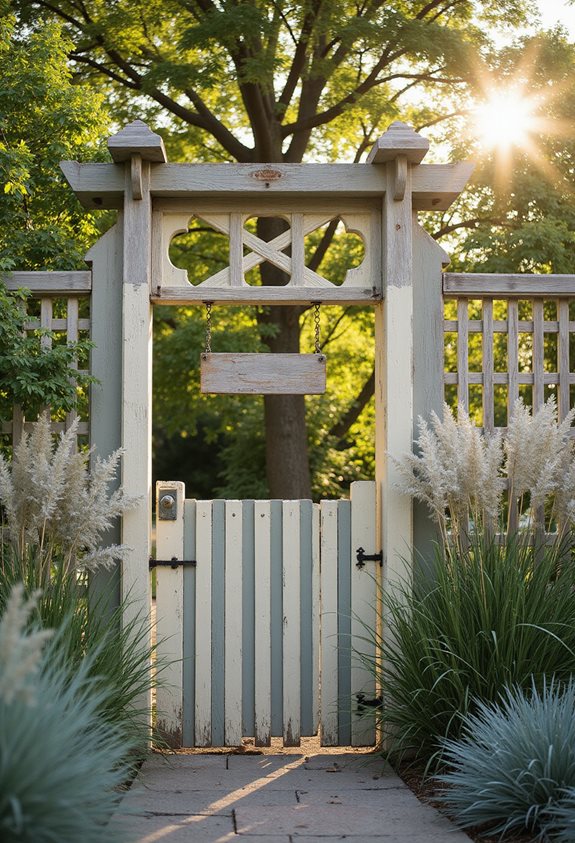
When you turn a plain garden gate into a trellis‑backed entrance, the space instantly feels like a secret garden for ornamental grasses.
You’ll attach vertical slats to the gate’s frame, then weave hardy bamboo or reclaimed wood between them.
As grasses sway, they frame the doorway, creating a living, moving sculpture.
It’s low‑cost, easy to maintain, and adds instant drama—plus you’ll feel like a garden‑gate wizard.
Adjustable T‑Post Trellis for Seasonal Crops
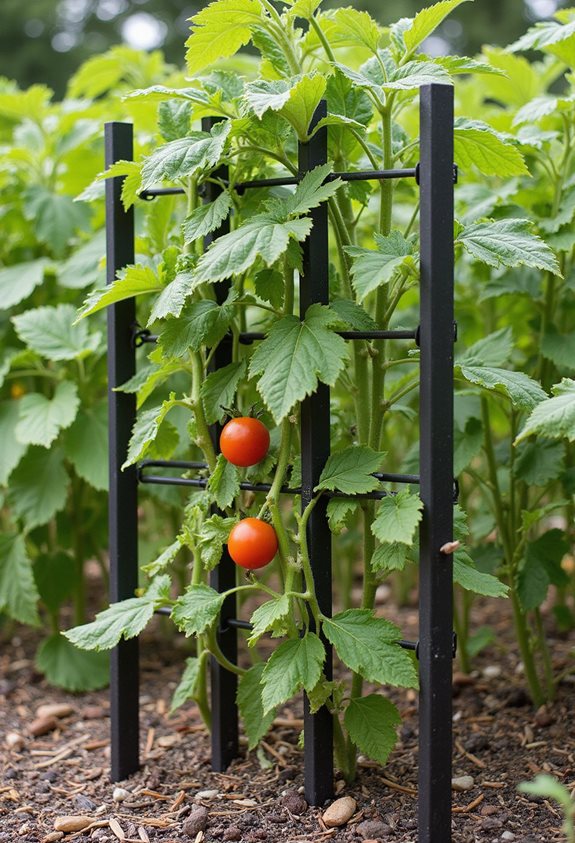
If you’ve ever struggled to keep tomatoes, beans, or cucumbers upright as they grow, an adjustable T‑post trellis can be a game‑changer.
You’ll love how it slides up and down, letting you match plant height each season without breaking a sweat.
- Choose sturdy T‑posts and secure them in the soil.
- Attach zip‑ties or clamps for quick height changes.
- Space posts 2‑3 feet apart for sturdy support.
- Add garden twine or netting to guide vines gently.
DIY Wire Mesh Curtain for Leafy Greens
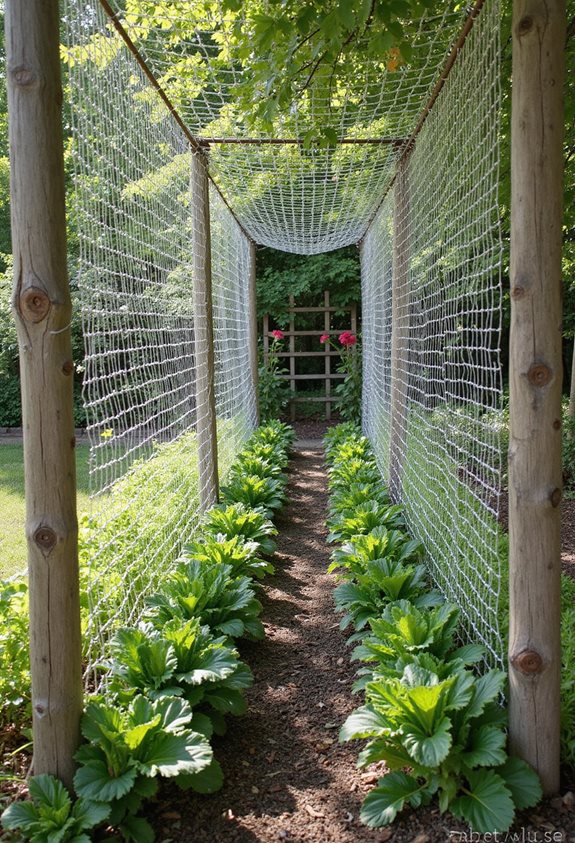
Ever wondered why your lettuce flops over like a tired gymnast?
You can fix that with a DIY wire mesh curtain.
Stretch a sturdy garden mesh between two posts, then tuck each leaf into the netting as it grows.
The curtain gives gentle support, keeps leaves upright, and looks like a cool, modern fence.
Your greens stay crisp, and you’ll feel like a garden superhero.
Garden Hose Reel Trellis for Sweet Peas
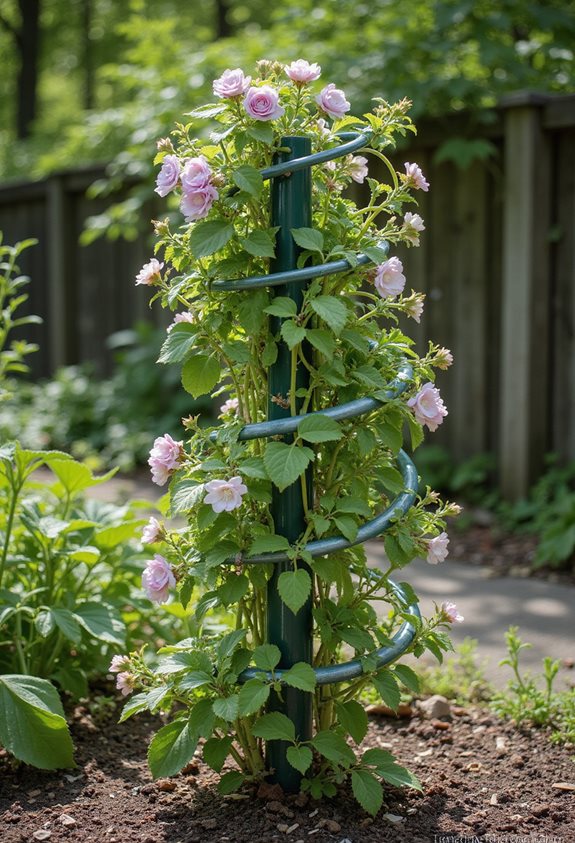
Even a simple garden hose reel can become a sturdy trellis for sweet peas, and the best part is you already have it sitting in the shed.
You’ll love watching vines twine around the metal, turning a forgotten tool into a garden hero.
- Clean the reel and remove rust.
- Position it upright in a sunny spot.
- Tie pea seedlings to the spokes with soft twine.
- Water regularly and enjoy the blooming cascade.
Tree‑Trunk Frame for Morning Glory
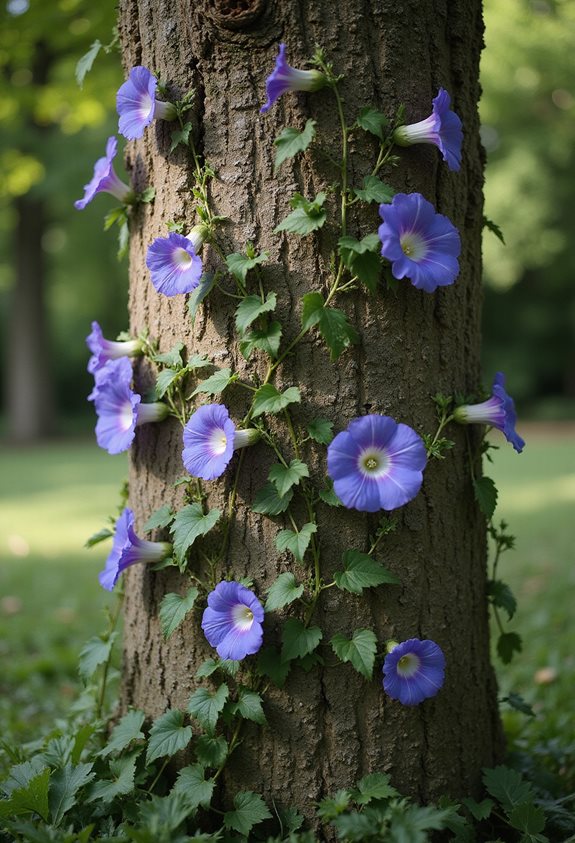
When you spot a sturdy tree trunk in your backyard, you can turn it into a gorgeous morning‑glory trellis in just a few steps.
Strip bark, attach a few cross‑bars, and anchor the frame with stakes.
Plant vines at the base, water them, and watch the vines climb, blooming in bright spirals.
It’s a quick, rustic showcase that adds instant charm to any garden.
Garden Bed Edge Trellis for Zucchini
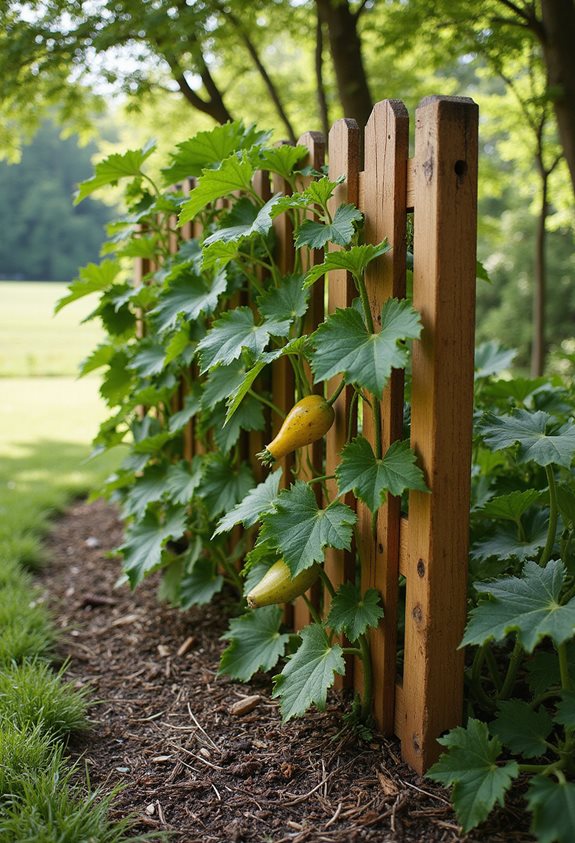
If you loved turning a tree trunk into a morning‑glory showcase, you’ll find the garden‑bed edge trellis just as rewarding—only it doubles as a sturdy fence for your zucchini vines.
It guides growth, keeps soil tidy, and adds charm to your plot.
- Use pressure‑treated boards for durability.
- Space slats 12 inches apart for easy climbing.
- Anchor with stakes to prevent wind wobble.
- Add a trellis‑friendly mulch for extra moisture.
Fold‑Flat Metal Frame for Small Spaces
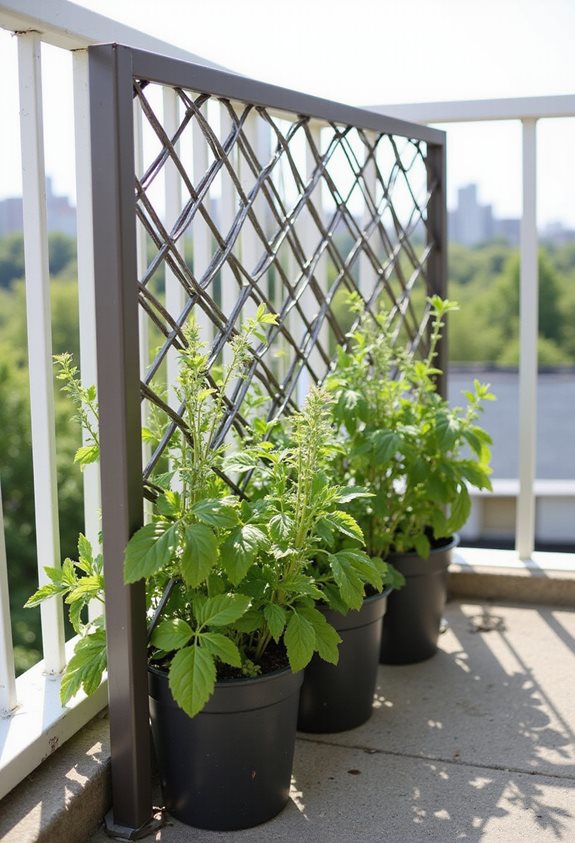
A fold‑flat metal frame is perfect for tiny balconies or cramped patios, letting you pop a trellis in and out like a superhero’s gadget.
You assemble it in minutes, then fold it flat for storage when winter comes.
The sleek steel holds vines steady, yet it’s lightweight enough to carry up stairs.
Add a splash of color with painted brackets, and watch your garden thrive in tight spots.
Reclaimed Door Frame Trellis for Clematis
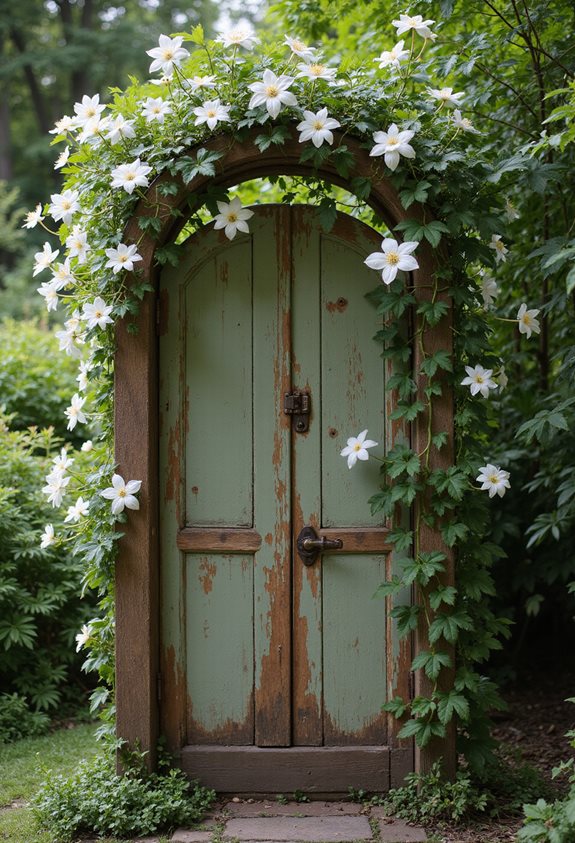
Even if you’ve never lifted a piece of wood before, turning an old door frame into a clematis trellis is surprisingly easy and totally rewarding. You’ll love watching vines climb the reclaimed frame, adding charm to your garden.
- Remove hinges, sand rough edges.
- Paint or stain for weather protection.
- Secure the frame upright with stakes.
- Train clematis shoots onto the crossbars.
DIY Trellis Using Old Garden Tools
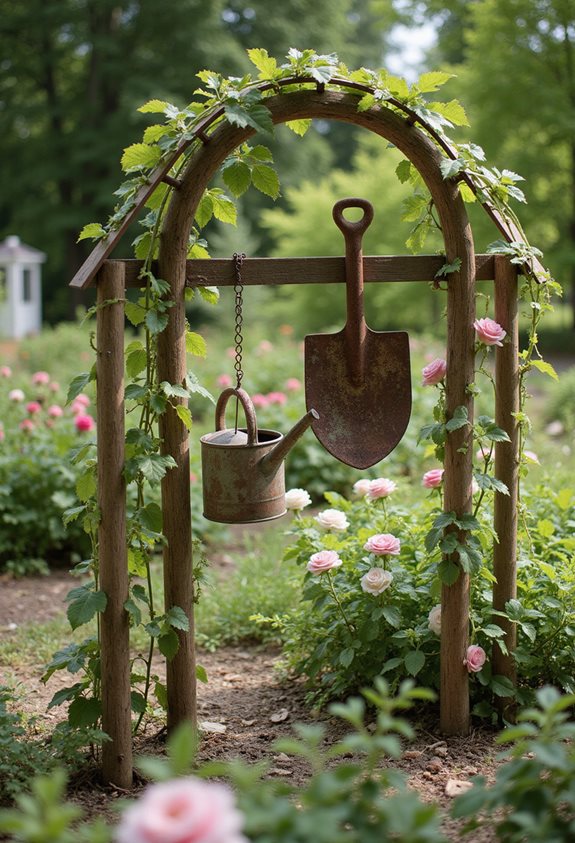
After turning a reclaimed door frame into a clematis trellis, you might wonder what else you can repurpose from the shed.
Grab an old garden fork, strip its tines, and hammer it into a wooden board for a rustic trellis.
Use a rusted rake head as a decorative spine, securing it with zip ties.
Even a broken watering can becomes a quirky plant perch when mounted upside‑down.
You’ll love the garden’s new, budget‑friendly personality.
Vertical Shelf Trellis for Indoor Herbs
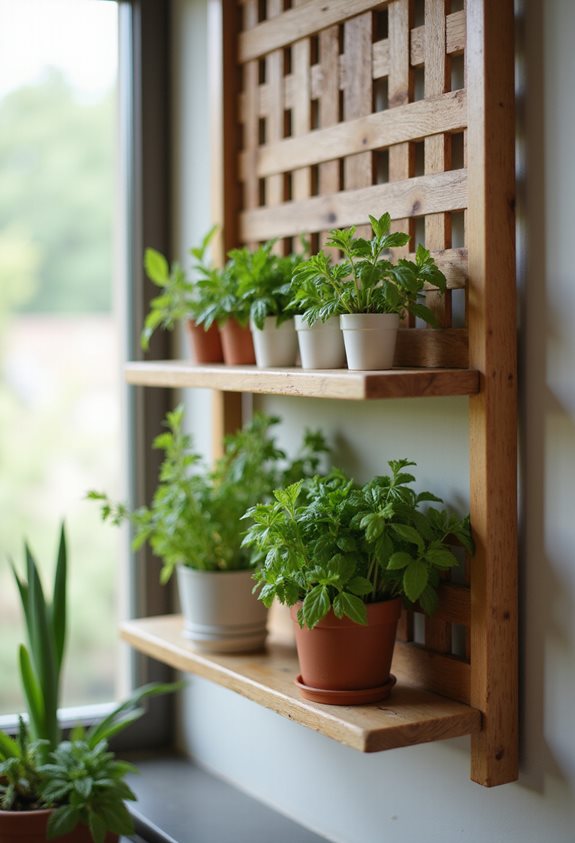
When you’re short on counter space but still want fresh herbs at arm’s reach, a vertical shelf trellis is the perfect hack.
It turns a narrow wall slot into a garden gallery, letting you harvest basil, mint, and thyme without clutter.
- Choose a sturdy, shallow shelf.
- Attach mesh or netting for roots.
- Plant herbs in small pots.
- Water from the top, let gravity help.
Rope‑Wrapped Wooden Post for Ivy
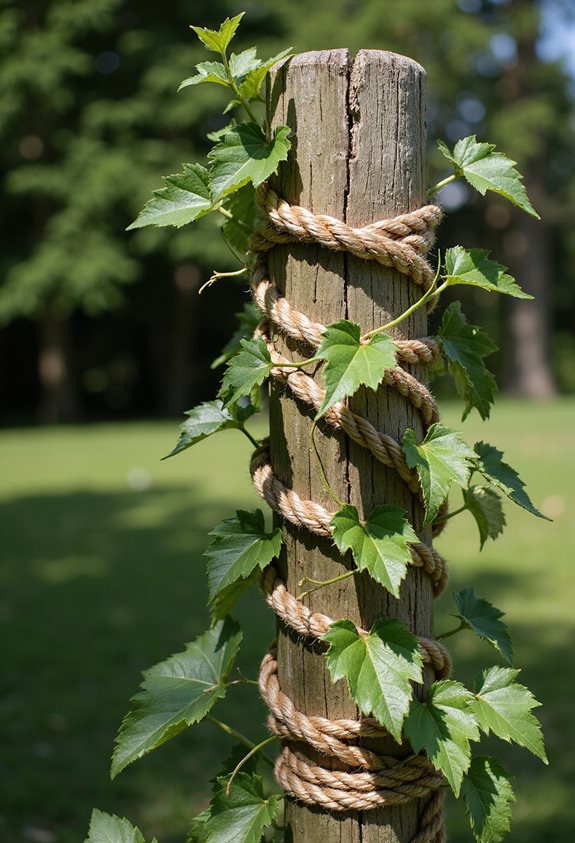
If you’ve ever watched ivy creep up a plain fence and thought, “That could look way cooler,” a rope‑wrapped wooden post is the perfect DIY upgrade.
Choose a sturdy post, wrap natural rope tightly, secure knots, and plant ivy at the base.
As the vines climb, the rope adds texture, making a garden centerpiece that feels both rustic and playful.
Solar‑Powered Light‑Integrated Trellis
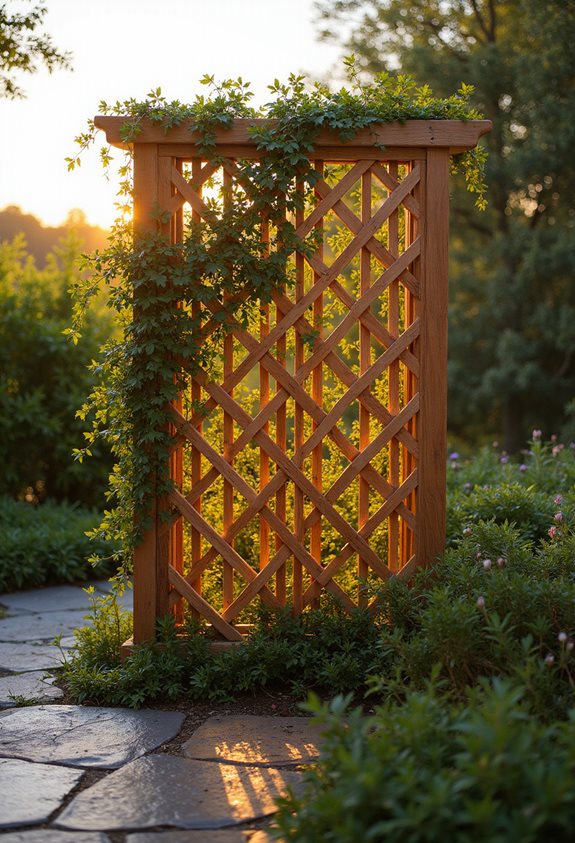
A solar‑powered light‑integrated trellis can turn a plain garden wall into a glowing, living artwork that lights up your evenings. You’ll love watching vines dance under soft LED glows while the sun charges the panels.
- Choose waterproof LED strips for durability.
- Mount a small solar panel on the trellis top.
- Wire a rechargeable battery hidden in the base.
- Add a dusk‑sensor switch for automatic lighting.
Low‑Cost DIY Trellis Using Chicken Wire and Rebar
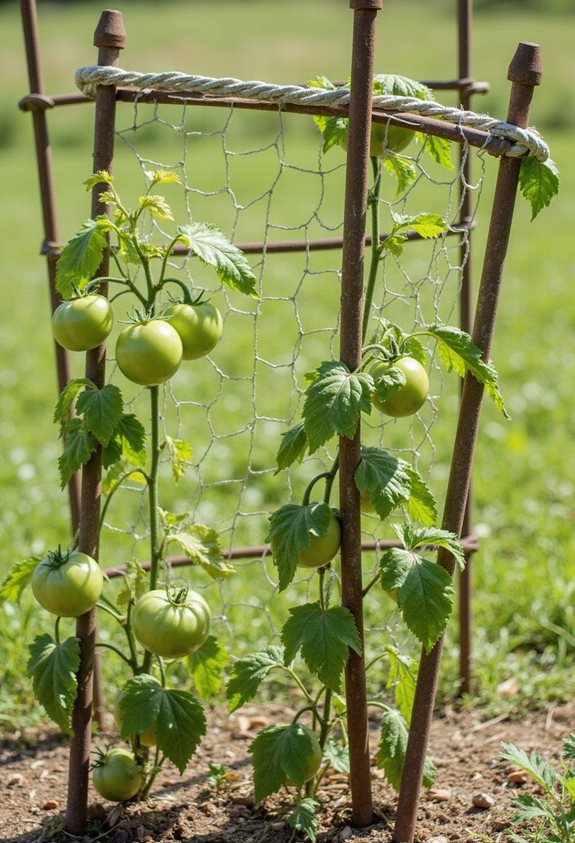
You can turn a cheap garden fence into a sturdy trellis with just chicken wire and a few pieces of rebar, and the result looks surprisingly professional.
Cut the rebar into 3‑foot sections, bend them into “U” shapes, and nail them to the fence.
Stretch chicken wire across, secure with zip ties, and trim excess.
Your vines will climb fast, and you’ll feel like a garden pro.