
You can turn your spring garden into a mosquito‑free zone by planting aromatic herbs and bright flowers that mask human scent and release natural repellents.
Mix lavender’s soothing linalool, citronella grass’s citrus punch, marigold’s pyrethrum, catnip’s nepetalactone, sweet alyssum’s low‑grow carpet, tansy’s bitter aroma, and bee balm’s citronella‑like oils for a fragrant shield.
Add mint, rosemary, basil, and eucalyptus for extra kick, and you’ll enjoy pest‑free patios while the bugs stay confused. Keep reading to discover the full list of 19 powerhouse plants.
Mosquito-Repelling Plants for a Spring Garden
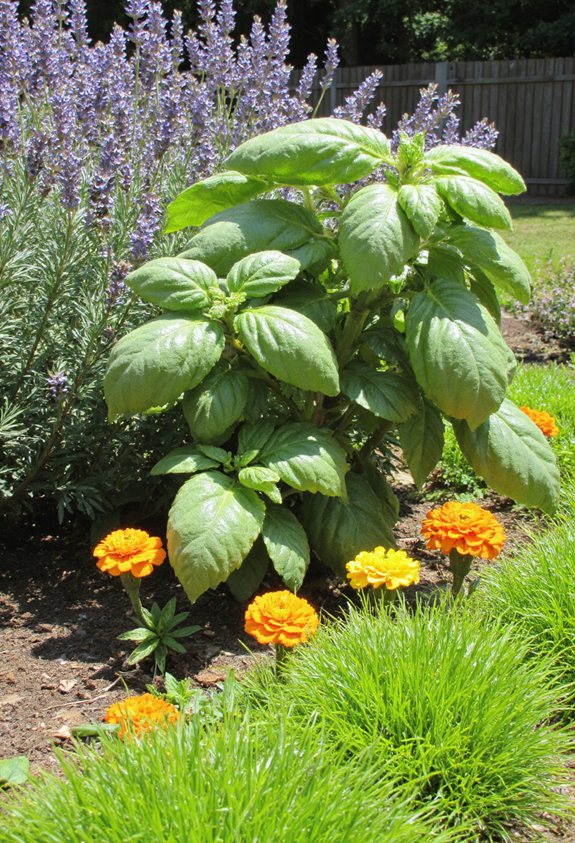
Ever wondered why a backyard full of greenery can feel like a mosquito‑free zone?
You’ll love planting lavender, rosemary, and mint—each releases scents mosquitoes bugs dislike.
Their fragrant leaves and blossoms fill the air, turning your garden into a pleasant sanctuary.
Plus, they’re easy to grow, smell great, and give you fresh herbs for cooking, making every bite a bug‑free delight. Adding homegrown garlic to your garden can also enhance your repellent strategy, as its strong scent further deters these pesky insects.
How Citronella Grass Keeps Mosquitoes at Bay
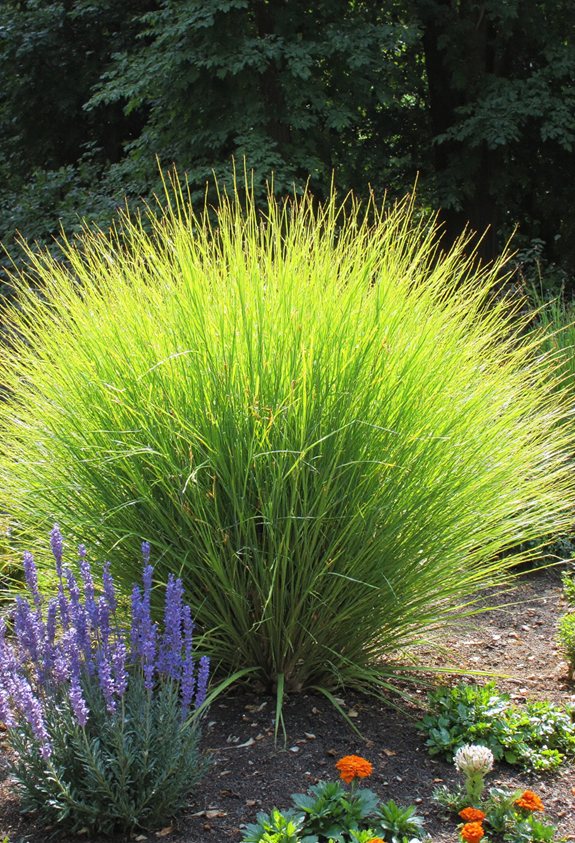
Even if you’ve never heard of citronella grass before, you’ll quickly see why it’s a garden hero.
You plant it in sunny spots, and its citrus‑scented leaves release oils that mosquitoes hate.
When the breeze rustles, the scent spreads, creating an invisible barrier.
You’ll notice fewer bites while kids play, and the grass adds a fresh, tidy look to your backyard. Additionally, surrounding greenery in your outdoor space can enhance the overall ambiance and further deter insects.
Why Lavender’s Fragrance Deters Biting Insects
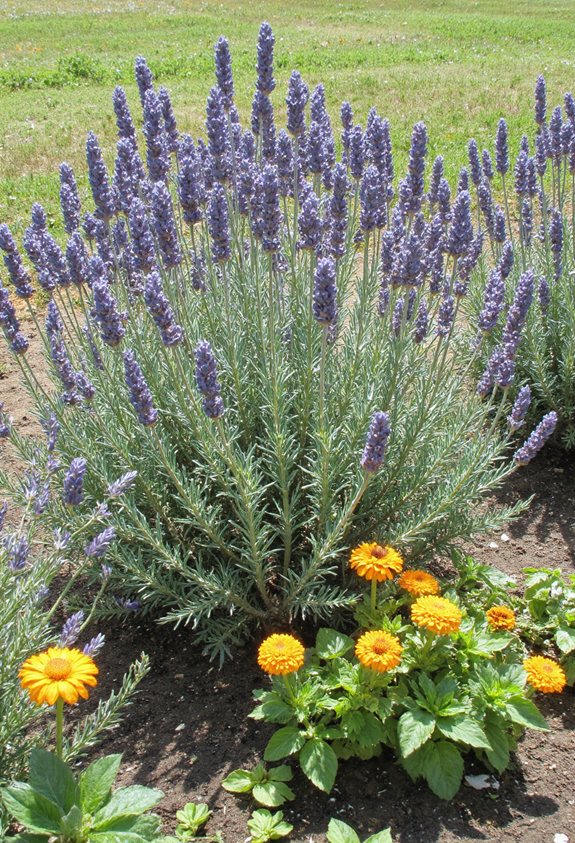
After enjoying the citrus shield from citronella grass, you might wonder what other scent‑powered plants can keep the bite‑hungry bugs at bay. Lavender’s sweet, herbaceous aroma confuses mosquitoes, masking human scent and making you less appealing. Its oil contains linalool, a natural repellent that unsettles many biting insects. Additionally, incorporating pest-repelling plants like rosemary and marigolds can enhance your garden’s defenses.
- Plant lavender near walkways
- Harvest buds for DIY sprays
- Pair with rosemary for extra punch
- Trim regularly to release fragrance
- Use potted lavender on patios
Marigold’s Natural Insect‑Repelling Power
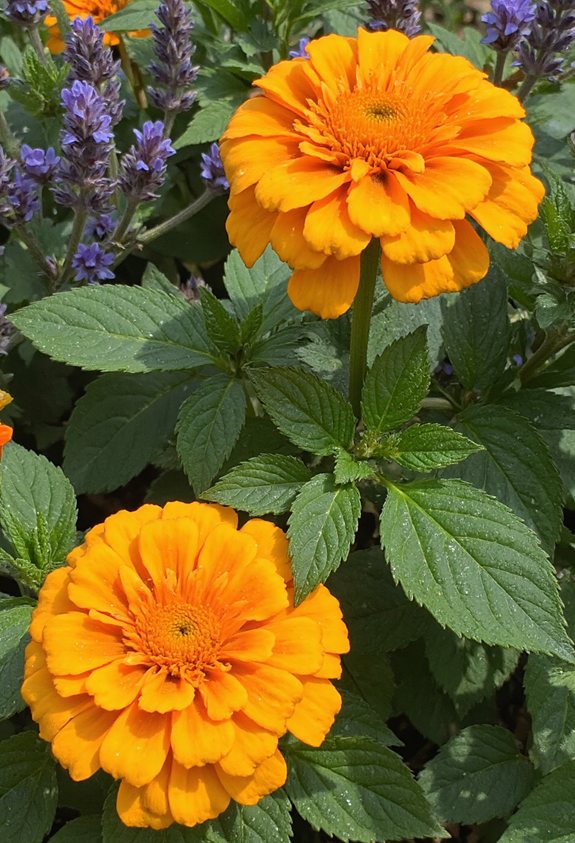
When you plant marigolds around your garden beds, their bright orange and yellow blooms do more than just look cheerful—they release a scent that mosquitoes and other pests find downright offensive.
Their strong aroma masks human odors, so bugs lose interest.
Plus, the leaves contain pyrethrum, a natural insecticide.
You’ll notice fewer bites, and the garden looks vibrant and lively.
Catnip: The Surprising Mosquito‑Fighting Herb
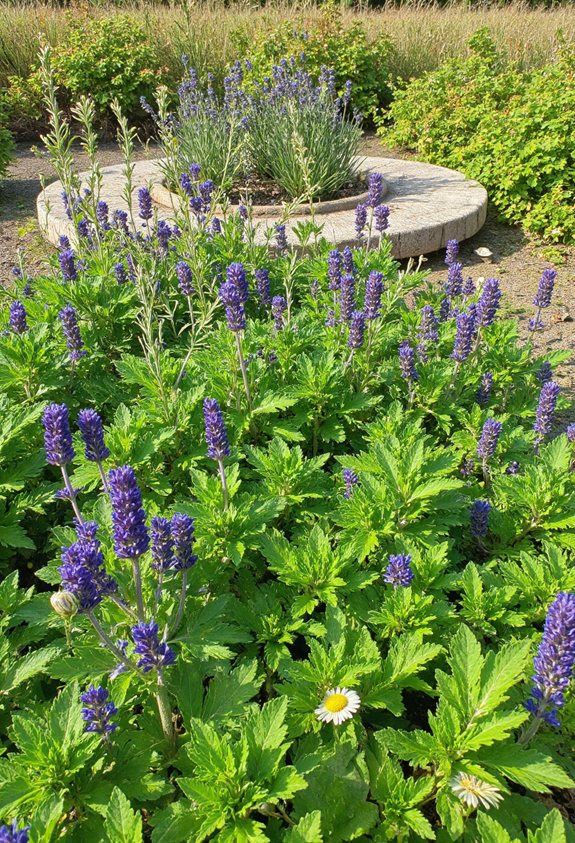
The tiny, fuzzy leaves release a compound called nepetalactone, which is practically a mosquito repellent in disguise.
- Plant catnip in sunny spots.
- Water moderately; avoid soggy soil.
- Trim often to boost leaf production.
- Pair with lavender for extra scent.
- Harvest leaves before flowering for strongest effect. Furthermore, planting catnip can enhance your garden’s appeal to restaurant-quality microgreens, creating a beneficial environment for various plant species.
Basil’s Dual Role: Culinary Delight and Insect Deterrent
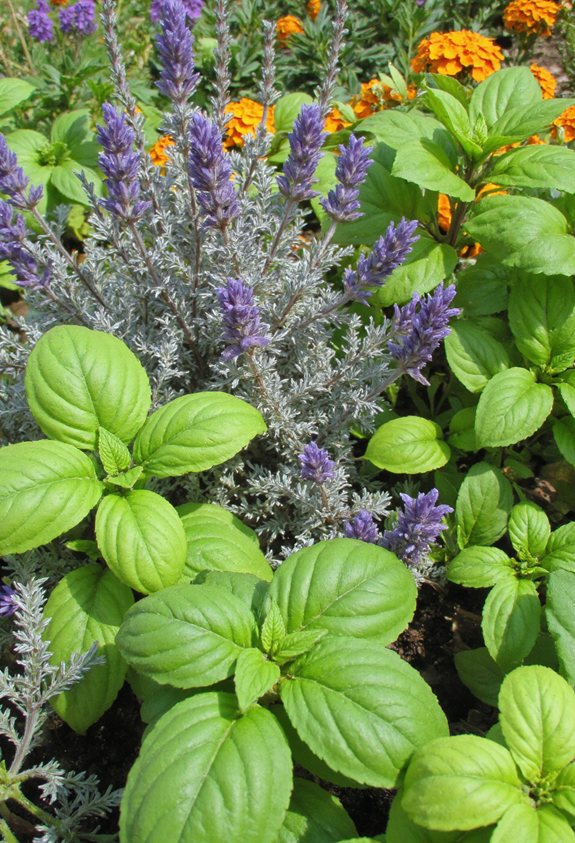
Catnip showed us that a garden herb can double as a mosquito shield, and basil does the same trick while spicing up your pasta.
You’ll notice its bright green leaves releasing a sweet, clove‑like scent that bugs hate.
Plant basil in sunny spots, pinch leaves for pesto, and watch mosquitoes steer clear.
Plus, the aroma makes your kitchen feel like a Mediterranean getaway. Additionally, growing natural pest deterrents like basil can create a more eco-friendly garden environment.
Mint’s Strong Aroma Repels Mosquitoes and Other Pests
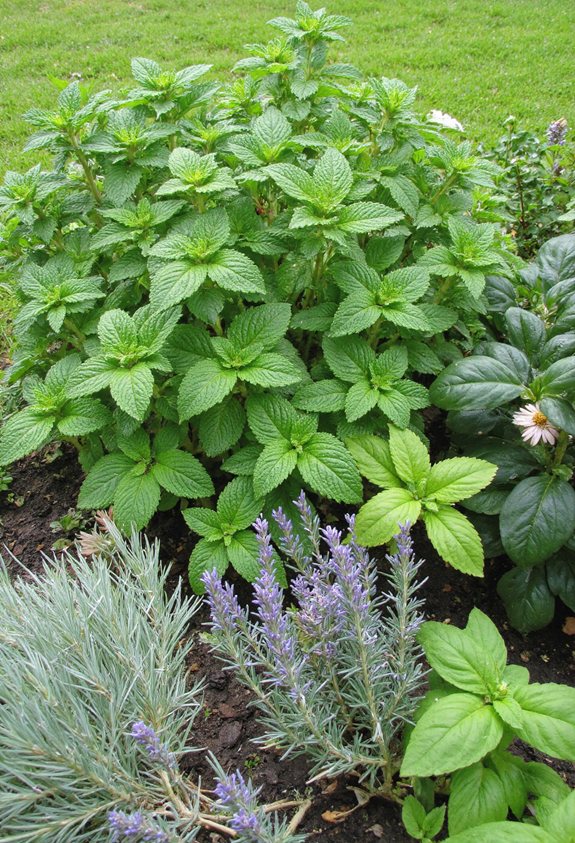
Even though mint’s tiny leaves might look harmless, their punchy, fresh scent is a mosquito’s nightmare. You’ll notice fewer bites when you plant mint near patios, and the aroma also keeps ants and aphids at bay, letting your garden thrive without extra chemicals.
- Plant mint in containers to control spreading.
- Pair with basil for a double‑deterrent.
- Harvest early for stronger scent.
- Use crushed leaves as a natural spray.
- Enjoy mint tea while mosquitoes stay away.
- Consider planting mint alongside STEM toys to encourage kids to spend more time outdoors and engage with nature.
Rosemary’s Woody Scent as a Mosquito Shield
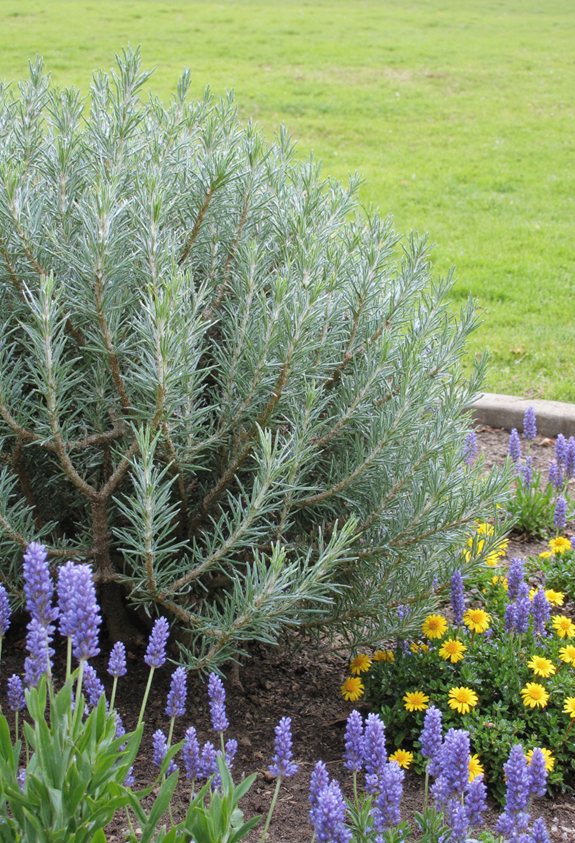
Ever wondered why rosemary’s pine‑y, woody aroma seems to chase mosquitoes away?
You’ll notice them buzzing away once you plant this herb near patios or garden beds.
Its strong scent masks human odors, making you less attractive to pests.
Plus, the silver leaves look cool, and you can snip fresh sprigs for cooking—double win for flavor and bug defense. Additionally, growing rosemary can enhance your garden’s overall mental well-being through outdoor engagement and enjoyment.
Sage’s Essential Oils for Mosquito‑Free Outdoor Spaces
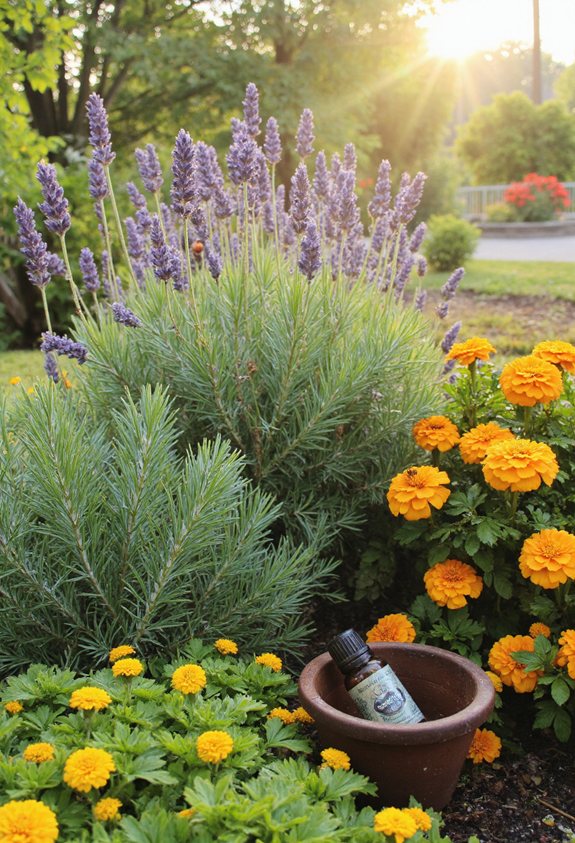
After you’ve seen rosemary’s pine‑y scent chase mosquitoes away, you’ll find sage works just as well—only with a different vibe.
Its earthy, herbal oil confuses insects, keeping your patio bite‑free while you grill or read.
Plant it near seating, crush leaves for a quick spray, or simmer a pot for a lingering shield.
- Plant sage in sunny borders
- Harvest fresh leaves for DIY repellent spray
- Use dried sage bundles around outdoor furniture
- Mix sage oil with water for a mist
- Grow sage in containers for patio mobility
Sage also complements seasonal decor elements by enhancing your outdoor environment while naturally deterring pests.
Lemon Balm’s Citrus‑Scented Defense Against Mosquitoes
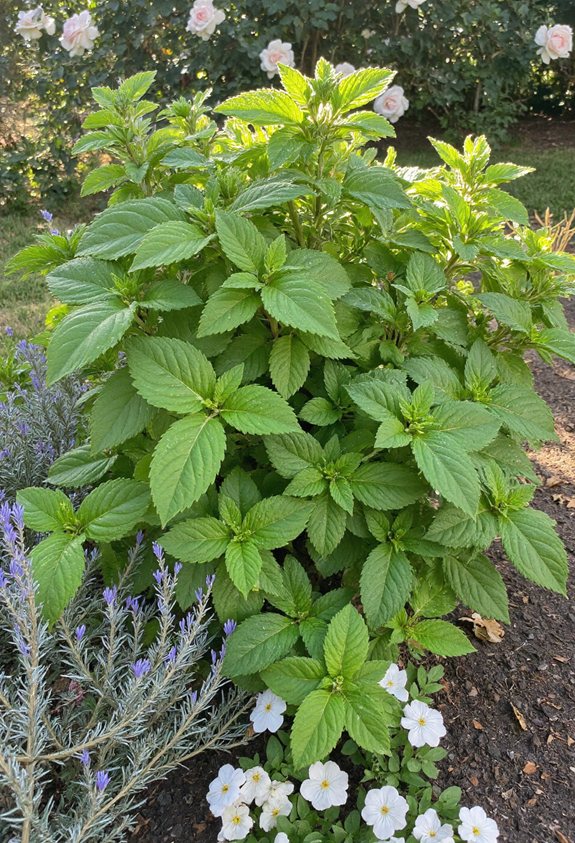
When you plant lemon balm in a sunny spot, its bright, citrusy aroma swoops in like a natural mosquito repellent, turning your backyard into a bite‑free zone. You’ll notice bees buzzing happily, while mosquitoes steer clear. The leaves release citronellal and other oils when brushed, so a gentle pat releases a fresh scent that keeps pests at bay. It’s low‑maintenance, smells great, and makes evenings outdoors enjoyable. Moreover, incorporating seasonal blooms can enhance the overall charm of your garden while keeping it functional.
Pennyroyal’s Potent Mosquito‑Repelling Compounds
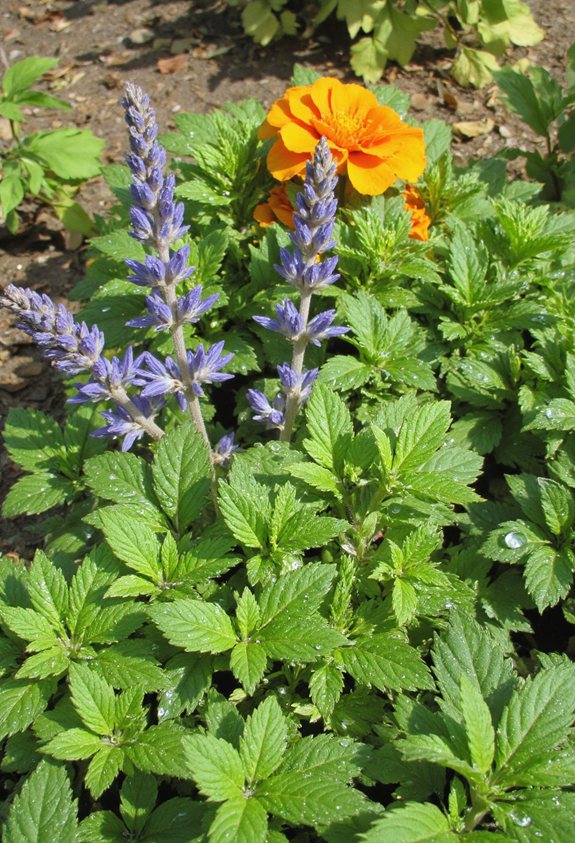
So, why does pennyroyal feel like a secret weapon against mosquitoes? Its sharp, minty aroma overwhelms pests, while the plant’s tiny oil droplets contain pulegone, a natural repellent that masks human scent.
You’ll notice fewer bites and a fresher garden vibe when you plant it alongside herbs and flowers.
- Strong mint fragrance
- High pulegone concentration
- Easy to grow in containers
- Attracts beneficial insects
- Low maintenance, fast spreading
Additionally, incorporating natural elements like pennyroyal into your garden can create a refreshing energy that enhances your outdoor space.
Eucalyptus’s Fresh Scent That Keeps Mosquitoes Away
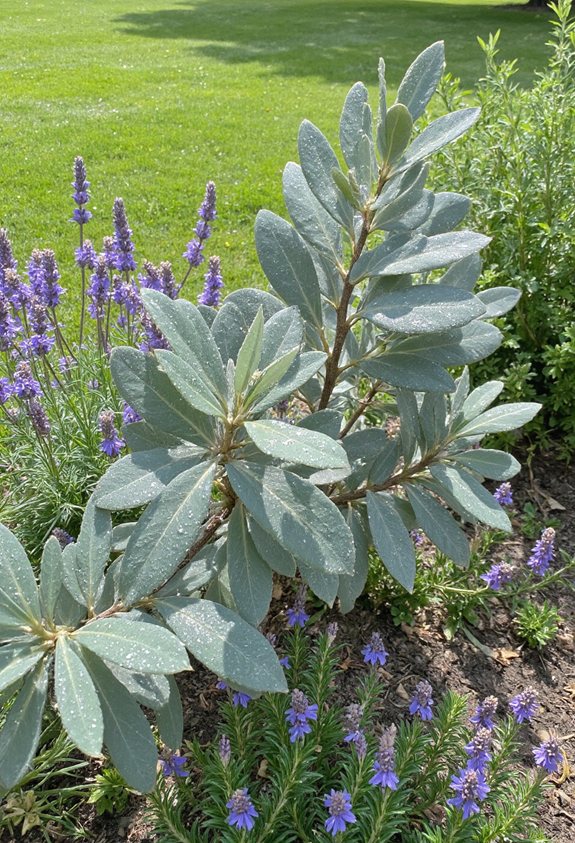
If you liked pennyroyal’s minty punch, you’ll love eucalyptus’s crisp, camphor‑rich scent.
Plant a few saplings near your patio and watch the fresh aroma drift across the air, creating an invisible shield that mosquitoes avoid.
Its cool, menthol‑like perfume reminds you of a forest hike, and you’ll notice fewer bites while you relax, laughing at the bugs’ disappointment.
Geraniums’ Leafy Aroma as a Natural Insect Repellent
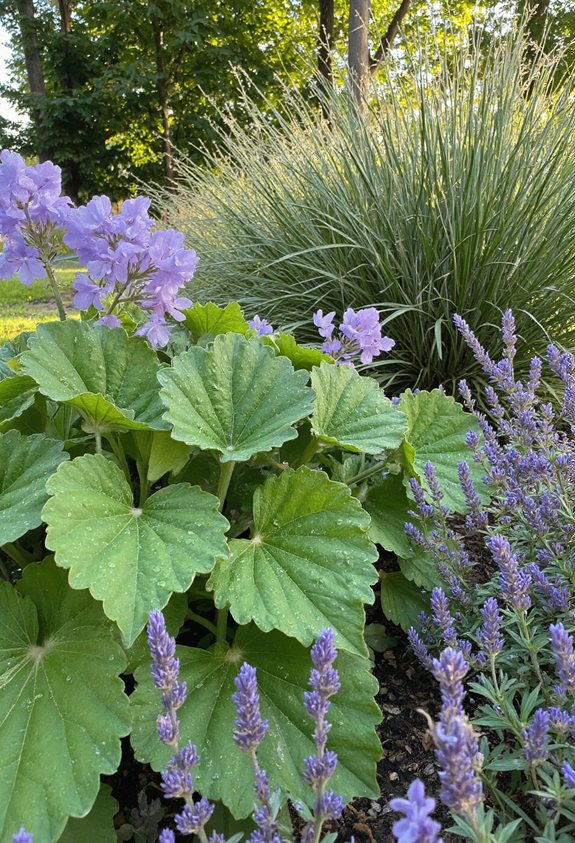
Even though geraniums look like ordinary garden flowers, their leafy scent packs a surprising punch against bugs.
You’ll notice fewer mosquitoes hovering near your patio when you plant them in sunny spots.
Their aroma also deters flies and gnats, making outdoor meals more pleasant.
- Plant geraniums in containers by doorways
- Trim leaves regularly to release scent
- Pair with lavender for extra power
- Water lightly; avoid soggy soil
- Harvest leaves for homemade repellent spray
Nasturtium’s Bright Flowers and Mosquito‑Deterring Properties
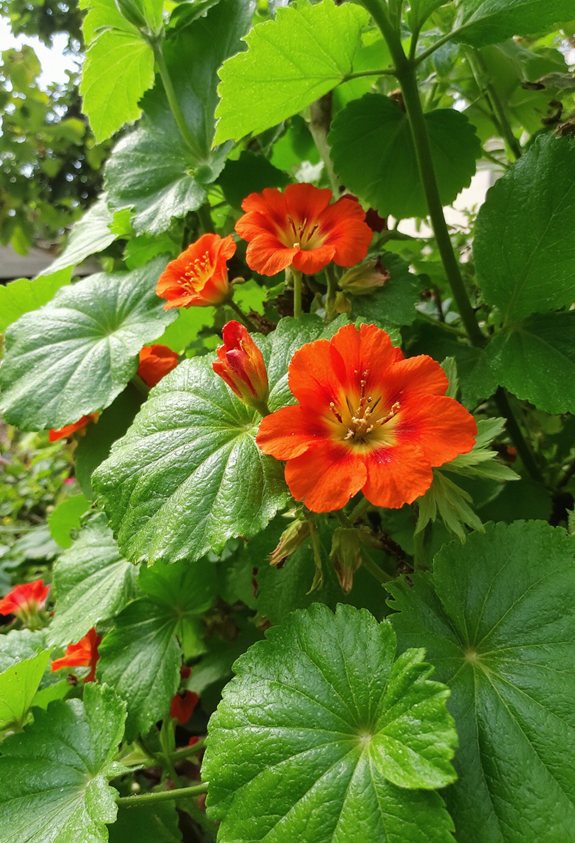
When you plant nasturtiums, their vivid orange‑red blossoms don’t just brighten the garden—they also give mosquitoes a reason to buzz elsewhere.
Their peppery scent confuses insects, while the nectar attracts predatory bugs that eat mosquito larvae.
You’ll notice fewer bites, and the trailing vines add a playful splash of color.
Plus, harvesting leaves for salads feels like a tasty victory over pests.
Alliums (Onion, Garlic, Chives) for Chemical‑Free Mosquito Control
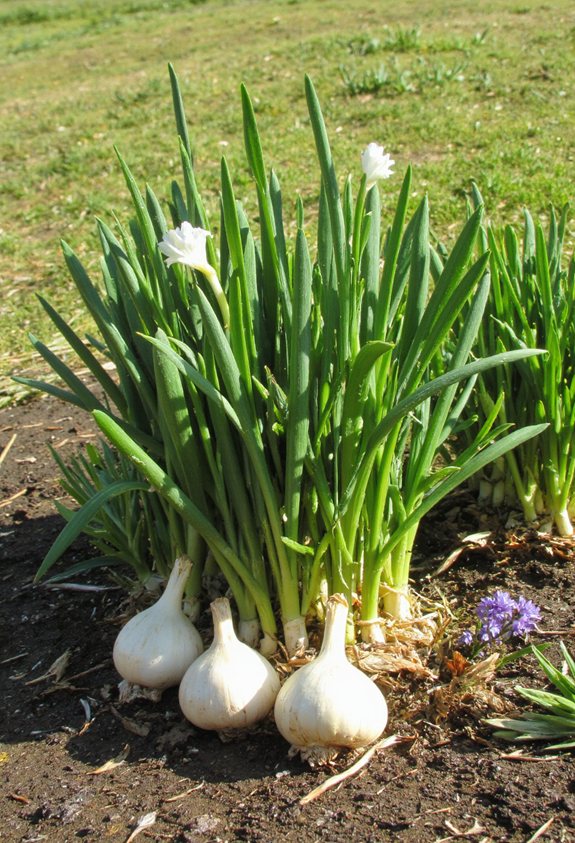
Because onions, garlic, and chives all pack a punch of sulfur‑rich compounds, they’re nature’s own mosquito‑repellent squad.
Plant them in sunny borders, and the aroma keeps pests at bay while you enjoy fresh herbs.
- Plant onions in rows for easy harvesting.
- Intercrop garlic between tomatoes for protection.
- Use chives as low‑maintenance edging.
- Harvest leaves early for stronger scent.
- Mulch with shredded garlic skins for extra deterrent.
Sweet Alyssum’s Low‑Growth Cover That Deters Mosquitoes
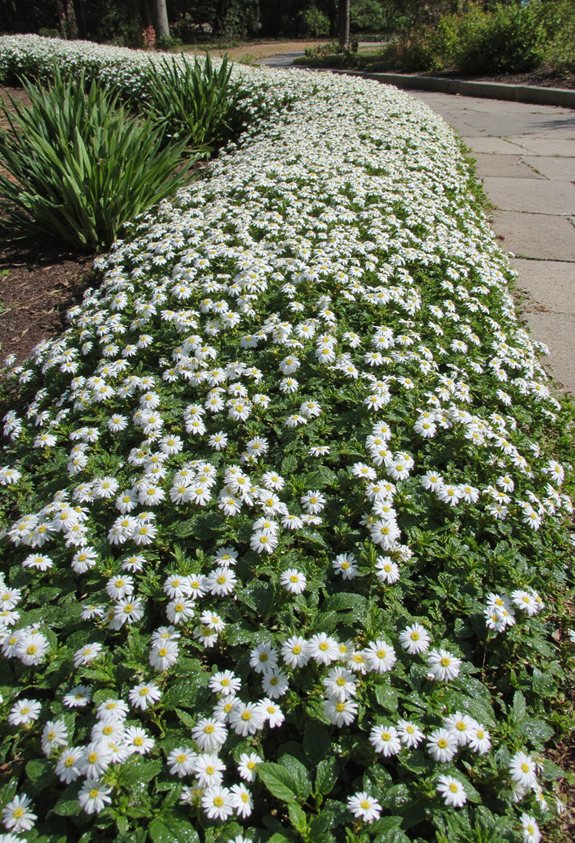
After the pungent punch of onions, garlic, and chives, you might think you’ve exhausted the garden’s arsenal, but Sweet Alyssum steps in with a gentle, low‑growth carpet that still sends mosquitoes packing.
Its tiny white blossoms release a subtle scent that bugs dislike, while the dense mat smothers standing water.
Plant it along borders or in containers, and watch pests disappear as your garden stays bright and breezy.
Tansy’s Bitter Aroma to Repel Mosquitoes Naturally
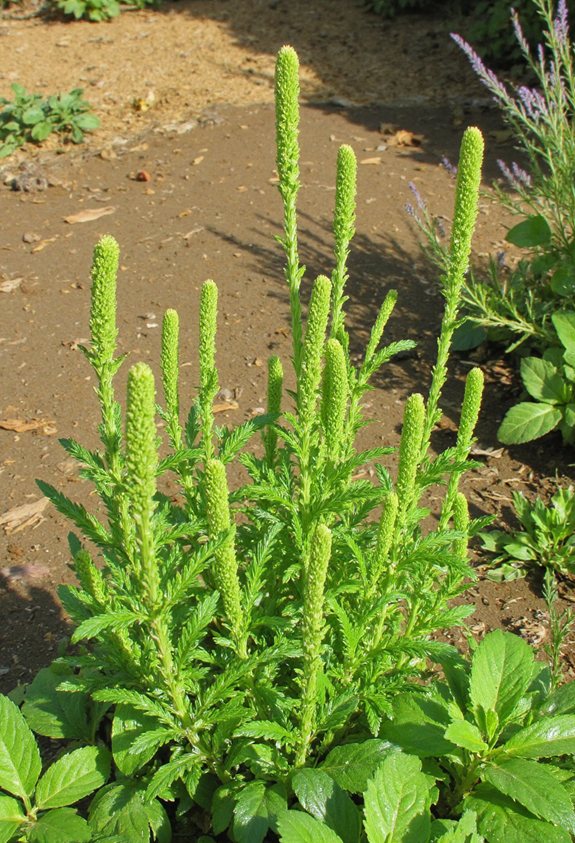
Ever wonder why a simple garden herb can turn your backyard into a mosquito‑free zone? Tansy’s bitter scent scares mosquitoes away, letting you enjoy evenings outdoors.
Plant it in sunny spots, water sparingly, and watch the bugs disappear.
- Strong, pungent aroma
- Easy to grow from seed
- Drought‑tolerant
- Attracts beneficial insects
- Low maintenance, hardy plant
Bee Balm’s Vibrant Blooms and Mosquito‑Repelling Benefits
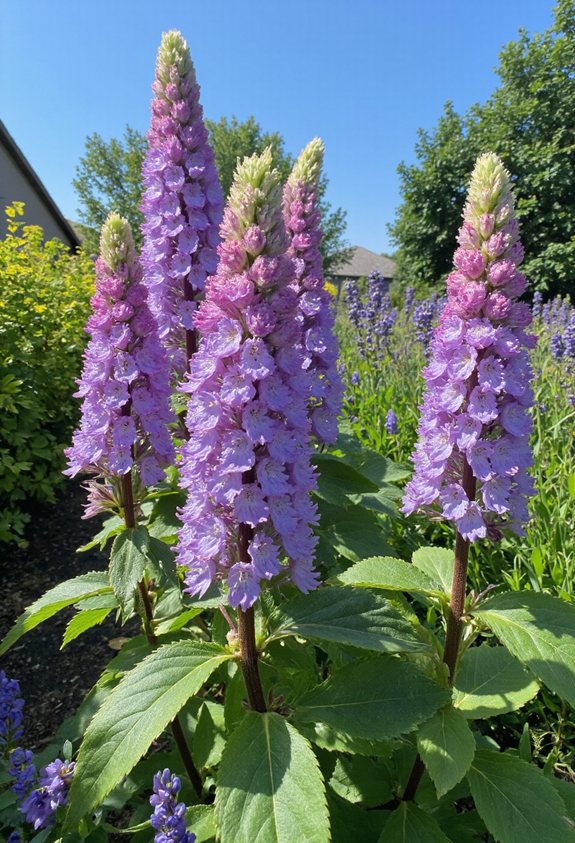
Ever wondered how a splash of color can double as a mosquito shield?
Plant bee balm and watch its ruby‑red blossoms attract hummingbirds while releasing citronella‑like oils that keep bugs at bay.
You’ll love the sweet scent, the buzzing pollinators, and the fact that mosquitoes seem to skip over your garden.
It’s a pretty, practical win‑win.
How to Combine These Plants for Maximum Mosquito Protection
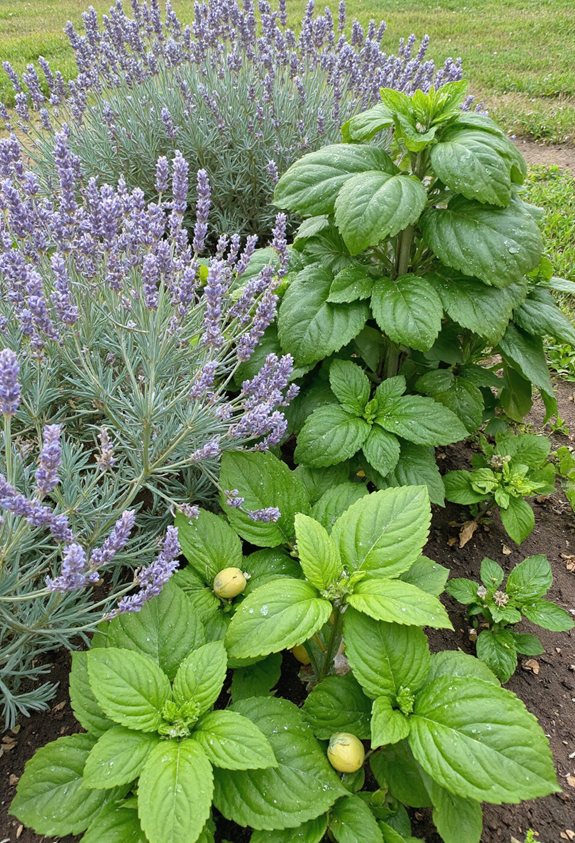
Bee balm’s ruby‑red blooms already make your garden a hummingbird hotspot, but you can up the mosquito‑repel factor by mixing it with a few other fragrant allies. Plant them together in clusters, let the scents blend, and enjoy a buzzing‑free oasis.
- Lavender borders around bee balm
- Marigold edging for bright contrast
- Lemon balm interspersed for citrus aroma
- Catnip patches for extra repellent power
- Rosemary shrubs to create aromatic layers