You can turn cheap junk into a cucumber‑climbing playground: repurpose a pallet by sanding slats, nailing them upright, and painting for weather‑proofing; hack a garden fence with hooks and potting mix for a living backdrop; bend coat‑hangers into arches and zip‑tie them for a budget‑friendly sculpture; drive bamboo stakes, loop twine around vines for a rustic look; stack concrete blocks and stretch wire net for heavy‑duty support; and use an old window frame as a vintage grid. Keep it simple, sturdy, and fun, and you’ll discover even more clever tricks ahead.
Repurposed Pallet Trellis – Quick, Free, and Sturdy
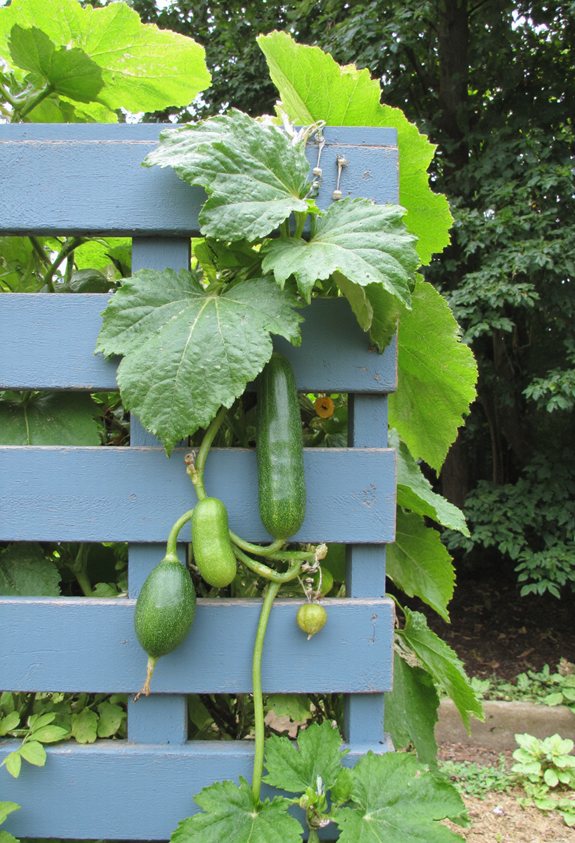
When you spot an old wooden pallet lying in the yard, don’t toss it—turn it into a sturdy trellis in minutes.
Strip the slats, sand rough edges, then nail them upright in a grid.
Paint or stain for weather‑proofing, and attach the frame to a fence or wall.
Your cucumbers will climb fast, and you’ll feel like a garden‑hero without spending a dime. Additionally, ensuring proper ventilation will help your plants thrive in their growing environment.
Simple String‑and‑Peg Ladder for Small Spaces
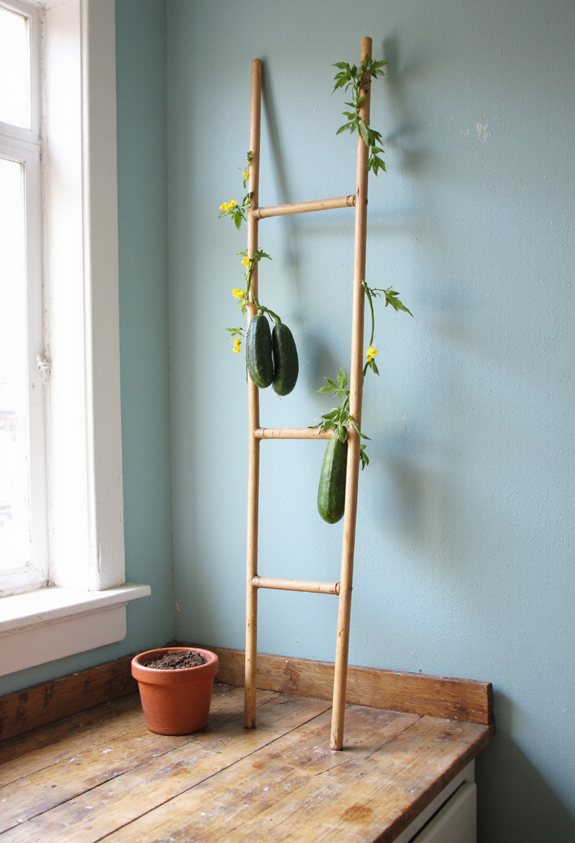
If you’ve already turned a pallet into a garden hero, you’ll love how a simple string‑and‑peg ladder can fit into a tiny balcony or a narrow patio.
Grab a couple of sturdy wooden pegs, tie a length of garden twine between them, and space the pegs evenly.
Hang cucumbers, watch them climb, and enjoy fresh snacks without cluttering your cozy space. This DIY solution mirrors the principles of natural elements used in festive tablescapes, promoting both functionality and aesthetic appeal.
DIY PVC Pipe Frame – Light, Cheap, and Easy to Assemble
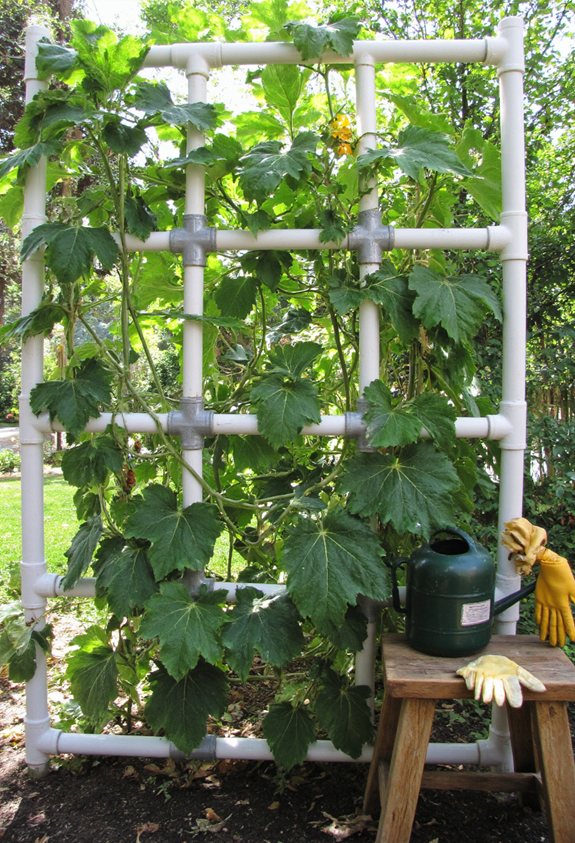
Ever wondered how a cheap, lightweight frame can turn a cramped balcony into a cucumber haven?
Grab a few ½‑inch PVC pipes, cut them to length, and connect with elbow joints.
Slip a couple of zip ties through the holes, and you’ve got a sturdy, airy trellis.
It’s quick, inexpensive, and you’ll love watching vines climb like tiny green ladders. Additionally, this provides maximized vertical space for your plants, allowing them to grow more efficiently.
Garden Fence Reuse – Turn an Old Fence Into a Vertical Garden
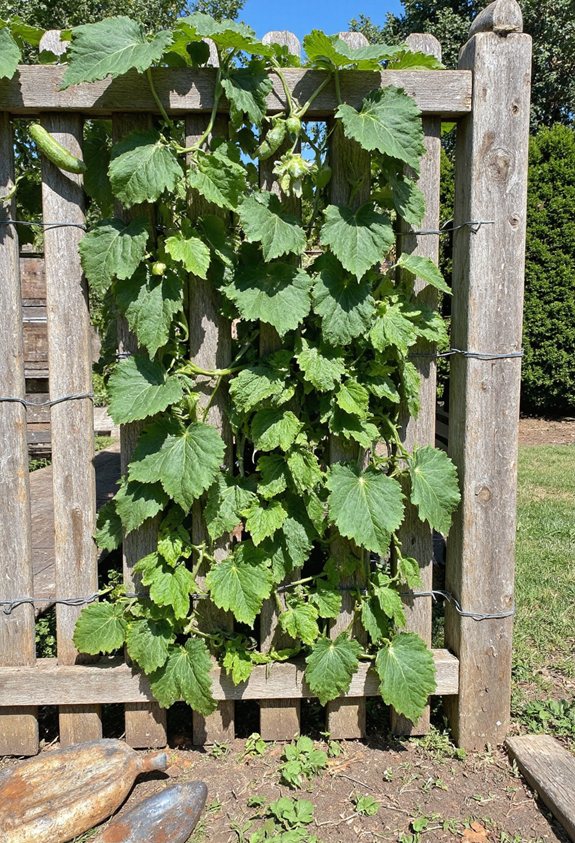
Even a tired, weather‑worn fence can become the star of your garden if you give it a fresh purpose.
First, clean the panels, then attach sturdy hooks or brackets.
Fill the gaps with potting mix and plant vines, herbs, or lettuce.
Water from the top, and watch the greenery cascade down, turning the old fence into a living, space‑saving masterpiece that’s both functional and eye‑catching. For added aesthetics, consider using tapestries to enhance the backdrop of your vertical garden, giving it an artistic flair.
Bamboo Stakes With Twine – Natural Look, Minimal Cost
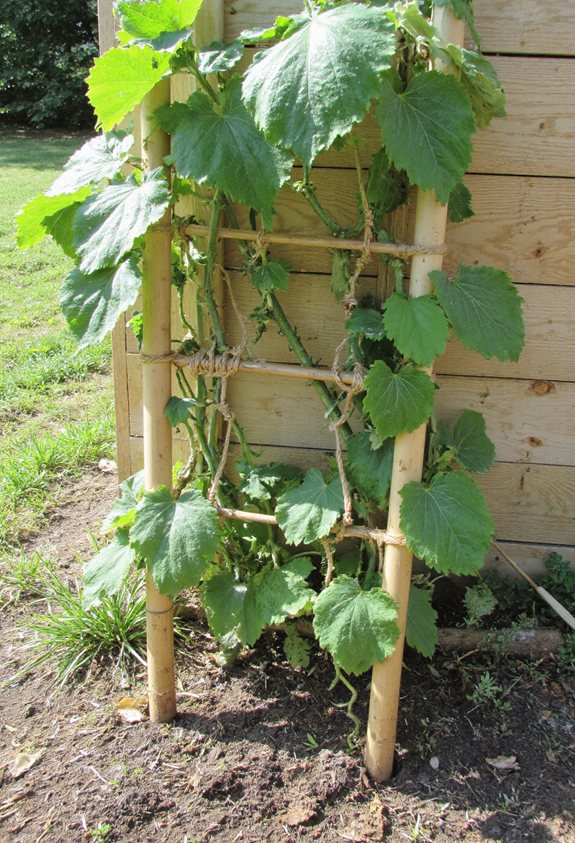
When you grab a few bamboo stakes and a coil of twine, you’re basically turning a cheap, natural material into a garden superhero.
Drive each stake into the soil, then loop twine around the stem, tying it loosely but securely.
The twine gives gentle support, letting cucumbers climb without breaking.
It looks rustic, costs pennies, and you’ll feel proud watching vines rise gracefully. Additionally, you can enhance your garden’s function with a seasonal coffee bar, providing a charming spot for breaks while tending to your plants.
Wire Mesh Grid on a Wooden Frame – Strong Support for Heavy Vines
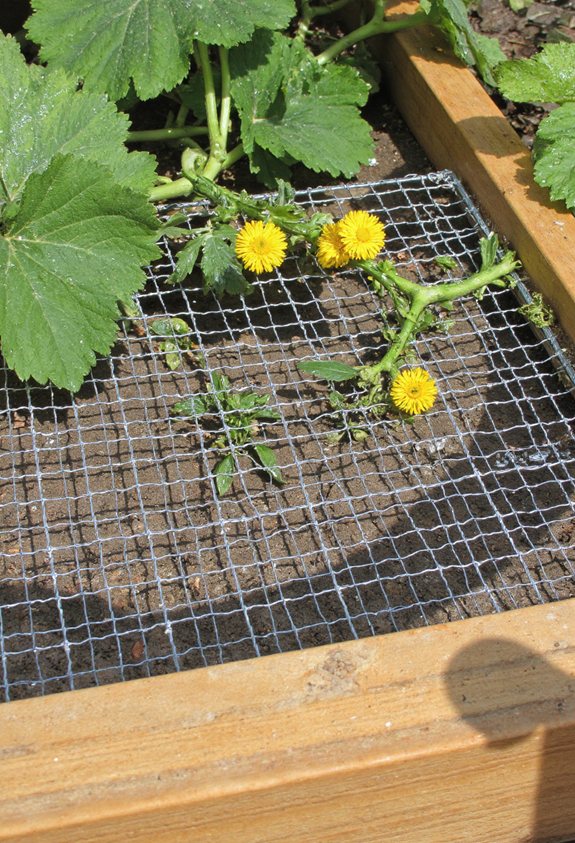
If you’ve got a bunch of heavy‑growing cucumber vines that keep toppling over, a wire‑mesh grid mounted on a sturdy wooden frame can be a game‑changer.
Build a simple frame from 2×4s, attach chicken‑wire or hardware cloth, then secure vines with garden ties.
The mesh holds weight, lets air flow, and looks neat—no more tangled messes, just tidy, thriving cucumbers. Additionally, proper trellising not only supports your plants but also maximizes high-yield vegetable production by promoting better air circulation and sunlight exposure.
Trellis Made From Old Ladder Rungs – Rustic Charm, Zero Waste
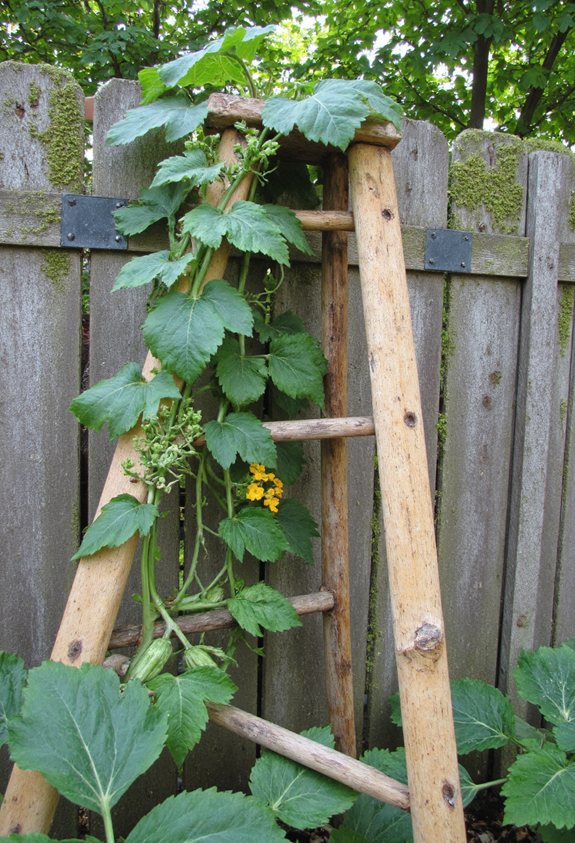
Because a backyard garden can feel like a treasure chest of leftovers, why not turn those old ladder rungs into a rustic cucumber trellis? You’ll love the reclaimed wood’s character and the way vines hug each rung. It’s cheap, eco‑friendly, and adds charm to any plot. Additionally, using repurposed materials can enhance the sustainability of your gardening practices.
- Gather sturdy rungs and clean them.
- Space rungs evenly on a wooden post.
- Secure with rust‑proof screws or brackets.
- Plant cucumbers and watch them climb naturally.
Metal Coat Hacks – Vertical Trellis With a Vintage Twist

Even if you think metal is only for industrial fences, a repurposed coat rack can become a sleek, vintage‑style trellis that makes your cucumbers look like they’re climbing a runway. Hang the rack vertically, secure it with garden stakes, and drape the vines through the spaced hooks. Add a splash of spray‑paint for color, and watch the plants turn your balcony into a chic garden runway. Incorporating natural pest management techniques alongside your trellis can further enhance your cucumber growth and overall garden health.
Wood Plank “A‑Frame” – Simple Geometry for Maximum Stability
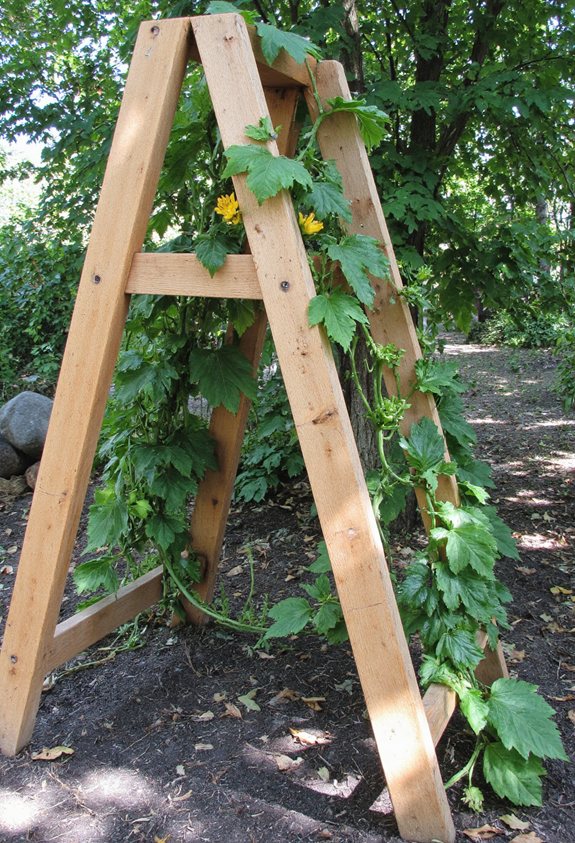
When you set two sturdy wood planks in an A‑frame shape, the geometry does most of the work, turning a simple garden trellis into a rock‑solid support for cucumber vines. You’ll notice the frame stays steady even when vines grow heavy, and assembly takes just a few minutes with basic tools.
- Cut planks to equal length
- Secure the apex with a metal bracket
- Anchor the base with ground stakes
- Add cross‑bars for extra vine guidance
Additionally, consider adding some lush green plants around your trellis for improved aesthetics and natural beauty in your garden.
Rope‑Wrapped Branches – Flexible, Adjustable, and Organic
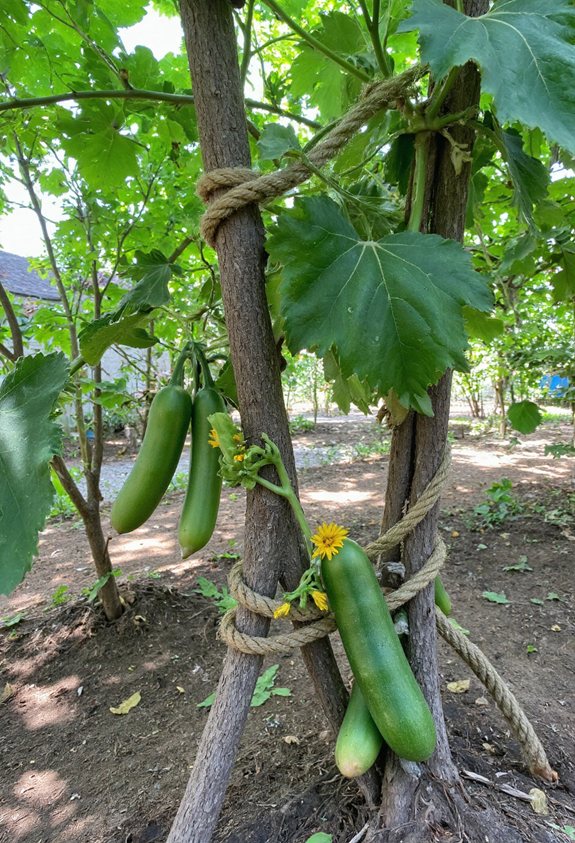
Ever tried turning a garden into a living, breathing sculpture?
Wrap a sturdy branch with natural rope, then twist it into a gentle curve.
The rope grips the wood, letting you tighten or loosen as vines grow.
You can move the branch, reshape it, and watch cucumbers climb like tiny climbers.
It feels like nature’s own adjustable ladder—simple, cheap, and surprisingly fun.
Recycled Plastic Bottle Columns – Eco‑Friendly and Weather‑Resistant
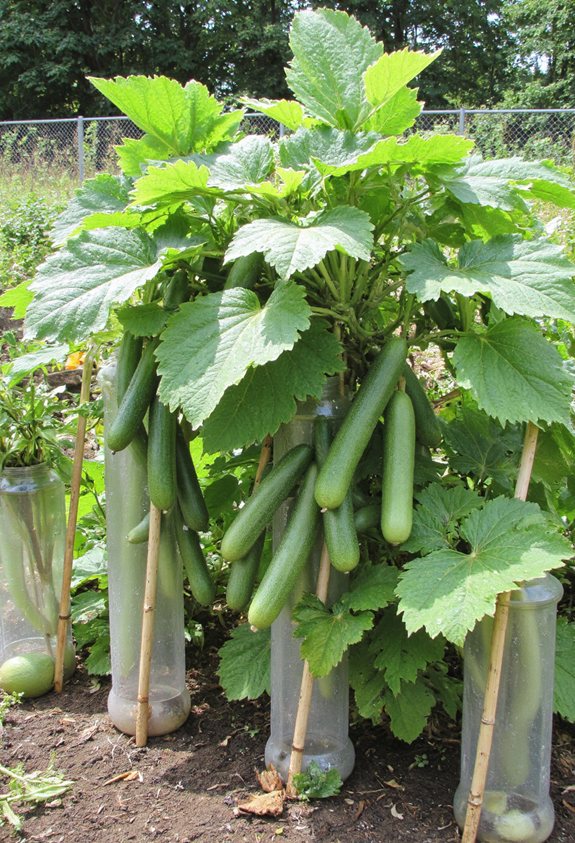
After you’ve gotten the rope‑wrapped branches working, try swapping them for something that won’t rot in the rain—recycled plastic bottle columns. Cut the bottles, fill them with sand, and stake them into the soil; they stand tall, resist weather, and give cucumbers a sturdy home.
- Cut bottles lengthwise
- Fill with sand or soil
- Secure with stakes or brackets
- Space evenly for plant growth
Additionally, having a comfortable seating area nearby can enhance your overall gardening experience.
Garden Hose Reel Trellis – Repurpose a Hose Reel for Easy Rotation
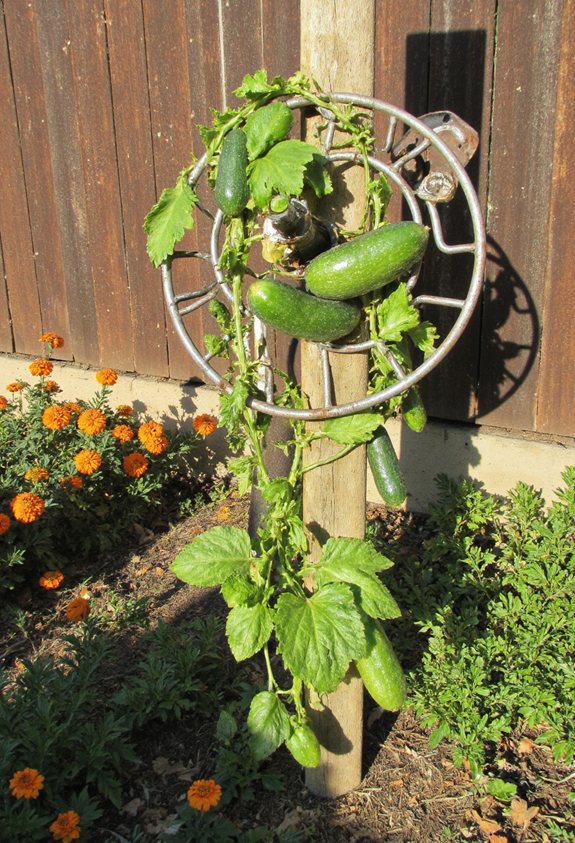
If you’ve got a spare garden hose reel lying around, you can turn it into a rotating trellis that makes cucumber vines grow like a well‑organized parade.
Attach a few sturdy wooden slats to the reel’s frame, secure the reel on a simple base, and let the vines wrap around as it spins.
You’ll love watching the garden dance while you harvest crisp cucumbers.
DIY Curtain‑Rod Trellis – Ideal for Narrow Pathways
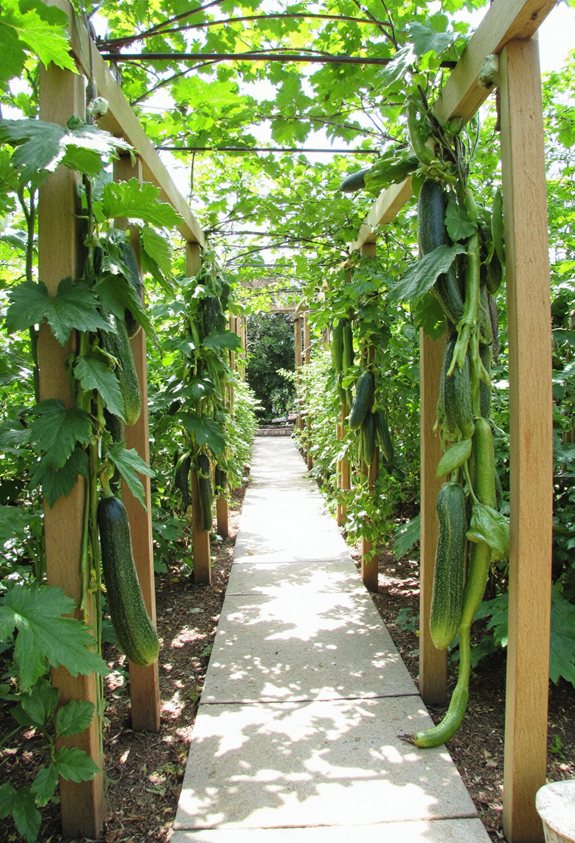
When you have a narrow garden path that feels more like a hallway than a backyard, a curtain‑rod trellis can turn that tight space into a cucumber runway. You’ll love how easy it’s to install, and the vines will climb like tiny acrobats, adding charm without crowding.
- Choose a sturdy metal or wooden rod, 3‑4 ft long.
- Secure it with brackets at each end, keeping it level.
- Attach twine or small clips for vines to grab.
- Trim regularly to keep the “runway” tidy.
Wire Coat‑Hangers Bent Into Mini‑Arches – Ultra‑Cheap and Fun
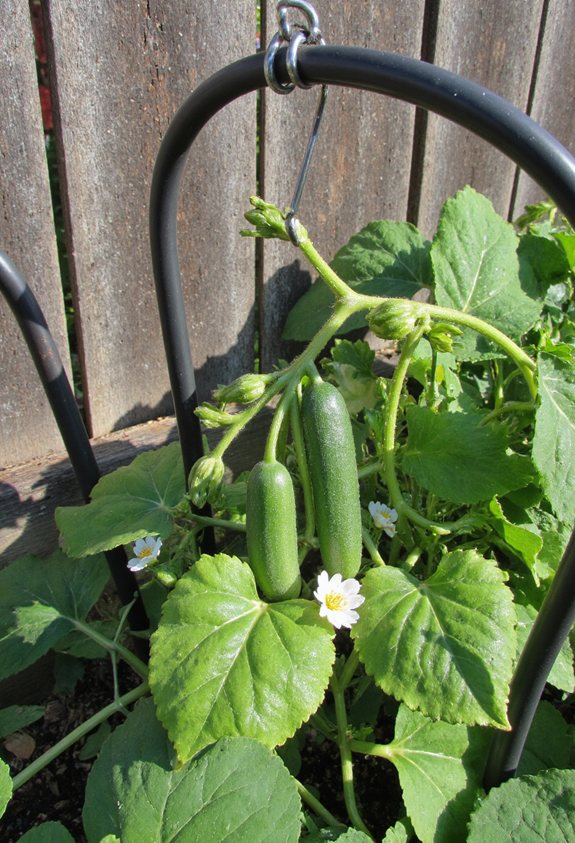
You’ve already seen how a simple curtain‑rod can turn a narrow garden path into a cucumber runway, so why not take that DIY spirit a step further with wire coat‑hangers?
Bend each hanger into a gentle arch, space them evenly, and secure with zip‑ties. The arches cradle vines, letting cucumbers climb freely while you enjoy a cheap, whimsical garden sculpture.
Old Window Frame Grid – Vintage Style, Ready‑Made Mesh
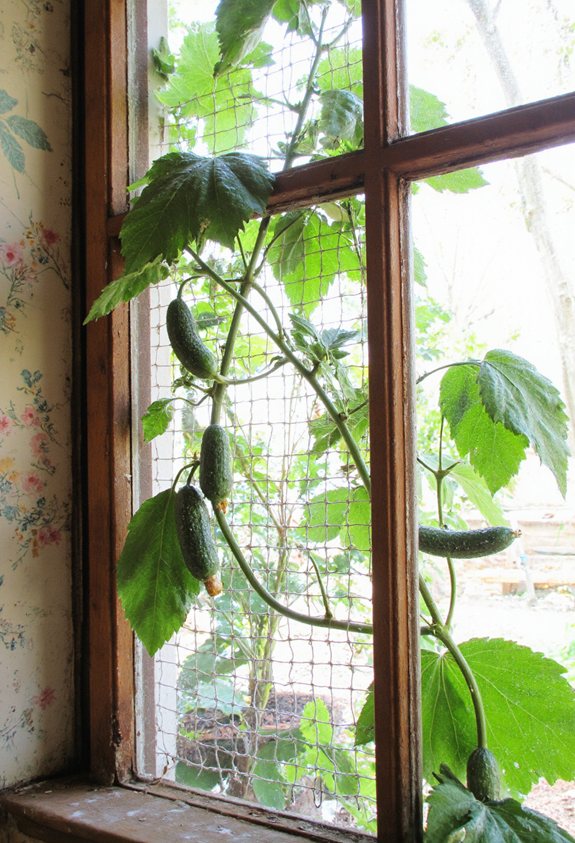
Even though you might think a dusty old window frame belongs in a thrift store, it actually makes a perfect vintage‑style mesh for cucumber vines.
You’ll love how the rusted wood adds charm while the grid holds vines steady, and you can paint it bright or leave it natural for that retro vibe.
- Clean and sand the frame
- Secure the grid with nails or zip ties
- Attach the frame to a fence or post
- Train vines through the squares and enjoy the harvest
Concrete Block and Wire Net – Heavy‑Duty for Large Cucumber Plants
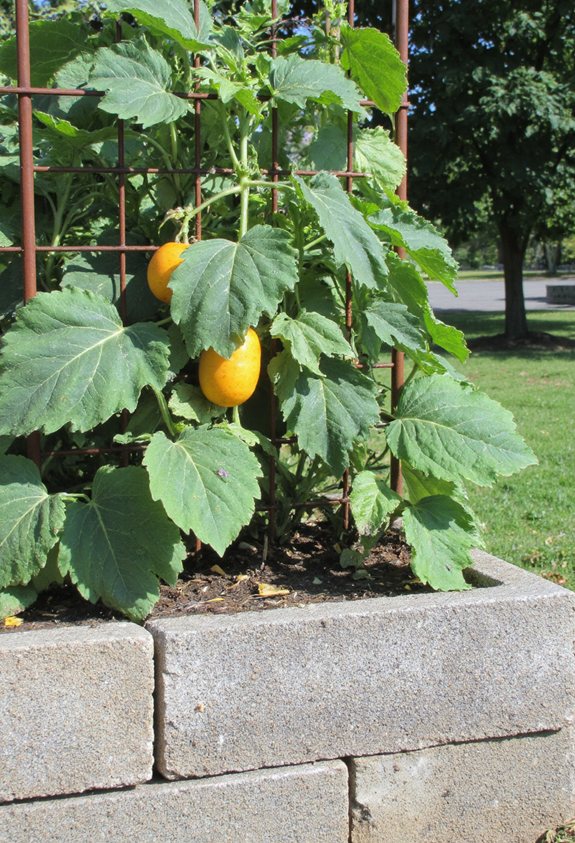
If you’ve got a backyard full of big, sprawling cucumber vines, a concrete block paired with a sturdy wire net is the perfect heavy‑duty trellis to keep them in check.
You’ll stack the block, then stretch the net over it, securing corners with zip ties.
The vines hug the net, growing upward, and you can easily prune or harvest without tripping over tangled stems.
This setup stands firm against wind and weight.
Garden Trellis Netting on a Stakes Base – Fast Installation, Scalable
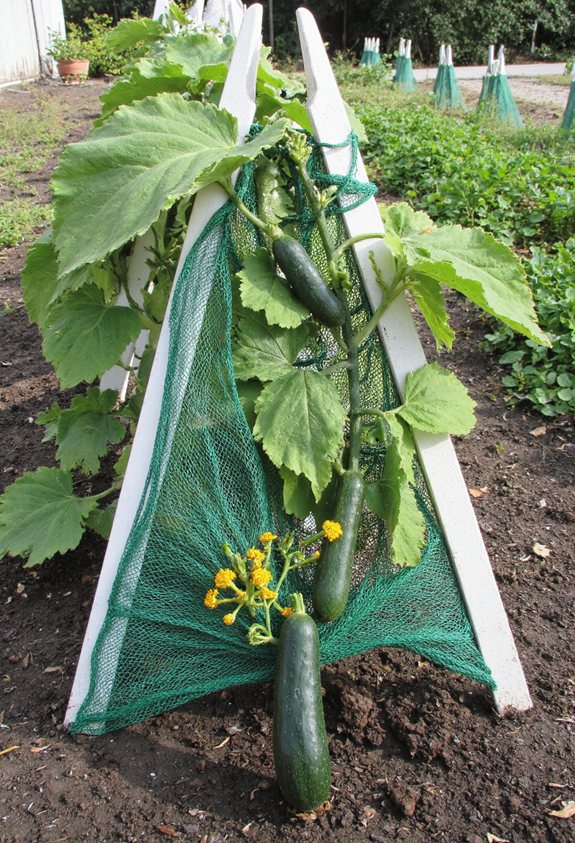
After the sturdy concrete‑block setup, many gardeners look for something lighter that still holds up under a heavy cucumber crop.
You can snap garden‑grade netting onto steel stakes, then drive the stakes into the soil in a zig‑zag pattern.
The net stretches quickly, and you can add rows as plants grow, keeping vines supported without a lot of hassle.
- Use ½‑inch galvanized stakes for durability
- Tie netting with zip‑ties or garden twine
- Space stakes 2‑3 feet apart for stability
- Adjust height as vines climb, trimming excess netting
Cardboard Tube “Spiral” Trellis – Temporary for Seedlings, Then Recycle
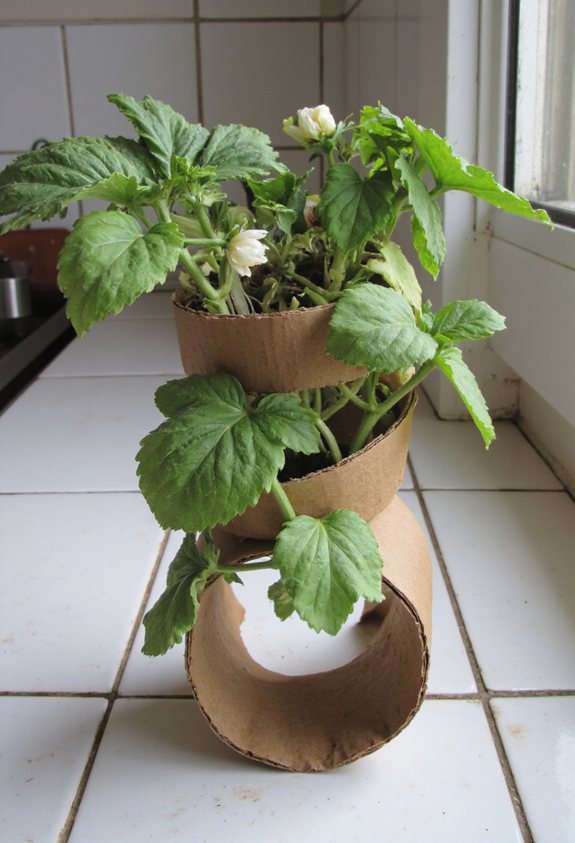
When you’re looking for a quick, cheap way to give your cucumber seedlings a boost, grab a few empty cardboard tubes and turn them into a spiral trellis.
Slip the tube around the plant, secure it with a rubber band, and watch vines curl upward.
It’s sturdy enough for early growth, then you recycle the tube after harvest, keeping waste low and garden happy.
Reclaimed Pallet Slat Ladder – Simple Rungs, Easy to Customize
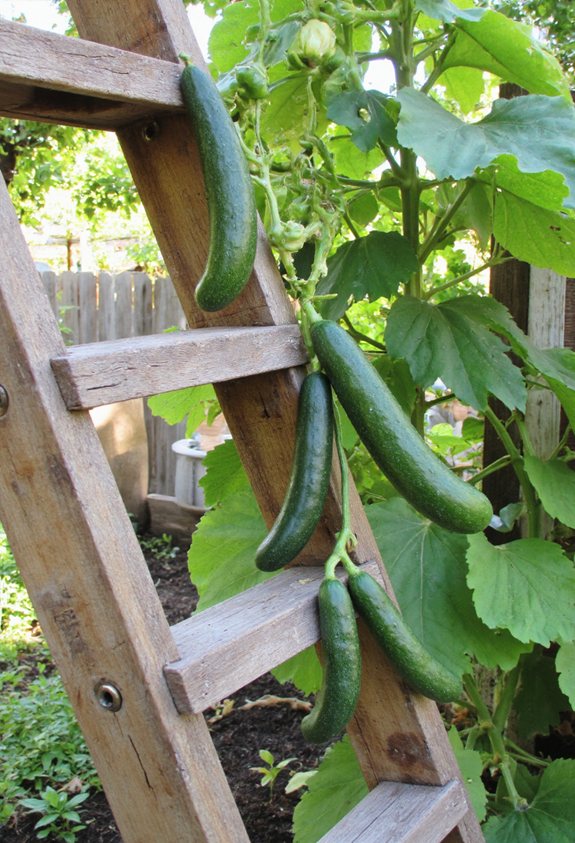
Ever wondered how a rescued pallet can become a sturdy, stylish ladder for your cucumber vines? You’ll sand the slats, cut them into uniform rungs, and attach them with simple brackets. Then you paint or stain for personality, and your garden gets a rustic, functional masterpiece.
- Sand and smooth slats
- Cut equal‑length rungs
- Secure with brackets or screws
- Finish with paint or stain
DIY “T‑Shape” Trellis Using Two Boards – Perfect for Corner Gardens
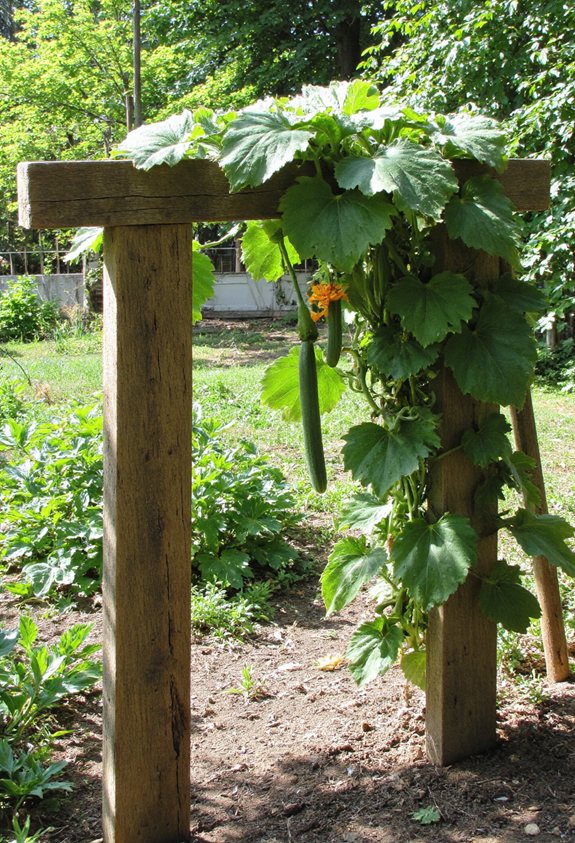
If you’ve got a little nook where two garden paths meet, a T‑shaped trellis made from two simple boards can turn that corner into a cucumber‑loving showcase.
Cut one board to the desired height, the other to the width, then screw them together at a right angle.
Paint or stain for weather‑proofing, plant seedlings at the base, and watch them climb happily.
Garden Twine and Bamboo Pole “Lattice” – Light, Airy, and Easy to Repair
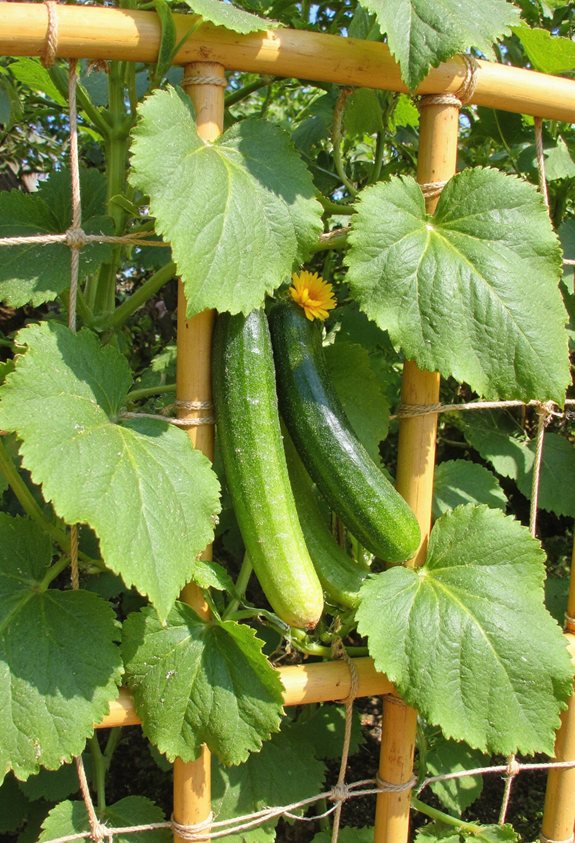
Even a tiny backyard can get a breezy, veggie‑friendly vibe with a garden twine‑and‑bamboo lattice.
You’ll love how the light poles let sun filter through while vines hug the twine, making repairs a snap if a strand snaps.
- Cut bamboo to 3‑ft sections
- Tie twine in a criss‑cross pattern
- Secure poles with garden stakes
- Replace broken twine in minutes
Adjustable Metal Bracket System – Grow Your Trellis With Your Plants
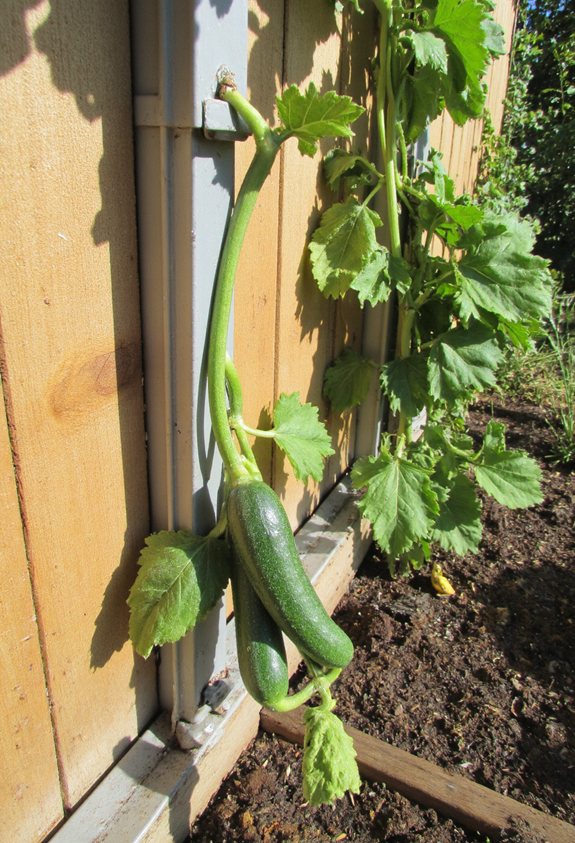
When you’re watching your beans climb, a metal bracket that slides up and down makes the whole trellis feel like it’s growing with them.
You clamp the bracket onto a sturdy pole, then adjust its height as vines stretch, no tools needed.
The smooth glide keeps plants supported, while you enjoy watching them reach higher.
It’s cheap, sturdy, and surprisingly satisfying.
Fabric‑Covered Wire Grid – Soft Support for Young Vines, Easy to Clean
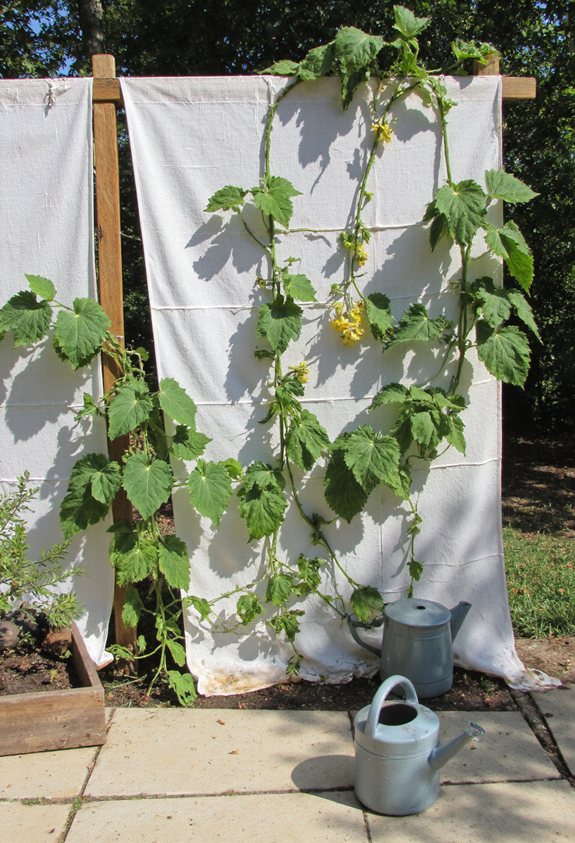
Because young vines can be delicate, wrapping a soft fabric over a sturdy wire grid gives them a gentle hug while staying strong enough to hold their weight.
You’ll love how easy it’s to clean—just a quick rinse and it’s fresh again. The fabric protects against sunburn and wind, letting vines grow confidently.
- Choose breathable cotton or mesh
- Secure fabric with zip ties or staples
- Attach grid to garden frame with brackets
- Wash with mild soap and air‑dry