You can turn any backyard into a veggie haven by picking a layout that fits your space. A classic raised‑bed rectangle gives tidy rows and warm soil for fast‑growing crops.
For tiny spots, a square‑foot garden packs plants into 1‑foot squares, while an L‑shaped bed hugs awkward corners and lets tall tomatoes shine. A U‑shaped aisle makes harvesting easy, and a circular bed creates a striking centerpiece. Modular cubes let you re‑arrange on the fly, and a patio‑box fits snugly on balconies.
Rain‑gardens conserve water, and a perimeter border defines the garden’s edge. Keep scrolling to discover the rest of the designs.
Choose the Classic Raised‑Bed Rectangle
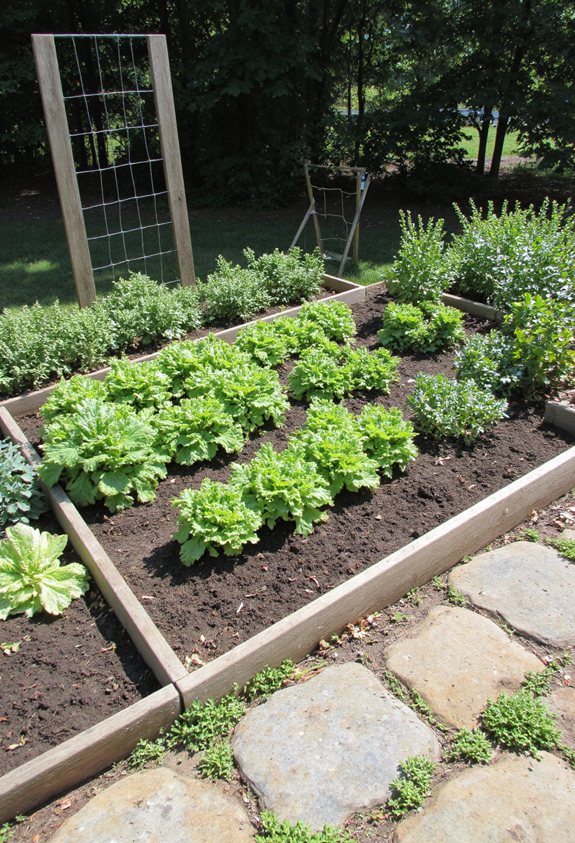
When you first step into a garden with a classic raised‑bed rectangle, you’ll feel like you’ve walked into a tidy, organized playground for veggies. You’ll love how the straight edges guide your planting rows, making watering and weeding a breeze. The soil stays warm, and pests find it harder to hide. Plus, the neat look invites friends to admire your harvest. Additionally, fast-growing vegetables thrive in this setup, allowing for quicker harvests to enjoy throughout the season.
Try a Square‑Foot Garden for Small Spaces
Ever wondered how you can fit a thriving garden into a cramped balcony or tiny backyard?
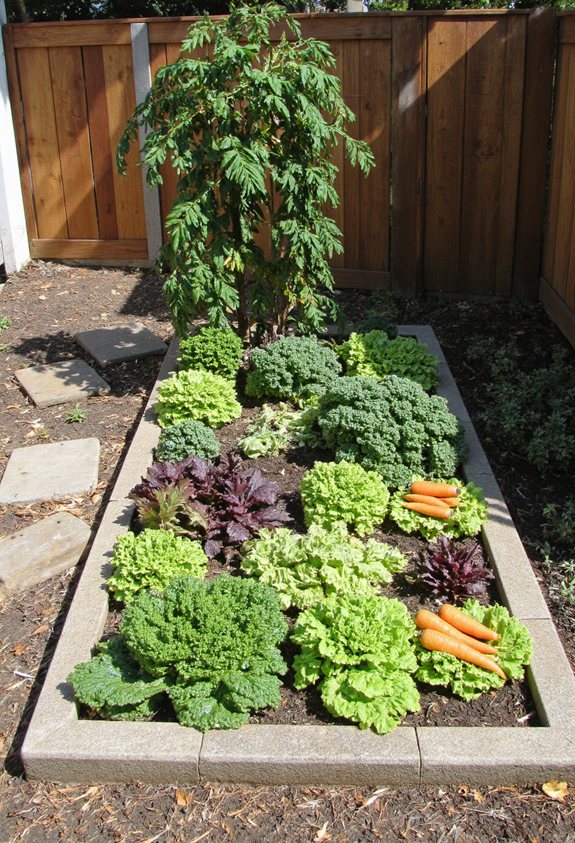
Try a square‑foot garden: divide a four‑by‑four foot plot into 1‑foot squares, plant one crop per square, and rotate yearly.
You’ll maximize space, reduce weeds, and enjoy fresh veggies without a mess. It’s simple, efficient, and surprisingly rewarding—perfect for small‑space growers. Additionally, consider incorporating heat-loving plants for a bountiful harvest during the summer months.
Build an L‑Shaped Bed to Fit Corner Plots
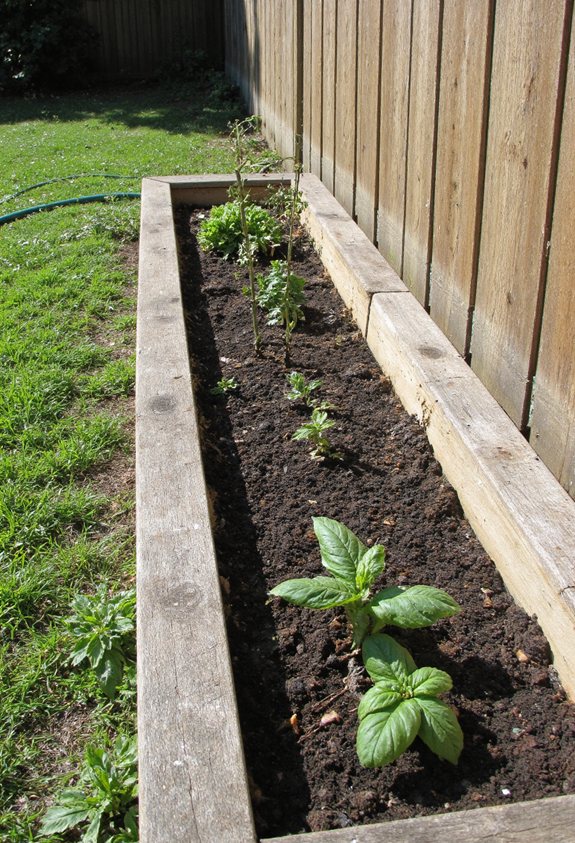
How can you turn that awkward corner into a garden hero? Sketch an L‑shaped bed that hugs the fence and the house, maximizing space.
Use sturdy edging, fill each leg with rich soil, and plant tall tomatoes on the outer side while low herbs hug the inner corner. This shape lets sunlight reach every row, and you’ll love harvesting from a clever, cozy nook. Consider using organic compost to enrich the soil, ensuring your tomatoes thrive in their new environment.
Use a U‑Shaped Layout for Easy Access
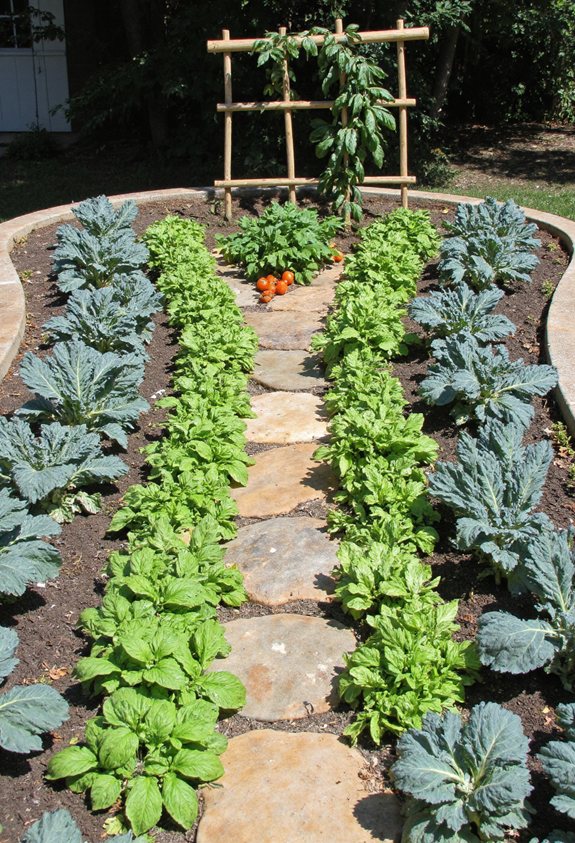
After mastering the corner with an L‑shaped bed, you’ll find a U‑shaped layout makes garden chores feel like a breezy walk around a small park.
You walk between two parallel rows, reach every plant without stepping on soil, and enjoy a tidy aisle that doubles as a shortcut.
It’s perfect for kids, pets, and anyone who loves quick, stress‑free harvesting. Additionally, incorporating companion planting can enhance the productivity and health of your U‑shaped garden by leveraging natural plant relationships.
Design a Circular Bed for Center‑Focused Planting
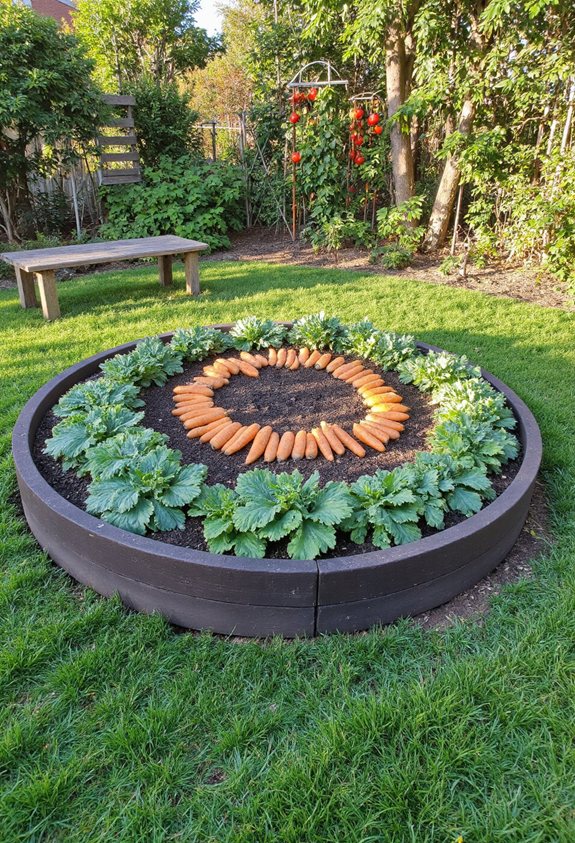
Wondering how a circular bed can become the star of your garden? Picture a round plot with a focal point—perhaps a tall tomato or a bright pepper—surrounded by lower-lying greens.
Lay out a sturdy rim, fill the center with your favorite centerpiece, then plant lettuce, herbs, and carrots around it. This design allows for optimal spacing of plants, similar to how bell peppers thrive in warm soil which enhances their growth and productivity.
The shape draws the eye, maximizes space, and makes watering a breeze. Enjoy the easy-access, eye-catching design!
Plant a Spiral Herb Garden for Space‑Saving Herbs
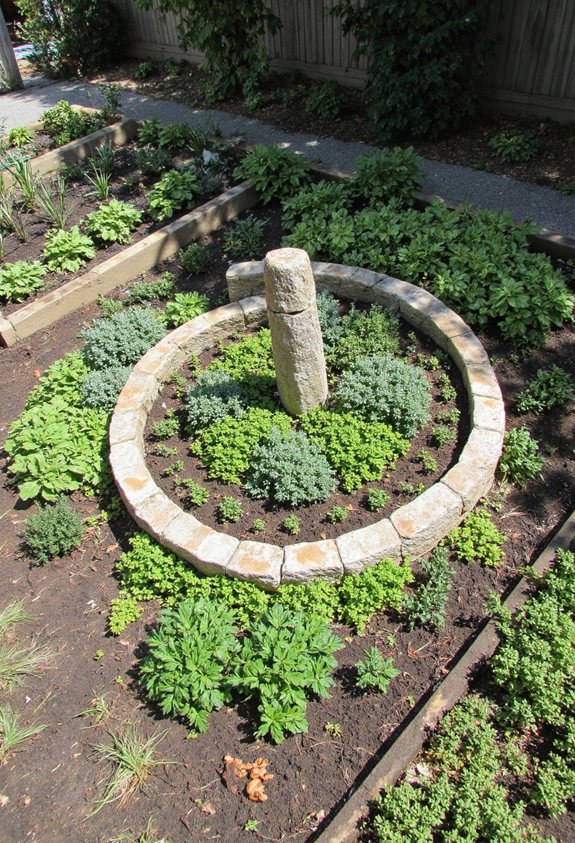
If you liked the way a circular bed pulls the eye to its center, you’ll love a spiral herb garden for it packs loads of flavor into a tiny space.
Start with a mound of soil, shape it into a tight coil, then plant basil, thyme, mint, and oregano along the curve.
Each turn gives you fresh herbs without crowding, and the design looks cool, like a garden-scented cinnamon roll. Additionally, consider the concept of a cozy retreat which can be incorporated into your garden space by placing a small seating area nearby for enjoyment.
Set Up a Vertical Tower for High‑Yield Crops
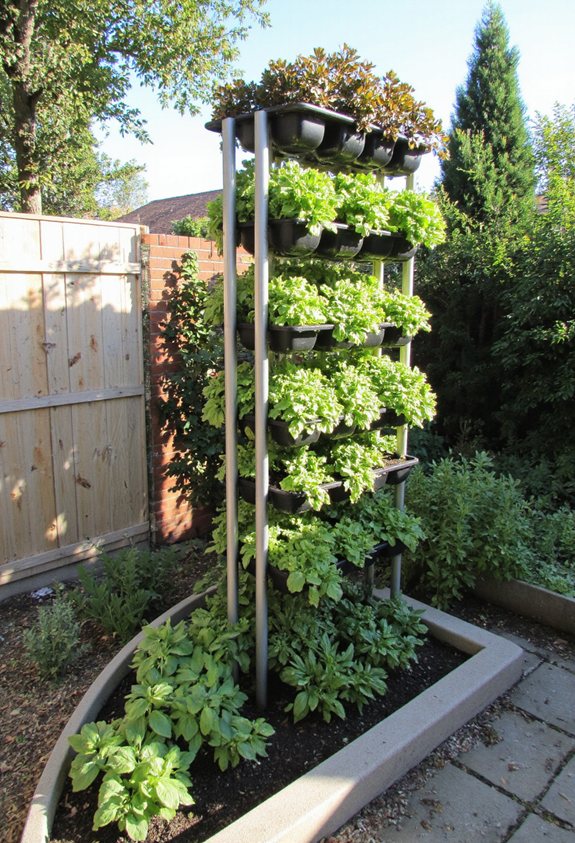
A three‑foot‑tall tower can turn a tiny balcony into a leafy powerhouse, and you’ll be amazed how fast it produces beans, lettuce, and cherry tomatoes.
First, secure a sturdy frame, fill it with nutrient‑rich soil, and plant seeds in each tier.
Water consistently, add compost monthly, and watch vines climb. Growing bush beans vertically allows you to maximize space and achieve a higher yield.
Harvest daily for fresh snacks, and brag to friends about your vertical garden victory.
Install a Pocket‑Planter Wall for Balcony Gardens
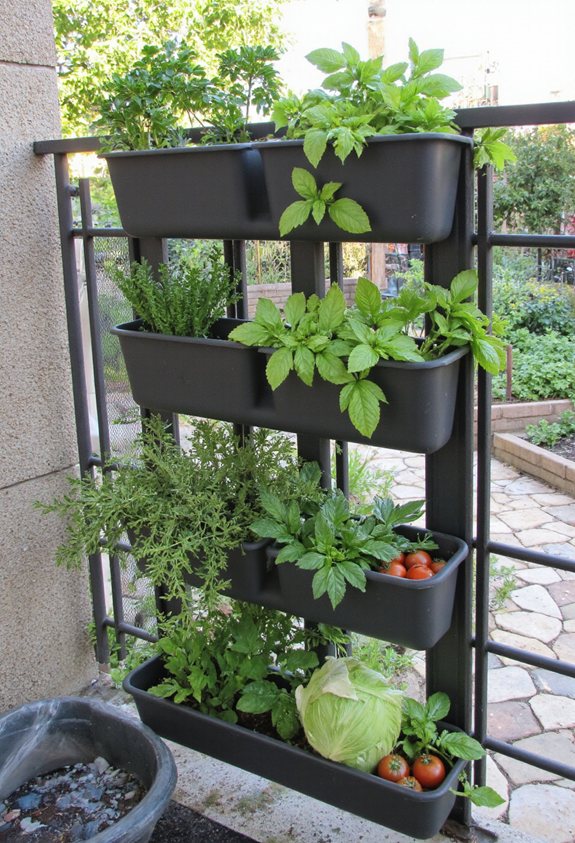
After you’ve mastered a three‑foot‑tall vertical tower, you’ll find a pocket‑planter wall a perfect next step for squeezing even more greens onto a balcony.
Choose a lightweight wooden or metal frame, attach fabric pockets, and fill them with soil.
Plant herbs, lettuce, and radishes; they’ll cascade down, saving space and looking chic.
Water from the top, and watch the garden thrive. Consider incorporating high-yield vegetables such as herbs and lettuces to maximize your harvest in limited space.
Create a Tiered Stepped Garden on Sloped Land
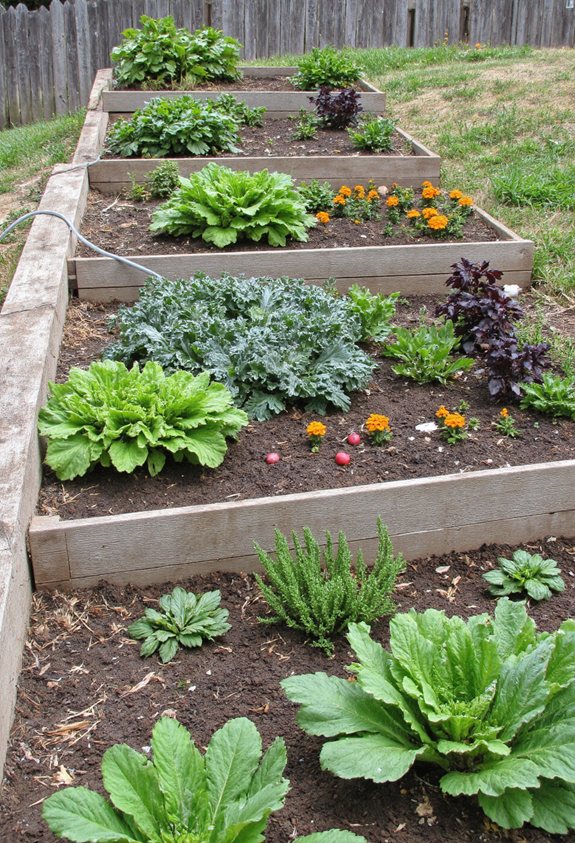
When your yard slopes like a gentle hill, turning that incline into a tiered, stepped garden can make the space feel organized and inviting. Build low retaining walls from stone or wood, then fill each level with rich soil. Plant tall tomatoes on the highest tier, leafy greens in the middle, and herbs at the bottom where they get the most sun. Water runs down naturally, keeping every row hydrated. Additionally, understanding soil quality is essential for ensuring that each tier supports healthy plant growth.
Arrange a Row‑Crop Garden for Mechanized Harvesting
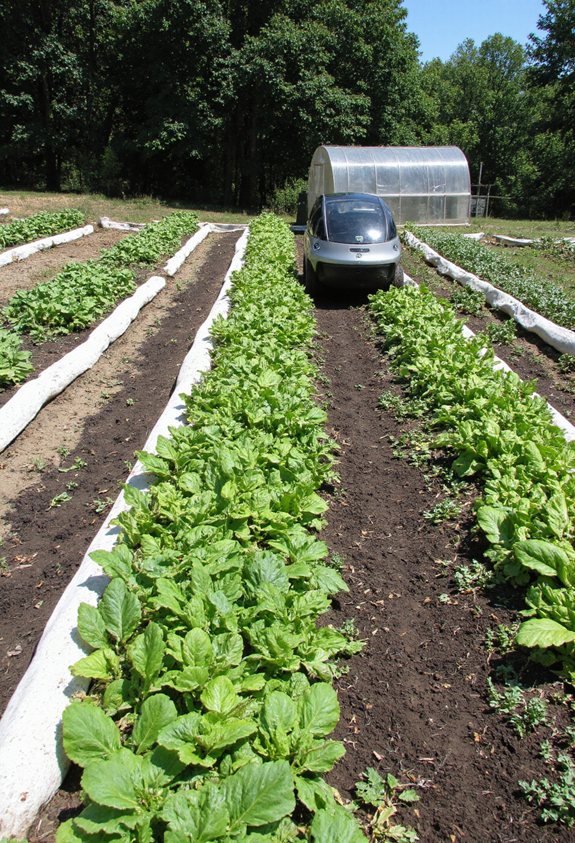
If you’ve got a small tractor or a motorized tiller, setting up straight, evenly spaced rows is the secret sauce for hassle‑free harvesting.
Lay the rows 30‑inch apart, keep them parallel, and use a marker to guide the machine.
Plant crops that grow upright, like carrots or beans, so the equipment can glide without snagging.
Incorporating climbing vegetables like pole beans can further optimize your harvest while making the best use of vertical space.
End each row with a turn‑around space for easy maneuvering.
Adopt a Keyhole Garden for Efficient Water Use
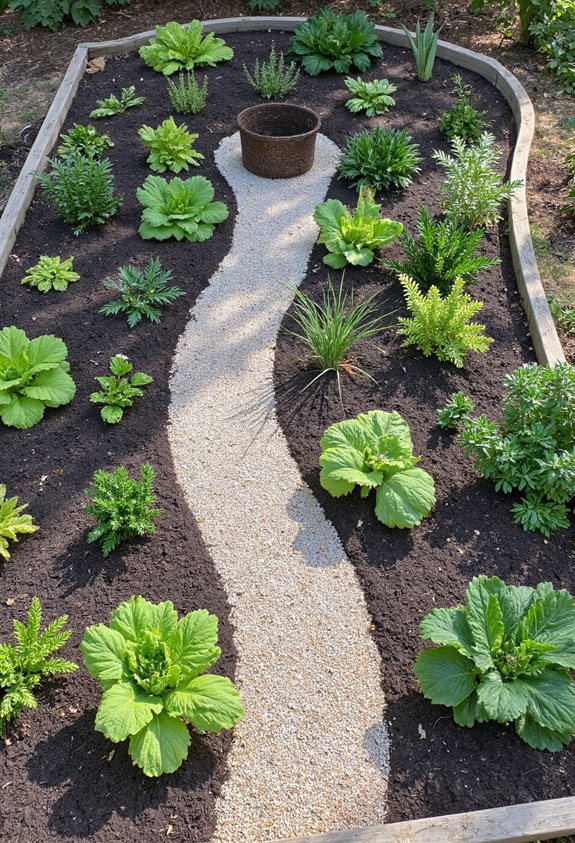
Even though space is tight, a keyhole garden can turn a tiny plot into a water‑wise oasis.
You’ll love how the circular path lets you reach every plant without stepping on soil, and the central compost bin feeds moisture straight to roots.
- Dig a shallow trench around the circle.
- Build a raised ring with soil.
- Add a compost basket at the center.
- Fill gaps with mulch for extra retention.
Build a Trench Garden for Deep‑Rooted Vegetables
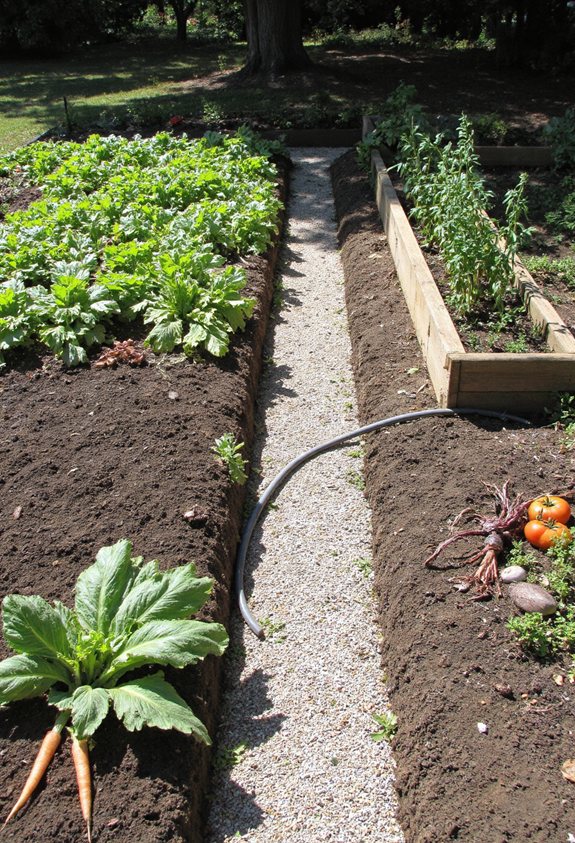
Because deep‑rooted veggies like carrots, beets, and potatoes need space to stretch, a trench garden gives them the room they crave while keeping your garden tidy.
Dig a 12‑inch‑wide, 12‑inch‑deep trench, line it with compost, then sow seeds in rows 3‑4 inches apart.
Cover lightly, water gently, and watch roots dive deep, thriving without crowding each other.
Use a Container‑Only Layout for Renters
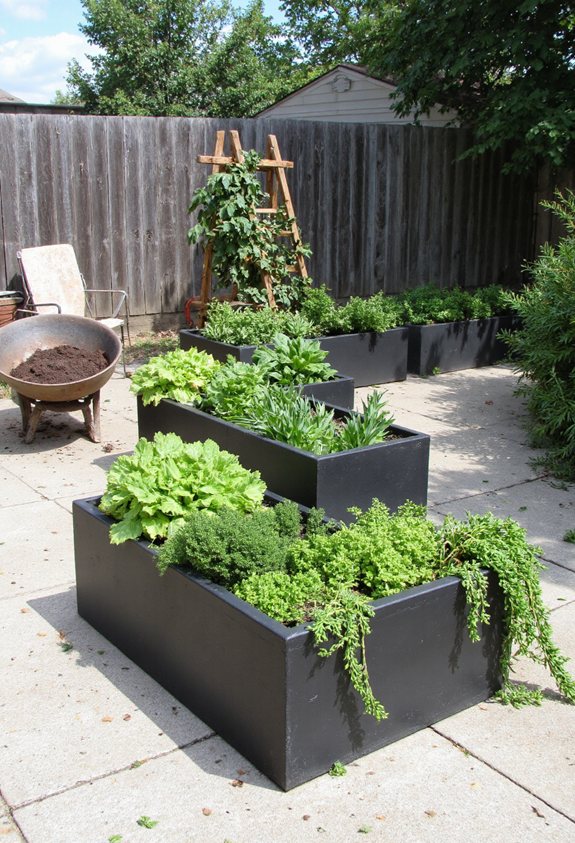
Ever tried to grow veggies when you’re stuck in a rented apartment? You can still harvest fresh lettuce and herbs without breaking lease rules. Use lightweight pots, stackable trays, and hanging baskets to maximize space.
- Choose bright‑colored containers for visual appeal.
- Use a drip‑irrigation kit for easy watering.
- Rotate crops every few weeks to keep soil healthy.
- Add a small trellis for climbing beans.
Combine Raised Beds With Pathways for Wheelchair Access
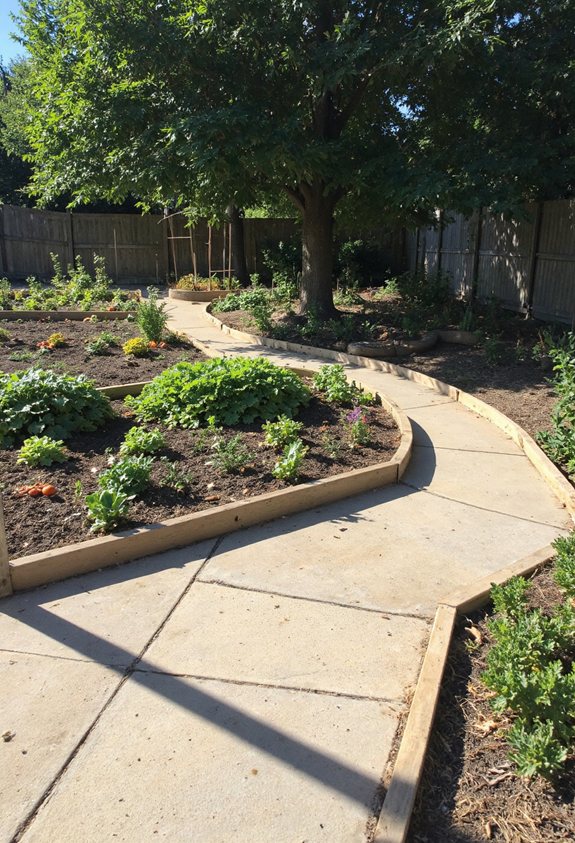
When you plan a garden that works for a wheelchair, think of the raised beds as friendly islands connected by smooth, wide pathways.
Space the aisles at least three feet wide, use firm mulch or pavers, and keep slopes gentle.
Position beds at a comfortable height so you can reach without strain.
Add railings for support, and you’ll glide through your garden like a park stroll.
Implement a Mixed‑Crop Patch for Companion Planting
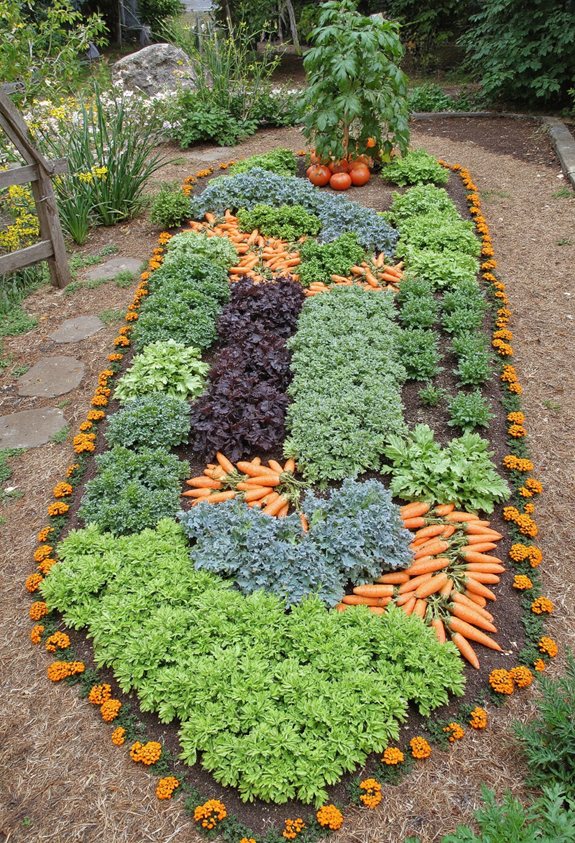
If you mix veggies that help each other grow, your garden becomes a little ecosystem that looks after itself.
You’ll see tomatoes shielding basil from pests, carrots loosening soil for beans, and marigolds deterring beetles.
- Pair tomatoes + basil for flavor and pest control.
- Plant carrots + onions to deter worms.
- Grow beans + corn for support and nitrogen.
- Add marigolds + cabbage to repel insects.
Try a “Three‑Season” Layout for Year‑Round Harvests
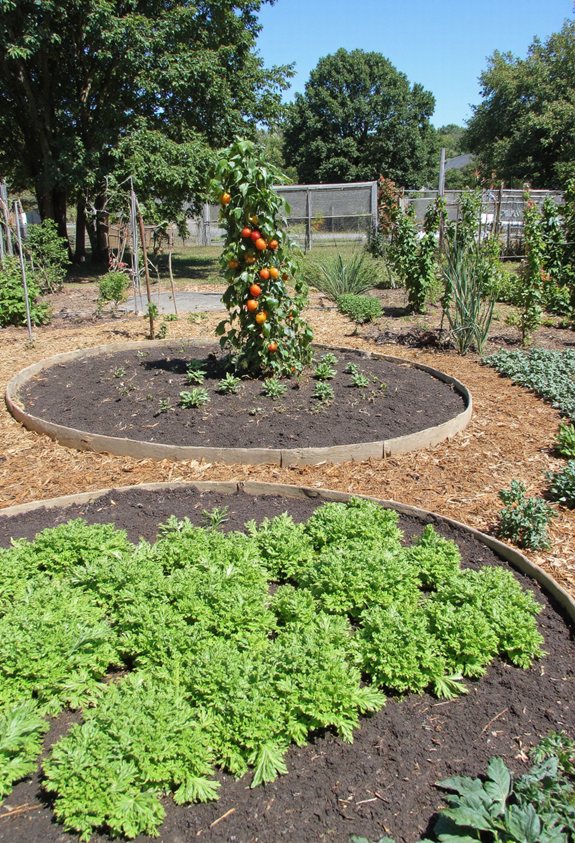
Why settle for a single harvest when you can enjoy fresh veggies all year?
Split your garden into three zones: early‑spring, summer, and fall.
Plant cool‑season crops like lettuce and peas in the first zone, heat‑loving tomatoes and peppers in the second, and root veggies such as carrots in the third.
Rotate crops each season, and you’ll keep the soil happy and your plate colorful year‑round.
Set Up a Mini‑Greenhouse Corner for Early Starts
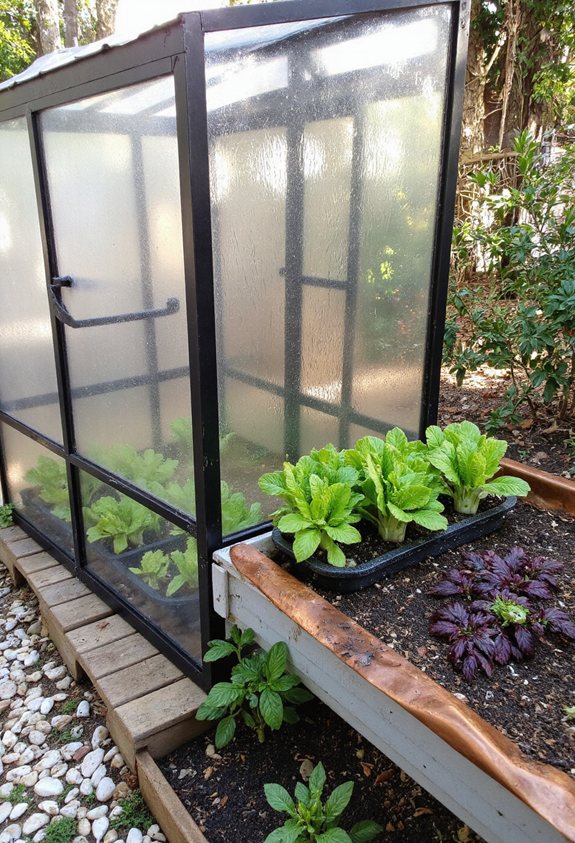
Even if your backyard is tiny, a mini‑greenhouse corner can give you a head start on the growing season.
Pick a sunny spot, use a clear PVC frame, and add a simple vent.
You’ll protect seedlings from frost and boost growth.
- Choose a location with at least six hours of sun.
- Build a frame from inexpensive PVC pipes.
- Cover with clear plastic or polycarbonate sheets.
- Install a flap or roll‑up vent for airflow.
Design a “Z‑Pattern” Bed to Maximize Sun Exposure
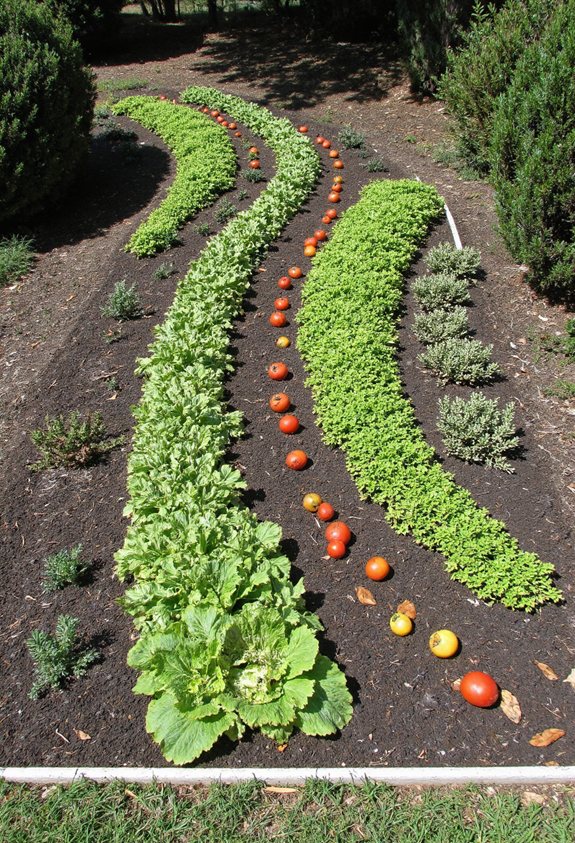
After you’ve got your mini‑greenhouse humming, the next step is to make the rest of the garden soak up every ray of sunshine.
Lay a Z‑shaped bed that zigzags across the sunniest strip, keeping rows angled toward the south. This pattern lets each plant catch light, even when the sun moves.
Space the bends a foot apart, and watch veggies thrive.
Use a “M‑Shaped” Layout for Large Yards With Multiple Zones
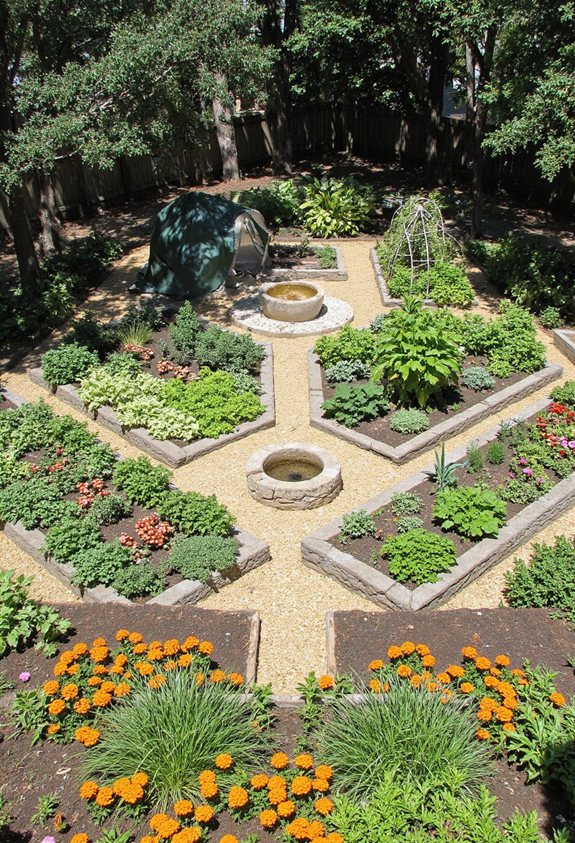
If you’ve got a big yard split into sunny, shady, and everything‑in‑between zones, an M‑shaped layout can turn that patchwork into a thriving veggie kingdom. It lets you walk the “M” and see each micro‑climate at a glance.
- Map sun patterns.
- Draw two parallel rows.
- Connect them with a diagonal bridge.
- Plant shade‑tolerant herbs in the middle.
Create a “Floating” Raised Bed on a Sloping Backyard
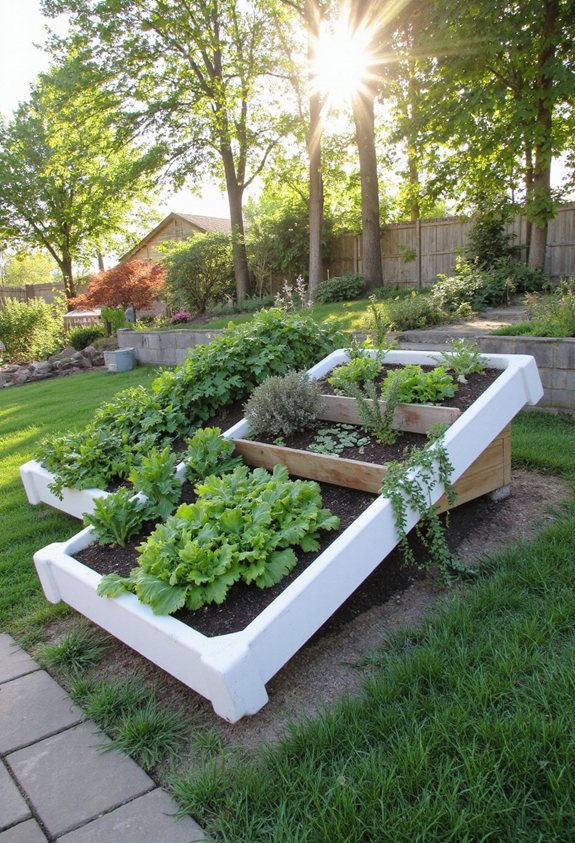
When your backyard slopes like a gentle hill, a floating raised bed can turn that tilt into a sleek, level garden island that looks like it’s hovering above the earth.
First, build a sturdy frame from pressure‑treated lumber, then attach brackets that reach down to the ground for support.
Fill the box with soil, plant veggies, and watch them thrive as if they’re defying gravity.
Build a “Clover” Intercropping Layout for Soil Health
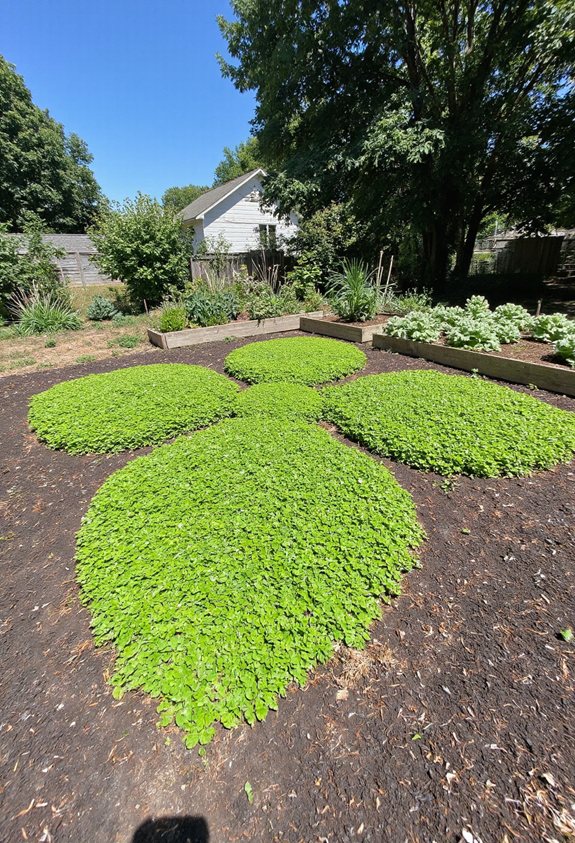
Ever wondered how a simple patch of clover could become your garden’s secret weapon? You’ll boost soil, while, and veggies grow healthier.
- Plant clover between rows of tomatoes.
- Space clover seeds 4‑6 inches apart.
- Mow lightly to let sunlight reach vegetables.
- Rotate clover yearly to keep nitrogen flowing.
Your backyard will thank you with richer soil and happier harvests.
Install a “Rail‑Garden” Along a Fence for Vertical Space
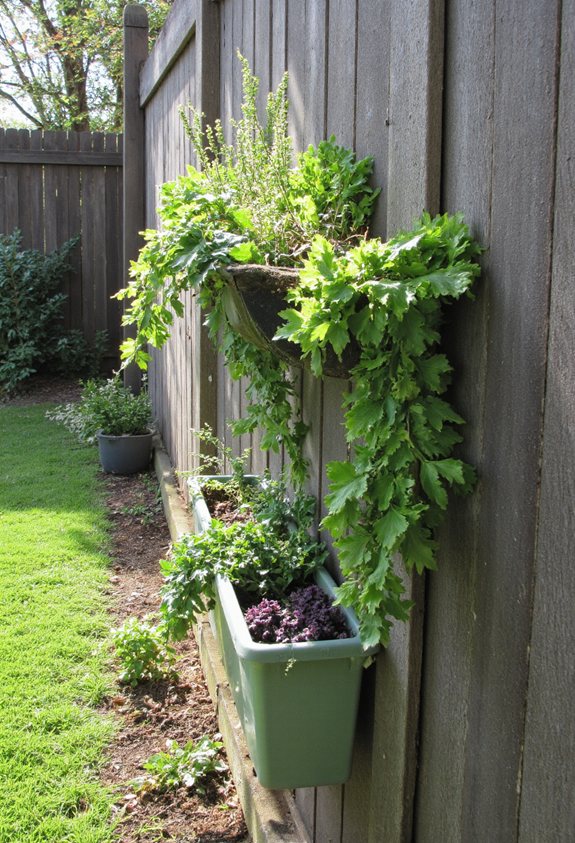
Ever imagined turning a plain backyard fence into a blooming, space‑saving garden?
You can mount sturdy rails, clip pots, and let vines cascade like living curtains.
Choose lightweight containers for herbs, cherry tomatoes, and lettuce, then water from the top.
The fence becomes a green shelf, freeing ground for beans or carrots, and you’ll love the easy harvest and brag‑worthy look.
Try a “Modular Cube” System for Flexible Reconfiguration
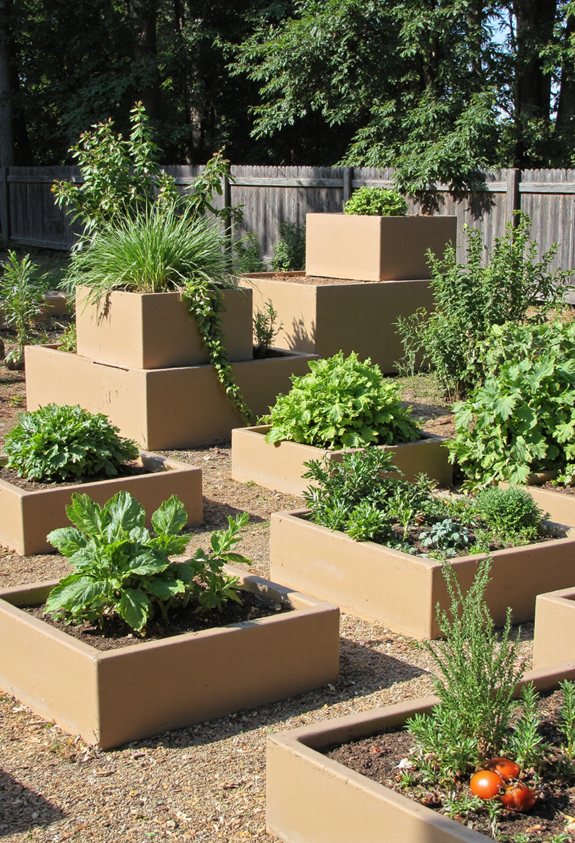
A modular cube garden lets you rearrange your veggies as easily as swapping Lego blocks, so you can adapt to changing sunlight, season, or simply a new craving for basil. You’ll love the freedom to move, expand, or shrink each unit without digging.
- Choose lightweight, weather‑proof cubes.
- Stack them vertically for shade‑loving herbs.
- Slide cubes sideways for quick crop rotation.
- Mix colors and textures for a playful, functional feast.
Set Up a “Patio‑Box” Garden for Small Urban Backyards
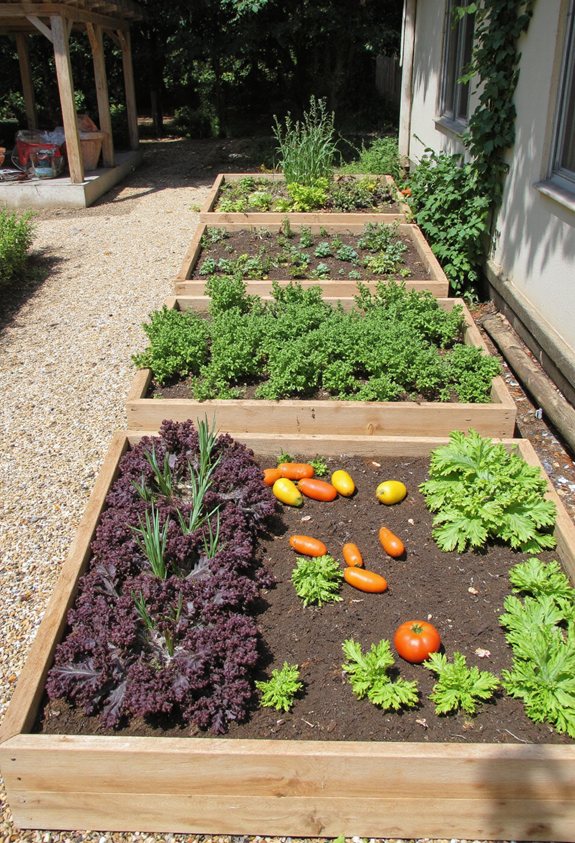
If you’ve got a tiny backyard and a big craving for fresh veggies, a patio‑box garden is the perfect solution.
Pick a sturdy wooden box, line it with landscape fabric, and fill it with lightweight potting mix.
Plant fast‑growing lettuce, herbs, and cherry tomatoes.
Water daily, add a slow‑release fertilizer, and watch your mini‑farm thrive on the patio.
Design a “Rain‑Garden” Layout for Water Conservation
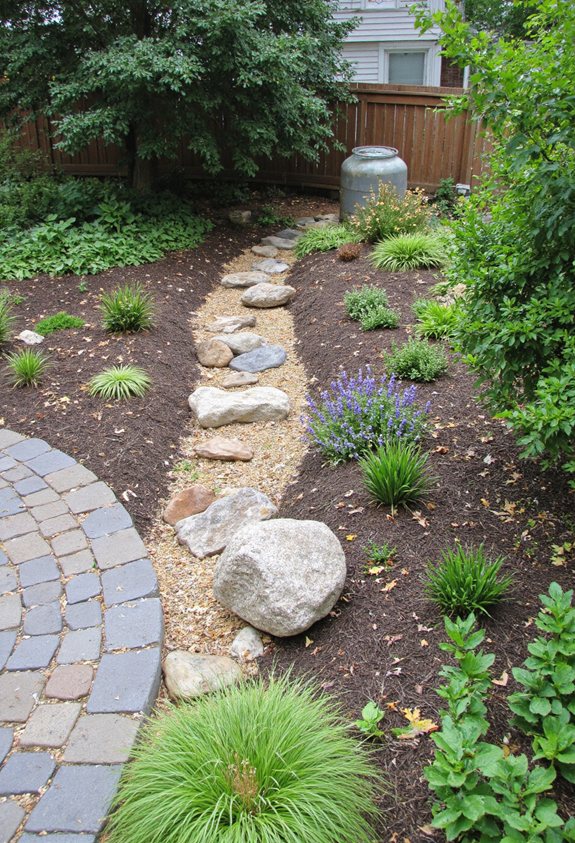
After enjoying fresh lettuce from your patio‑box, you’ll love turning a corner of your yard into a rain‑garden that captures runoff and feeds thirsty plants.
Pick a low spot, dig a shallow basin, and line it with mulch and native plants.
- Choose water‑loving perennials
- Add a gravel drainage layer
- Plant in tiered sections
- Mulch to retain moisture
Use a “Perimeter Border” Garden to Define Space and Add Aesthetics
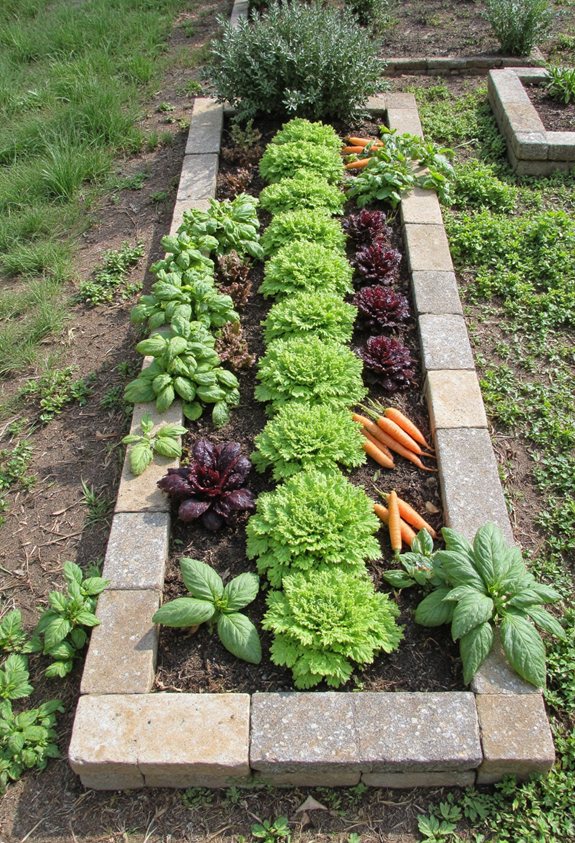
Two or three simple steps can turn a plain yard edge into a lively “perimeter border” garden that frames your space and adds instant charm.
Pick low‑maintenance herbs or flowering veggies, plant them in a curved line, and mulch to keep weeds away.
You’ll see a neat frame, a splash of color, and a handy snack bar—plus neighbors will wonder how you did it.