
To craft a serene bedroom, experts recommend mastering the 60-30-10 color rule with muted blues as your dominant color, soft beige accents, and pale grays for balance, using matte or satin finishes to create a soothing ambiance.
Incorporate layered warm 2700K LED lighting with dimmers for adjustable moods, and select multifunctional furniture featuring clean lines and built-in storage to maintain clutter-free elegance.
Thoughtfully combining these elements sets a tranquil foundation, while incorporating statement wallpapers or textiles offers personality and warmth. Explore more tailored strategies to elevate your space further.
Create a Calming Color Palette for Your Bedroom
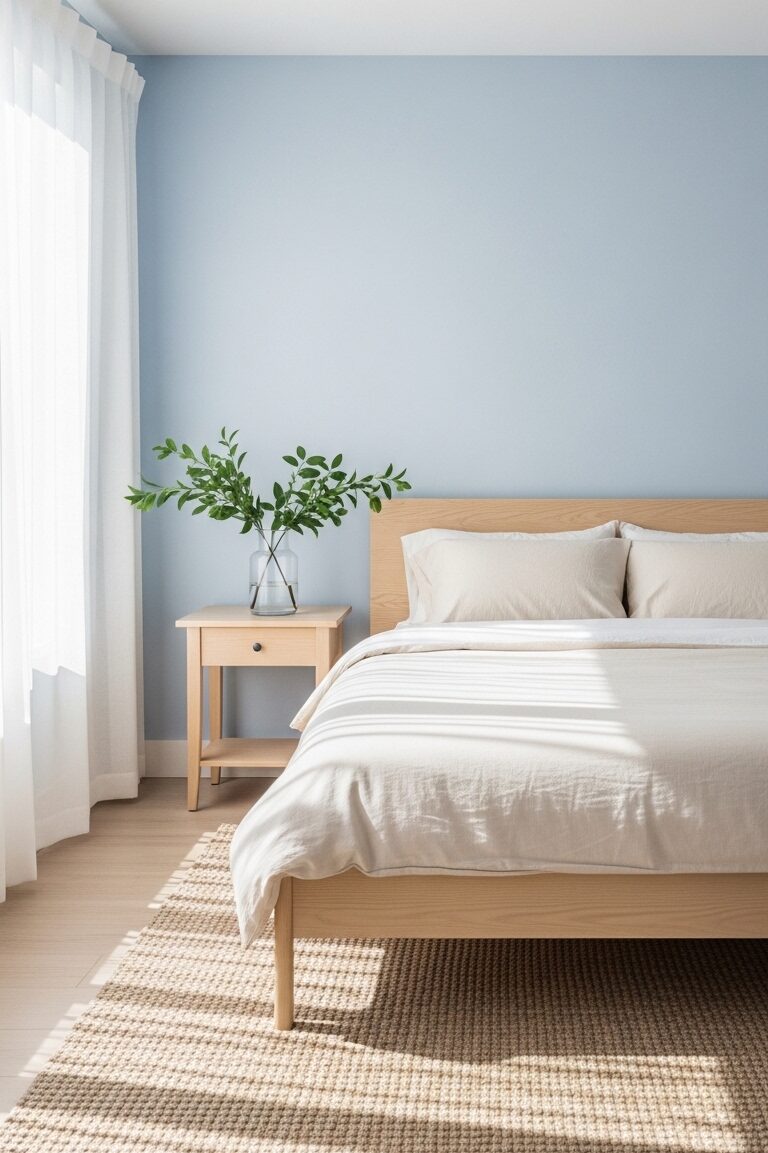
When you design your bedroom’s color scheme, choosing a calming palette is essential to promote relaxation and restful sleep.
This goal is emphasized by interior designer Rachel Lin, who advises selecting hues that reduce visual stimulation and balance both cool and warm tones.
Aim for muted blues paired with soft beiges or pale greys, applying a 60-30-10 rule for balance between dominant, secondary, and accent colors.
Choose the Best Paint Finishes for Bedroom Walls
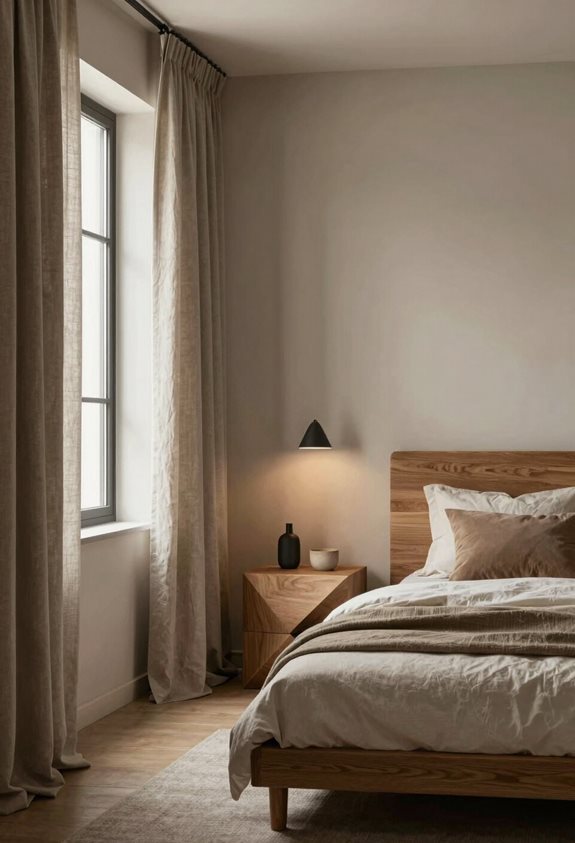
Three paint finishes stand out as ideal choices for bedroom walls, each offering distinct advantages tailored to your room’s function and lighting conditions.
Experts recommend matte for hiding imperfections and creating a soft ambiance.
Satin is recommended for durability with a slight sheen ideal in moderate light.
Eggshell provides an elegant balance that resists moisture.
Choose based on maintenance needs and natural light exposure.
Use Statement Wallpaper to Add Personality

Adding statement wallpaper can instantly transform your bedroom’s vibe, injecting character and depth where paint alone might fall short.
According to design experts, textured vinyl or grasscloth wallpapers add tactile interest and durability, especially behind the bed or on accent walls measuring about 8 by 10 feet.
Choose bold patterns to contrast neutral furnishings, ensuring your space feels personalized and modern.
Pick the Right Bedroom Lighting for Different Moods
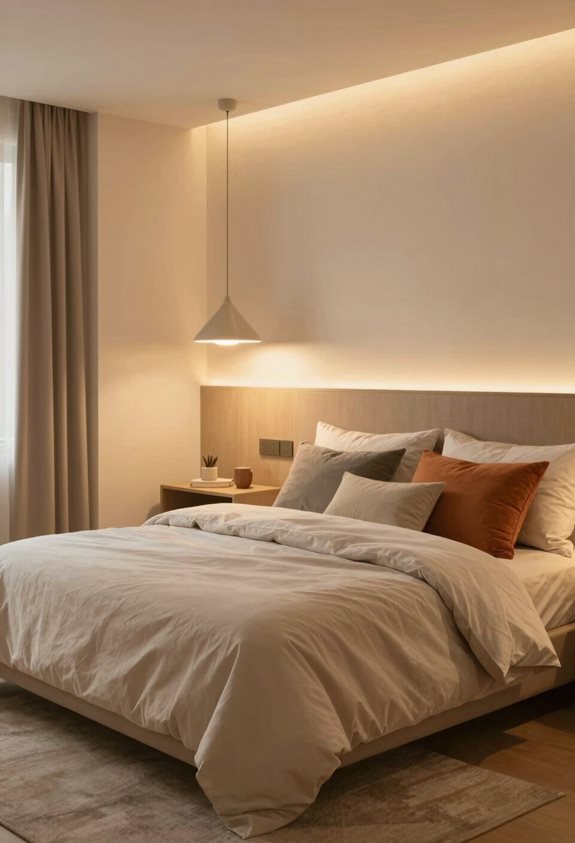
Few elements influence a bedroom’s atmosphere as greatly as lighting, which you can tailor to suit various moods by strategically combining ambient, task, and accent fixtures.
Lighting designer Anna Lee suggests using warm LED bulbs around 2700K for relaxation, while brighter, focused lamps enhance reading or work.
Layer soft dimmers and sconces to effortlessly shift from calm evenings to energized mornings.
Incorporate Smart Lighting Solutions in Your Bedroom
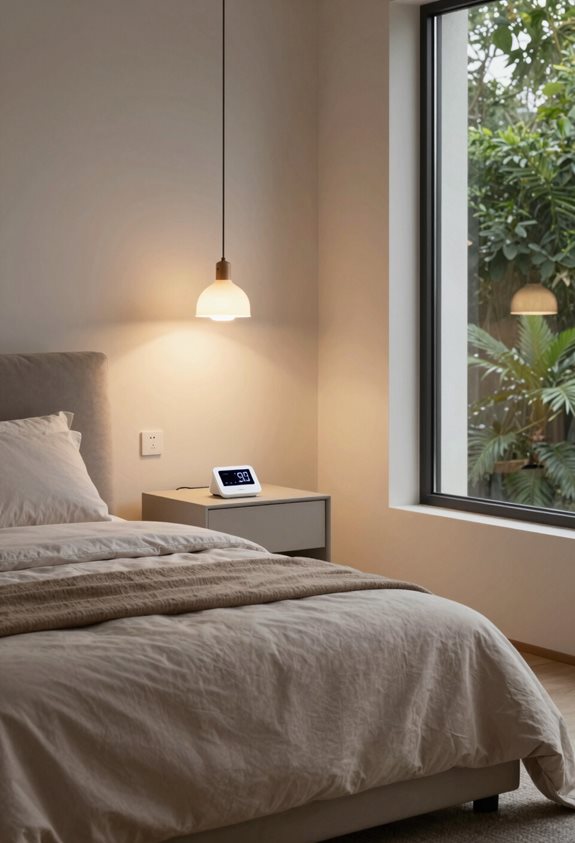
When you integrate smart lighting solutions into your bedroom, you gain precise control over brightness, color temperature, and scheduling, all through intuitive apps or voice commands.
Lighting designer Rachel Lee notes that adjustable color temperatures between 2700K and 6500K support both relaxation and focus.
Install dimmable LED strips or tunable white bulbs near your bed for seamless ambiance shifts throughout the day.
Select Cozy and Stylish Bedding for Ultimate Comfort
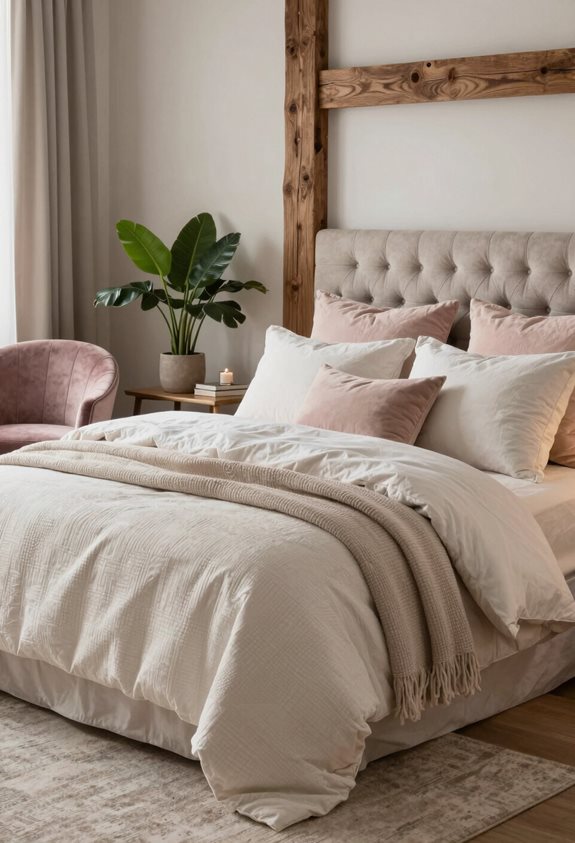
Beyond smart lighting, selecting cozy and stylish bedding plays an essential role in creating a restful bedroom atmosphere that invites relaxation and promotes restorative sleep.
Sleep specialist Dr. Hayes recommends breathable fabrics like organic cotton or linen with a 300-400 thread count for durability and comfort.
Choose duvet inserts with a 700-fill power to guarantee warmth without weight, optimizing your nightly rest.
Layer Textures to Create Depth and Warmth

Although texture might seem like a subtle detail, layering different materials can dramatically enhance your bedroom’s depth and warmth, making it a sanctuary rather than just a sleeping space.
Interior designer Sarah Mills notes that combining tactile fabrics like velvet cushions, chunky knit throws, and linen sheets adds multidimensional interest.
Try pairing a 12×12-inch velvet pillow with a soft 50×60-inch throw to enrich your room’s feel. Additionally, incorporating varying light sources can further elevate the ambiance and contribute to the overall warmth of the space.
Mix Patterns Tastefully Without Overwhelming the Space
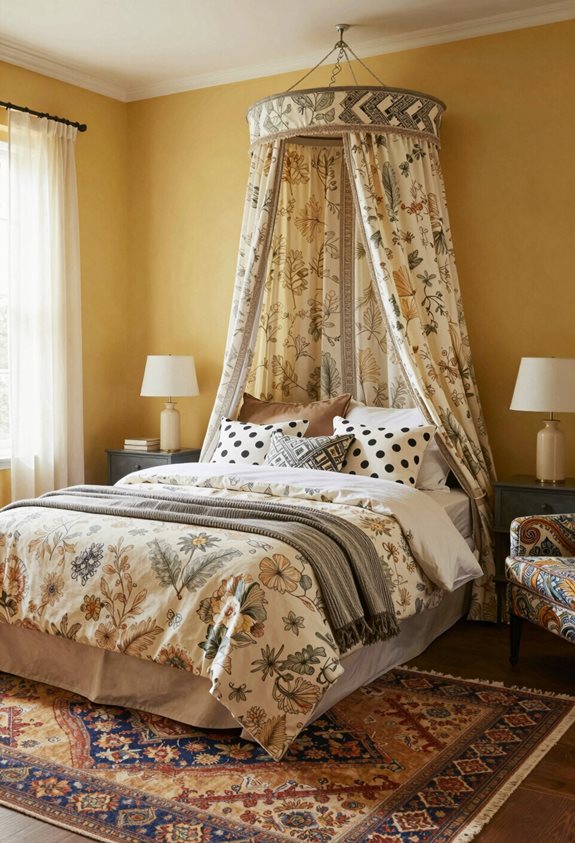
Layering textures sets the stage for incorporating patterns without creating visual chaos.
Interior designer Emily Ross emphasizes balance: “Mix patterns by varying scale, color, and style.”
Focus on:
- Combining a large floral print with subtle stripes.
- Limiting your palette to 2-3 colors.
- Using neutral backdrops to ground the motifs.
This approach keeps your bedroom visually engaging yet harmonious.
Add Natural Elements With Plants and Organic Decor
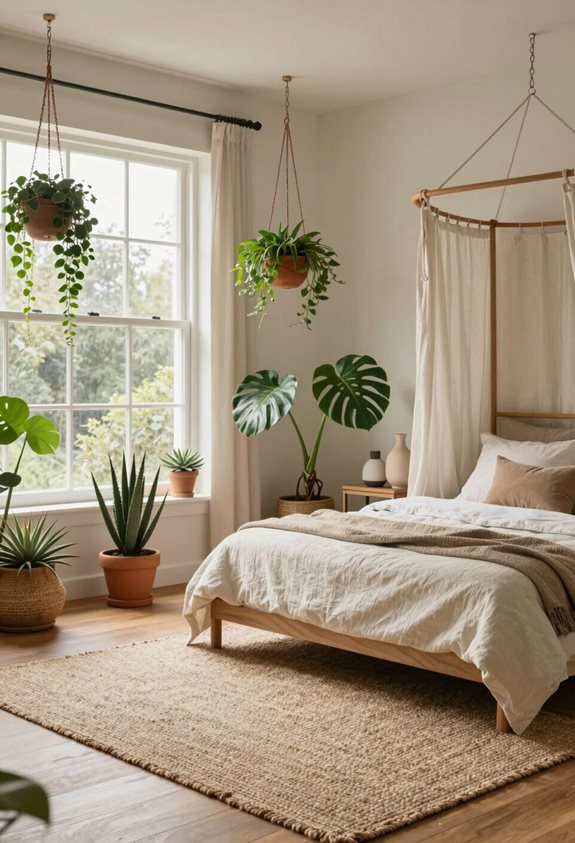
When you integrate natural elements like plants and organic decor into your bedroom, you not only enhance air quality but also introduce textures that soften hard lines and add warmth.
According to interior designer Mia Torres, using jute rugs and terracotta pots brings tactile depth.
Place a 12-inch snake plant on your nightstand for low-maintenance greenery that purifies air efficiently.
Integrate Multifunctional Furniture to Save Space
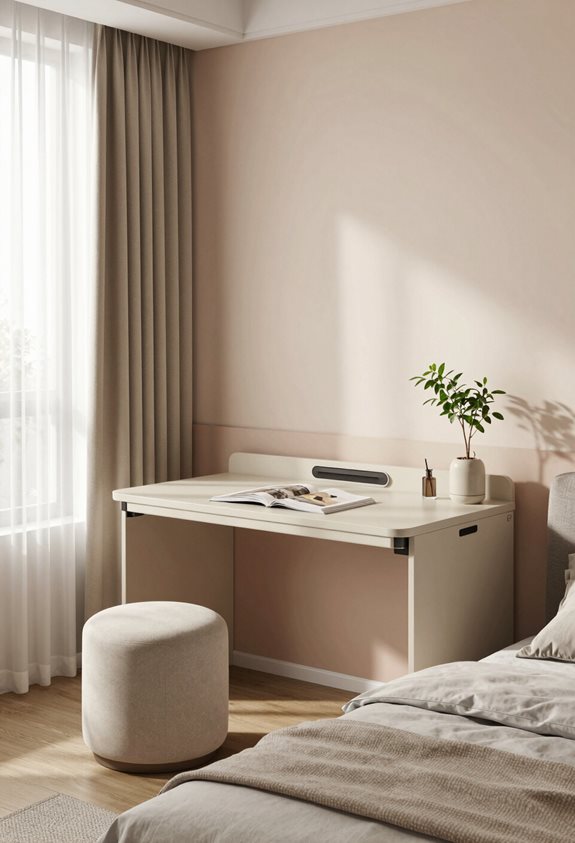
Since bedrooms often double as personal retreats and functional spaces, integrating multifunctional furniture lets you maximize square footage without sacrificing style or comfort.
Designer Emily Clark states, “Choose pieces with hidden compartments or dual purposes.”
Consider:
- A bed with built-in drawers measuring 36 inches deep.
- Convertible desks that double as vanity tables.
- Ottoman seating featuring storage inside.
These smart selections keep your bedroom spacious and organized. Additionally, utilizing under-bed storage can further enhance your space efficiency while maintaining a tidy environment.
Use Under-Bed Storage to Declutter Effectively
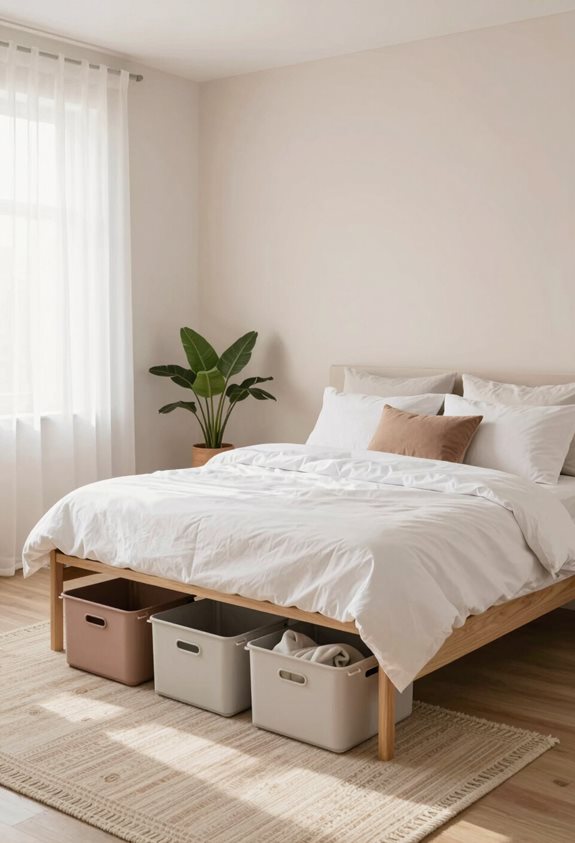
Building on multifunctional furniture, under-bed storage offers a practical extension to keep your bedroom clutter-free without sacrificing aesthetics or accessibility.
According to interior designer Jane Parker, sliding containers with dimensions around 36 by 18 inches fit most beds and optimize unused space.
Choose clear polypropylene bins or fabric drawers for visibility and ventilation, making seasonal clothes or shoes easy to store and retrieve.
Find the Perfect Nightstands for Style and Function
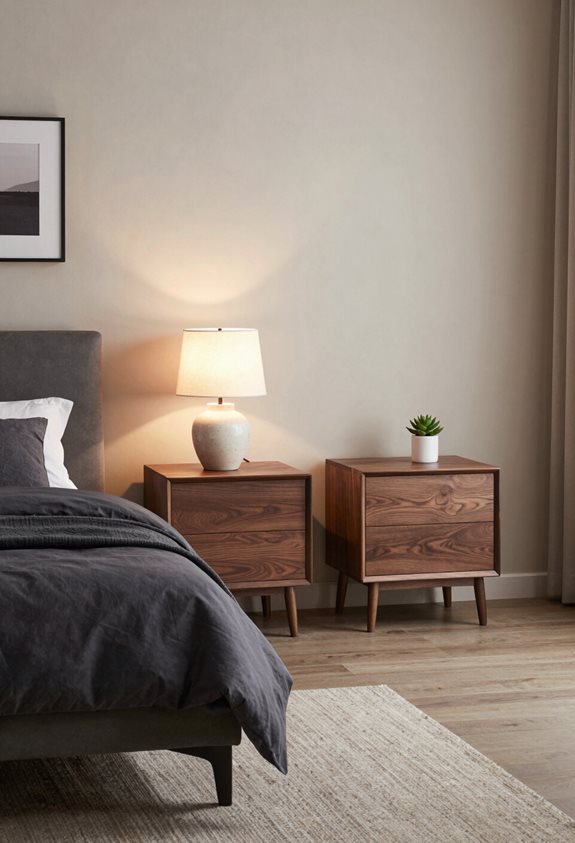
How do you select nightstands that balance both style and function perfectly?
Interior designer Mark Evans advises focusing on three factors:
- Height: Match your mattress level, typically 24–28 inches for ergonomic reach.
- Storage: Opt for drawers or shelves to keep essentials organized.
- Material: Choose durable wood or metal finishes that complement your bedroom’s aesthetic.
This guarantees nightstands that blend usability with visual appeal.
Design a Cozy Reading Nook in Your Bedroom
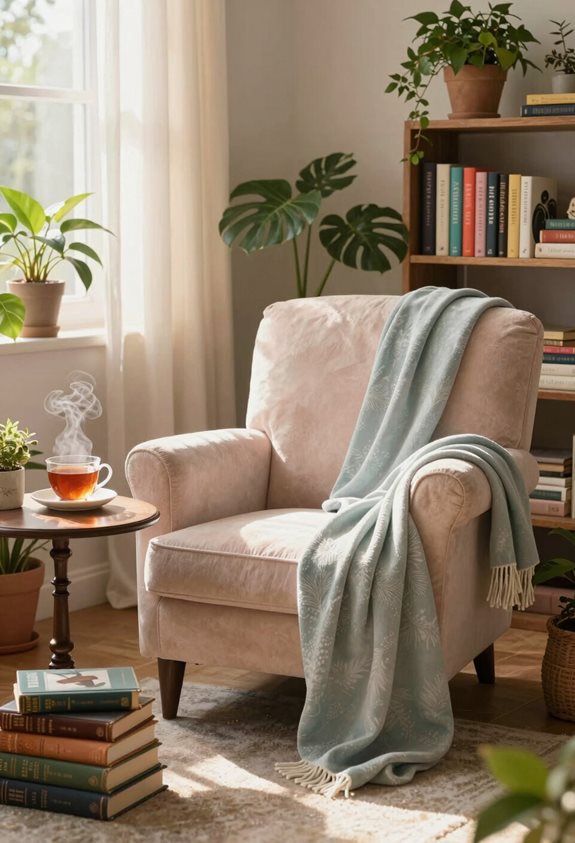
After selecting nightstands that complement your bedroom’s functionality and style, you can enhance your space by carving out a cozy reading nook that invites relaxation. Interior designers recommend positioning a cushioned armchair near natural light sources, adding a lamp with adjustable brightness, and incorporating built-in shelves measuring at least 24 inches deep to store your favorite books efficiently. Additionally, incorporating soft, neutral tones in your reading nook can promote relaxation and create a tranquil atmosphere.
Choose Blackout Curtains for Better Sleep Quality
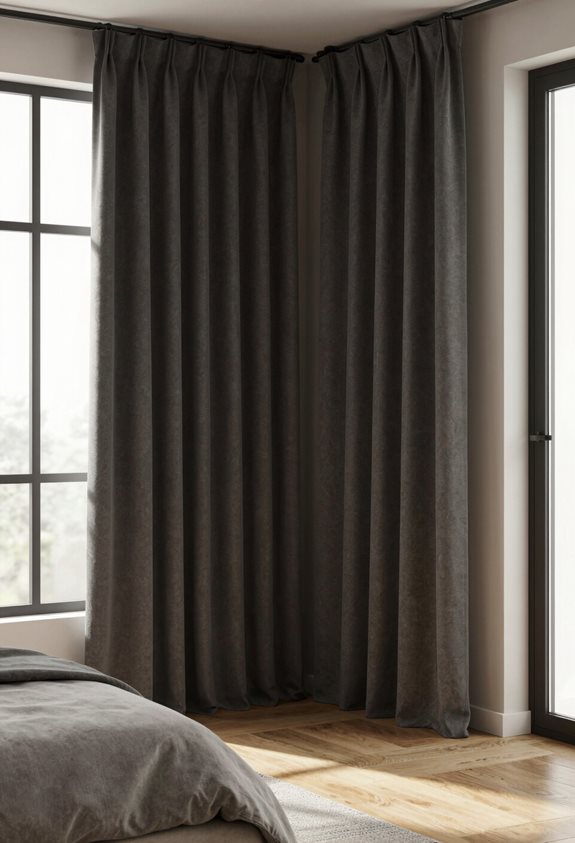
Though natural light invigorates your space during the day, using blackout curtains can dramatically improve your sleep quality by blocking external light sources that disrupt your circadian rhythm.
Sleep experts recommend selecting curtains with:
- Triple-weave fabric for ideal light blocking,
- Thermal lining to regulate temperature,
- Floor-to-ceiling installation to prevent light gaps, ensuring a restful night.
Add Mirrors to Enhance Light and Make Space Feel Larger
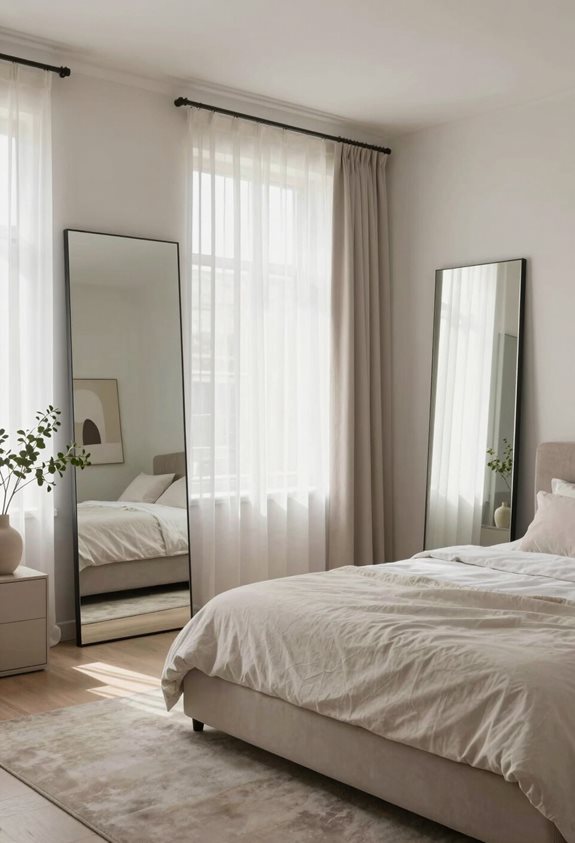
Optimizing your bedroom’s lighting goes beyond choosing blackout curtains; incorporating mirrors can greatly amplify both natural and artificial light, making your space feel more expansive.
Interior designer Lisa Thompson notes, “Placing a 3-foot by 4-foot frameless mirror opposite a window reflects sunlight effectively.”
You can also use beveled glass mirrors to add depth, instantly enlarging cramped areas.
Create a Gallery Wall With Personal Art and Photos
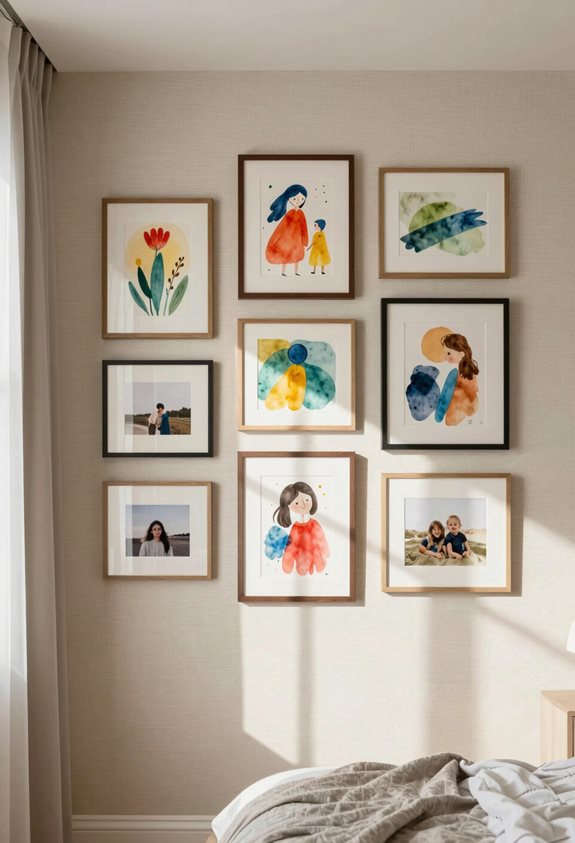
When you combine personal art and photos into a curated gallery wall, you transform your bedroom into a unique expression of your style and memories, while adding visual interest that complements the room’s overall design.
Experts recommend you:
- Use frames with consistent colors or materials for cohesion.
- Arrange pieces using a balanced grid or organic layout.
- Include varying sizes to maintain dynamic visual flow.
Incorporate Metallic Accents for a Modern Touch
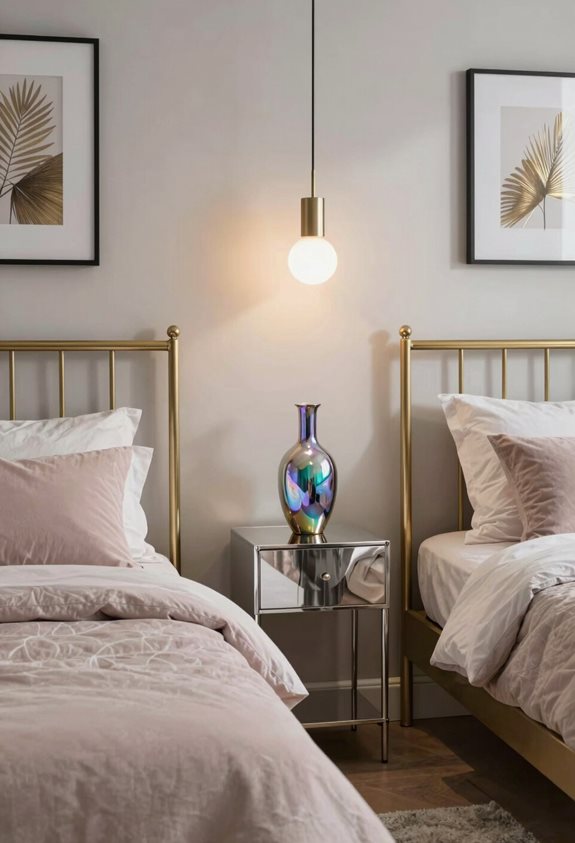
Because metallic accents reflect light and add texture, they instantly elevate your bedroom’s modern aesthetic while maintaining functionality, making them an ideal choice for contemporary design.
Design expert Lara Benton recommends incorporating brushed brass or matte nickel hardware on furniture and lighting fixtures, offering subtle shine without overwhelming the space.
Consider 18- to 24-inch metal wall sconces or geometric metal trays to enhance visual interest efficiently.
Use Rugs to Define Zones and Add Softness

A variety of rugs can effectively define distinct areas within your bedroom while introducing a layer of softness underfoot, enhancing both comfort and style.
Interior designer Lisa Monroe emphasizes layering textures for warmth. Consider these tips:
- Place a 5×8 wool rug under the bed to anchor your sleeping zone.
- Add a smaller, plush rug near seating for coziness.
- Use durable jute rugs in high-traffic pathways. Additionally, layering various textures can create an inviting atmosphere throughout your space.
Choose Bedroom Furniture in Warm Wood Tones
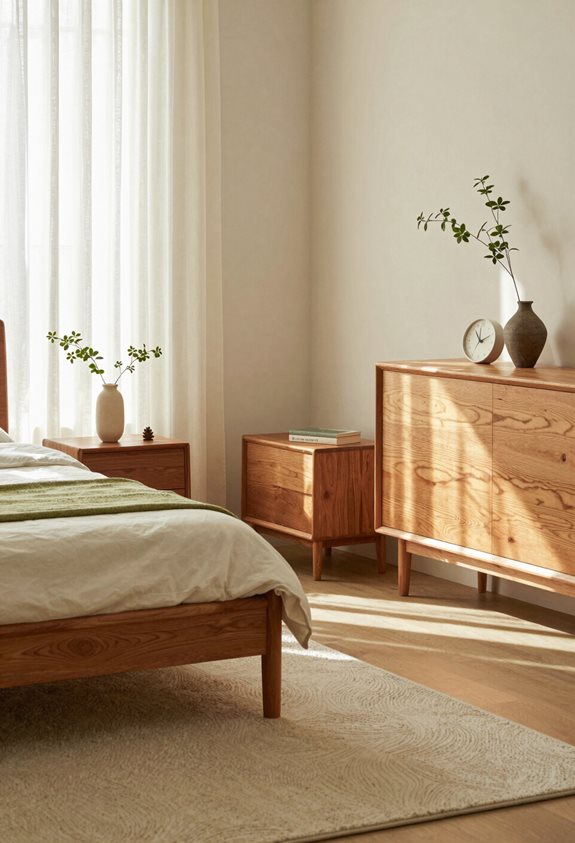
Although you might be tempted by modern finishes, selecting bedroom furniture in warm wood tones creates a timeless foundation that invites comfort and elegance.
Interior designer Lisa Carter emphasizes that woods like walnut or cherry enhance room warmth while offering durability.
Opt for pieces with clean lines and sturdy hardwood construction, such as a queen bed frame measuring 60 by 80 inches, to balance style and function effortlessly.
Introduce Bold Accent Colors With Cushions and Throws
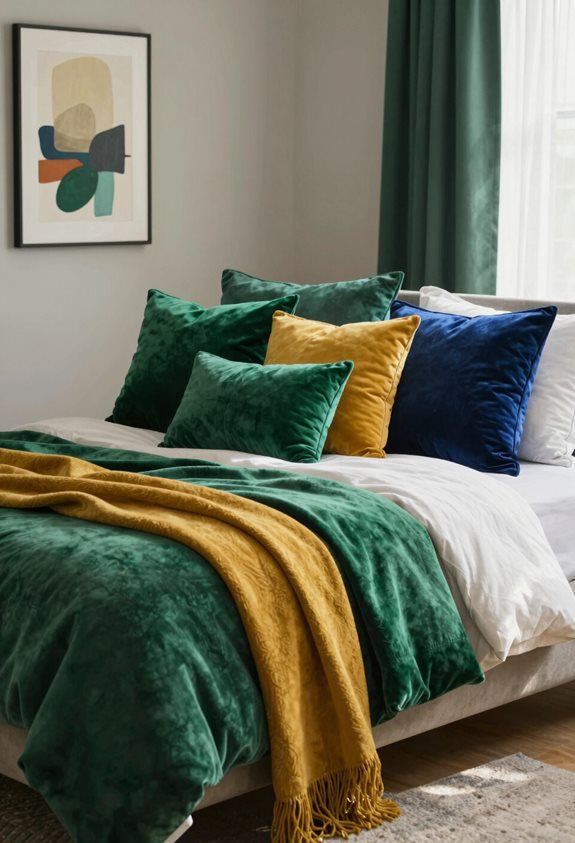
When you introduce bold accent colors through cushions and throws, you instantly create focal points that enliven a neutral or warm-toned bedroom palette.
Interior designer Jane Smith suggests:
- Choose cushions in saturated hues like emerald or burnt orange for contrast.
- Layer textured throws, such as chunky knit or velvet, for depth.
- Select patterns strategically to reflect your room’s style without overpowering it.
Optimize Closet Organization With Smart Systems
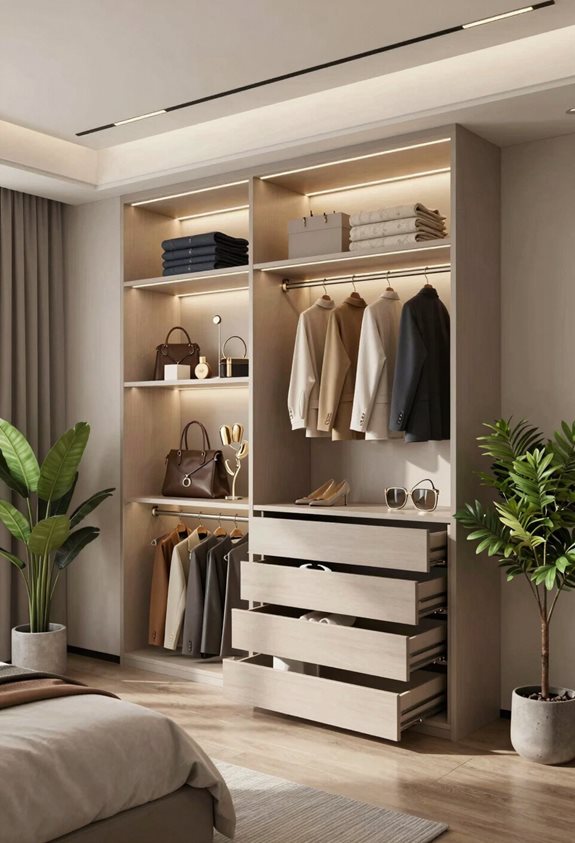
Shifting focus from color accents to functional design will elevate your bedroom’s utility and style by optimizing closet organization with smart systems. According to storage experts, integrating adjustable shelving with sensor-activated LED lighting not only maximizes space but also enhances visibility. Additionally, incorporating clearly labeled storage will simplify finding items, making your closet even more efficient. Consider modular hangers and pull-out drawers sized 12-15 inches deep to streamline access. These upgrades simplify daily routines and keep your wardrobe effortlessly neat.
Create Symmetry With Balanced Furniture Placement
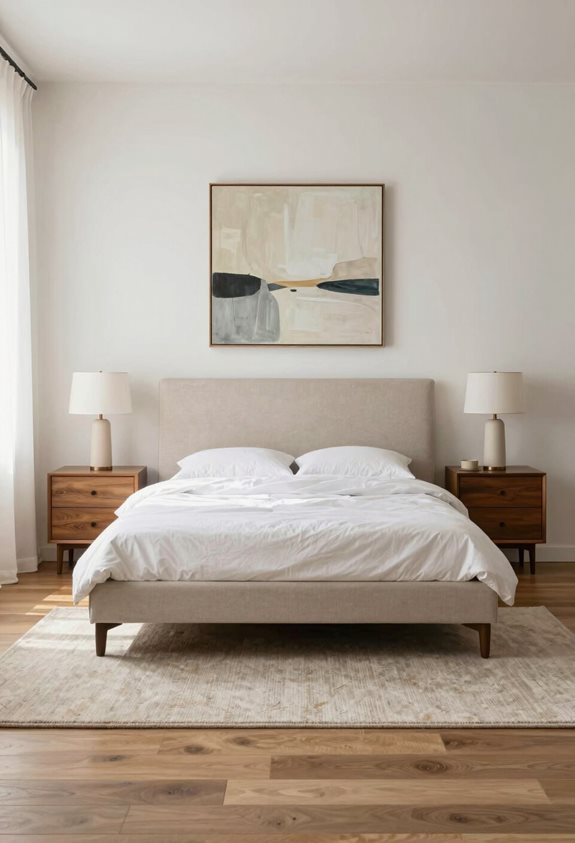
By arranging furniture symmetrically around a central focal point, you create a balanced and inviting bedroom layout that promotes relaxation and flow.
Interior designer Madison Clark advises, “Symmetry enhances spatial harmony.”
Try these steps:
- Center the bed on the main wall.
- Place matching nightstands evenly spaced.
- Use identical lamps for visual consistency.
This structured approach fosters calm and order. Additionally, incorporating stackable storage bins can further enhance organization and functionality in your bedroom space.
Hang Unique Pendant Lights Instead of Traditional Lamps
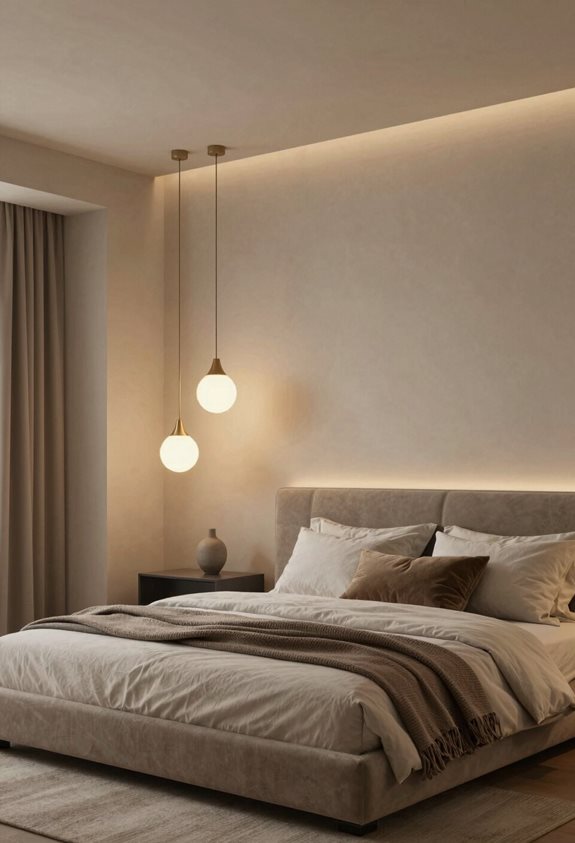
Instead of relying on traditional bedside lamps, you can elevate your bedroom’s ambiance by installing unique pendant lights, which free up surface space and introduce a sculptural element above your nightstands.
Lighting designer Emma Clarke recommends fixtures hanging 24 to 30 inches above the nightstand for ideal illumination.
Choose materials like matte brass or smoked glass to blend style with functionality seamlessly.
Include Vintage Pieces for Character and Charm

Although vintage pieces might seem like a niche choice, incorporating them can instantly infuse your bedroom with unique character and timeless charm.
Interior designer Lila Evans recommends:
- Integrate a restored wooden dresser with detailed carvings for warmth.
- Add a brass bedside lamp to enhance ambient lighting.
- Use a patterned Persian rug measuring 5×8 feet for texture and color contrast. Additionally, consider incorporating wooden elements that bring warmth to the space, reminiscent of Nancy Meyers’ bathroom design style.
Design With Sustainability-Friendly Bedroom Materials
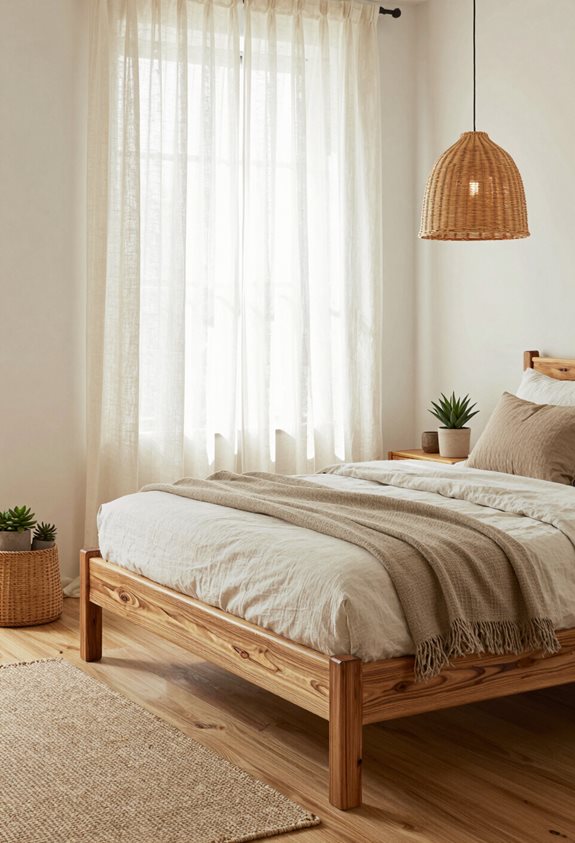
While vintage pieces add undeniable character to your bedroom, selecting sustainability-friendly materials confirms your space respects both style and the environment.
Interior designers recommend bamboo and reclaimed wood for furniture, citing their renewable and low-impact qualities.
Incorporate organic cotton or hemp bedding to reduce chemical exposure. These choices confirm durability and eco-conscious comfort without sacrificing modern aesthetics. Additionally, utilizing sustainable living practices in your design can further enhance the overall impact of your bedroom on the environment.
Use Wall-Mounted Shelves to Showcase Decor and Free Floor Space
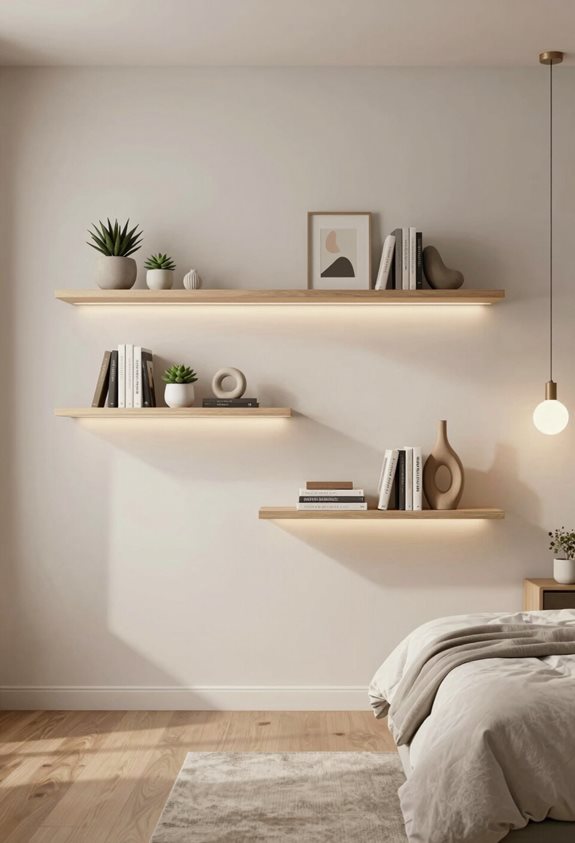
When you install wall-mounted shelves, you maximize vertical space and keep your bedroom floor clear, which interior designers emphasize as essential for creating an uncluttered environment. Expert Tom Davis suggests: 1. Use floating wood shelves (12-18 inches deep) for books and plants. 2. Incorporate metal brackets for durability. 3. Arrange decor by size to maintain balance and flow. Additionally, maximizing vertical space utilization can significantly enhance the overall aesthetic of your bedroom.
Create a Minimalist Bedroom With Clutter-Free Design Tips
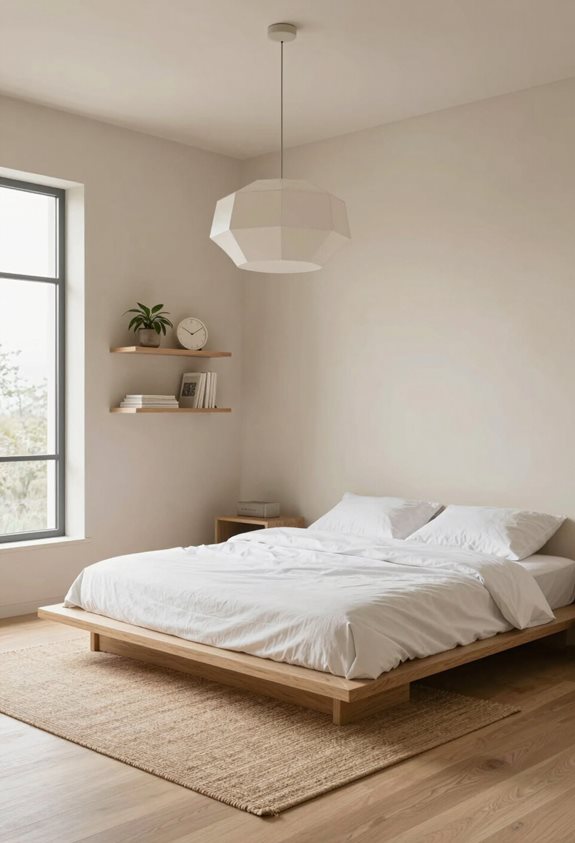
To create a minimalist bedroom, you’ll want to focus on clutter-free design strategies that emphasize simplicity and functionality, which interior designer Lisa Morgan recommends as essential for maintaining calm, open spaces.
Start by choosing furniture with clean lines and built-in storage, like under-bed drawers or wall-mounted nightstands, to maximize floor area. Limit decor to essentials, maintain neutral tones, and use cordless window treatments for a seamless look. Additionally, consider space-saving furniture like ottomans with hidden compartments to further enhance organization and efficiency.
Add a Statement Headboard as a Focal Point

Shifting from a minimalist base, adding a statement headboard brings character and instant style to your bedroom without cluttering your space.
Interior designers recommend these:
- Use an upholstered headboard, 48-60 inches wide, in rich velvet for texture.
- Opt for geometric wood panels to add architectural interest.
- Choose bold colors or metallic finishes to make your bed the room’s centerpiece.
Incorporate Soothing Scents With Candles or Diffusers
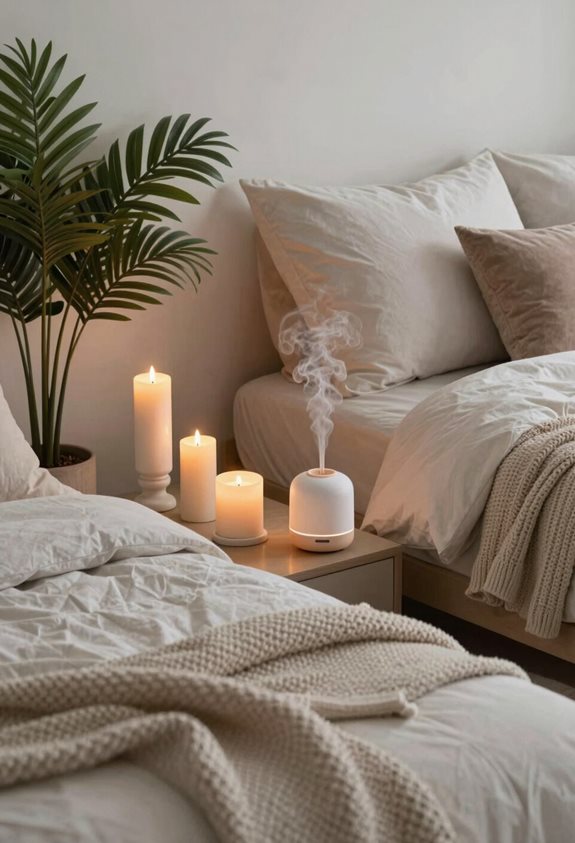
Although visual elements dominate bedroom design, incorporating soothing scents with candles or diffusers greatly enhances your space’s ambiance and relaxation quality.
Aromatherapist Dr. Lane notes that lavender and chamomile oils, diffused at low settings for 30 minutes before bedtime, promote calmness and restful sleep.
Choose soy-based candles or ultrasonic diffusers for a clean, steady release, balancing style with wellness effectively.
Choose Tech-Friendly Bedroom Gadgets for Convenience
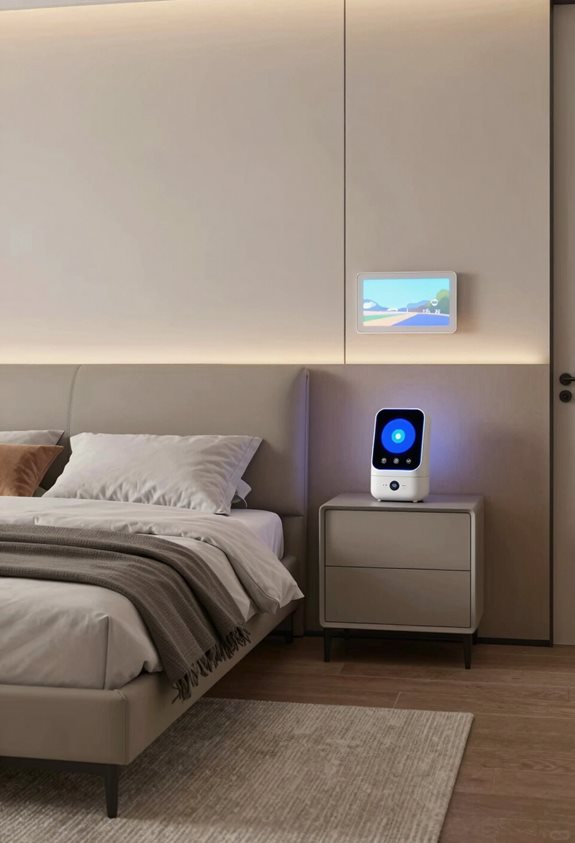
Enhancing your bedroom with soothing scents complements the conveniences modern technology offers, letting you craft an environment that supports both relaxation and functionality.
Sleep specialist Dr. Lee recommends tech gadgets like:
- Smart lighting systems that adjust color temperature to enhance circadian rhythms.
- Bluetooth speakers with voice control for seamless audio integration.
- Wireless charging stations to keep devices powered without clutter.
Combine Open and Closed Storage for a Balanced Look
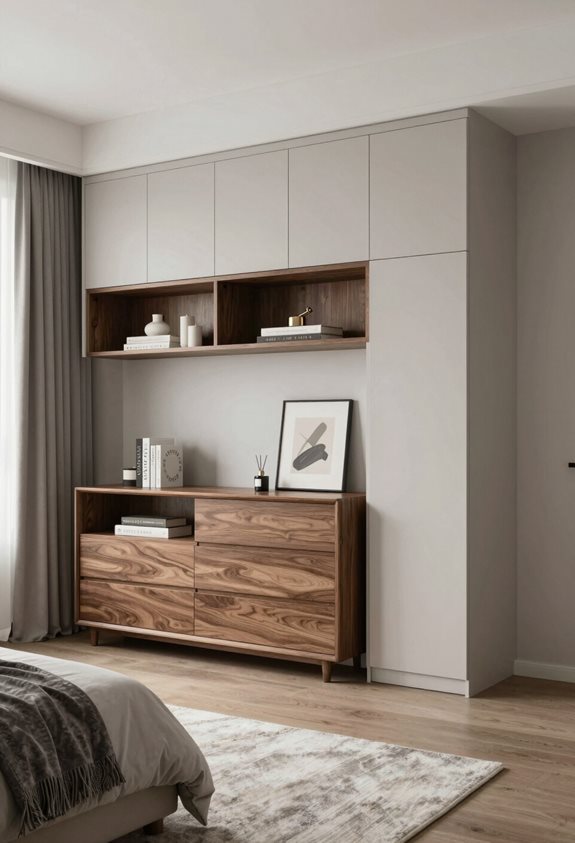
When you combine open and closed storage options in your bedroom, you create a visually balanced space that maximizes both accessibility and clutter control.
Interior designer Jane Smith advises using open shelves with adjustable metal brackets alongside closed cabinetry crafted from matte-finished plywood for durability.
This mix lets you display decor while concealing essentials, streamlining organization and enhancing room aesthetics effortlessly.
Use Color Blocking to Modernize Bedroom Walls
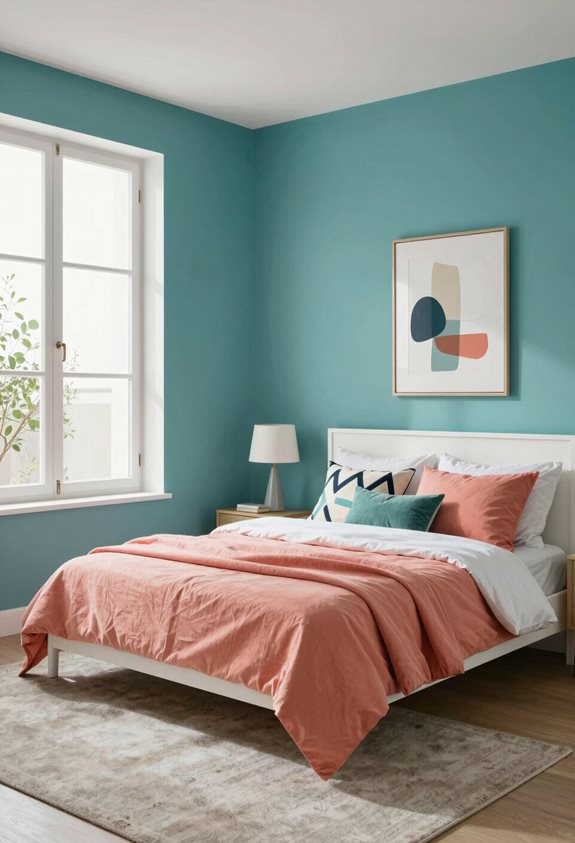
Balancing storage with stylish features sets the stage for rejuvenating your bedroom walls using color blocking, a technique that injects modern flair by combining contrasting or complementary hues in defined sections.
According to interior designers, you should:
- Paint large rectangles with matte latex paint measuring at least 3×4 feet.
- Use painter’s tape for crisp edges.
- Select colors with a 30-50% saturation difference for striking contrast.
Create a Calming Workspace Nook in Your Bedroom
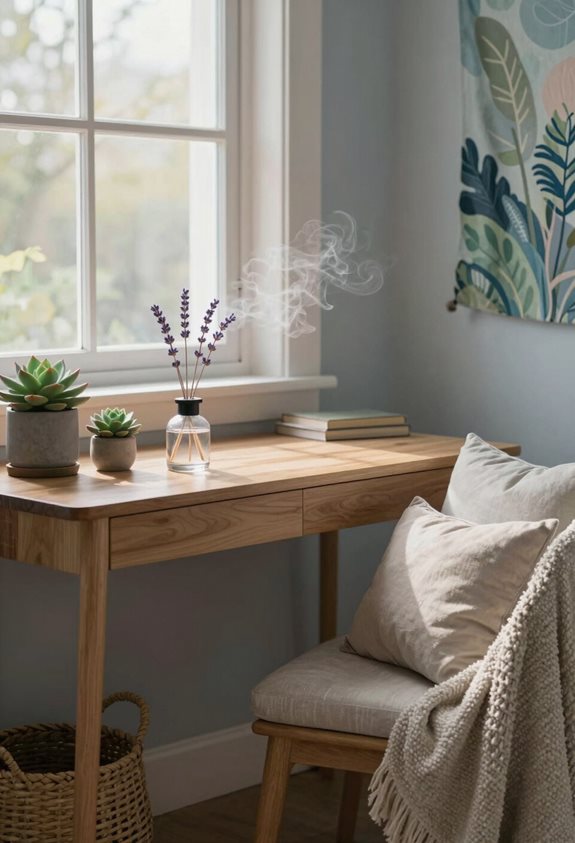
Although bedrooms are primarily designed for rest, incorporating a designated workspace nook can greatly enhance productivity without sacrificing tranquility.
Design expert Laura Mitchell advises using soft, neutral tones and ergonomic furniture sized around 30 inches wide to maximize comfort.
Incorporate natural light with sheer curtains and add noise-reducing materials like cork panels to maintain a serene atmosphere that supports focused work.
Choose Durable Fabrics That Look Great and Last Longer
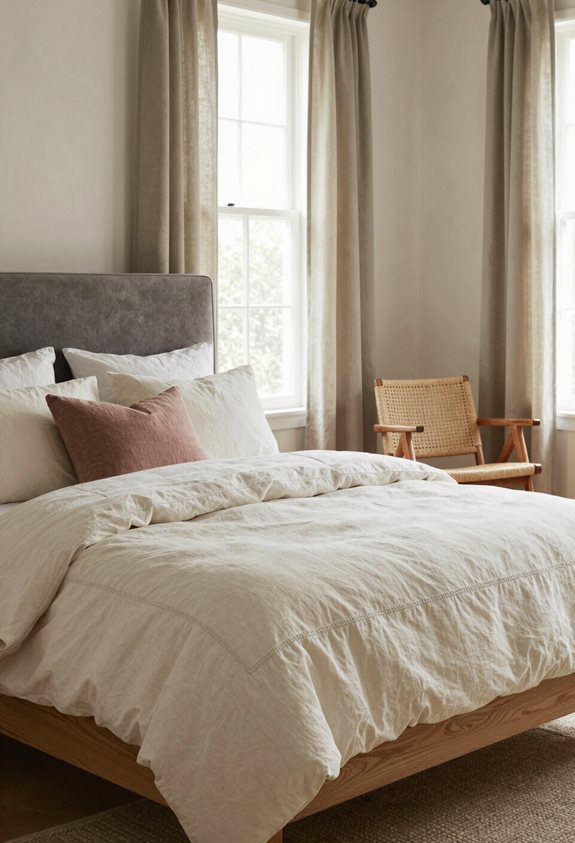
Integrating durability into your bedroom fabric choices guarantees that your space remains stylish and functional over time, especially in areas with frequent use.
Interior designer Liam Conrad emphasizes selecting materials with high Martindale rub counts, ensuring longevity.
To optimize durability, consider:
- Performance fabrics like Crypton or Sunbrella
- Tight weaves such as twill or canvas
- Stain-resistant treatments or finishes