
You can turn a simple pallet into a rustic garden wall trellis, hang an old ladder for a vertical herb garden, or snap together PVC pipes for a sturdy tomato support. A bamboo arch gives peas a graceful climb, while wire mesh on a fence lets beans spread like a green carpet. Try a living wall with moss and succulents, a modular plastic grid that expands, or a step‑ladder pallet for multi‑level planting. An adjustable tension‑wire system lets you fine‑tune height and width, and if you keep going, you’ll discover even more clever ideas.
Build a Lumber Pallet Trellis for a Rustic Garden Wall
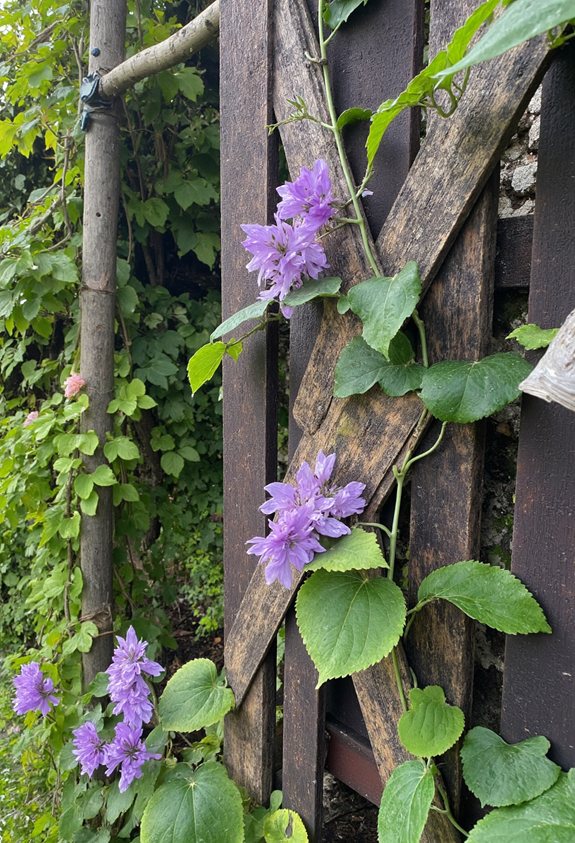
If you’ve got a spare lumber pallet lying around, you can turn it into a charming, rustic trellis in just a few hours.
First, sand the pallet to smooth rough edges, then attach sturdy cross‑bars with galvanized screws.
Paint it a weathered gray or leave natural wood for a vintage vibe.
Plant vines at the base, water regularly, and watch them climb, turning your wall into a living artwork. Ensure that the vines you choose have optimal sunlight exposure to thrive and create a vibrant display.
Repurposed Ladder Trellis for Vertical Herb Gardens
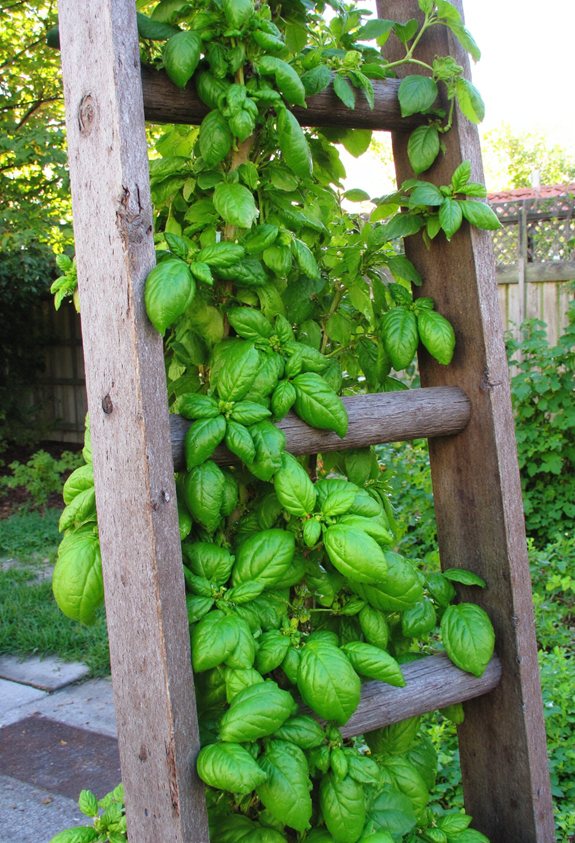
Ever thought a kitchen ladder could double as a herb garden?
You can flip an old ladder, secure it against a wall, and clip pots onto each rung.
The vertical design saves counter space, lets sunlight reach every leaf, and makes harvesting a breeze.
Add a splash of paint for personality, and you’ll have fresh basil, mint, and thyme within arm’s reach. Additionally, this approach promotes sustainable gardening practices, ensuring your herb garden is eco-friendly and efficient.
Simple PVC Pipe Frame for Easy‑Build Tomato Support
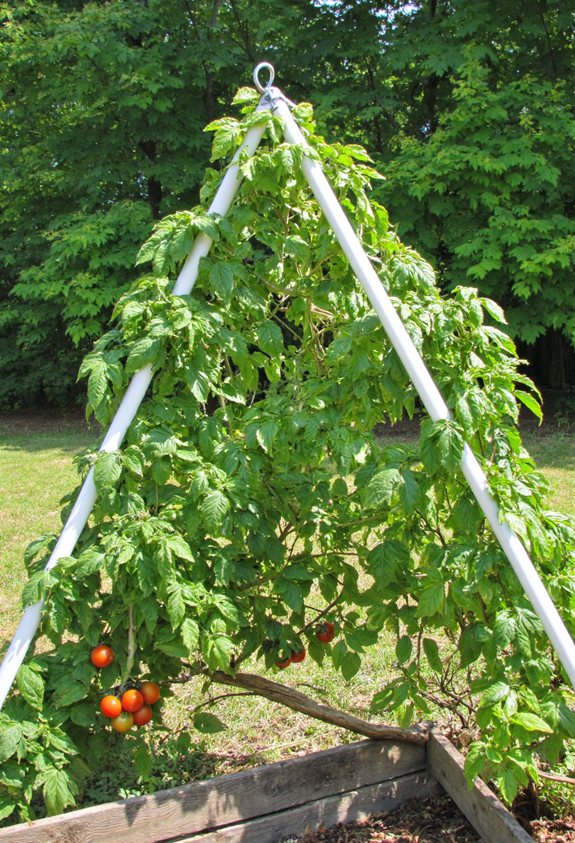
When you grab a few PVC pipes and a couple of elbows, you can turn a cheap, lightweight frame into a sturdy tomato trellis in under an hour. This DIY trellis is particularly beneficial for supporting indeterminate varieties of tomatoes, which produce continuously throughout the season. Cut the pipes to height, connect elbows at each corner, then slide a garden hose through as a spine. Secure the hose with zip ties, and you’ve got a breezy, reusable support for thriving tomatoes.
- Cut pipes to 4‑ft length
- Attach elbows at top and bottom
- Thread garden hose through pipe
- Tie hose with zip ties for stability
DIY Bamboo Arch for Flowering Vines and Peas
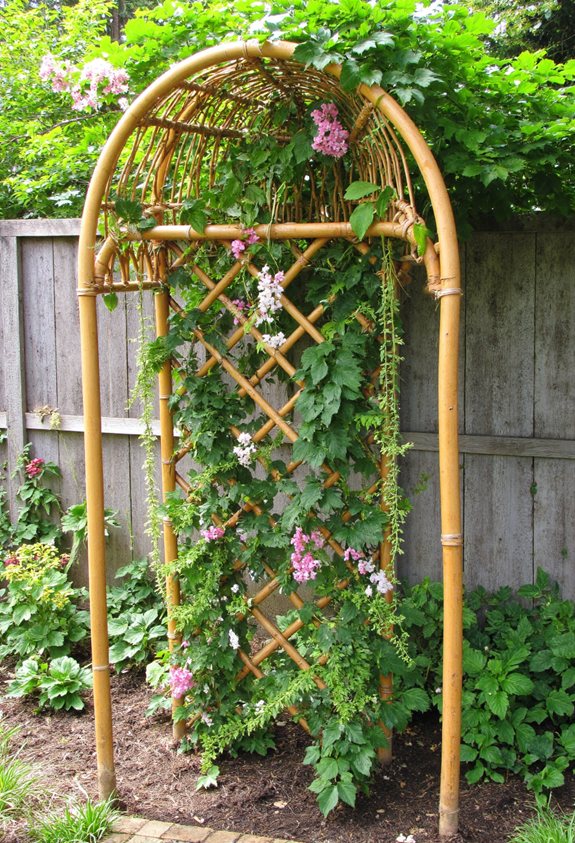
You can turn a bundle of bamboo poles into a graceful arch that lets flowering vines and peas climb like they’re on a runway.
First, cut two sturdy poles for the legs, then bend a third into a smooth curve and secure it with twine.
Plant the base in rich soil, water generously, and watch blossoms strut their stuff along your natural runway. This delightful addition can create a charming personal sanctuary in your garden, enhancing the serene atmosphere around your home.
Wire Mesh Grid on a Garden Fence for Climbing Beans
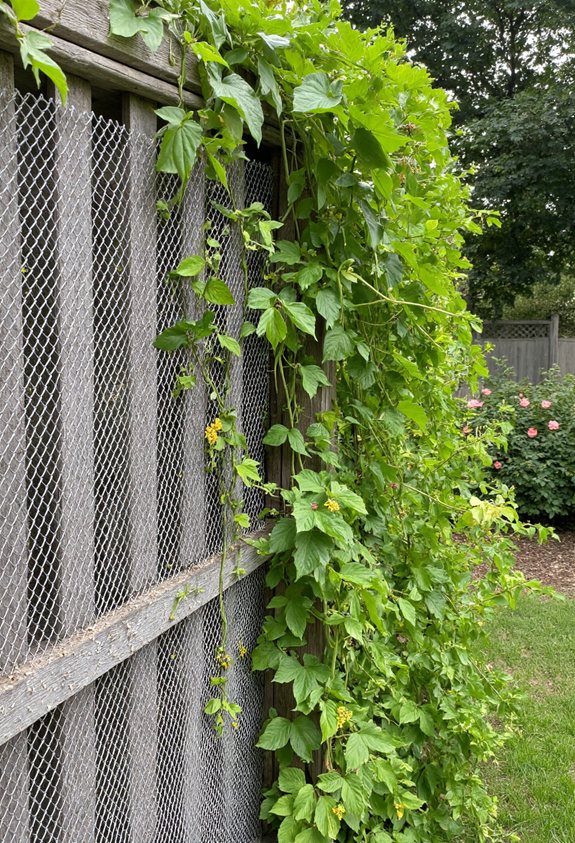
Curious how a plain garden fence can become a bean‑climbing runway? You’ll attach a sturdy wire mesh, secure it with zip ties, and watch beans scramble upward like tiny climbers. The fence turns into a vibrant, living art piece, and harvesting becomes a breeze.
- Choose galvanized mesh for rust resistance.
- Stretch mesh tightly across fence gaps.
- Use zip ties every 12 inches.
- Plant beans directly beside the fence.
Additionally, incorporating vertical space solutions can enhance the overall gardening experience and help optimize your planting area.
Hanging Shoe‑Organizer Trellis for Small‑Space Cucumbers
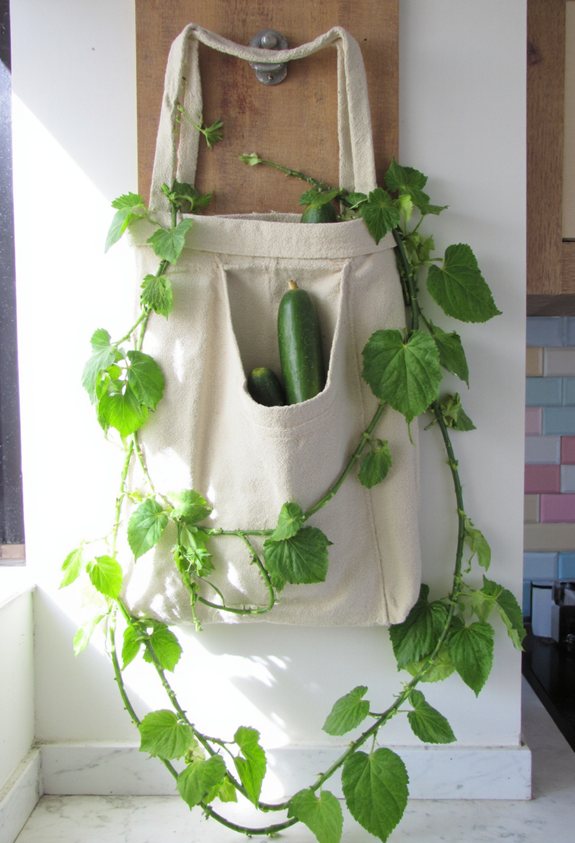
Ever wondered how a simple shoe organizer can double as a cucumber trellis in a tiny balcony?
Hang a clear, fabric shoe rack on a railing, slip in a few sturdy pots, and let the pockets become vertical vines.
The cucumbers climb, peas their leaves peeking through each slot.
You’ll love watching the garden grow upward, saving space and adding a quirky, green décor touch. This ingenious idea aligns with the concept of utilizing vertical gardening techniques to maximize limited space effectively.
Recycled Wire Coat Hangers Formed Into a Twine Trellis
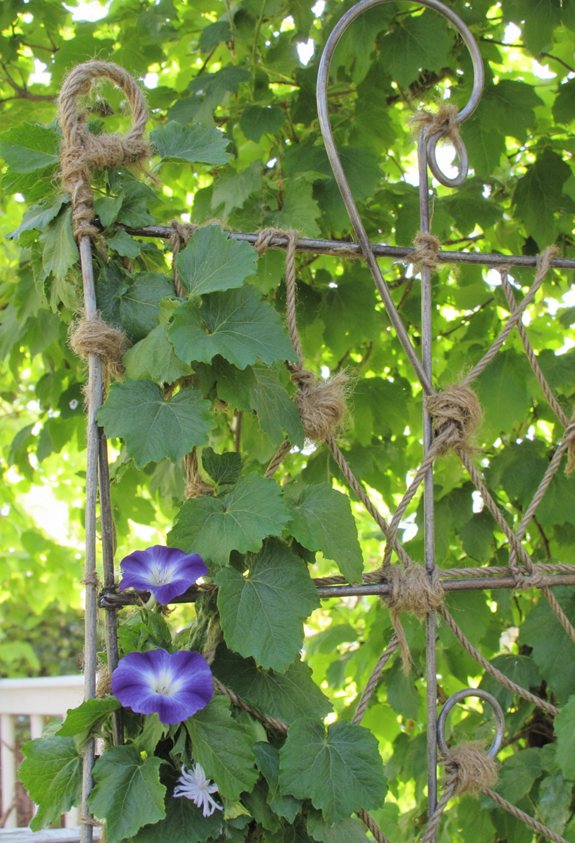
A bunch of old wire coat hangers can turn into a sturdy twine trellis in just a few minutes, and the result looks surprisingly sleek. You’ll straighten the hangers, twist them into a grid, then wrap bright twine for a rustic look. It’s quick, cheap, and looks great beside any garden bed. Additionally, using eco-friendly materials not only saves money but also promotes sustainable gardening practices.
- Gather and straighten hangers
- Cut and shape into a rectangular frame
- Secure corners with pliers
- Wrap twine tightly across the grid
Old Window Frame Trellis for Decorative Ivy
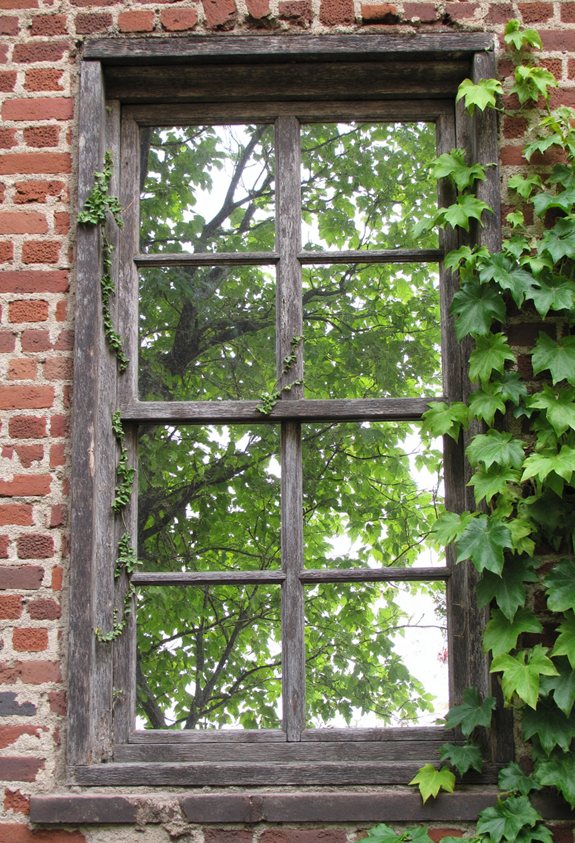
After you’ve twisted twine around those coat‑hanger grids, you can give that same rustic charm a new home in an old window frame.
Strip the panes, sand rough edges, then attach ivy‑friendly wire across the frame.
Plant cuttings at the bottom, water lightly, and watch green tendrils climb like tiny climbers on a vintage stage. It’s a quick, eye‑catching makeover that screams “home‑grown art,” and incorporating natural pest management can further enhance your climbing plants’ health.
Garden Gnome‑Style Wooden Trellis for Fun Backyard Flair
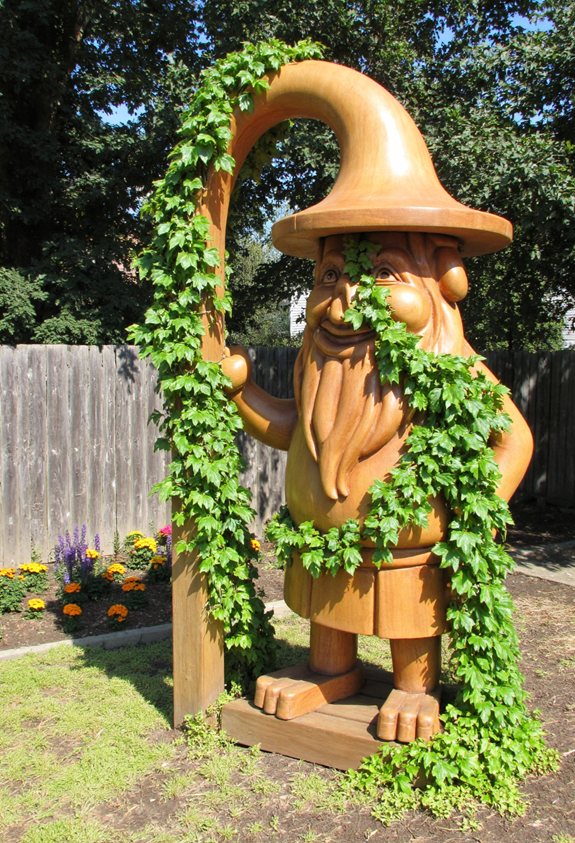
So, why not turn a simple wooden fence into a whimsical garden gnome that watches over your vines? You’ll love how the gnome’s hat becomes a trellis, and the beard supports climbing beans. It adds charm, invites kids to explore, and makes gardening feel like a storybook adventure. Additionally, bush beans thrive in compact spaces, making them perfect candidates for your delightful gnome trellis.
- Paint gnome’s hat bright red
- Carve a smiling beard for vines
- Attach tiny wooden boots as planters
- Secure a faux beard for extra support
Stacked Mason Jar Ladder Trellis for Indoor Herbs
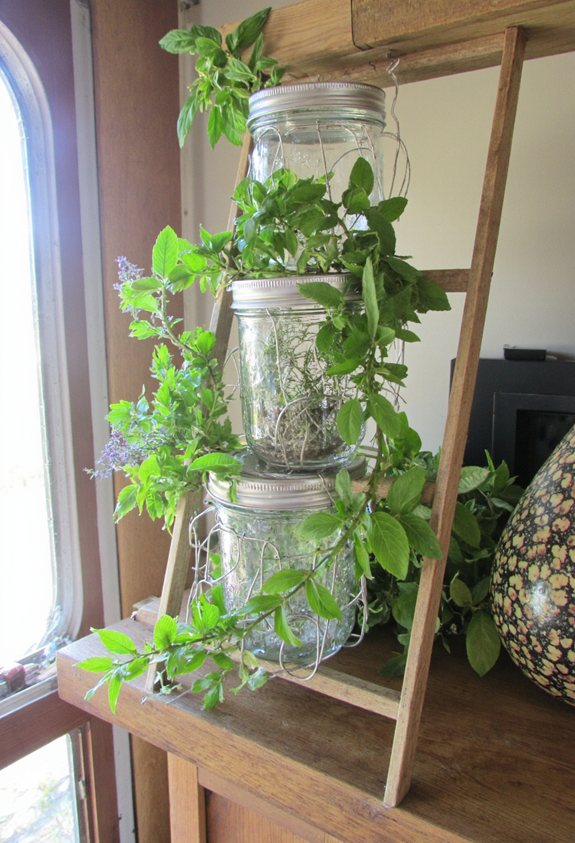
Swapping the garden‑gnome vibe for a kitchen‑friendly twist, you can turn a set of mason‑jar lids into a tiny ladder that lets your herbs climb right on your countertop. Stack the lids, glue them together, and insert a thin dowel for stability. Slip basil, mint, or thyme into the openings, water regularly, and watch them sprout upward, adding fresh flavor and charm to everyday cooking. This creative approach to using mason jars reflects their versatile and functional characteristics as an easy DIY gardening solution.
Metal Pipe “Tree” Trellis for Heavier Fruiting Plants
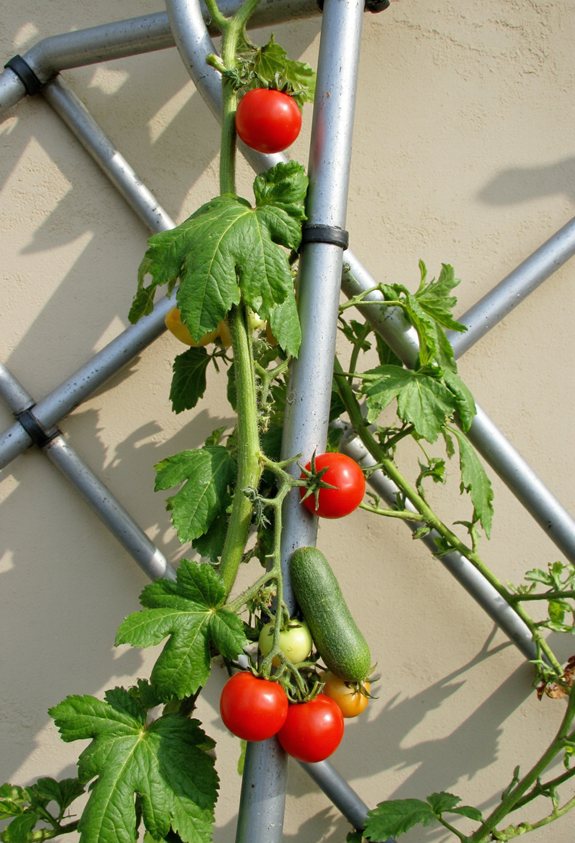
If you’ve got a backyard full of tomato vines or pepper bushes that keep pulling at the usual stakes, a metal‑pipe “tree” trellis can be the sturdy, eye‑catching solution you need.
You’ll love how it stands tall, supports heavy fruit, and adds industrial flair.
- Pipe trunk with welded arms
- Adjustable cross‑bars for spacing
- Anchor rings for ground stakes
- Paint or powder‑coat for rust protection
DIY Trellis Using Galvanized Steel Staples and Twine
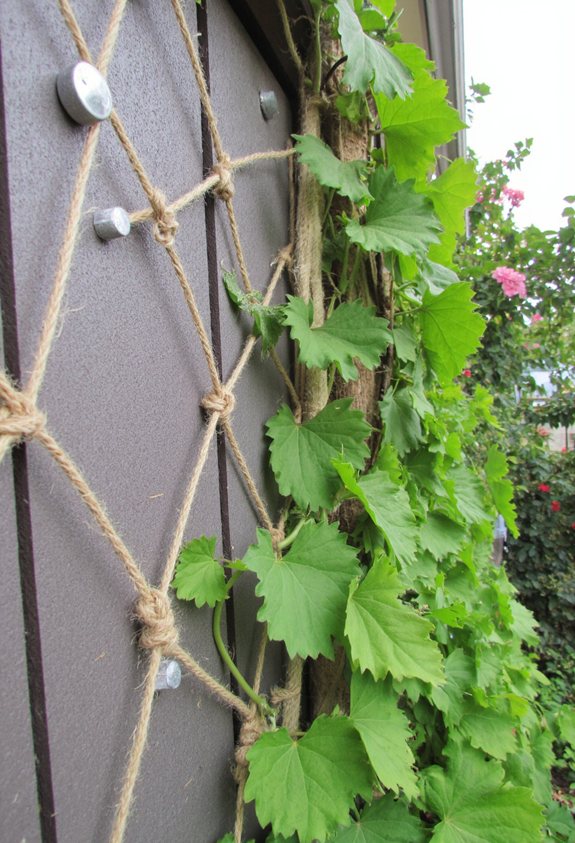
One simple way to give climbing plants a sturdy home is to string them up with galvanized steel staples and twine.
You hammer staples into a wooden fence or pallet, then tie twine between them, creating a flexible net.
The steel holds firm, while the twine lets vines hug the structure.
It’s cheap, quick, and looks surprisingly neat—perfect for backyard tomatoes or beans.
Pocket‑Style Fabric Trellis for Balcony Tomatoes
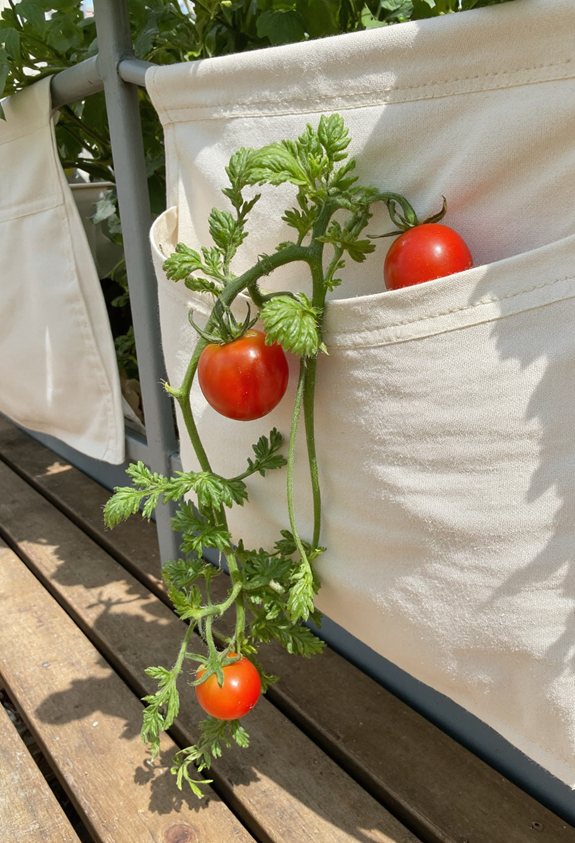
Imagine this: a sunny balcony, a few pots of tomatoes, and a lightweight fabric trellis that slides right into a pocket you’ve sewn onto the side of each pot. You’ll love how it lets vines climb without tangling, and you can pull it out for pruning or harvesting.
- Cut fabric to pot height
- Sew a pocket seam
- Insert trellis, slide out as needed
- Tie vines gently to fabric
Upside‑Down Plastic Bottle Trellis for Budget‑Friendly Cucumbers
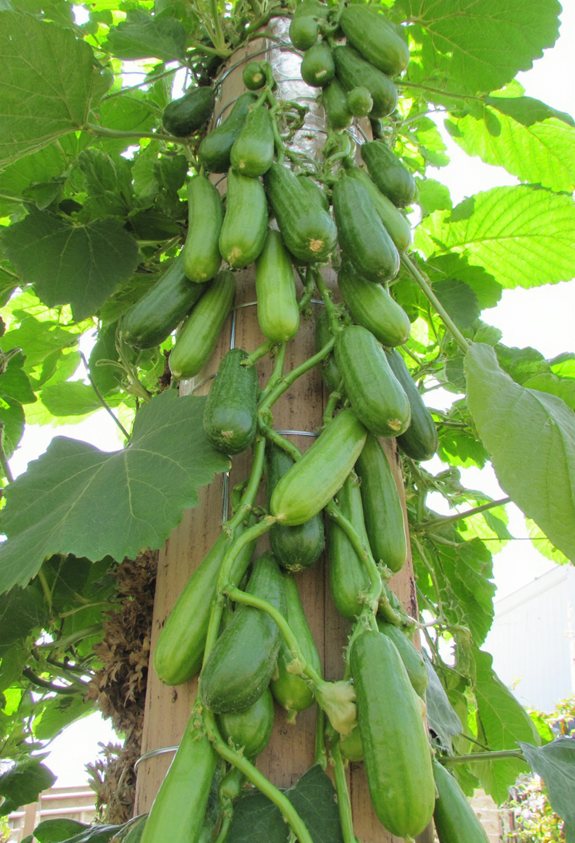
Ever wondered how a simple plastic bottle can become a sturdy trellis for your cucumber vines without breaking the bank?
Cut the bottle in half, flip the top half upside‑down, and stake it into the soil.
The wide mouth catches vines, while the narrow neck supports fruit.
You’ll love watching cucumbers climb, and the repurposed bottle looks oddly chic in your garden.
Rope‑Wrapped Wooden Stakes for Flexible Bean Supports
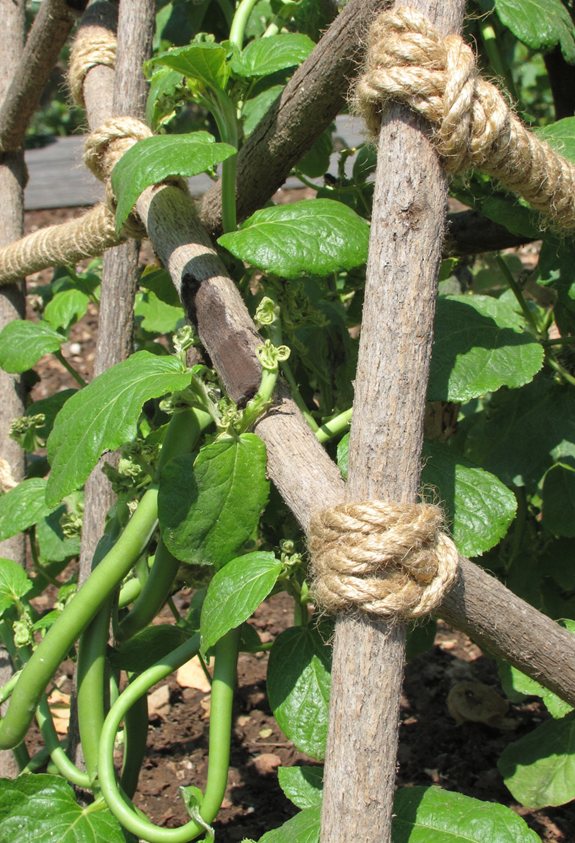
After the bottle trellis proved that cheap hacks can hold up a whole crop, you’ll find rope‑wrapped wooden stakes just as handy for beans that love to sway. You’ll twist sturdy rope around a 2‑foot stake, tie a knot, and let vines climb with freedom. The result feels like a bean‑dance floor, sturdy yet flexible.
- Choose a smooth wooden stake.
- Wrap natural rope tightly, overlapping each turn.
- Secure the end with a firm knot.
- Plant the stake, guide beans, and enjoy the sway.
Folding Book‑Shelf Trellis for Portable Indoor Gardens
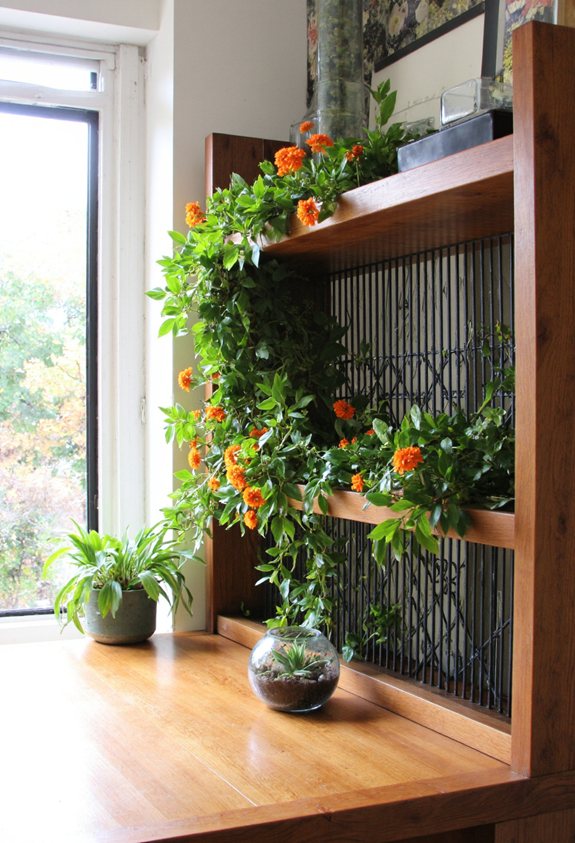
Ever wondered how you could turn a spare bookshelf into a portable garden for your climbing herbs?
You’ll fold the shelves flat, secure a few wooden dowels as vertical guides, and attach gentle plant clips.
When you’re ready, unfold, prop it against a wall, and let vines drape over the rails.
It’s lightweight, moves easily, and even looks cool when you’re binge‑watching.
Trellis Made From Repurposed Wire Garden Netting
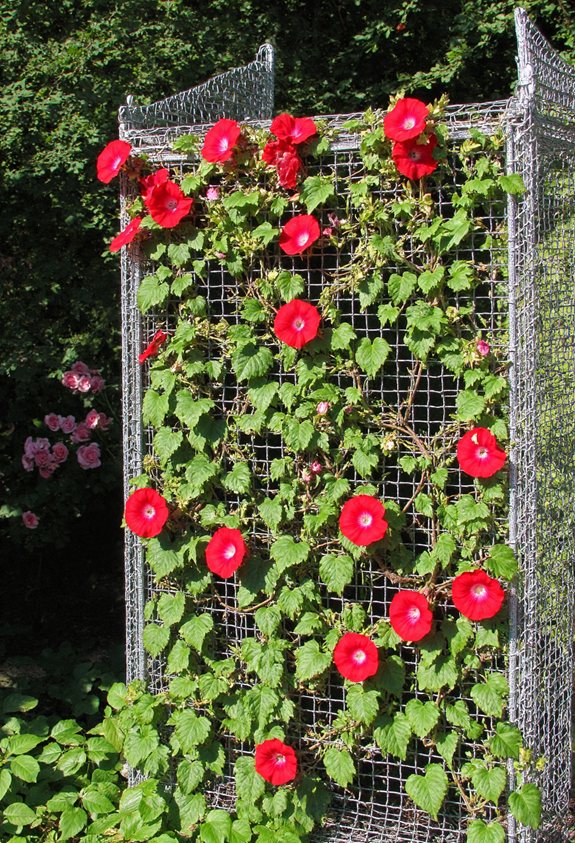
If you’ve got a roll of old wire garden netting lying around, you can turn it into a sturdy trellis in just a few minutes.
Cut it to size, bend the edges into a frame, and staple it to wooden stakes.
Then you’ll have a flexible, airy support for beans, peas, or morning glories.
- Cut netting to desired height
- Shape into rectangular frame
- Attach to stakes with zip ties
- Secure plants by wrapping stems around wire
Concrete Block and Wire Mesh Trellis for Strong Support
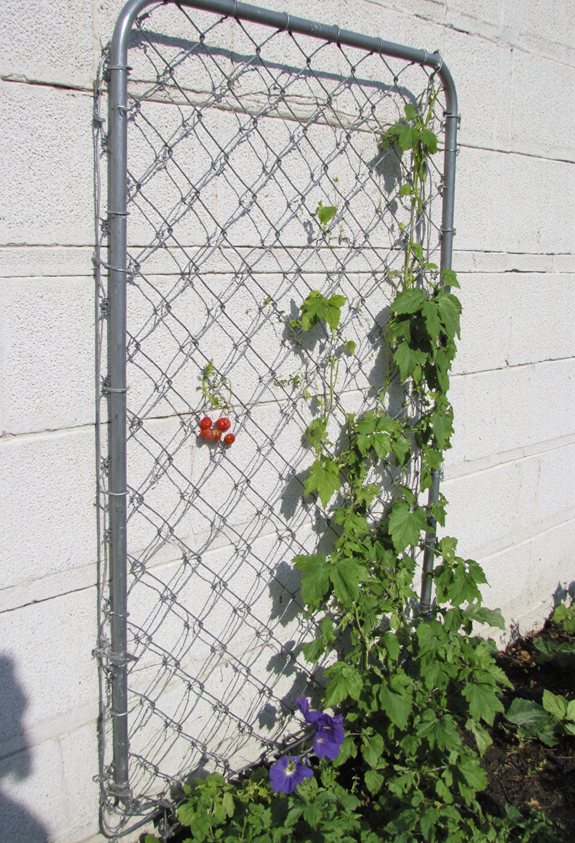
You can upgrade that simple wire‑netting trellis by anchoring it to a concrete block, giving your climbing veggies a rock‑solid backbone that won’t wobble in the wind.
Slip the mesh over the block, fasten with zip‑ties, and plant vines right at the base.
The weight keeps the trellis steady, even during gusty days, while the mesh lets shoots thread through easily, creating a sturdy, low‑maintenance garden hero.
DIY “Living Wall” Trellis Using Moss and Succulents

When you turn a plain garden wall into a living wall, the whole backyard suddenly feels like a secret jungle. You’ll layer moss, plant succulents, and watch tiny ecosystems sprout, turning dull concrete into vibrant, low‑maintenance art. It’s soothing, colorful, and surprisingly easy—perfect for a quick nature fix.
- Attach a breathable mesh to the wall.
- Spread a thick layer of moss as a cushion.
- Plant assorted succulents in small pots or directly in the moss.
- Water sparingly and let sunlight do the rest.
Modular Plastic Grid Trellis for Easy Expansion
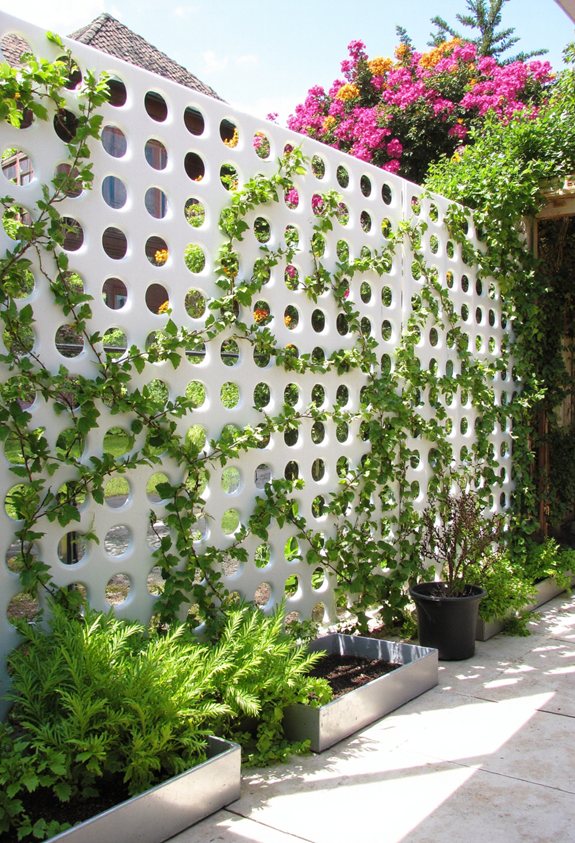
After sprucing up a wall with moss and succulents, you might crave a system that grows as your garden does—enter the modular plastic grid trellis.
Snap together lightweight panels, clip them onto any frame, and watch vines climb effortlessly.
When you need more space, just click extra squares on.
No tools, no hassle—just a flexible, budget‑friendly playground for your plants.
Recycled Pallet “Step‑Ladder” Trellis for Multi‑Level Planting
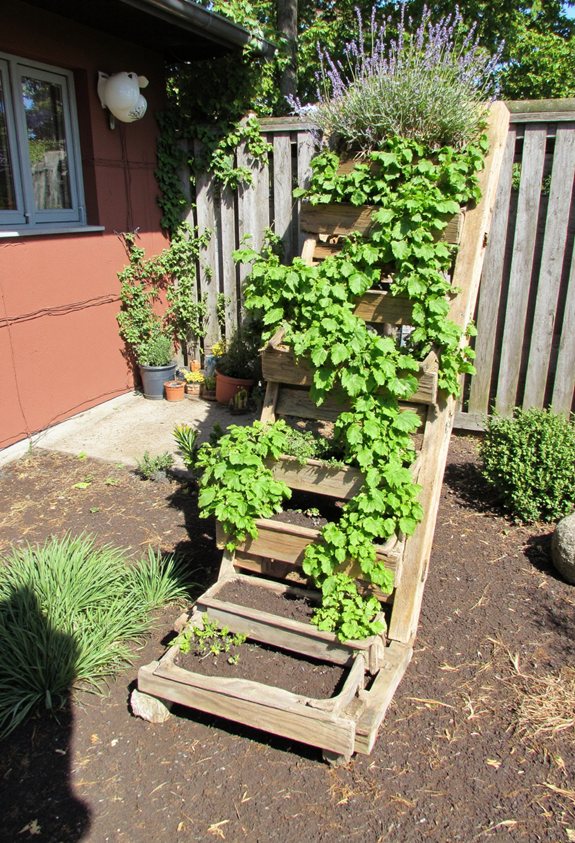
Two or three sturdy pallets can turn a boring backyard corner into a vertical garden playground. You’ll stack them, secure the steps, and let vines climb each rung, creating layers of flowers and veggies. It’s cheap, eco‑friendly, and looks like a quirky ladder for nature.
- Lay pallets flat, anchor with stakes.
- Stack with staggered gaps.
- Attach rope or netting between steps.
- Plant climbing beans, peas, or morning glories.
Adjustable Tension‑Wire Trellis for Custom Height and Width
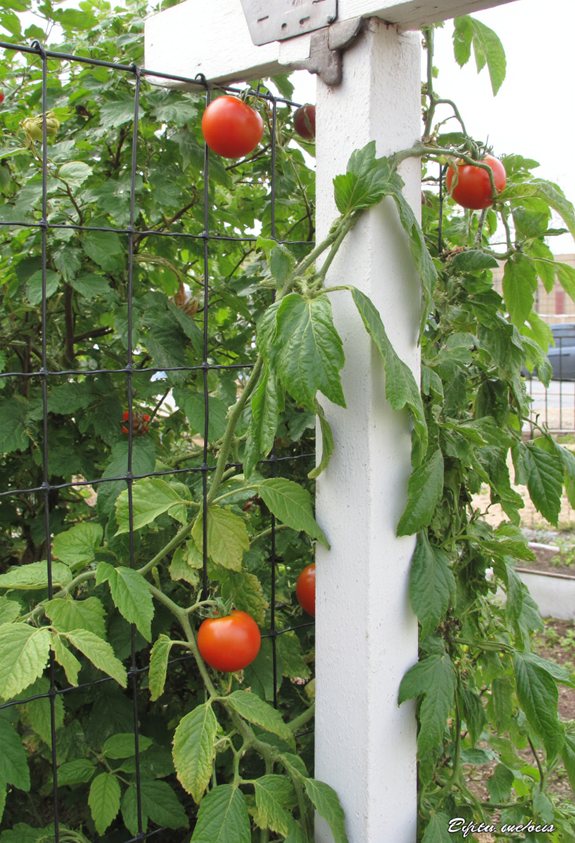
If you want a trellis that grows with your garden, the adjustable tension‑wire system is perfect.
You’ll stretch sturdy wire between two wooden posts, then slide clamps up or down to change height and width.
As vines climb, you tighten the wire for support, and when they outgrow it, you simply reposition.
It’s like giving your plants a custom‑fit workout bench—fun, flexible, and totally doable.