You can turn everyday items into worm compost bins that boost your garden and slash kitchen waste. Try a plastic‑bottle bin for tiny spaces, a pallet‑stacked system for backyard beds, or a terrarium jar for indoor herbs. A rain‑barrel setup feeds large yards, while a recycled wooden crate works for DIY fans. For cold climates, an insulated styrofoam box keeps worms cozy, and a wheelbarrow bin lets you compost on the move. A hanging mesh tote fits balconies, and a smart sensor‑enabled bin tracks moisture and temperature. Keep reading to discover the full 17‑step guide.
Plastic Bottle Worm Bin for Small Spaces
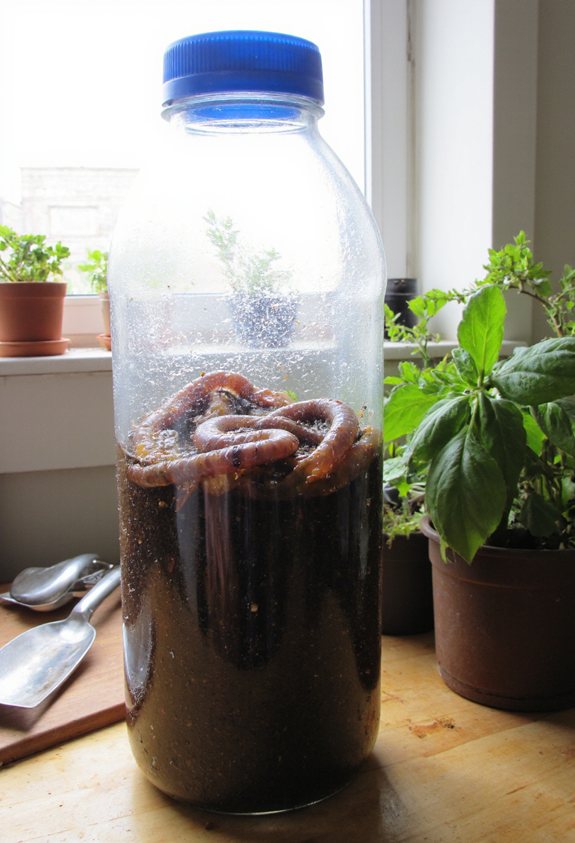
A plastic bottle can become a tiny worm kingdom that fits on a windowsill or under a desk, and you’ll love how easy it’s to set up.
Cut the top off, poke a few holes for airflow, and add damp newspaper.
Toss in kitchen scraps, then drop a handful of red wigglers.
Watch them munch, turning waste into black gold while you study or game. This compact bin is a great example of using vertical space to enhance your gardening efforts.
Pallet‑Stacked Bin for Backyard Gardens
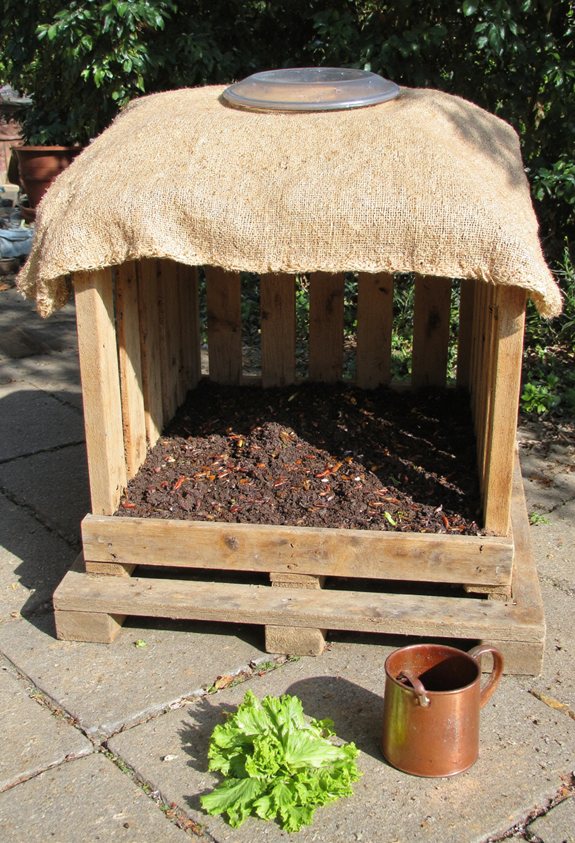
When you stack a few wooden pallets in your backyard, you instantly get a sturdy, airy home for red wigglers that looks like a tiny garden shed for bugs.
Fill the gaps with straw, add damp kitchen scraps, and cover with a loose lid.
The pallets keep the bin ventilated, preventing odors, while the worms feast, turning waste into black gold for your garden. Additionally, incorporating proper ventilation methods can further enhance the bin’s effectiveness in composting.
DIY Terrarium Worm Bin for Indoor Herbs
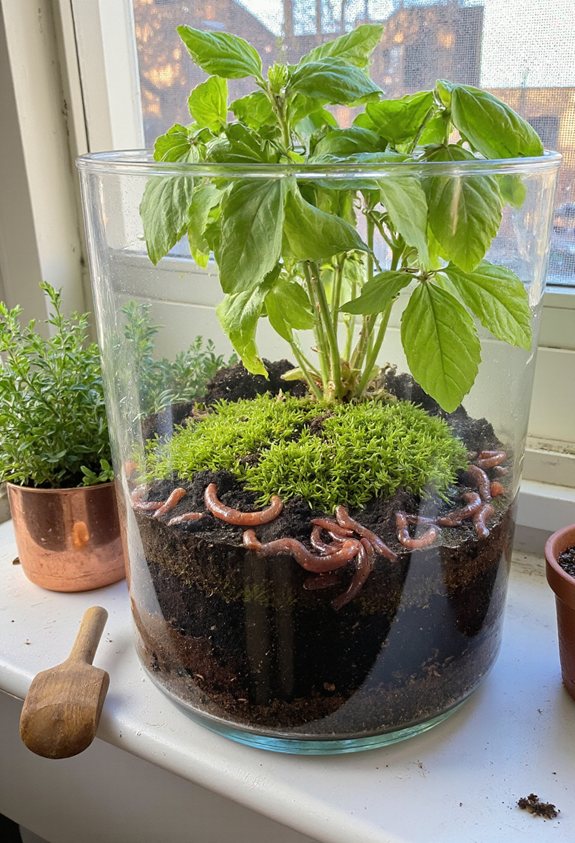
If you want fresh herbs right on your windowsill and a fun way to recycle kitchen scraps, a terrarium‑style worm bin is the perfect DIY project. You’ll see tiny worms turning peels into nutrient‑rich tea for basil, mint, and cilantro.
- Choose a clear glass jar with a lid
- Add a layer of moist coconut coir
- Sprinkle shredded newspaper for bedding
- Introduce red wiggler worms gently
- Feed scraps weekly, then harvest herbs.
Creating a worm bin not only supports healthy plant growth but also promotes a sustainable gardening practice that enriches your soil naturally.
Rain Barrel Worm Compost System for Large Yards
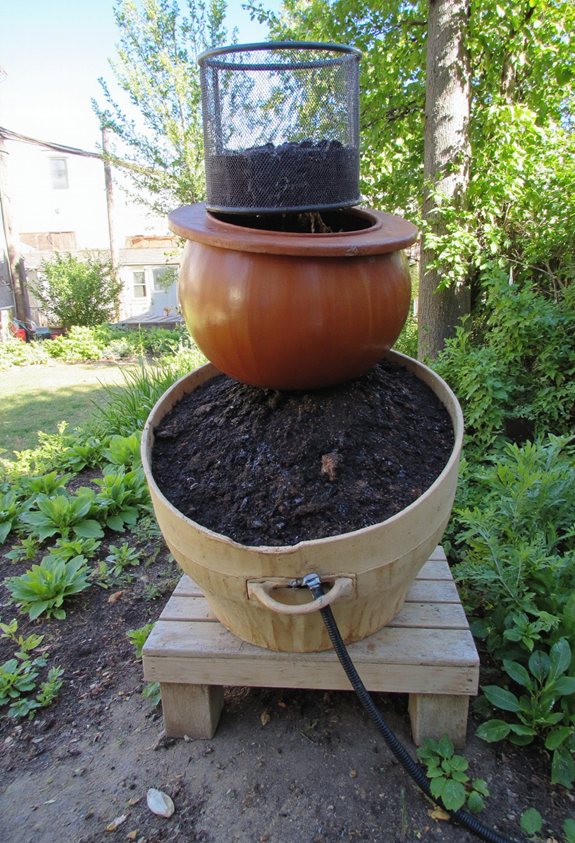
Switching from a tiny glass jar to a full‑size rain barrel might sound like moving from a hamster wheel to a tractor, but the idea stays the same: let worms turn kitchen waste into garden gold.
You’ll drill drainage holes, add bedding, and introduce a thriving worm crew. As they munch, the compost drips into a collection tray, ready to enrich your massive yard soil. This process mirrors the concept of natural composting systems that harness the power of organic materials to enhance soil health.
Recycled Wooden Crate Bin for DIY Enthusiasts
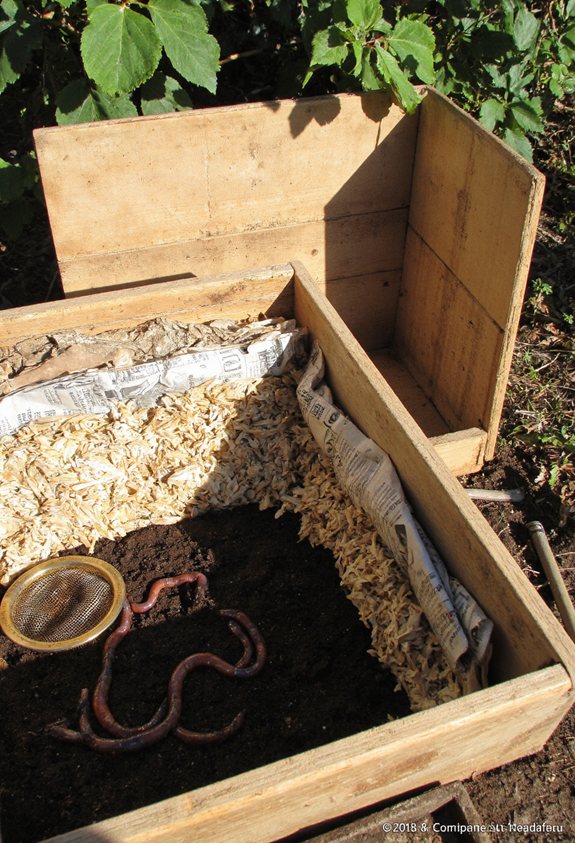
Ever thought a simple wooden crate could become the star of your garden? You can turn a recycled crate into a worm haven that looks charming and works efficiently.
- Cut ventilation holes on each side
- Line with breathable fabric or cardboard
- Add damp newspaper base
- Fill with kitchen scraps and soil
- Introduce red worms and watch them feast
Your garden will thank you. Effective ventilation design is crucial for maintaining a healthy ecosystem within your compost bin.
PVC Pipe Worm Tower for Vertical Composting
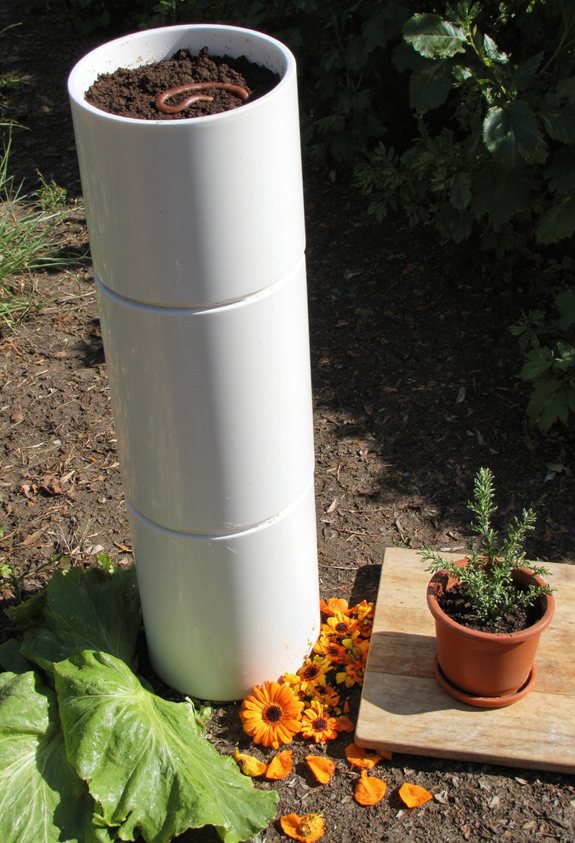
Looking for a fun way to turn a boring backyard corner into a thriving worm metropolis?
Grab a few PVC pipes, cut them into 12‑inch sections, and stack them with a little mesh at the bottom.
Fill each tube with damp newspaper and kitchen scraps, then drop in your worms.
They’ll crawl upward, turning waste into rich soil while you watch a vertical garden of activity. This method aligns with vertical gardening techniques that maximize your available space.
Metal Trash Can Bin With Ventilation for Urban Balconies
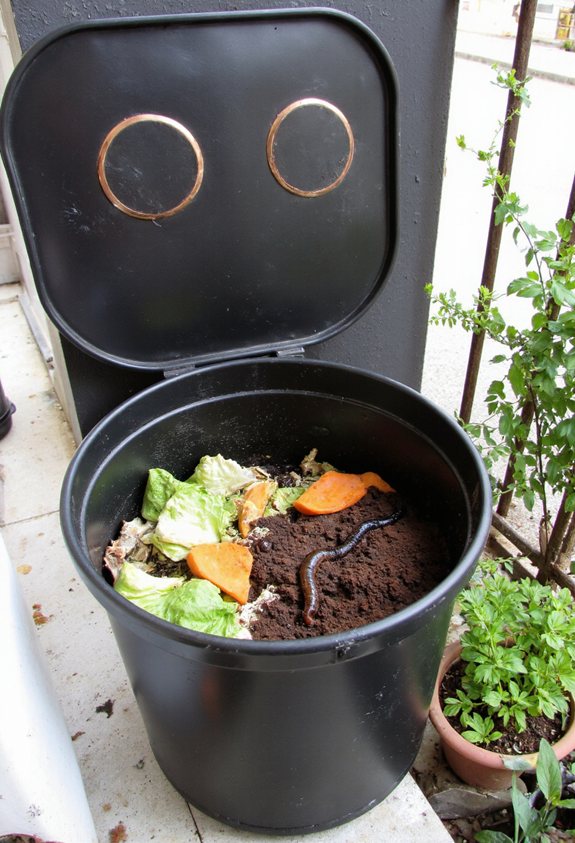
One of the easiest ways to turn a cramped balcony into a thriving worm hub is to repurpose a sturdy metal trash can and give it a few smart ventilation tweaks. You’ll love how fresh it smells and how tiny workers thrive.
- Drill ½‑inch holes near the top and bottom.
- Add a mesh screen to keep predators out.
- Use a lid with small gaps for airflow.
- Line the can with damp newspaper.
- Place it in a sunny, wind‑protected spot. Additionally, incorporating a layered frame styling approach can create a visually engaging environment for your composting setup.
Concrete Block Worm Habitat for Durable Outdoor Use
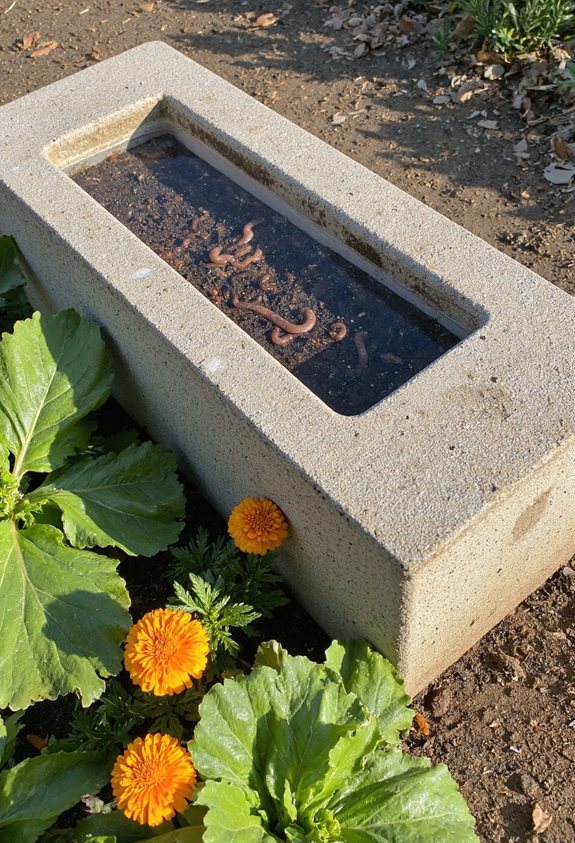
If you’ve got a garden patch or a patio that sees a lot of weather, a concrete block worm habitat can give you a tough, low‑maintenance home for your composting critters. Stack a few solid blocks, drill drainage holes, and fill the top with moist bedding. Worms love the cool, stable environment, and you’ll hardly ever need to move it. It’s sturdy, cheap, and keeps predators out. This durable outdoor use of concrete blocks not only benefits your worms but also complements the aesthetics of your garden space.
Fabric Grow Bag Worm Bin for Portable Composting
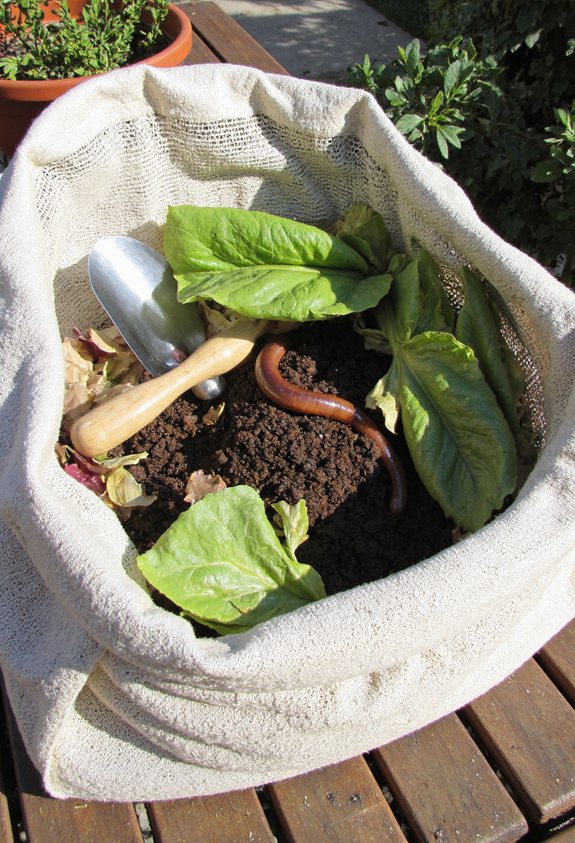
Because you love a quick, mess‑free way to turn kitchen scraps into black gold, a fabric grow bag worm bin is perfect for portable composting.
It folds, fits in a backpack, and lets you garden while traveling or camping.
- Breathable fabric keeps worms happy
- Lightweight, easy to carry
- Simple lid for odor control
- Drainage holes prevent soggy mess
- Transparent side shows worm activity instantly
- The design of the bin supports air circulation to maintain a healthy environment for the worms.
Upcycled Coffee Can Worm Bin for Kitchen Countertops
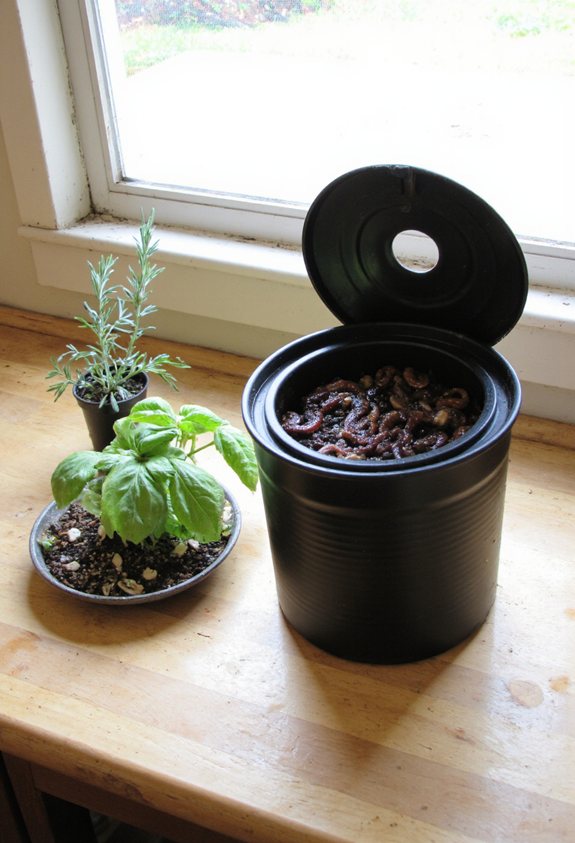
Even if you’ve never turned a trash can into a garden, upcycling a coffee can for a kitchen countertop worm bin is surprisingly easy and surprisingly cool.
Cut a ventilation hole, add a layer of damp newspaper, then drop in your compost worms.
Place the lid loosely, keep the can out of direct sunlight, and watch the worms turn coffee grounds into rich soil while you sip your brew. This process can enrich your garden soil, much like how microgreens yield provide nutrients.
Garden Shed Corner Worm Bin for Space‑Saving Storage
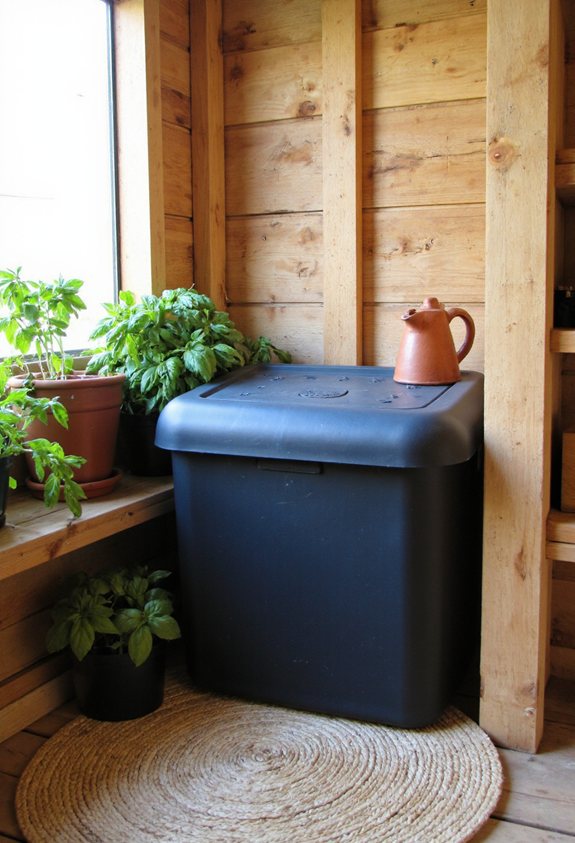
Ever wondered how to squeeze a worm bin into that cramped corner of your garden shed without turning the space into a chaotic mess? Use a shallow tray, stackable bins, and a hanging rack to keep worms happy and soil tidy.
- Choose a rectangular tray that fits the corner.
- Add a removable lid for easy access.
- Install a small vent for airflow.
- Use a low‑profile shelf to store tools above the bin.
- Line the bottom with damp newspaper for bedding.
DIY Solar‑Powered Worm Bin With Automated Aeration
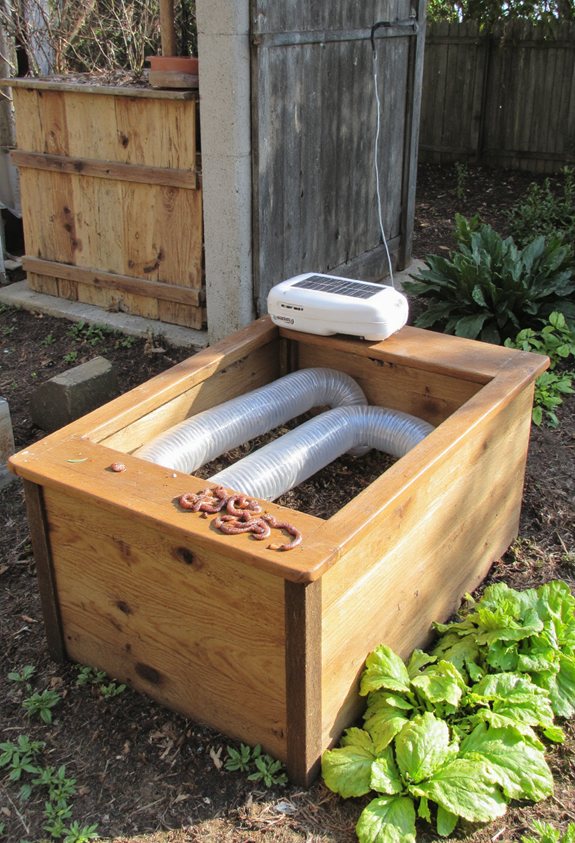
When the sun shines on your garden shed, you can turn that light into a power source that keeps your worm bin breathing easy.
Install a small solar panel on the roof, connect it to a low‑voltage pump, and attach a timer‑controlled aeration tube.
The pump pushes fresh air through the compost, preventing odors while the sun powers everything, so you enjoy thriving worms without lifting a finger.
Multi‑Tier Worm Compost Rack for High‑Yield Production

If you stack your worm bins like a bookshelf, you’ll turn a tiny corner into a high‑yield compost powerhouse.
- Use sturdy wooden pallets for each tier.
- Add a mesh floor to keep worms in place.
- Fill the bottom layer with moist bedding, then layer food scraps.
- Rotate trays weekly to harvest fresh castings.
- Keep a spray bottle handy for quick moisture tweaks.
Insulated Styrofoam Box Worm Bin for Cold Climates
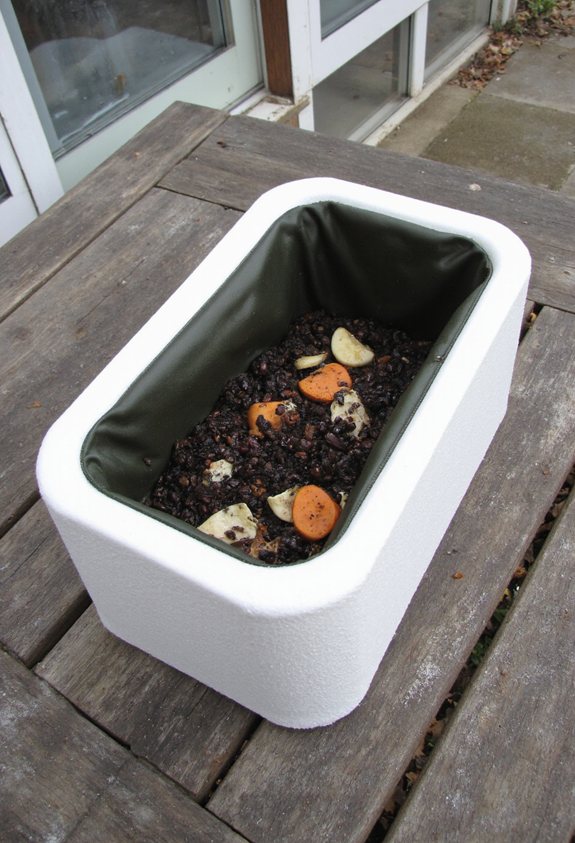
Your bookshelf‑style worm rack works great in mild weather, but when winter drops below freezing, those trays can turn into icy prisons for your critters.
Wrap a sturdy styrofoam box in foil, cut a vent, fill with shredded newspaper, and add a few heat‑absorbing bricks.
Place your worms inside, keep moisture steady, and check daily—your compost will stay warm, thriving even when snow falls.
DIY Composting Wheelbarrow Worm Bin for Mobile Gardens
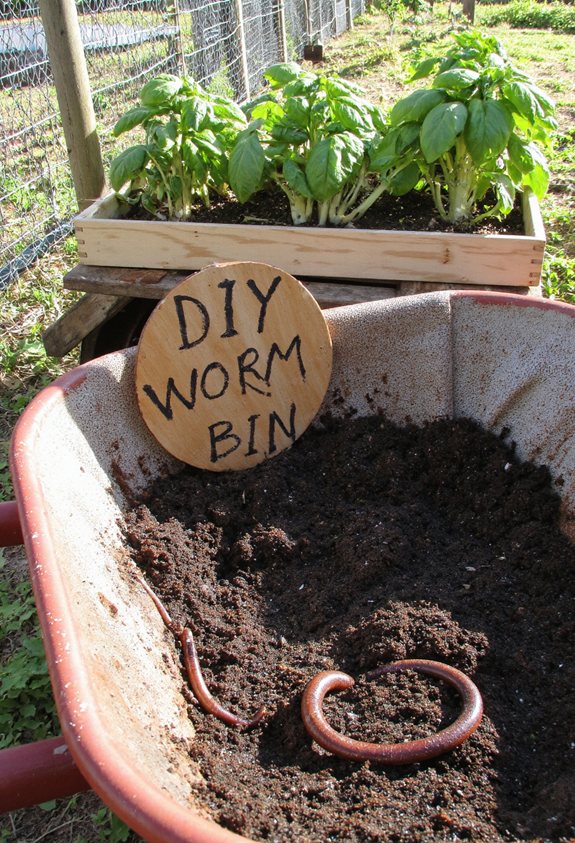
Ever wondered how to turn a simple wheelbarrow into a roaming worm haven for your garden? You’ll love dragging fresh compost wherever you need it, and the worms will thrive in the moving micro‑habitat.
- Choose a sturdy, ventilated wheelbarrow
- Line it with breathable fabric
- Add moist bedding and kitchen scraps
- Introduce a few dozen red wigglers
- Rotate the barrow weekly for even feeding.
Hanging Mesh Worm Bin for Small Apartment Balconies
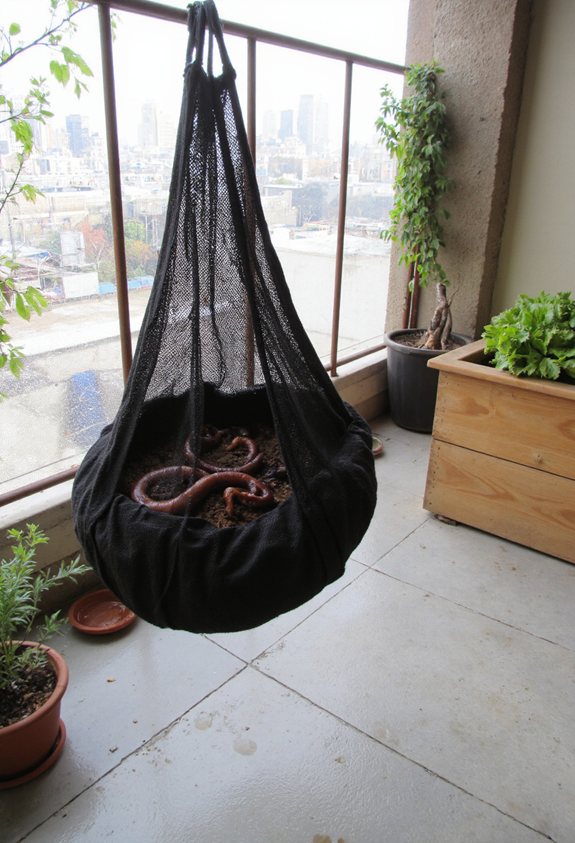
When space is tight on a balcony, a hanging mesh worm bin can turn that tiny nook into a thriving compost corner.
You’ll attach the breathable mesh tote to a sturdy rail, fill it with damp bedding, and drop in kitchen scraps.
Worms love the dark, cool shelter, and you’ll watch humus form fast.
It’s low‑maintenance, smells great, and looks quirky enough to spark neighbor envy.
Smart Sensor‑Enabled Worm Bin for Data‑Driven Gardening

Even if you’ve never tinkered with tech, a smart sensor‑enabled worm bin can feel like a tiny, data‑driven garden assistant perched on your balcony. It tracks moisture, temperature, and worm activity, sending alerts to your phone so you adjust feed or ventilation instantly.
- Moisture sensor prevents soggy beds
- Temperature gauge keeps worms comfy
- Light sensor warns of sunburn
- Wi‑Fi module pushes real‑time stats
- Battery‑friendly design lasts weeks