Start by grading your yard so water slides away at a gentle ½‑inch‑per‑foot slope, then lay landscape fabric and decorative rock mulch to keep soil in place while slowing runoff.
Dig a shallow swale or a DIY French drain with perforated pipe and gravel for quick water escape, and add a gravel soakaway pit as a backup.
Plant a rain garden or install a green roof on a patio to soak up excess moisture, and mix coarse sand or compost into the soil for better infiltration. Keep an eye on these features, and you’ll discover even more tricks ahead.
Proper Yard Grading
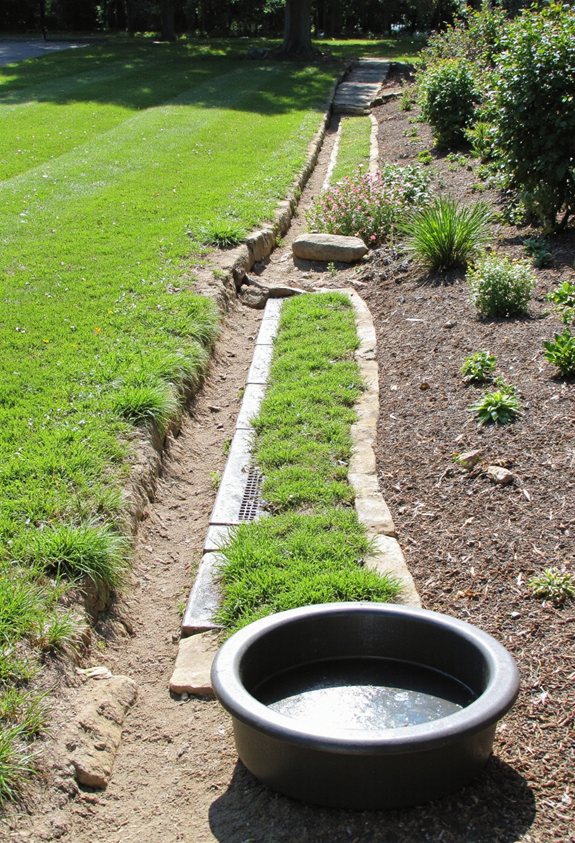
When you tilt a yard just a little, water knows exactly where to go—so proper yard grading is the secret sauce that keeps puddles from turning your lawn into a swamp.
You’ll want a gentle slope away from the house, about a half‑inch per foot, guiding rain toward drains or lower spots.
Test it with a level, adjust soil, and enjoy dry, happy feet all summer. Additionally, implementing temporary wall solutions can enhance your outdoor living space by creating a cozy atmosphere for gatherings.
Install a Simple Surface Swale
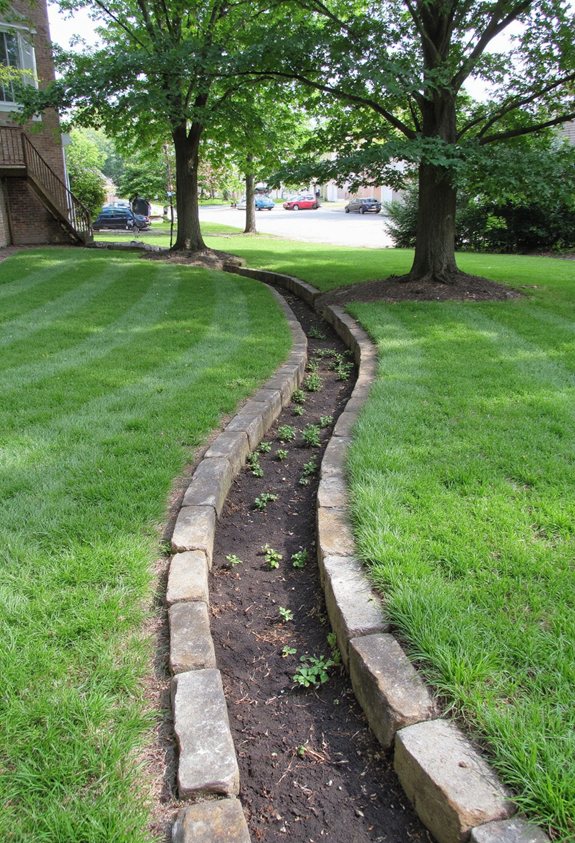
If you carve a shallow ditch along the natural slope of your yard, you’ll give rainwater a clear path to flow instead of pooling around the house. A surface swale works like a gentle river, guiding water away while adding a cool visual feature. In addition, incorporating natural foliage can enhance the aesthetics of the swale while providing additional absorption for water runoff.
- Pick a low‑traffic spot.
- Dig a 4‑inch‑deep, 12‑inch‑wide trench.
- Line it with gravel for stability.
- Plant grass or native shrubs to keep it green.
Build a DIY French Drain
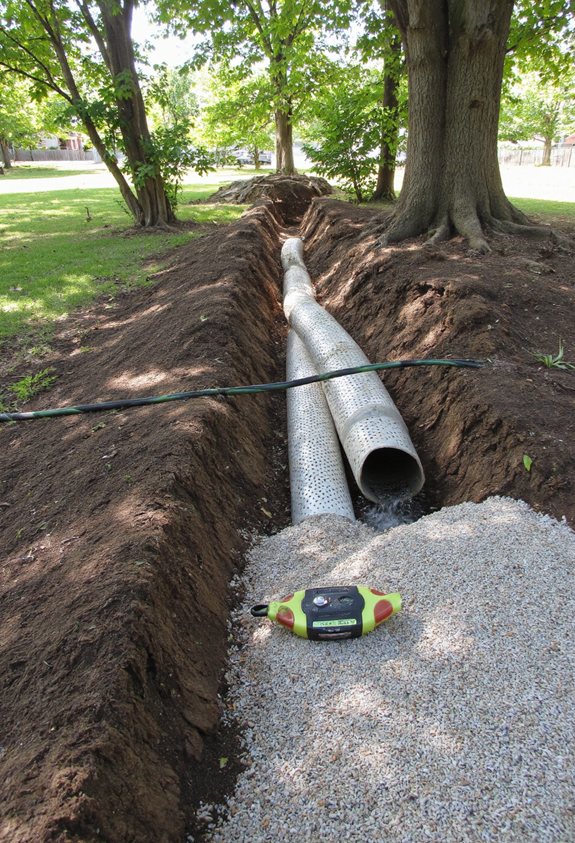
Because water loves to find the easiest route, a DIY French drain can become your yard’s secret superhero, pulling excess rain away before it turns your lawn into a soggy mess.
Dig a trench sloping away, line it with landscape fabric, drop in perforated pipe, cover with gravel, then backfill.
Test it with a hose, watch the water disappear, and enjoy a dry, happy yard. Adding effective drainage solutions can enhance the overall aesthetics and functionality of your outdoor spaces, just like in luxurious outdoor bathrooms.
Add a Gravel Soakaway Pit
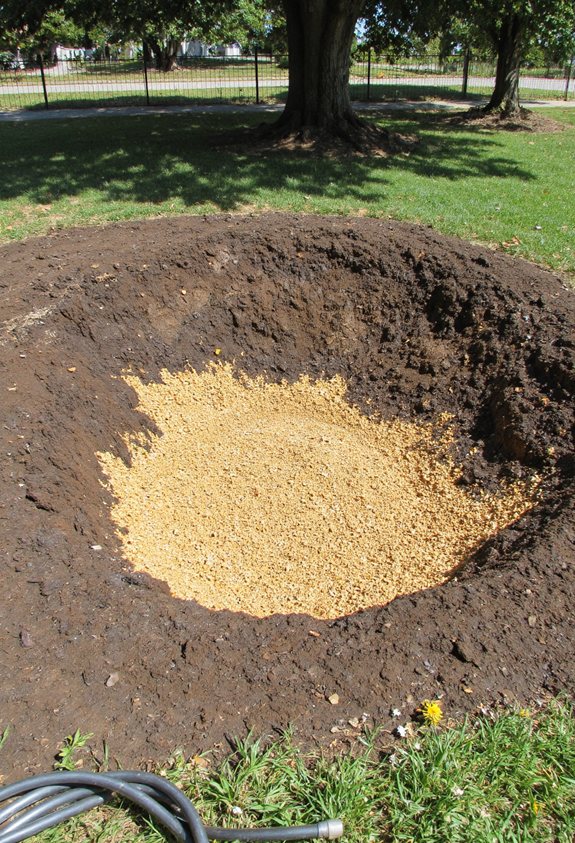
After you’ve got the French drain doing its magic, a gravel soakaway pit can give your yard a backup plan for those extra‑rainy days. It’s simple: dig a hole, fill it with coarse gravel, and let water disappear underground.
Here’s how to make it work:
- Choose a low spot away from foundations.
- Dig 3‑4 ft deep, wide enough for a bucket.
- Line with landscape fabric, then add 12‑inch gravel layer.
- Top with soil or mulch for a neat finish.
Additionally, using exposed stone or brick can enhance drainage issues by allowing water to naturally filter through the ground.
Plant a Rain Garden for Natural Filtration
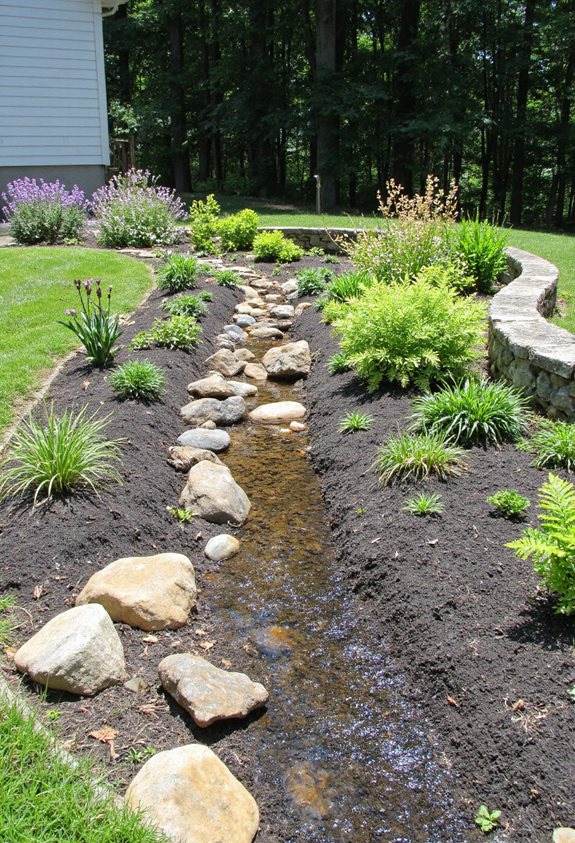
Even on a rainy day, you can turn a soggy patch of yard into a thriving mini‑ecosystem. Dig a shallow basin, fill it with native, moisture‑loving plants, and mulch the surface. As rain falls, roots soak up water, filter pollutants, and release clean drip back into the soil. Your garden becomes a living sponge, attracting butterflies while keeping puddles at bay. Additionally, incorporating companion plants that thrive in similar conditions can further enhance your rain garden’s resilience and biodiversity.
Use Permeable Pavers on Walkways
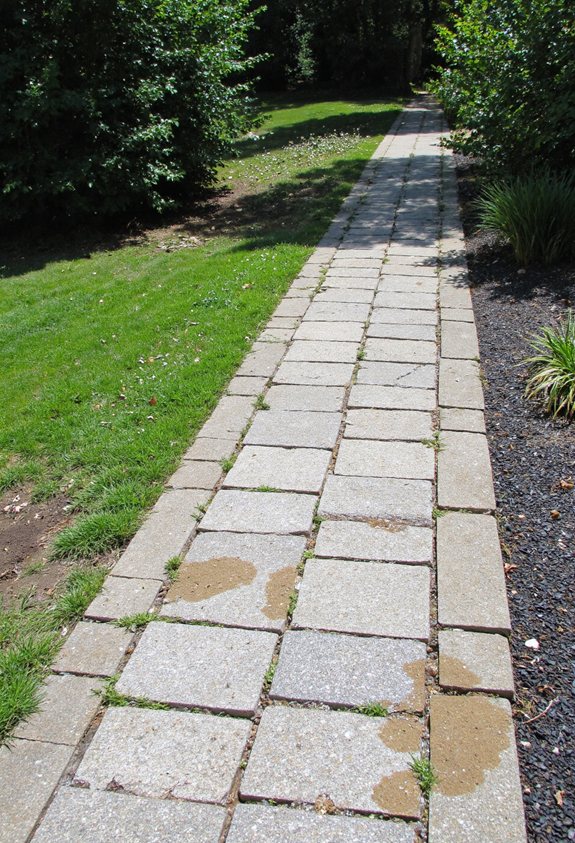
When you lay down permeable pavers on your walkways, the rain can slip right through the gaps instead of pooling on the surface.
You’ll notice less mud, quicker drying, and a cleaner yard.
Plus, your garden stays healthier because water reaches the roots instead of forming puddles. Incorporating eco-friendly options in your yard can further enhance water management while promoting sustainability.
- Choose pavers with spaced joints.
- Install a compacted stone base.
- Add a layer of coarse sand.
- Seal lightly to keep weeds out.
Create a Dry Creek Bed to Redirect Flow
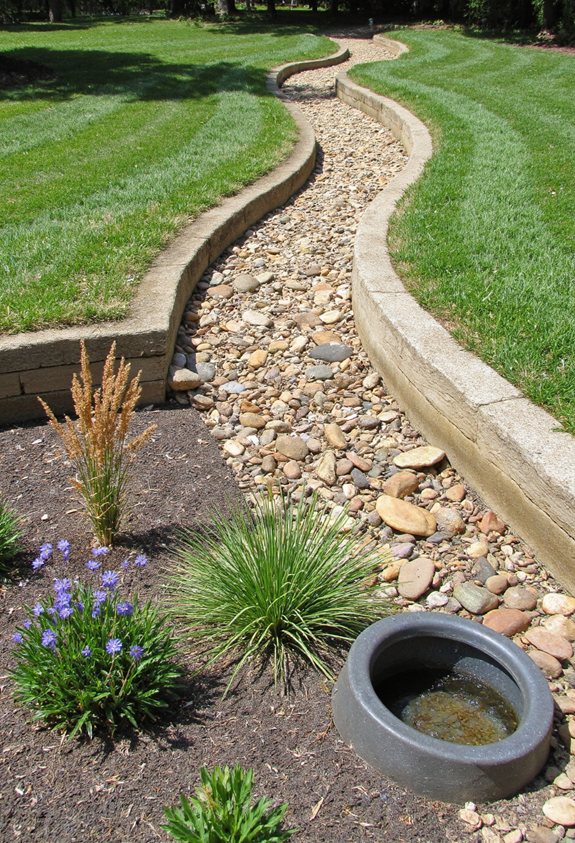
Ever wondered how a tiny, winding ditch can turn a soggy yard into a dry, attractive landscape?
Dig a shallow trench, line it with rocks, and shape it like a miniature creek.
Let water flow through, slowing and spreading before it disappears into the ground.
Add a few hardy plants for texture, and you’ll enjoy a functional, eye‑catching feature that keeps your yard dry. Additionally, incorporating permeable options like stone or concrete pavers can further enhance your yard’s drainage and aesthetic appeal.
Set Up a Catch‑Basin and Downspout Extension
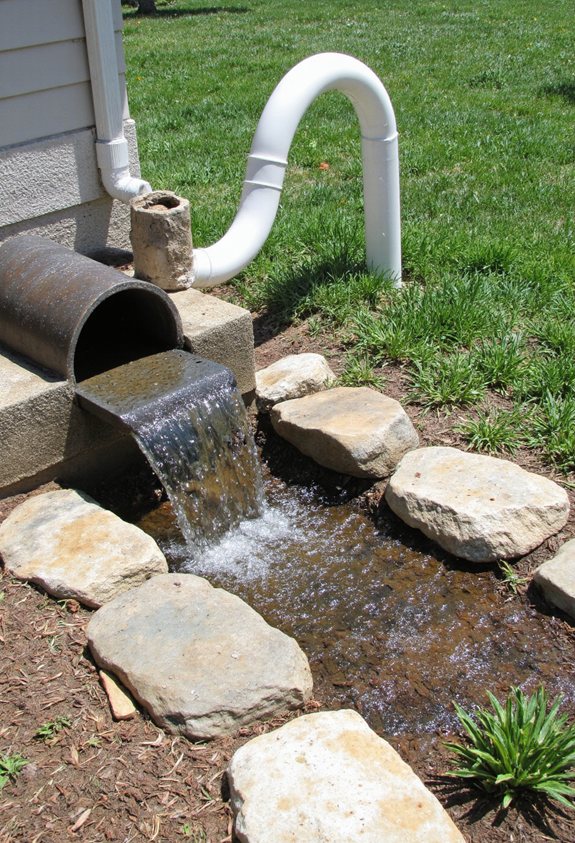
If you’ve ever watched rain pool around your porch and thought, “There’s got to be a better way,” a catch‑basin plus a downspout extension can be your yard’s superhero. You’ll guide water away, stop soggy spots, and keep your garden happy. Additionally, proper drainage solutions can protect belongings in your yard from erosion and flooding.
- Dig a shallow basin at the low point.
- Connect a PVC pipe from the downspout.
- Angle the pipe toward a dry area or drainage ditch.
- Add a grate to keep debris out.
Install a Subsurface Sump Pump System
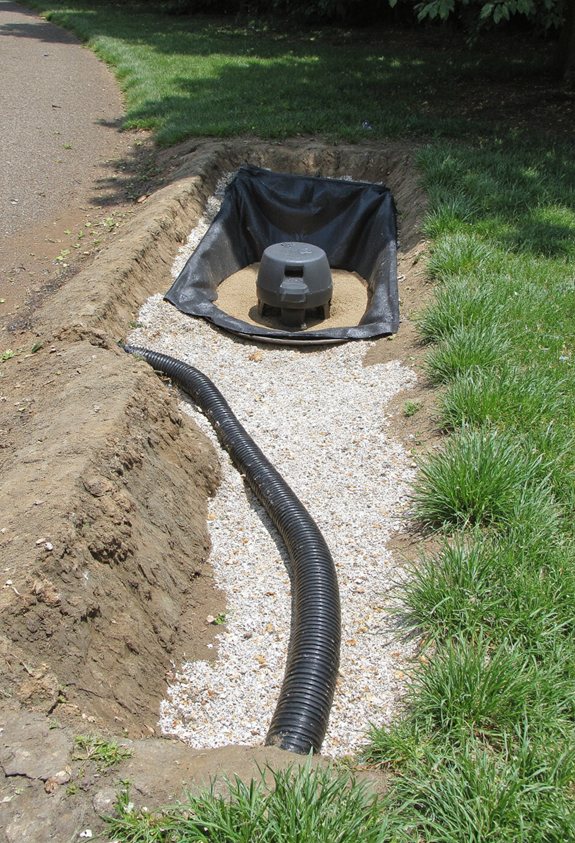
After getting the catch‑basin to whisk water away, you might notice that some of that runoff still disappears near the foundation, especially after a heavy downpour.
Install a subsurface sump pump: dig a pit, place a waterproof basin, connect a pump, and route a discharge pipe to a lower area. Pay attention to drainage solutions that help redirect water effectively toward your sump pump system. Test it regularly, and let the pump silently guard your foundation from hidden floods.
Deploy a Pop‑Up Sprinkler for Soil Aeration
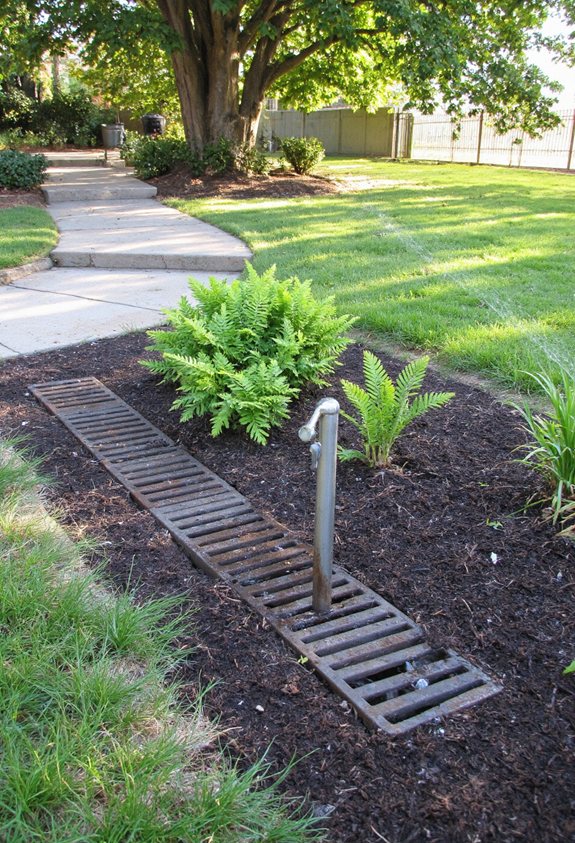
A pop‑up sprinkler can do more than just keep your lawn green—it’s a secret weapon for aerating the soil beneath your yard.
When it bursts upward, it creates tiny tunnels that let air and water flow, loosening compacted earth and boosting root health.
- Set sprinkler spacing 3‑4 ft apart.
- Choose a pressure‑regulated head.
- Run it for 5‑10 minutes weekly.
- Pair with a light top‑dressing for extra fluff.
Additionally, regular soil aeration helps to support root health and contributes to the overall resilience of your garden, just as creating unique scarecrows can reinvigorate your yard’s atmosphere.
Apply a Laying‑Barrier Membrane Under Lawns
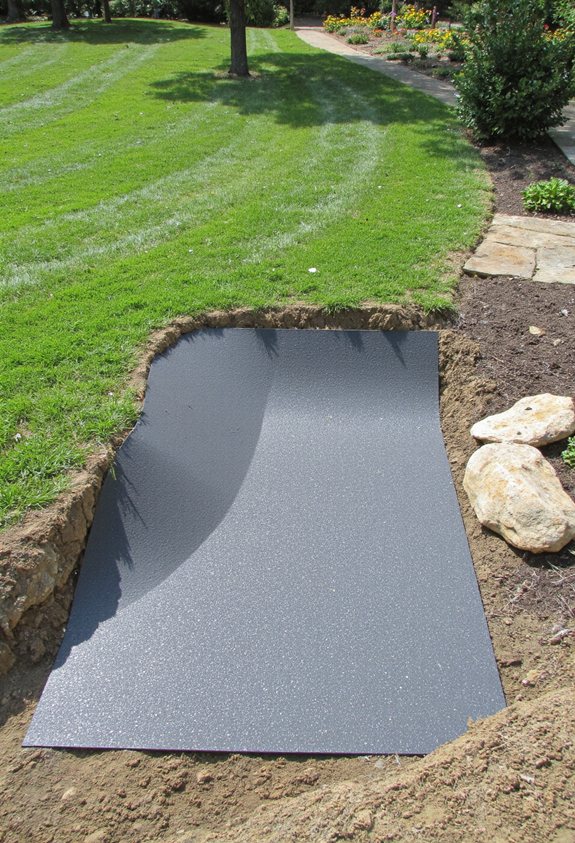
Even before the grass starts to sprout, laying a barrier membrane beneath your lawn can save you from future headaches.
You’ll roll the sheet over prepared soil, overlap edges, and secure it with pins or staples.
This thin shield stops weeds and reduces water pooling, letting roots grow straight and strong.
Think of it as a superhero cape for your yard—quiet, invisible, but powerful.
Construct a Raised Bed With Integrated Drainage
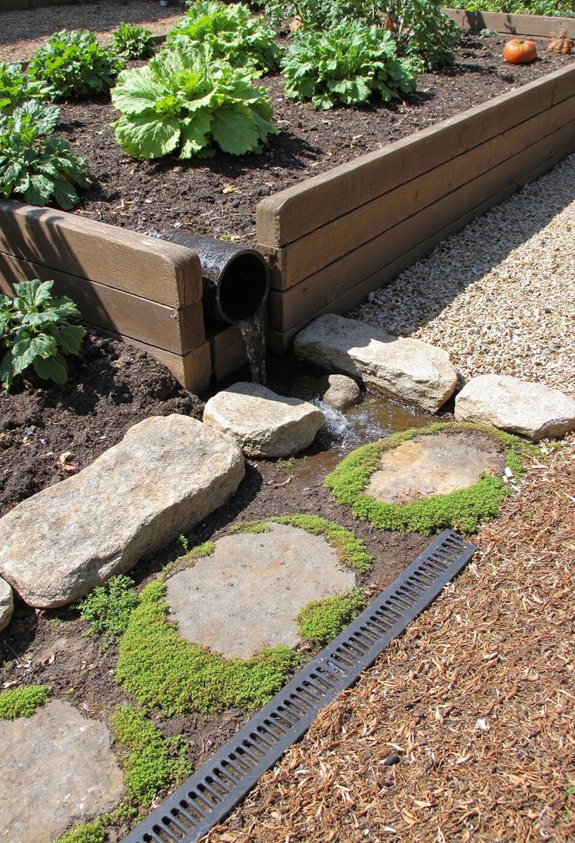
When you build a raised bed, think of it as a mini‑garden skyscraper that needs a good plumbing system, so start by digging a shallow trench around the perimeter and filling it with coarse gravel or crushed stone.
- Lay a geotextile liner for extra filtration.
- Add a layer of sand to smooth water flow.
- Install a perforated pipe at the base.
- Cover with soil and plant your favorites.
Use Landscape Fabric to Stabilize Slopes
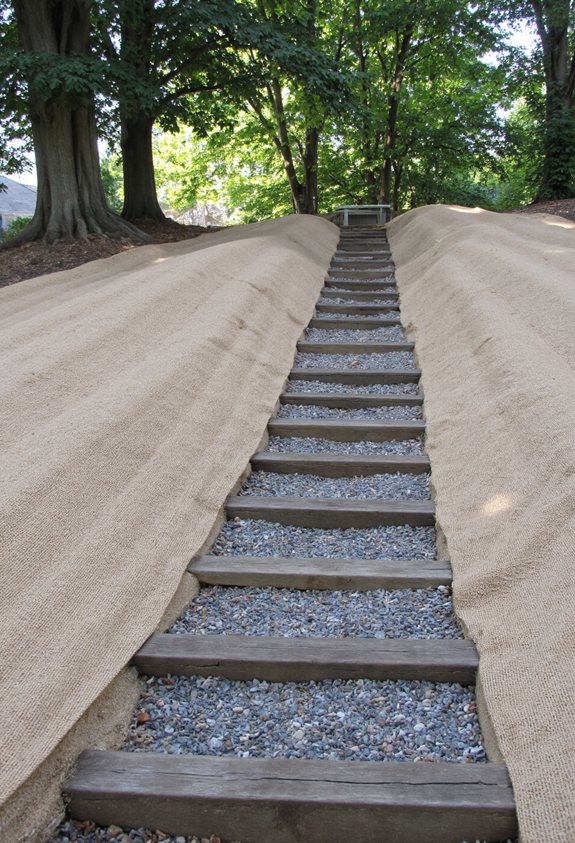
If you’ve got a slope that looks like a mini‑mountain in your yard, landscape fabric can be your secret weapon for keeping it from turning into a landslide.
Lay the fabric over clean soil, overlap edges, and secure it with stakes.
Then add a layer of mulch or gravel on top.
The fabric holds soil in place while still letting water pass through, preventing erosion and giving you a stable, tidy hillside.
Add a Water‑Collecting Barrel With Overflow Pipe
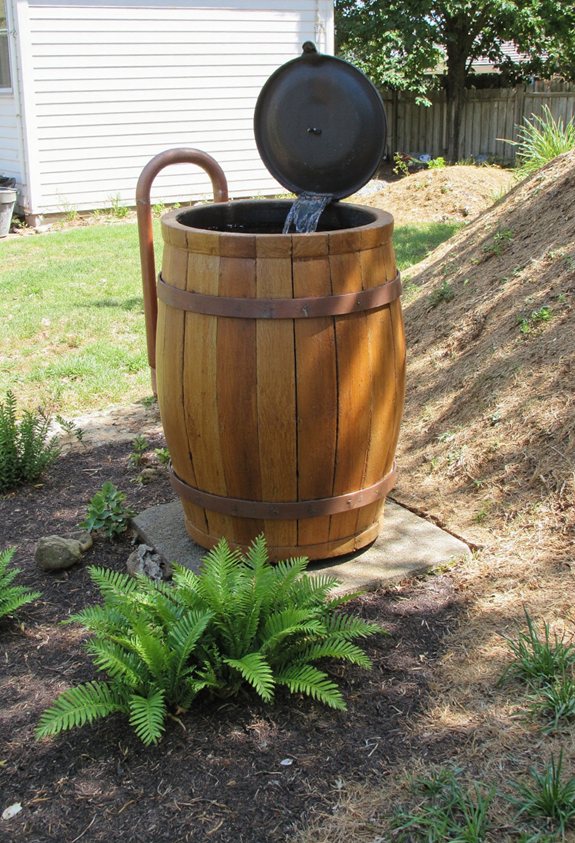
Because rain can turn a simple slope into a soggy mess, a water‑collecting barrel with an overflow pipe is a game‑changer for any yard. You’ll capture runoff, reduce erosion, and have handy water for plants.
- Place the barrel at the low point of the slope.
- Connect a pipe that lets excess flow into a drainage ditch.
- Add a screen to keep debris out.
- Use the stored water for watering on sunny days.
Install a Low‑Profile Curtain Wall for Sloped Yards
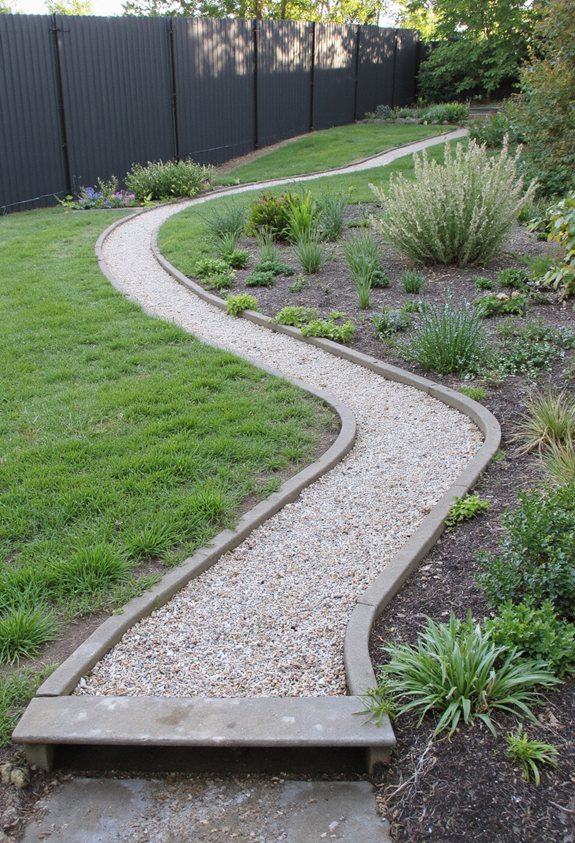
A low‑profile curtain wall can turn a sloped yard from a tumble‑down hill into a sleek, usable space without sacrificing style.
You’ll anchor the wall to sturdy footings, then attach vertical panels that guide water down into a hidden trench.
The wall looks modern, blocks erosion, and creates a flat platform for chairs or a garden.
It’s easy to maintain, and you’ll love the tidy, safe finish.
Integrate a Green Roof Over a Patio or Shed
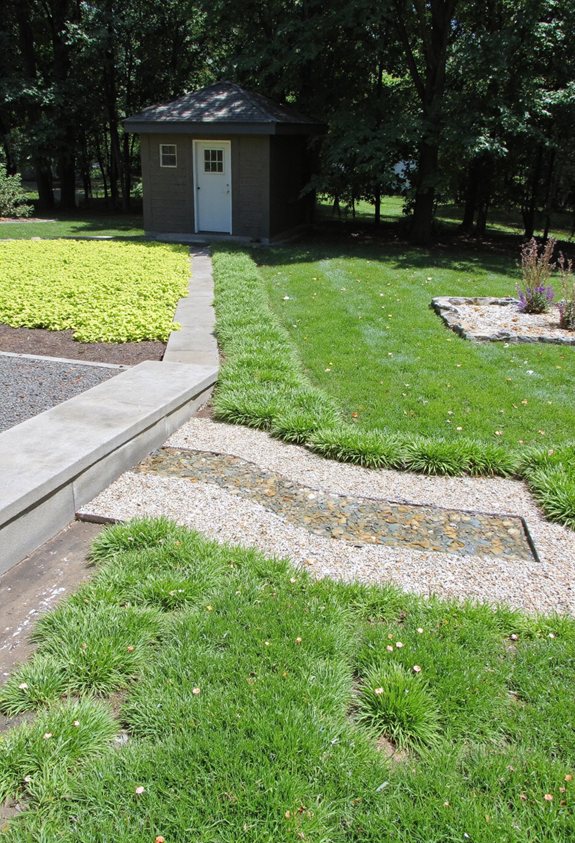
Ever thought a simple patio could double as a mini‑garden oasis? A green roof on your patio or shed captures rain, cools the space, and looks amazing.
It’s easy to start, and you’ll love watching seedlings push through.
- Choose lightweight soil mix.
- Install a sturdy waterproof membrane.
- Add a breathable drainage layer.
- Plant drought‑tolerant succulents or grasses.
Apply Soil Amendments to Increase Infiltration
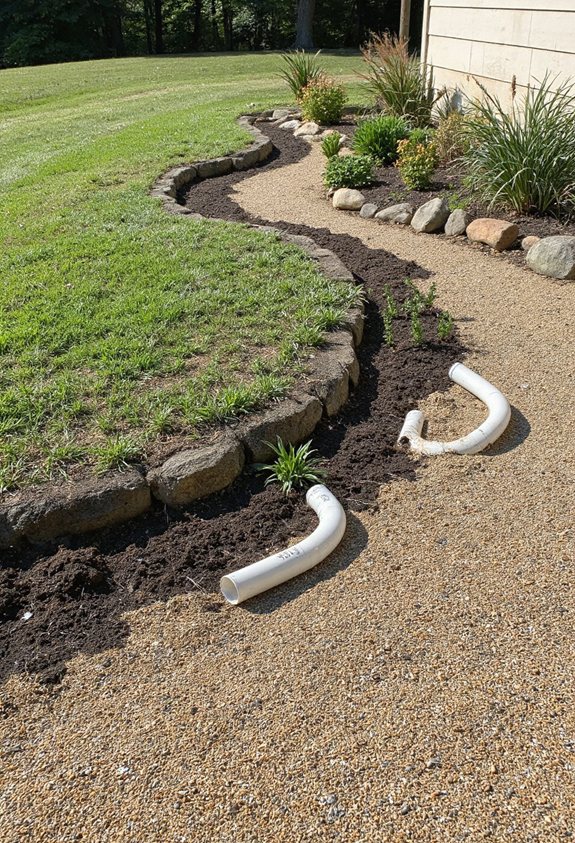
After you’ve set up that cool green‑roof patio, the next step is getting the soil underneath to let water slip right through instead of pooling.
Mix in coarse sand, compost, or perlite to break up compacted earth.
Spread a layer of aged manure, then till it in.
The added texture creates channels, letting rain drain quickly while feeding plants.
You’ll notice puddles disappearing faster, and your yard will feel drier and healthier.
Use Decorative Rock Mulch to Slow Surface Runoff
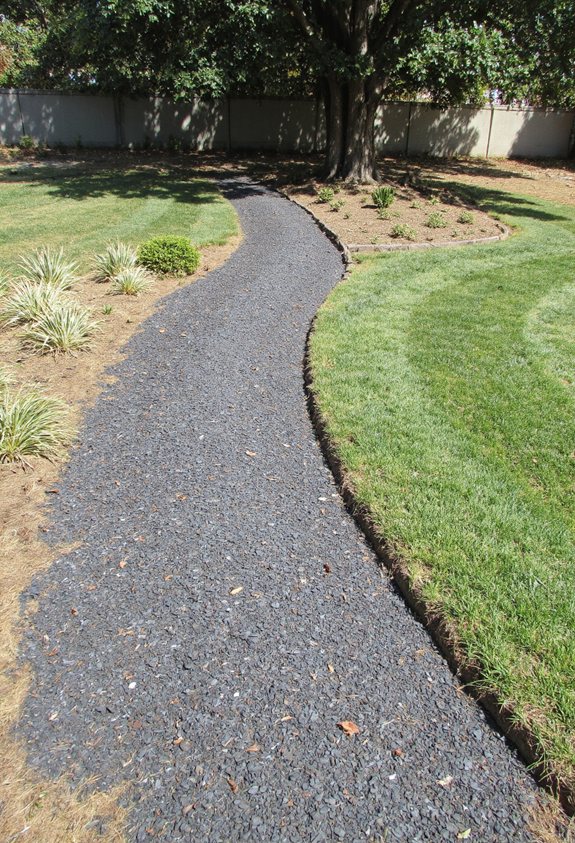
When rain hits your yard, decorative rock mulch acts like a friendly speed bump for water, slowing its rush across the surface while still letting it seep into the soil below.
It looks cool, keeps weeds down, and adds weight that holds soil in place.
- Choose stones 2‑4 inches thick.
- Spread a 2‑inch layer.
- Leave gaps for plants.
- Re‑level after storms.
Perform Regular Maintenance Checks on All Drainage Features
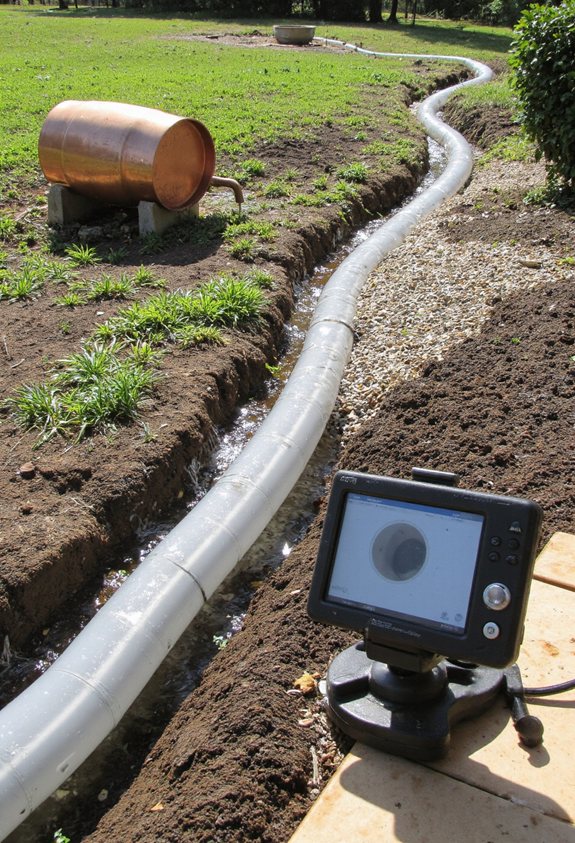
Even if you think your yard’s drainage system is “set and forget,” a quick walk‑through each month can catch tiny problems before they turn into soggy disasters.
Inspect gutters, downspouts, and French drains for leaves, debris, or cracks.
Clear blockages, tighten loose fittings, and note any slow‑moving water.
A few minutes now prevents costly repairs later and keeps your yard dry and happy.