You can mix bright coneflowers, dwarf lavender, and black‑eyed Susan for a year‑round splash that barely needs pruning, then add drought‑tolerant succulents like Echeveria and Sedum to slash watering time. Sprinkle in native wildflowers such as milkweed for pollinators, and set the whole thing in a self‑watering raised bed with drip tubing for hands‑off irrigation. Throw in evergreen shrubs for structure and a simple edge for definition, and you’ll have a stunning, low‑effort oasis that keeps on giving—keep scrolling for even more ideas.
Choose a H, Low‑Maintenance Perennials for Year‑Round Color
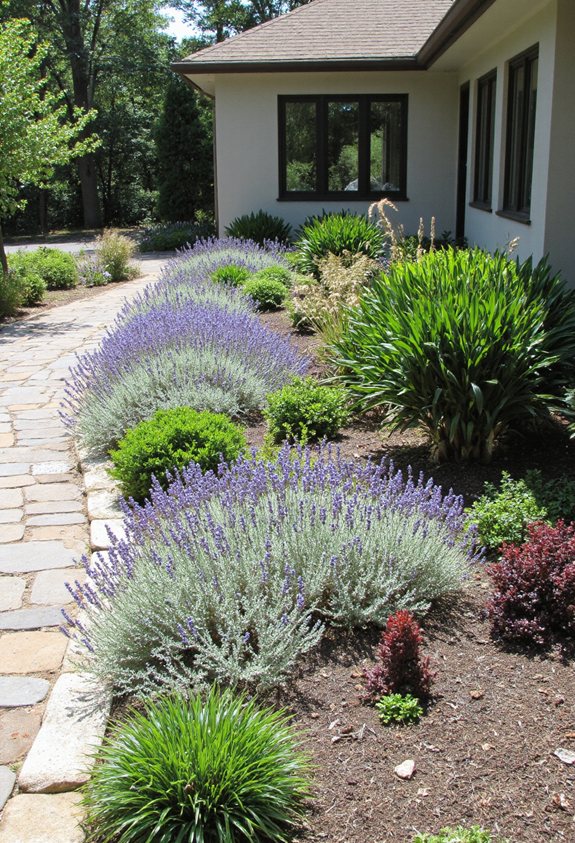
Ever wonder how you can keep a splash of color in your garden without spending every weekend we on we?
Pick hardy, low‑maintenance perennials like coneflowers, daylilies, and lavender. They bloom through seasons, need little water, and tolerate shade. Low-maintenance plants provide long-lasting beauty with minimal intervention.
Plant them in groups, mulch for moisture, and watch them thrive while you relax, sipping lemonade on the porch.
Plant Drought‑Tolerant Succulents for a Water‑Saving Bed
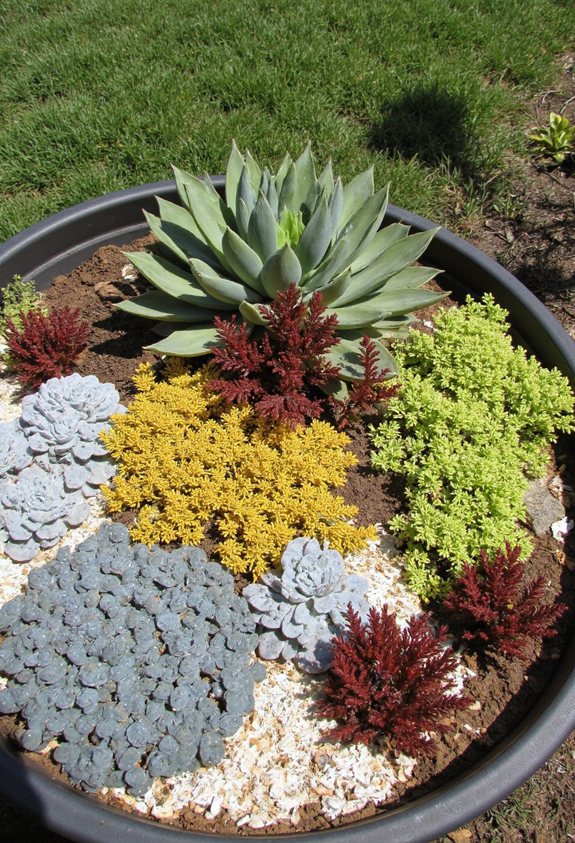
Ever you’re wondering how to keep your garden looking fresh without constantly watering it, try planting drought‑tolerant succulents. They store water, need minimal care, and add quirky texture. Choose varieties that thrive in sun, tolerate shade, and stay compact.
- Echeveria – rosette shapes, bright colors.
- Sedum – ground‑cover, hardy, spreads easily.
- Aloe – medicinal leaves, striking greens.
Additionally, using mulch can help retain moisture and reduce your need for frequent watering, making these plants even easier to maintain.
Use Native Wildflowers That Thrive With Minimal Care
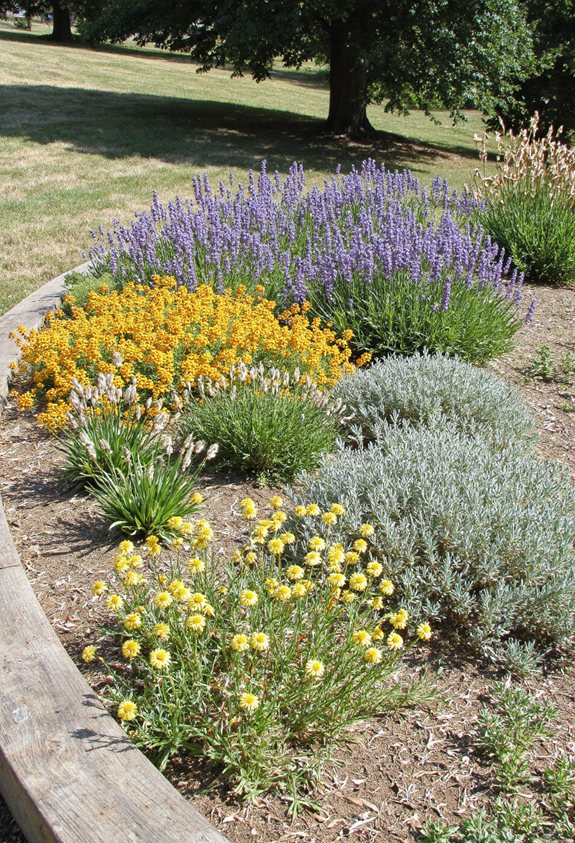
If you want a garden that looks lively without demanding daily attention, native wildflowers are the perfect answer.
Choose species like coneflower, black-eyed Susan, or blanketflower; they’re adapted to local soil and climate, so they bounce back after rain or drought.
Plant them in groups, water once after planting, then let nature do the rest—watch the colors pop while you sip coffee. Additionally, incorporating eco-friendly materials into your garden design can enhance its sustainability and visual appeal.
Install a Self‑Watering Raised Bed for Easy Irrigation
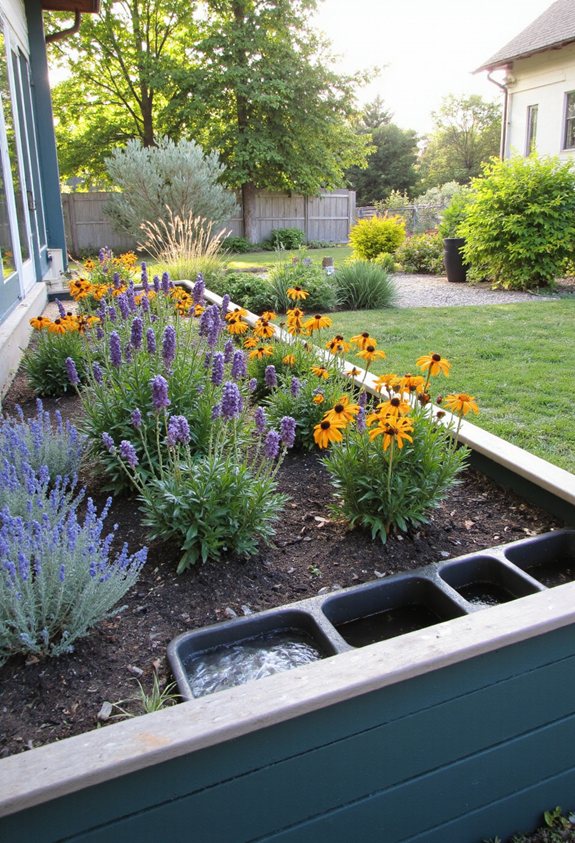
Wondering how to keep your garden thriving without a daily watering ritual? A self‑watering raised bed stores water in a reservoir and releases it slowly, so you set it and forget it. You’ll love the reduced chores and healthier plants.
- Choose a sturdy frame with a built‑in water tank.
- Fill the reservoir with a drip‑line hose for even distribution.
- Add mulch on top to keep moisture in and weeds out. This design can promote proper airflow which is essential for maintaining healthy plant roots and preventing rot.
Add Evergreen Shrubs for Year‑Round Structure and Texture
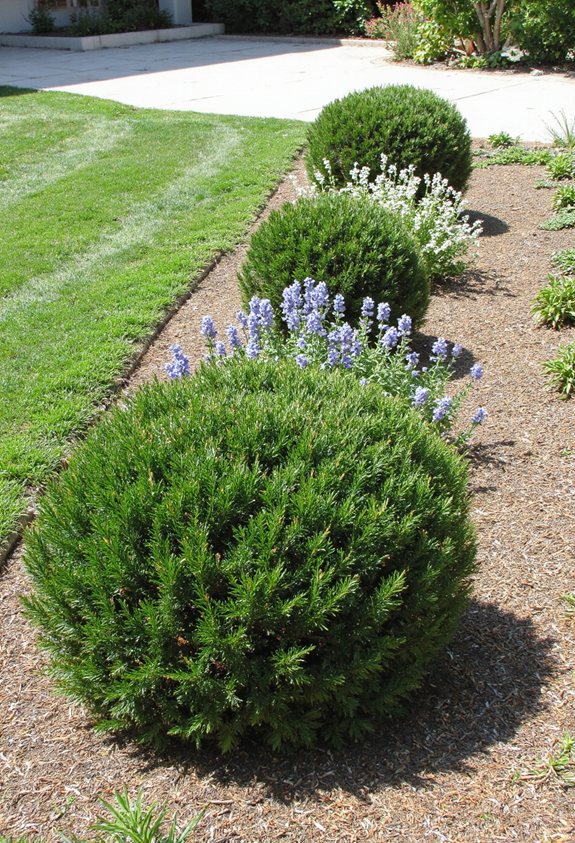
When you sprinkle a few evergreen shrubs into your garden, you instantly give it a backbone that stays vibrant all year long.
Choose low‑maintenance varieties like boxwood or dwarf juniper; they stay green, need minimal pruning, and tolerate most soils.
Plant them in groups for texture, and watch them frame your flowers while you enjoy a steady, lush backdrop without the hassle. This is similar to how lush green plants enhance the ambiance in outdoor spaces.
Mix Ornamental Grasses for Movement and Low Up
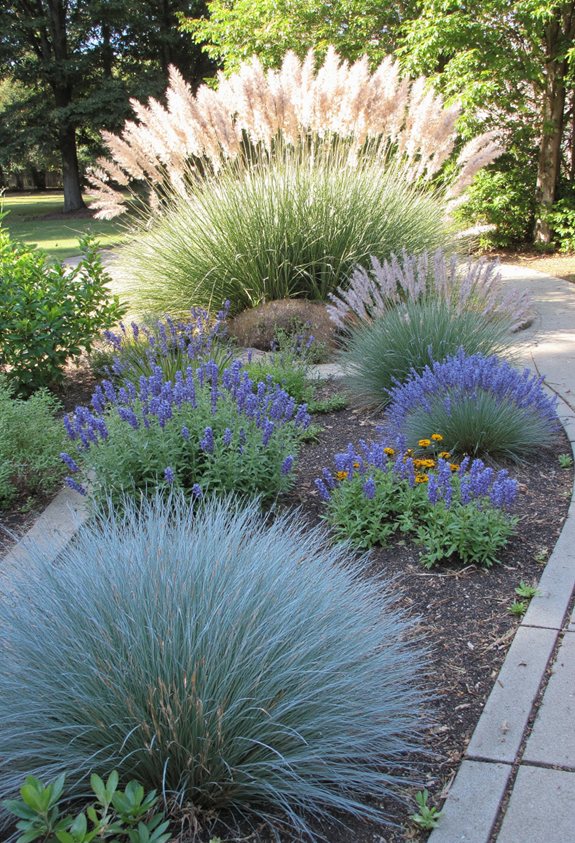
Evergreen grasses can turn a sleepy flower bed into a breezy, moving masterpiece, and they’re surprisingly easy to care for. You’ll love how they sway, adding texture without demanding hours of work. Choose varieties that stay low, so you can walk through without tripping over tall stems.
- Fountain grass – soft plumes, tidy height.
- Blue fescue – compact, blue‑gray foliage.
- Mexican feather grass – airy, fine leaves, gentle rustle.
Adding seasonal greenery to your landscape can enhance both beauty and maintenance ease, making your outdoor space inviting year-round.
Create a Shade‑Loving Fern Garden Under Trees
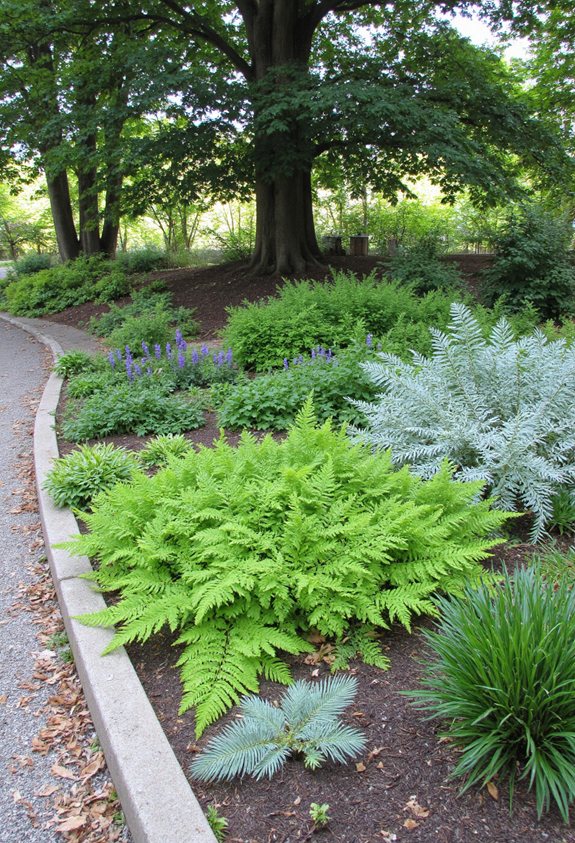
If you’ve got a shady spot under a tree that feels more like a forgotten corner than a garden, a fern‑filled oasis can turn it into a cool, lush retreat with almost no hassle.
Choose hardy ferns like Japanese painted or lady, plant them in moist, well‑drained soil, and mulch to keep roots cool.
Water lightly after planting, then let rain do most of the work.
Enjoy a green, low‑maintenance hideaway that thrives where sun‑loving plants struggle. A well-placed rustic porch swing can enhance the serene atmosphere while you relax and enjoy your garden.
Design a Sunny, Rock‑Based Bed With Alpine Plants
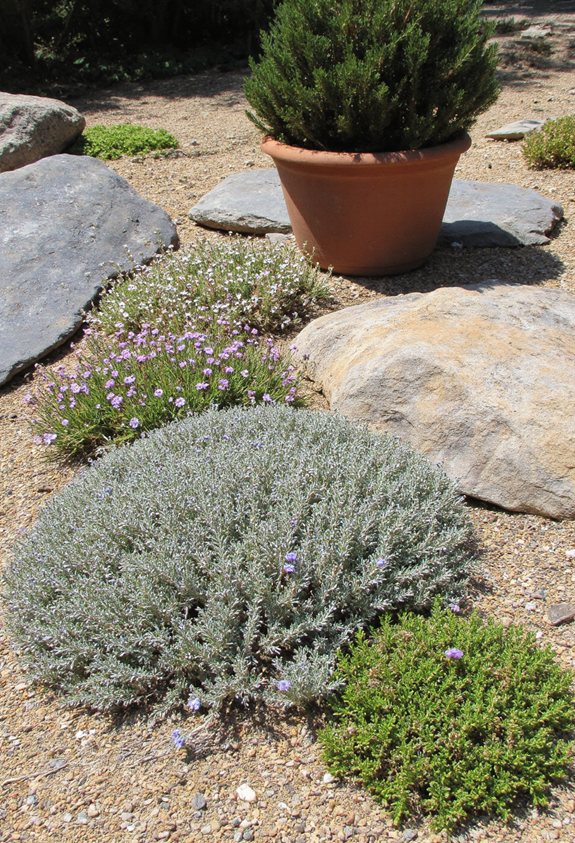
Ever wondered how a sunny rock garden can feel like a miniature mountain retreat? You’ll love the crisp air feel, the rugged rocks, and the hardy alpine plants that thrive with minimal care.
Pick the right stones, choose low-maintenance species, and arrange them for natural flow.
- Select well-draining gravel and flat boulders.
- Plant cushion-forming sedums, dwarf conifers, and alpine asters.
- Add a few tiny water-catch basins for extra charm. Fast-growing vegetables can also be integrated for a seasonal harvest.
Incorporate Automatic‑Blooming Annuals That Require No Deadheading
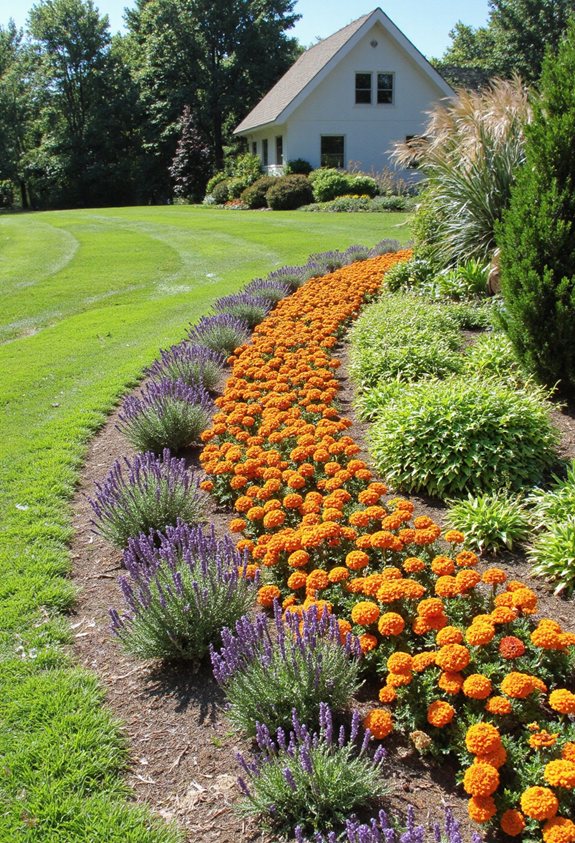
A bright marigold sprouting from a sunny corner can turn a dull patch into a burst of color without you lifting a finger after planting.
Choose automatic‑blooming annuals like zinnias, cosmos, or impatiens; they keep blooming all season and shed spent flowers on their own.
No deadheading means less work, more time to admire the endless, carefree display. Consider adding pumpkin patch designs to your landscaping for a festive touch during the fall season.
Design a Rain‑Garden Bed That Handles Moisture Naturally
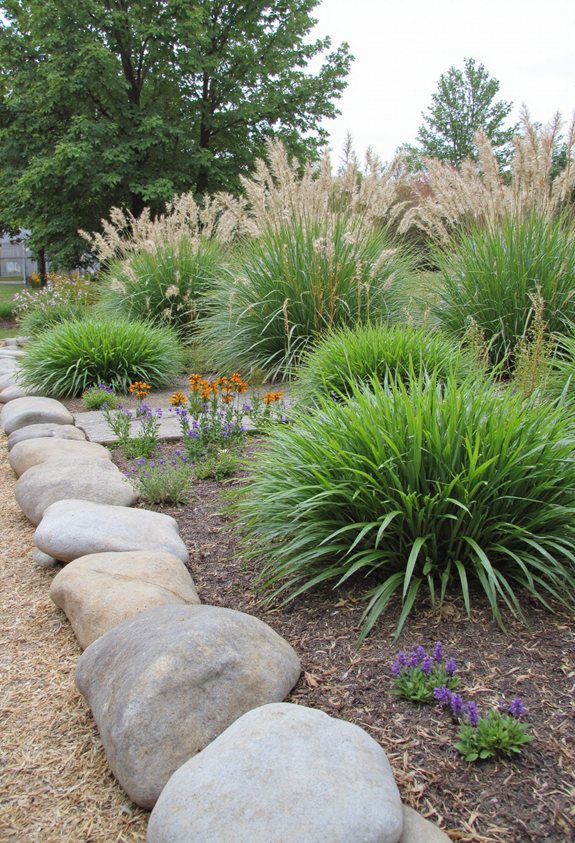
When a storm hits, the water that pools in your yard doesn’t have to turn into a soggy mess; it can become a thriving mini‑ecosystem. Choose a low spot, dig a shallow basin, and plant water‑loving natives that soak up excess moisture.
- Pick native sedges and rushes for quick drainage.
- Add a gravel border to guide runoff.
- Install a simple overflow pipe for heavy rains. Additionally, consider incorporating natural scents from the plants to enhance your garden’s appeal.
Use Mulch‑Rich Soil to Suppress Weeds and Retain Moisture
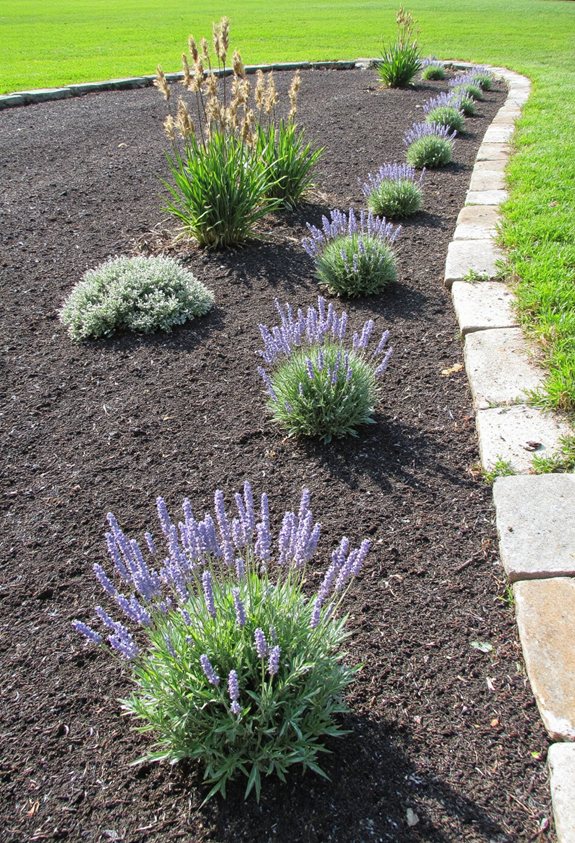
Why not turn your garden soil into a thick, fluffy blanket that keeps weeds at bay and water where it belongs?
Spread a generous layer of shredded bark, pine needles, or composted leaves.
The mulch creates a dark, moist barrier that blocks seed sprouting and slows evaporation.
As you walk by, you’ll notice fewer weeds, healthier plants, and a garden that practically takes care of itself.
Choose Low‑Maintenance Groundcovers Like Creeping Thyme
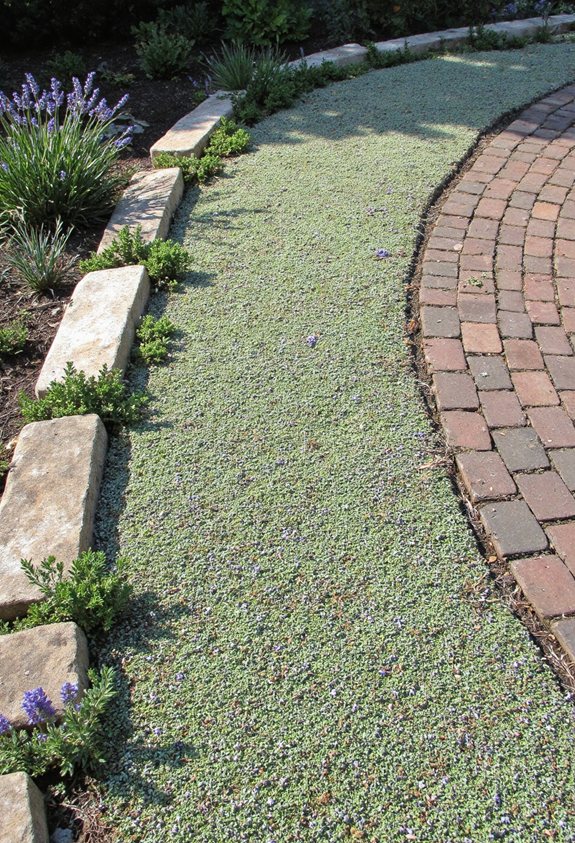
After you’ve tucked the soil under a cozy mulch blanket, the next step is to fill the gaps with a plant that practically works for you.
Creeping thyme spreads fast, stays low, and tolerates drought, so you’ll spend less time weeding and more time relaxing.
- Plant in spring for quick establishment.
- Water lightly until roots anchor.
- Trim occasionally to keep it tidy.
Plant a Color‑Coordinated Box of Lavender for Fragrance and Drought Tolerance
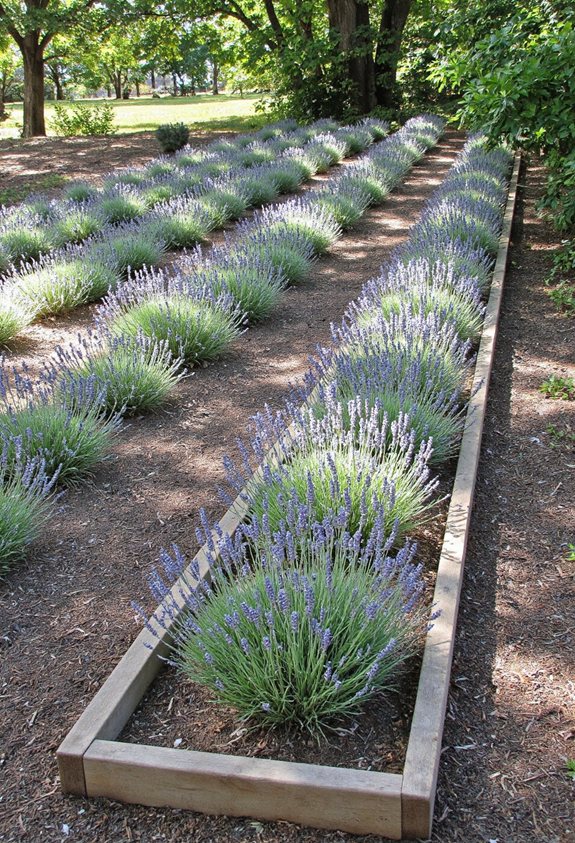
If you want a garden that smells amazing and survives a hot, dry spell, plant a color‑coordinated box of lavender.
Choose a compact variety, arrange it in a rectangular container, and mix purple spikes with sage‑green foliage for visual harmony.
Lavender thrives on minimal water, so you’ll spend less time watering and more time enjoying its soothing scent during backyard barbecues.
Add a Small, Container‑Based Bed for Flexible Placement
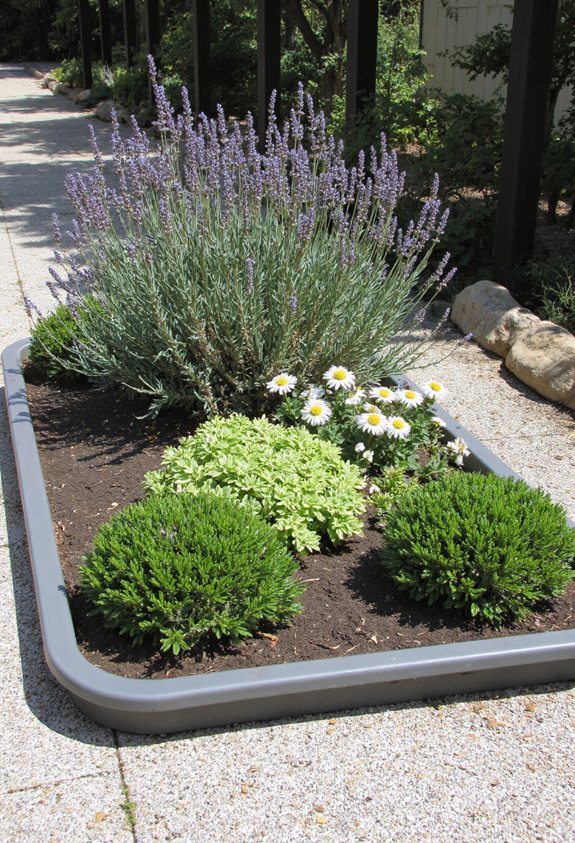
Ever thought about how a tiny, movable garden could save you space and stress? You can pick a decorative pot, fill it with soil, and plant low‑maintenance blooms that thrive in sunlight or shade. This flexible bed lets you rearrange colors whenever you like, and it’s easy to pull indoors during bad weather.
- Choose a lightweight, weather‑resistant container.
- Use a well‑draining potting mix for healthy roots.
- Select compact, drought‑tolerant flowers for effortless care.
Use a Mix of Perennial Herbs That Double as Culinary Assets
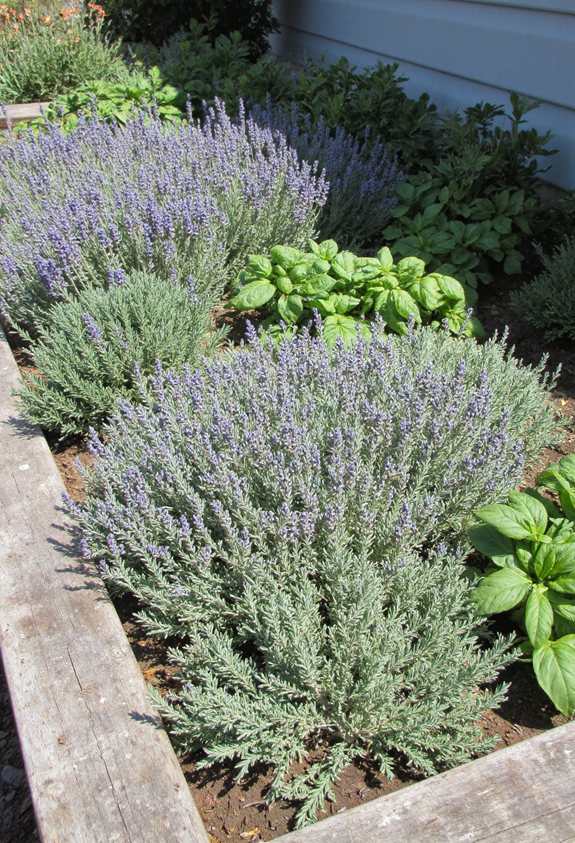
Ever wondered how a single garden bed can become your kitchen’s secret weapon?
Plant thyme, rosemary, and sage in a sunny spot, and you’ll harvest flavor on demand.
These perennials bounce back each year, needing only occasional trimming.
Imagine snipping fresh herbs for pasta while the flowers sway—no extra chores, just tasty, aromatic rewards from a low‑maintenance, edible oasis.
Install a Simple Drip‑Irrigation System for Targeted Watering
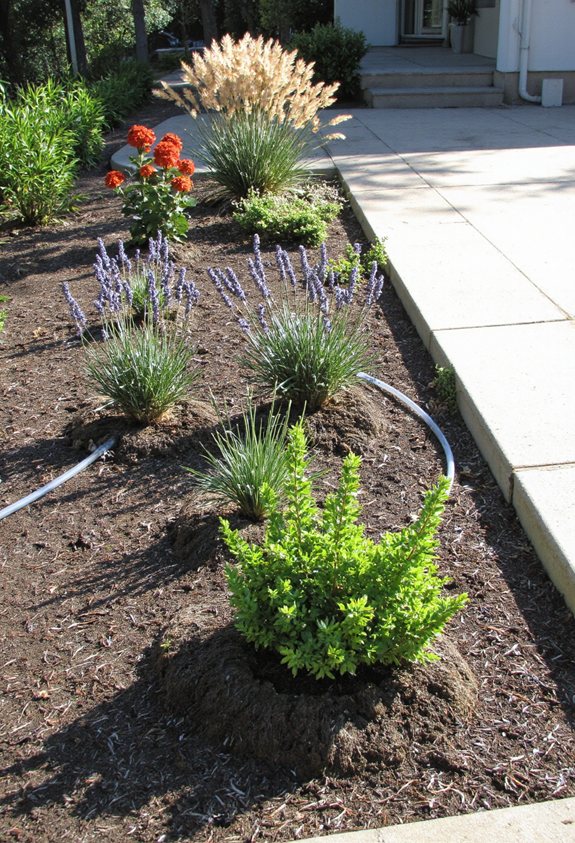
After enjoying fresh herbs straight from the garden, you’ll notice the soil around them drying out faster than the rest of the bed.
A simple drip‑irrigation system delivers water right where roots need it, saving time and preventing waste.
It’s easy to install and keeps plants happy.
- Lay mainline tubing along plant rows.
- Attach emitters near each herb clump.
- Connect to a timer for automatic watering.
Incorporate Low‑Maintenance Bulbs for Spring‑Season Interest
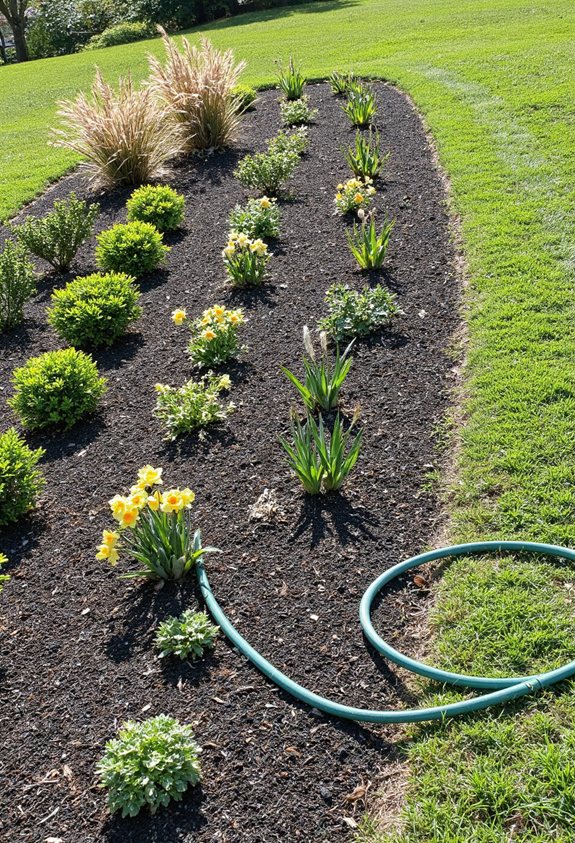
When spring rolls in, you’ll love how a handful of low‑maintenance bulbs can turn a dull patch into a burst of color without demanding your constant attention.
Plant tulips, daffodils, or crocuses in well‑drained soil, water them once, and let nature do the work.
Their vivid blooms appear early, rewarding you with effortless beauty while you sip coffee.
Plant a Butterfly‑Friendly Bed That Attracts Pollinators With Little Care
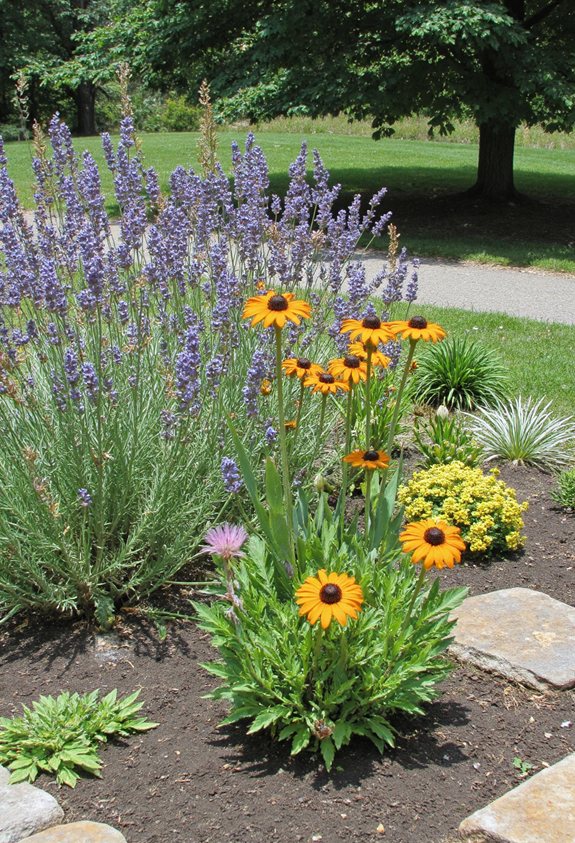
If you want a garden that practically throws a party for butterflies without demanding your time, start with a butterfly‑friendly bed. Choose hardy natives, sow in early spring, and water sparingly. You’ll see colors bloom while pollinators dance, and maintenance stays low.
- Plant milkweed, coneflower, and lavender.
- Use a drip‑irrigation line for occasional watering.
- Add a shallow mulch layer to retain moisture.
Use a Combination of Tall Spikes and Low Mounds for Visual Depth
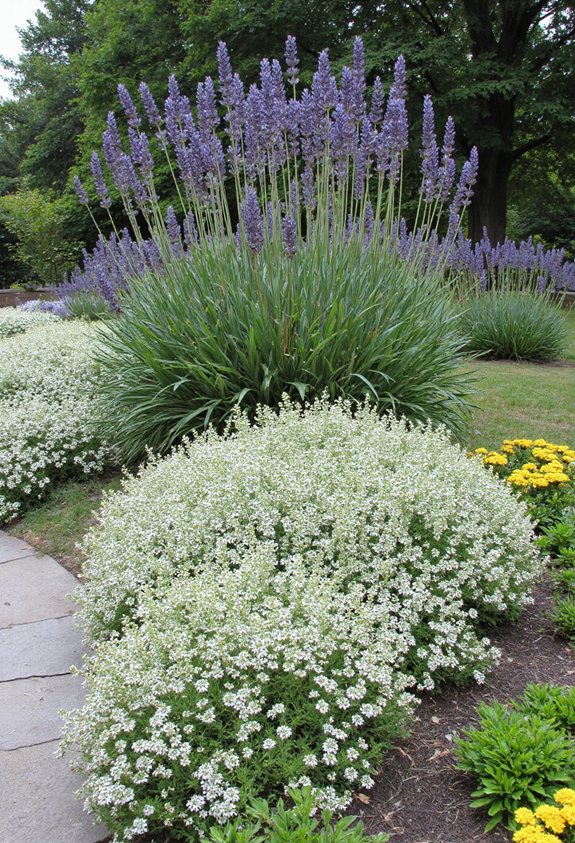
Even though you’re juggling school, sports, and screen time, you can still give your yard a wow‑factor by mixing tall spikes with low mounds.
Plant a few sky‑high coneflowers at the back, then drape shorter dwarf lavender or creeping thyme in front.
The contrast creates depth, making the bed look larger while staying low‑maintenance.
It feels like a mini‑landscape you built in a weekend.
Choose Compact, Slow‑Growing Varieties to Reduce Pruning Needs
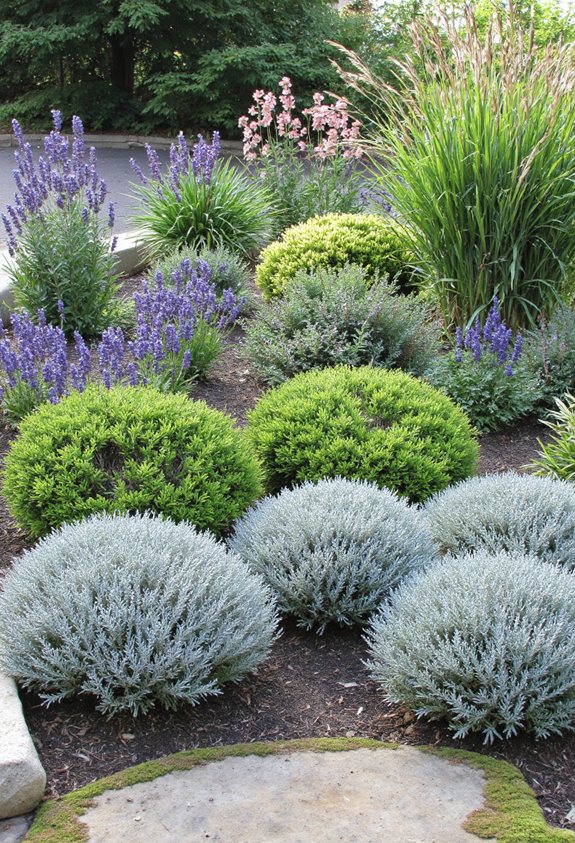
After playing with tall spikes and low mounds, you’ll notice the real time‑saver is picking plants that stay small on their own. Choose cultivars that naturally stay compact, and you’ll cut back on trimming. Their slow growth means you can enjoy blooms longer without constant upkeep.
- Dwarf coneflower – low, dense, rarely outgrows its spot.
- Compact coreopsis – spreads gently, stays tidy.
- Miniature lavender – stays bushy, needs minimal pruning.
Add a Low‑Maintenance, Color‑Changing Foliage Plant for Seasonal Interest
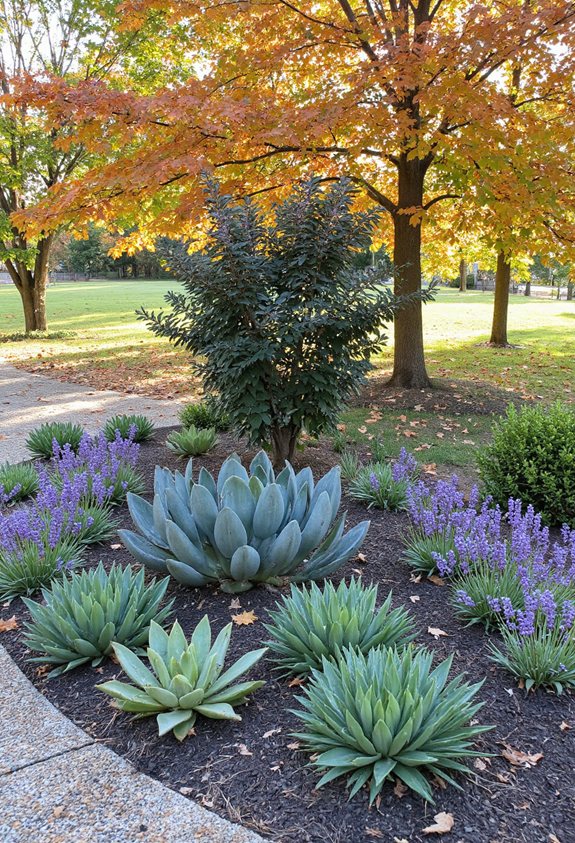
When you pick a plant that shifts its leaf color through the seasons, you instantly add drama to a low‑maintenance garden without extra work.
Try a Japanese maple or a heuchera; they start emerald, turn bronze, then blaze crimson.
They need water only during droughts, and you’ll enjoy a fresh backdrop every month, no pruning required.
Plant a Series of Seasonal “Mosaic” Beds That Rotate Every Few Years
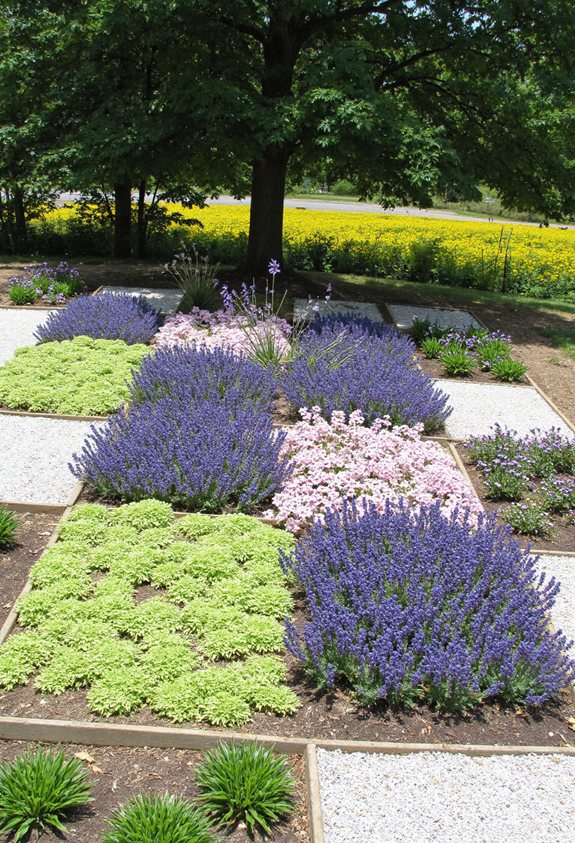
If you want your garden to feel fresh without a constant overhaul, set up a series of seasonal “mosaic” beds that you swap out every few years. Rotate colors, textures, and heights to keep neighbors guessing.
- Choose three theme palettes—spring pastels, summer bolds, autumn earth tones.
- Plant perennials that bloom in each season, then replace a few stems yearly.
- Use low‑maintenance groundcovers to fill gaps and reduce weeding.
Use a Mix of Sun‑Loving and Partial‑Shade Plants for Flexible Placement
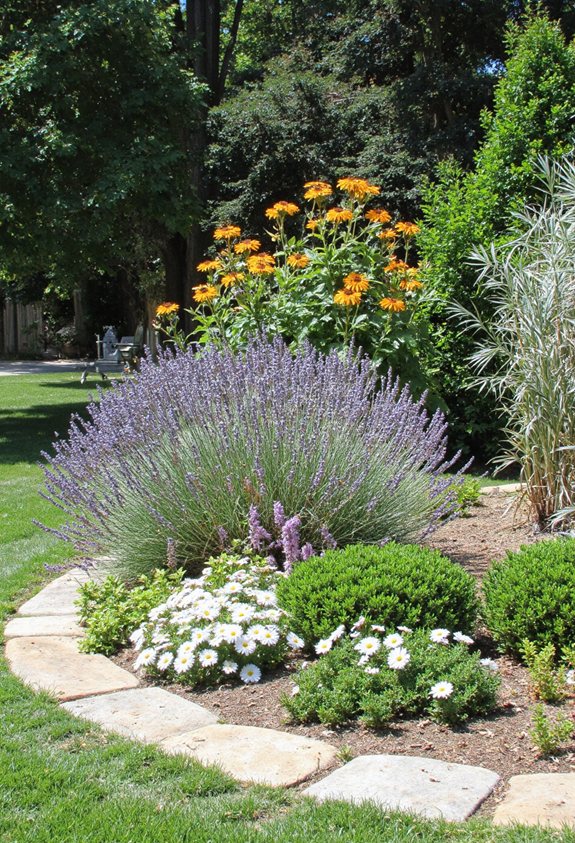
Mixing sun‑loving and partial‑shade plants lets you fill every corner of your yard without worrying about a single, perfect spot.
Choose bright marigolds for sunny patches, then add delicate hostas where trees cast dappled light.
This combo lets you move pots around, swap perennials each season, and keep the garden looking fresh—even when your schedule’s a mess. It’s a hassle‑free, colorful solution.
Incorporate a Simple, Low‑Cost Garden Edge to Define the Bed
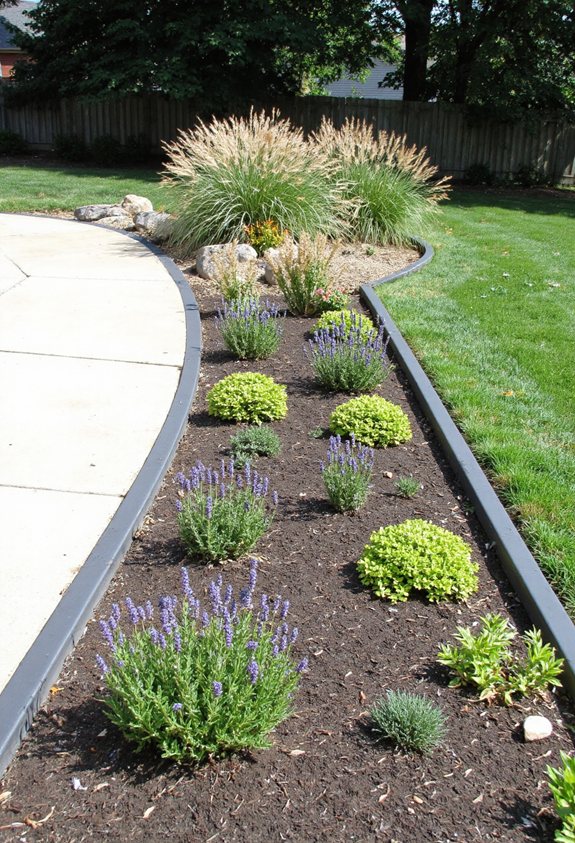
One cheap trick to give your flower bed a polished look is to add a simple garden edge—think of it as the frame that holds your picture together. It keeps soil in place, guides water, and makes the space feel tidy without breaking the bank.
- Snap‑together plastic edging, easy to install and cheap.
- Recycled brick or pavers, give a rustic vibe.
- Low‑profile metal strips, durable and sleek.
Choose a Single‑Color Theme for Cohesive, Low‑Effort Aesthetics
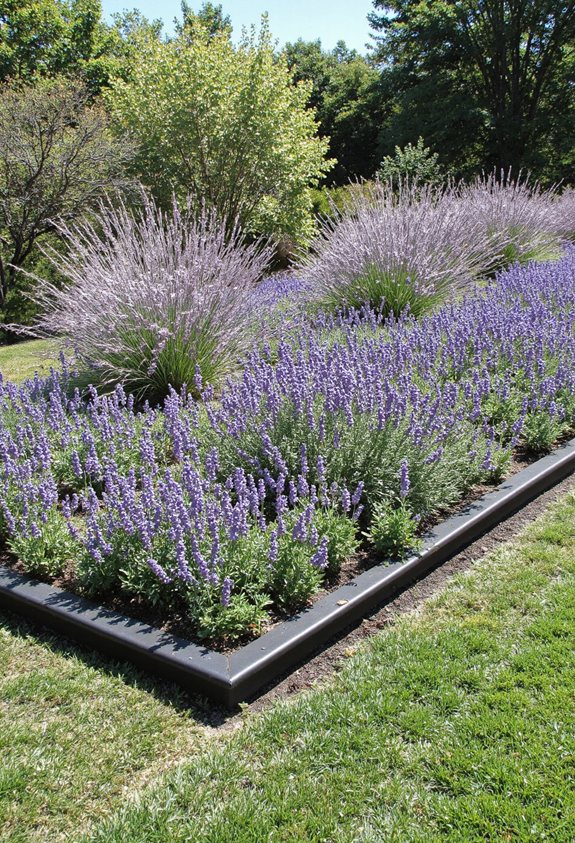
A single‑color theme can turn a chaotic garden into a sleek, low‑maintenance masterpiece without you having to become a horticultural guru.
Pick a hue you love—say, soft lavender—and stick to plants that bloom in that shade.
Marigolds, thyme, and ornamental grasses all fit, so you’ll spend less time matching colors and more time enjoying a harmonious, effortless backdrop.