Pick a spot that catches morning sun but cools off in the afternoon, then plant azaleas in acidic, well‑drained soil for bold pinks and reds. Pair them with low‑maintenance evergreens or hostas to add texture, and use tiered containers for a cascading “flower wall” that looks like a rainbow on your patio.
Mix in reclaimed‑wood planters, bright mulch, and a few ornamental grasses for contrast, and you’ll get a vivid, spring‑ready garden. Keep reading to discover more tricks.
Choose the Perfect Sun‑to‑Shade Spot for Azaleas
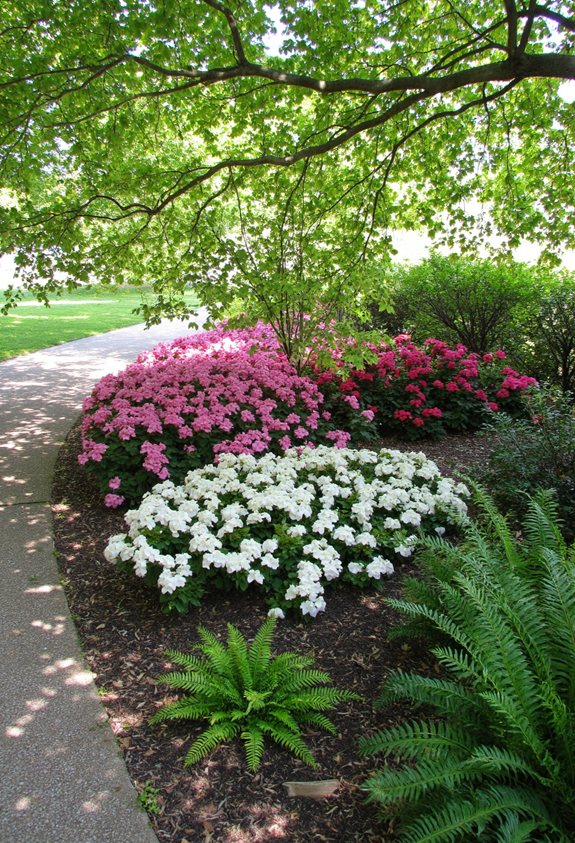
If you’ve ever tried to grow azaleas, you know they’re a bit picky about light, so start by scouting a spot that gets a mix of sun and shade—think morning sun, afternoon shade.
Test the soil’s moisture, then plant where a gentle breeze won’t dry it out.
Remember, too much heat wilts blossoms, while too much shade stunts growth.
Incorporating principles of zone planning can help you determine the best location for your azaleas based on their specific needs.
Choose wisely, and your azaleas will thrive.
Pair Azaleas With Evergreen Foundations for Year‑Round Interest
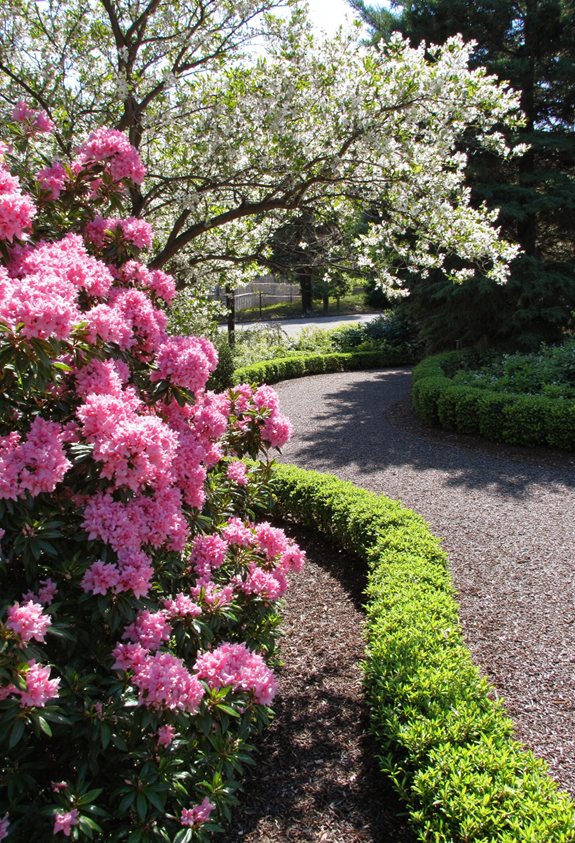
Finding the right mix of sun and shade sets the stage, but the real magic happens when you pair those azaleas with evergreen foundations.
Evergreen shrubs keep the garden looking alive in winter, so your azaleas never feel lonely.
Choose low-maintenance evergreens like boxwood or holly, plant them around the azaleas, and enjoy a backdrop that frames each bloom with year-round color. Additionally, incorporating elements like reclaimed wood planters can enhance the overall rustic charm of your garden setting.
Create a Cascading “Flower Wall” Using Tiered Azalea Containers
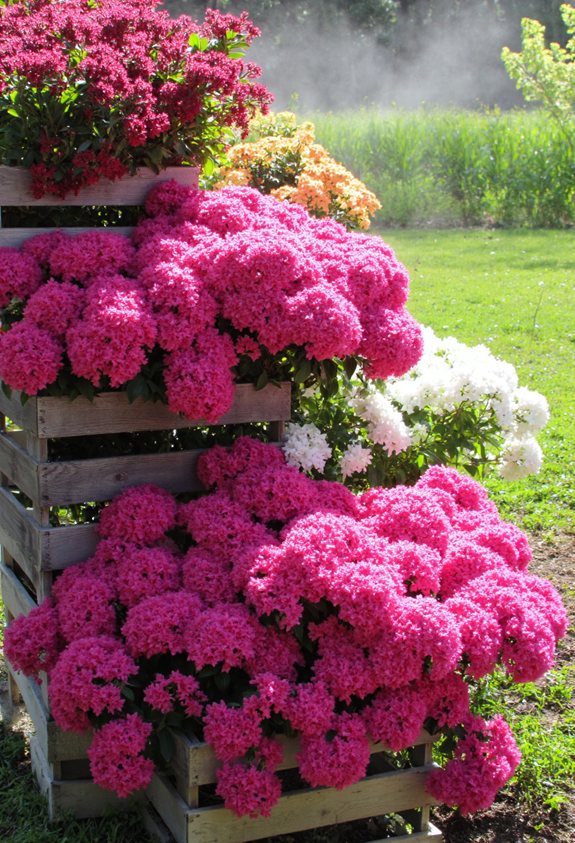
Ever wondered how to turn a plain fence into a blooming masterpiece?
Grab a set of tiered containers, fill each with rich soil, and plant azaleas in gradient colors. Water consistently, add mulch, and watch the cascade grow. Additionally, consider incorporating container gardening techniques to ensure optimal growth for your azaleas.
- Choose three heights for visual flow
- Use complementary azalea shades
- Secure containers to the fence
- Prune regularly for fullness
Design a Mixed‑Color Border With Azaleas and Hostas
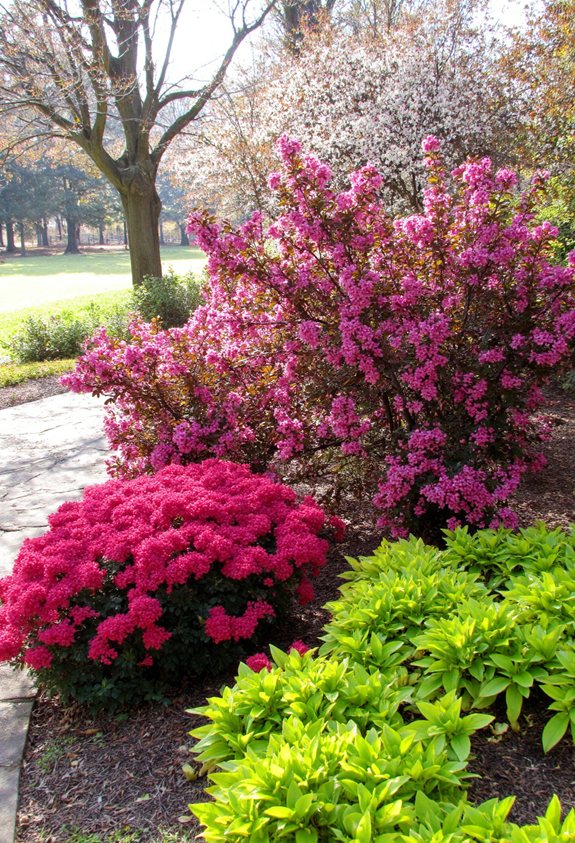
Ever imagined a garden border that feels like a living painting, with azaleas flashing bold reds and pinks beside hostas flaunting cool greens and silvers? Plant azaleas in staggered groups, then tuck hostas between them for texture. Mix heights—short hostas near the path, taller azaleas behind. Water consistently, mulch to keep roots happy, and watch the colors dance each spring. Incorporating perennials and low-maintenance greenery can further enhance the vibrancy and ease of care for your garden.
Use Azaleas as Low‑Maintenance Ground Cover in Shade Gardens
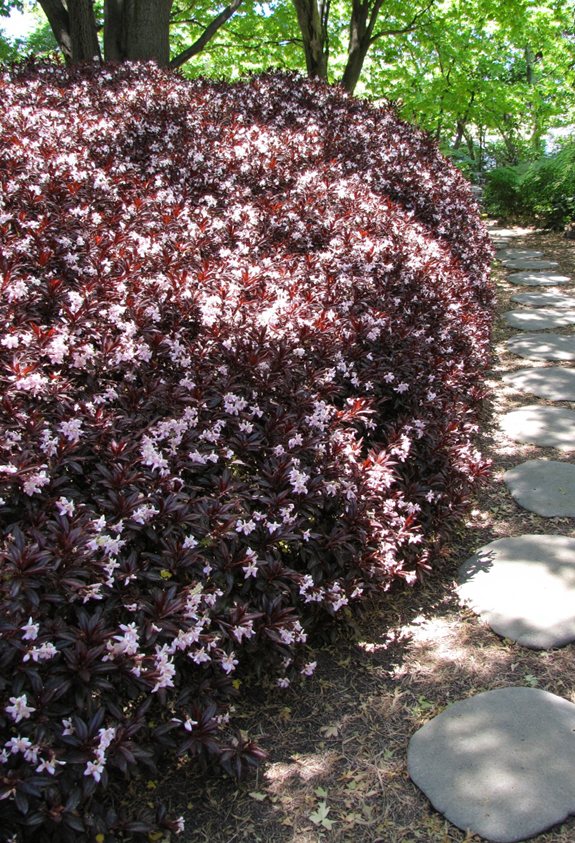
After admiring the bold splash of azaleas and hostas along the border, you’ll notice they also thrive when you let them spread low and wide in shady spots. Their soft foliage blankets the ground, cutting weeds and needing little pruning.
- Choose shade‑tolerant varieties.
- Plant in well‑drained, acidic soil.
- Water deeply but infrequently.
- Mulch to retain moisture and suppress competition. Additionally, consider incorporating natural pest management techniques to enhance the overall health of your shade garden.
Build a Formal Azalea Hedge for Structured Garden Lines
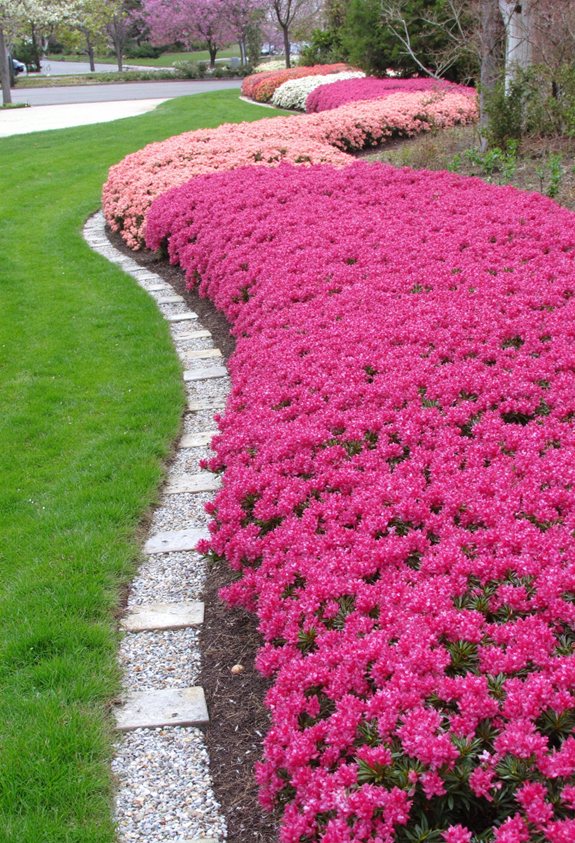
When you line up a row of azaleas along a garden edge, you instantly get that crisp, orderly look you see in formal parks, and the best part is you don’t need a landscaping degree to pull it off.
Choose a single variety, space plants 18‑24 inches apart, and prune lightly after bloom.
Use a sturdy stake or low wall to keep the line straight, and water consistently for a lush, uniform hedge. Incorporating fast-growing vegetables alongside your azaleas can enhance the overall garden aesthetic while providing a bountiful harvest.
Highlight Azaleas With Contrasting Mulch Colors
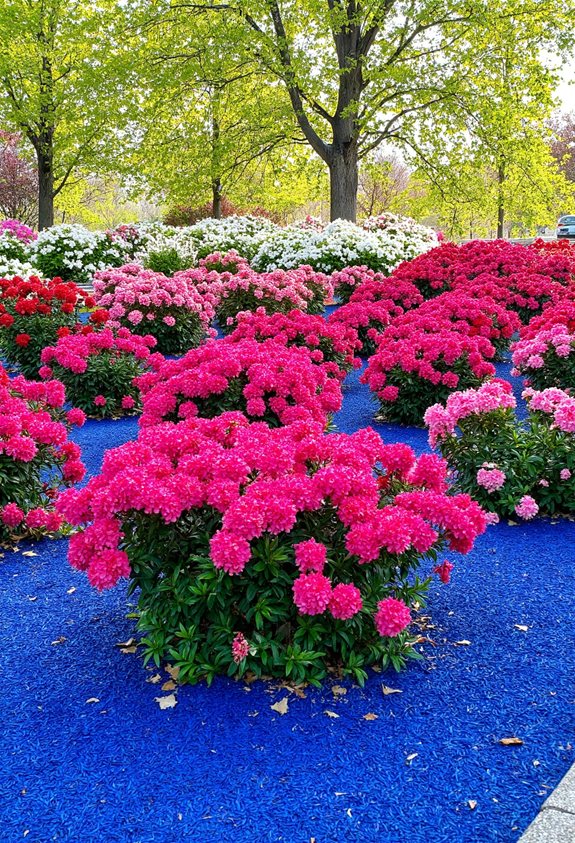
If you pair bright‑colored mulch with your azaleas, the contrast instantly makes the blossoms pop like fireworks against a night sky. Choose a hue that makes the reds, pinks, or whites stand out, and you’ll feel like a garden artist.
- Dark brown for deep‑red azaleas
- Light gray for soft pink blooms
- Charcoal for white flowers
- Red for yellow or orange varieties. Additionally, incorporating tropical garden surroundings in your landscaping can enhance the visual appeal of your azaleas.
Combine Azaleas and Ornamental Grasses for Textural Contrast
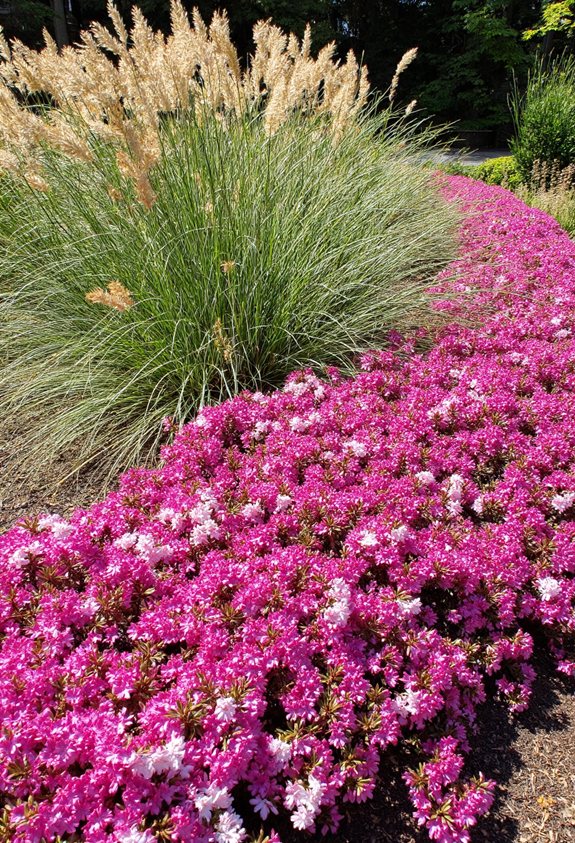
Ever wonder why some gardens feel like a living, breathing artwork? Pair bold azalea blooms with swaying ornamental grasses to create texture that pops. The soft, feathery blades soften the azaleas’ glossy leaves, while the grasses’ movement adds drama.
Mix heights—short grasses near the ground, taller plumes behind—to keep eyes wandering and spirits lifted. Additionally, layered planting enhances visual interest and creates a dynamic garden experience.
Install a Raised Bed Azalea Garden for Easy Access and Soil Control
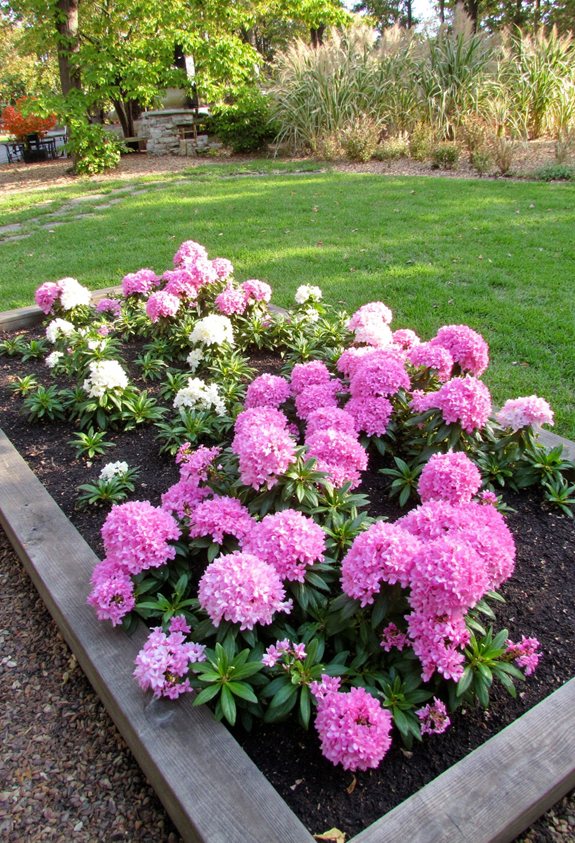
Because a raised bed lets you control the soil and reach the plants without bending over, it’s a game‑changer for azalea lovers.
You’ll love the tidy look, the easy watering, and the reduced weeds.
- Use rot-resistant lumber for the frame.
- Fill with acidic, well‑draining mix.
- Space plants 18‑24 inches apart.
- Add a low edge for wheelchair access.
- Consider incorporating design elements for privacy to enhance the overall garden ambiance and create a tranquil escape.
Plant Azaleas Near Water Features to Reflect Their Vivid Hues
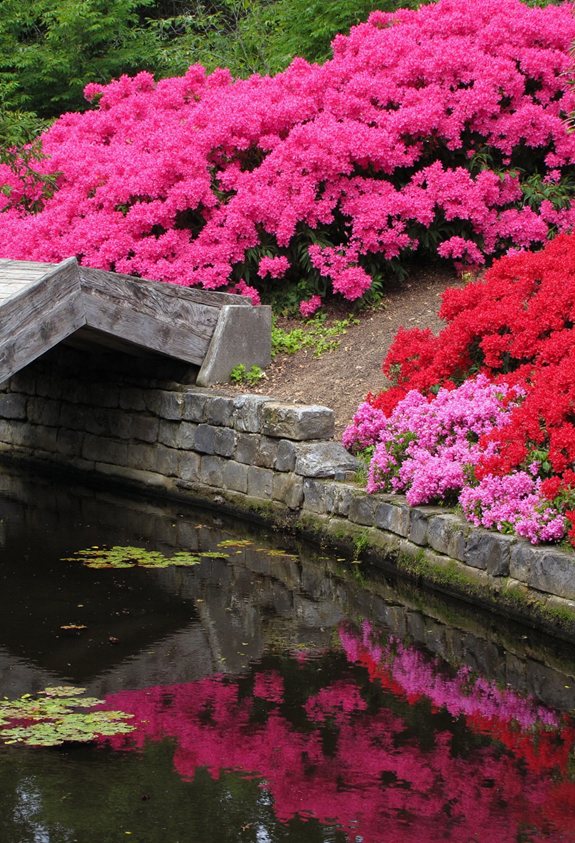
When you plant azaleas right next to a pond or fountain, the water’s surface acts like a giant mirror, bouncing the flowers’ bright reds, pinks, and purples back into the garden. You’ll notice the colors seem deeper, as if the water drinks them in and spills them out. Choose low‑lying varieties, keep soil moist, and enjoy the dazzling, mirrored display. Additionally, consider incorporating natural elements around your water features to enhance the overall aesthetic and create a harmonious environment.
Integrate Azaleas Into a Cottage‑Style Meadow Layout
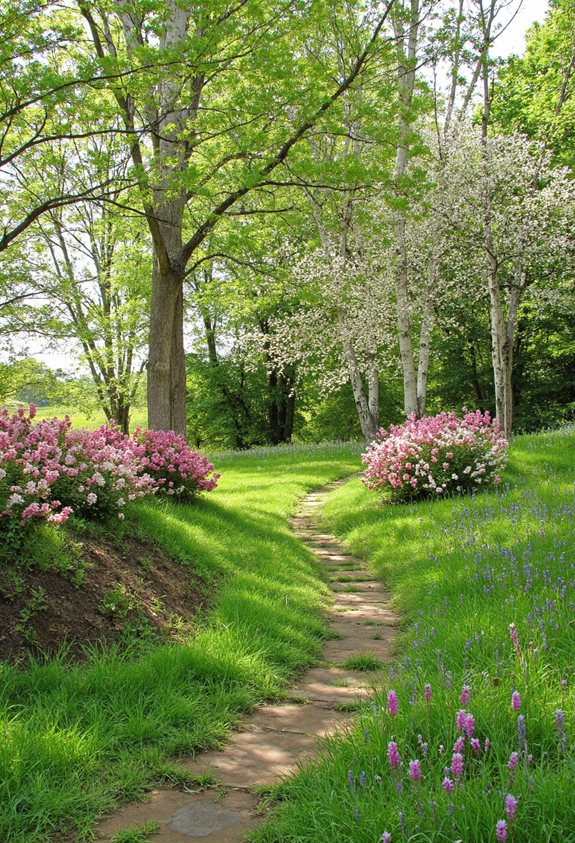
If you picture a sunny meadow dotted with wildflowers, adding a few azalea shrubs can turn it into a charming cottage‑style scene.
Scatter them in natural clusters, let them mingle with grasses, and watch the colors pop against the soft greens.
- Choose low‑maintenance varieties
- Plant at varying heights for depth
- Pair with lavender or yarrow for contrast
- Space them loosely to mimic wild growth
Use Azaleas to Frame Pathways and Walkways With Colorful Arches
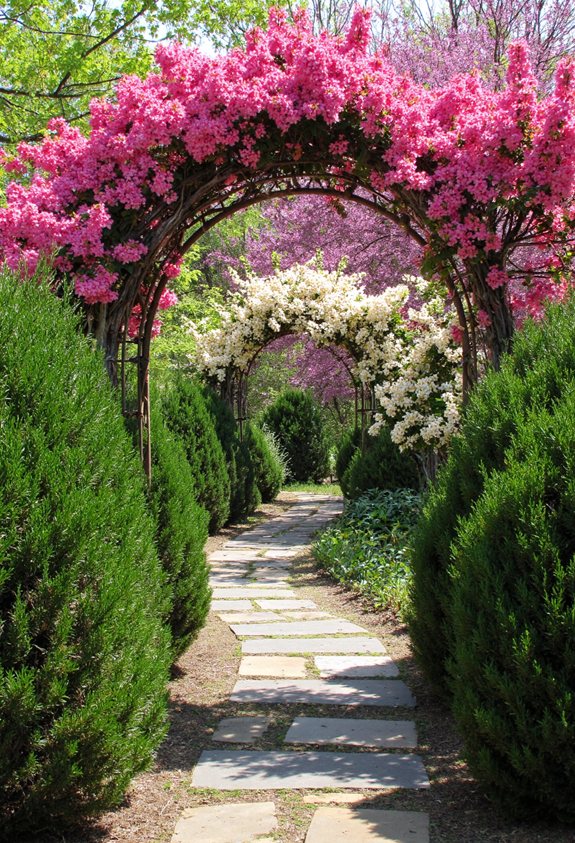
Picture the meadow you just imagined, then add a winding path that snakes through it.
You plant azaleas on both sides, shaping them into a bright arch that greets each step.
Their blossoms burst in pinks, whites, and reds, turning an ordinary walk into a lively tunnel.
As you stroll, the scent lifts your mood, and you’ll smile at nature’s playful, colorful doorway.
Pair Azaleas With Rhododendrons for a Bold, Monochrome Display
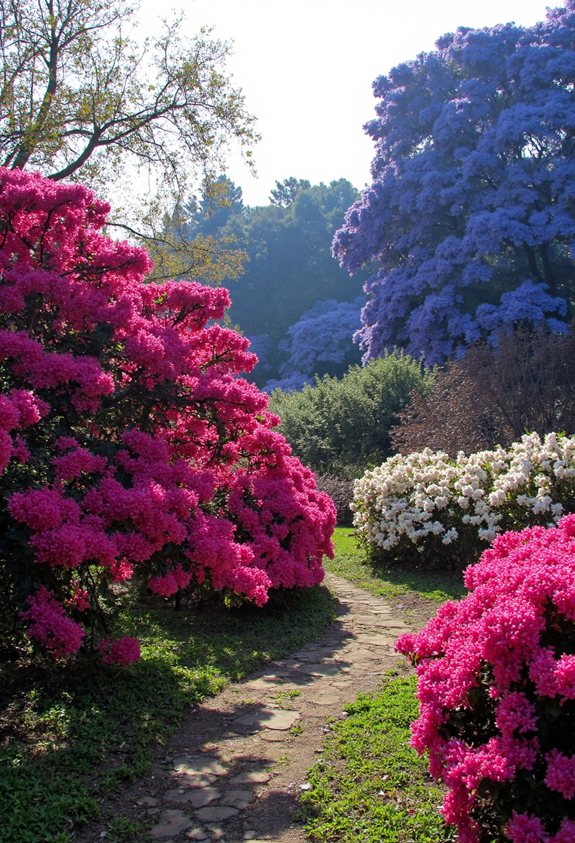
Ever wondered how a garden can look like a sleek, modern art piece?
Pairing azaleas with rhododendrons creates a bold, monochrome display that feels both dramatic and refined.
- Choose matching leaf colors for harmony.
- Plant in clusters for visual impact.
- Mix heights to add depth.
- Use contrasting bloom times for continuous interest.
Create a Seasonal Color‑Shift by Grouping Azaleas by Bloom Time
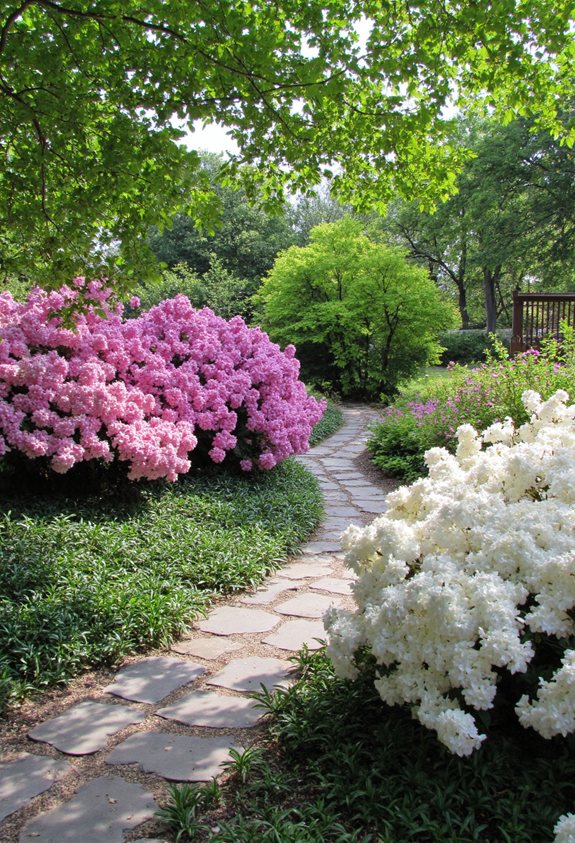
After showcasing bold, monochrome clusters, you can keep the excitement going by arranging azaleas so they bloom in a smooth, seasonal color‑shift.
Plant early‑spring pinks on the south side, mid‑season whites in the middle, and late‑summer reds toward the north.
As each wave unfurls, your garden transforms, inviting neighbors to marvel at nature’s timed rainbow.
Add Light‑Reflecting Rocks and Pebbles to Enhance Azalea Blooms
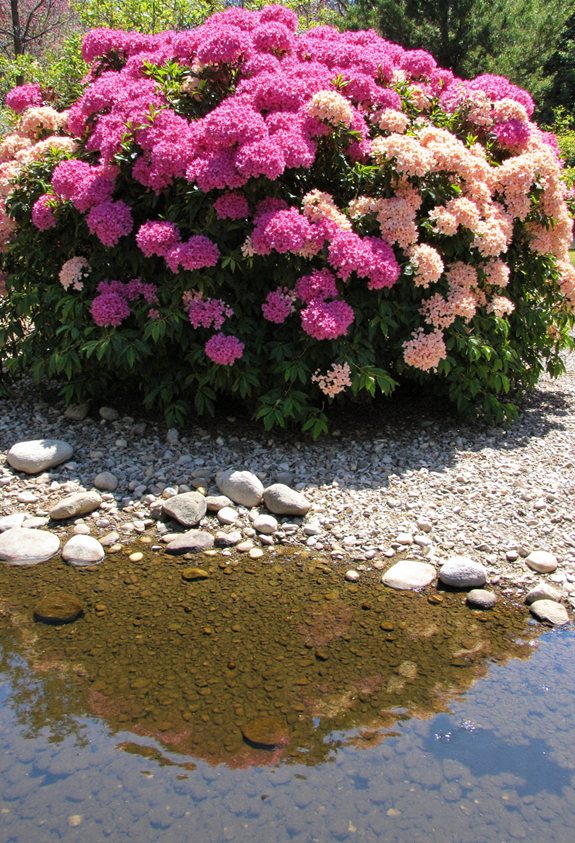
Scatter a few light‑reflecting rocks and pebbles around your azaleas, and you’ll see the blossoms sparkle like tiny mirrors in the sun.
They bounce light, making colors pop and creating a playful garden vibe.
Use these tips for best results:
- Choose white or silver stones for maximum glare.
- Scatter them unevenly for a natural look.
- Pair with mulch to keep stones in place.
- Refresh seasonally to maintain sparkle.
Plant Azaleas in Container Arrangements for Patio Accent
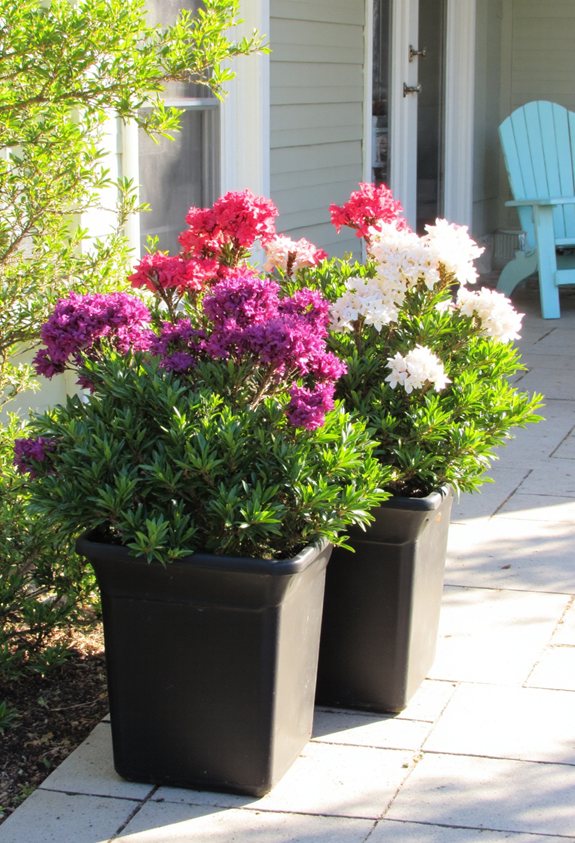
Want to turn your patio into a splashy, colorful nook?
Pick a wide‑rimmed pot, fill it with acidic soil, and plant a handful of compact azaleas.
Water them regularly, add mulch, and place the container where morning sun kisses the leaves.
Mix bright‑colored varieties for a rainbow effect, and watch neighbors stop and stare, asking, “What’s your secret?”
Use Azaleas as a Backdrop for Fruit Trees and Berry Bushes
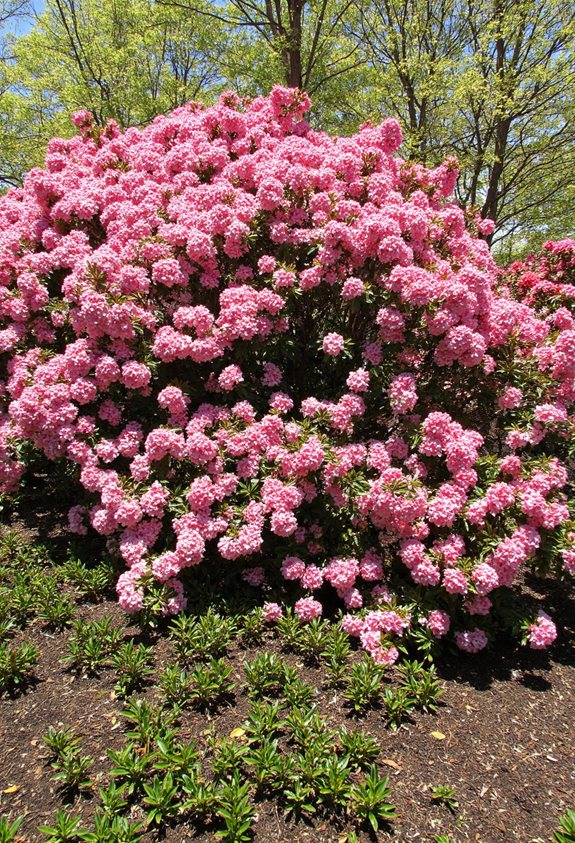
If you plant azaleas right behind your fruit trees or berry bushes, they become a living backdrop that makes the whole garden pop. Their vibrant blossoms frame the fruit, add height, and hide bare soil.
- Choose contrasting colors for drama.
- Prune azaleas to stay tidy.
- Plant low‑lying varieties for a tiered look.
- Water consistently for lush, lasting color.
Incorporate Azaleas Into a Multi‑Layered Rock Garden Design
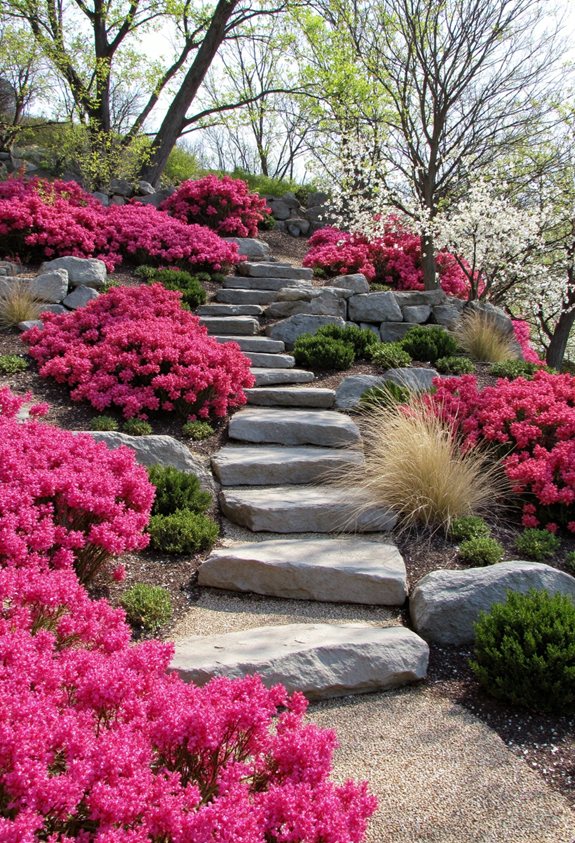
Ever thought a rock garden could feel like a living painting?
Picture bright azalea blooms spilling over stone terraces, each tier offering a new splash of color.
Plant low‑lying varieties on the base, medium ones midway, and tall, dramatic shrubs on the top rim.
Mix smooth pebbles, driftwood, and tiny succulents for texture, then step back and admire your vibrant, layered masterpiece.
Maintain Vibrant Azalea Color With Proper Pruning and Soil Amendments
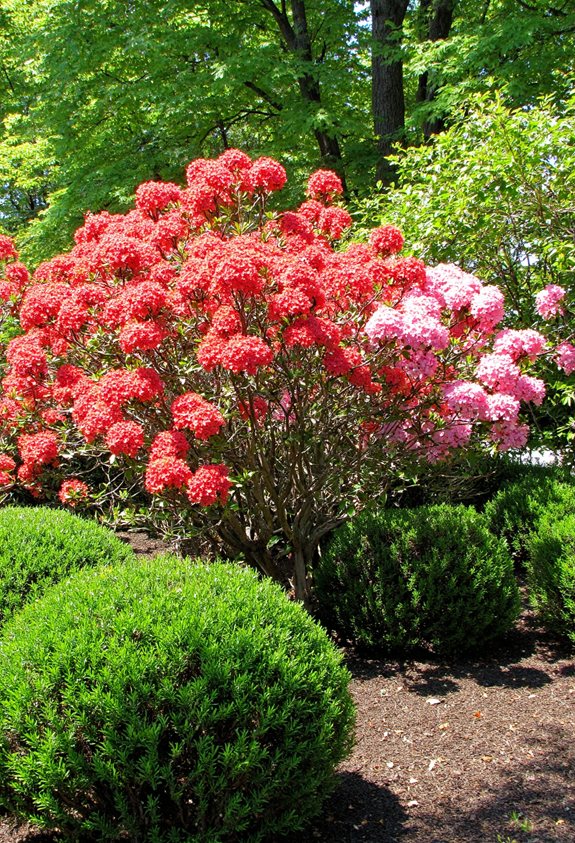
After admiring the layered rock garden, you’ll notice that the azalea’s brilliance fades if the plants aren’t cared for right. Keep them vivid by pruning after bloom and enriching soil.
- Trim spent stems to shape and air‑circulate.
- Add acidic compost or pine bark.
- Mulch to retain moisture and protect roots.
- Test pH and adjust with sulfur if needed.